
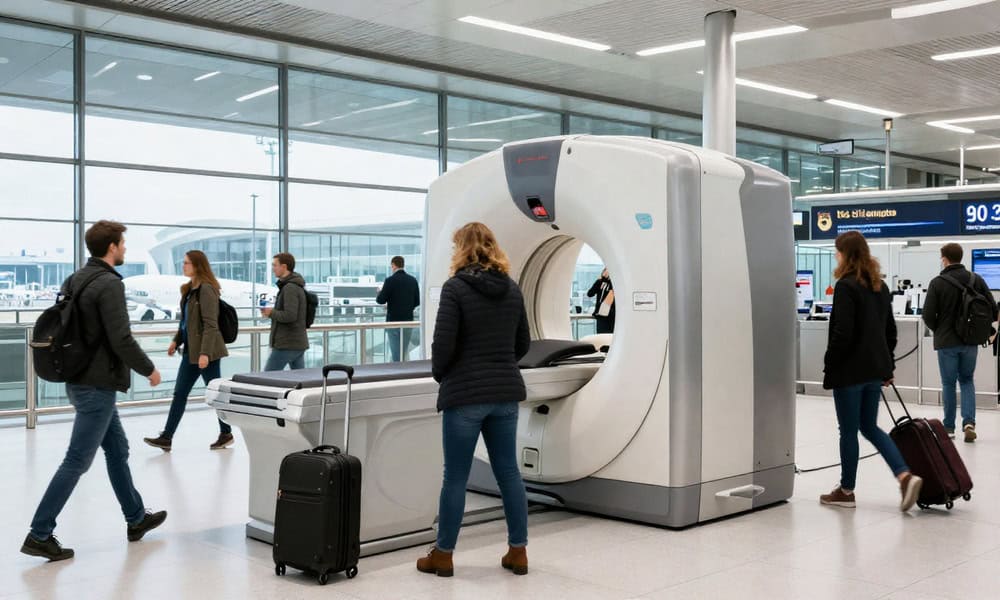
Image generated with Ai
Heathrow Airport is preparing for a sharp rise in summer passenger traffic, which has triggered updated travel guidance for international flyers. The airport has introduced faster security screening using advanced CT scanners, expanded hydration facilities, and revised baggage procedures to handle growing demand efficiently. These changes are designed to reduce congestion at checkpoints, improve passenger flow, and enhance overall travel experience during peak season. The advisory also highlights that security rules may differ between departure and return airports, making advance preparation essential for smooth international journeys through the UK’s busiest aviation hub.
Heathrow Airport is entering one of its busiest travel phases of the year, with passenger volumes rising sharply due to peak summer holiday demand and expanded international connectivity. Airport operations teams are preparing for sustained high throughput across all terminals, where hundreds of thousands of travellers are expected to pass through security systems daily. The emphasis is now on smoother processing, faster movement, and improved passenger awareness to reduce delays during peak hours.
Advertisement
A key focus has been placed on travel readiness, particularly around security procedures and baggage handling. With advanced screening systems now fully operational across the airport, the departure experience has changed significantly compared to previous years. Travellers are being encouraged to understand updated processes before arriving at the terminal to avoid unnecessary delays at security checkpoints. The airport’s operational model is increasingly designed around automation and touchless systems, which require passengers to follow updated packing and preparation standards.
These improvements form part of a broader transformation strategy aimed at strengthening capacity without compromising safety. As international travel continues to expand, Heathrow is positioning itself as a high-efficiency global hub capable of handling rising demand while maintaining consistent security performance.
Advertisement
Advertisement
A major transformation has taken place in the airport’s security framework following the deployment of next-generation computed tomography scanning systems. These advanced machines allow security staff to inspect luggage in greater detail without requiring traditional manual unpacking of items. As a result, several long-standing restrictions have been removed, significantly altering how passengers prepare for flights.
One of the most notable changes is the removal of the strict limitation on liquid container sizes for departing passengers. Travellers using Heathrow can now carry larger volumes of liquids in their hand luggage, provided containers comply with the updated screening compatibility standards. This marks a shift away from the previously universal small-volume restrictions that were once standard across UK airports.
Electronic devices such as laptops and tablets no longer need to be removed from bags during screening, reducing queue congestion and speeding up checkpoint flow. The elimination of separate transparent liquid bags has also simplified passenger preparation, cutting down on pre-security sorting procedures.
These upgrades reflect a broader global shift toward intelligent airport security systems that rely on imaging precision rather than physical inspection. However, operational consistency still depends on passenger compliance with airport-specific rules, especially as not all airports have adopted the same technology simultaneously.
In response to rising passenger numbers and longer dwell times during peak periods, Heathrow has significantly expanded its accessibility to hydration points across all terminals. Over one hundred water refill stations are now available throughout the airport, allowing travellers to refill reusable bottles after security clearance.
This initiative supports both passenger comfort and environmental sustainability goals by reducing reliance on single-use plastic bottles. Travellers are encouraged to bring reusable containers and make use of refill stations once they have cleared security checks.
To ensure smooth security processing, passengers are advised to empty reusable bottles before entering screening areas. Once cleared, bottles can be refilled immediately, reducing the need for expensive retail purchases and supporting faster movement through boarding zones.
The approach reflects a wider trend in major international airports focusing on passenger wellbeing alongside operational efficiency. With summer travel peaks often creating congestion in terminal areas, small improvements such as hydration access points play a significant role in maintaining overall traveller satisfaction and reducing pressure on retail infrastructure.
Although Heathrow has implemented significant changes to its security screening procedures, these updates apply exclusively to outbound flights departing from the airport. Travellers must remain aware that return journeys or onward departures from other airports may still operate under older security frameworks.
This means that passengers travelling through multiple airports during a single trip must comply with the strictest applicable security rules across their entire journey. In many international locations, traditional liquid restrictions and separate device screening procedures remain in place.
Airport authorities continue to emphasise the importance of checking security requirements before travel, particularly for connecting flights and return routes. Differences in screening technology adoption across global airports can lead to inconsistencies in what passengers are permitted to carry.
The evolving nature of aviation security standards means that travellers must remain adaptable and informed. While Heathrow’s system represents a more advanced and streamlined model, global harmonisation of these standards is still in progress, making pre-travel preparation essential for avoiding delays and confiscations during security checks abroad.
As summer travel demand intensifies, Heathrow Airport is prioritising operational efficiency through a combination of advanced technology and enhanced passenger communication strategies. The objective is to minimise congestion, improve queue times, and maintain high security standards despite record passenger throughput.
The introduction of new scanning systems has already demonstrated measurable improvements in checkpoint speed and accuracy. However, the effectiveness of these systems depends heavily on passenger cooperation, particularly in terms of packing compliance and awareness of updated procedures.
Travellers are encouraged to prepare in advance by understanding current security expectations, including how liquids, electronics, and baggage items are processed. This preparation helps reduce bottlenecks and ensures a smoother experience across all stages of departure.
The airport’s broader strategy is focused on long-term scalability, ensuring it can accommodate growing international demand without compromising service quality. As global mobility continues to increase, Heathrow’s evolving infrastructure is expected to play a central role in shaping the future of UK air travel efficiency.
Advertisement
Advertisement
Advertisement













Sunday, September 6, 2026

Sunday, September 6, 2026

Sunday, September 6, 2026

Sunday, September 6, 2026

Saturday, September 5, 2026

Saturday, September 5, 2026

Sunday, September 6, 2026

Sunday, September 6, 2026



