
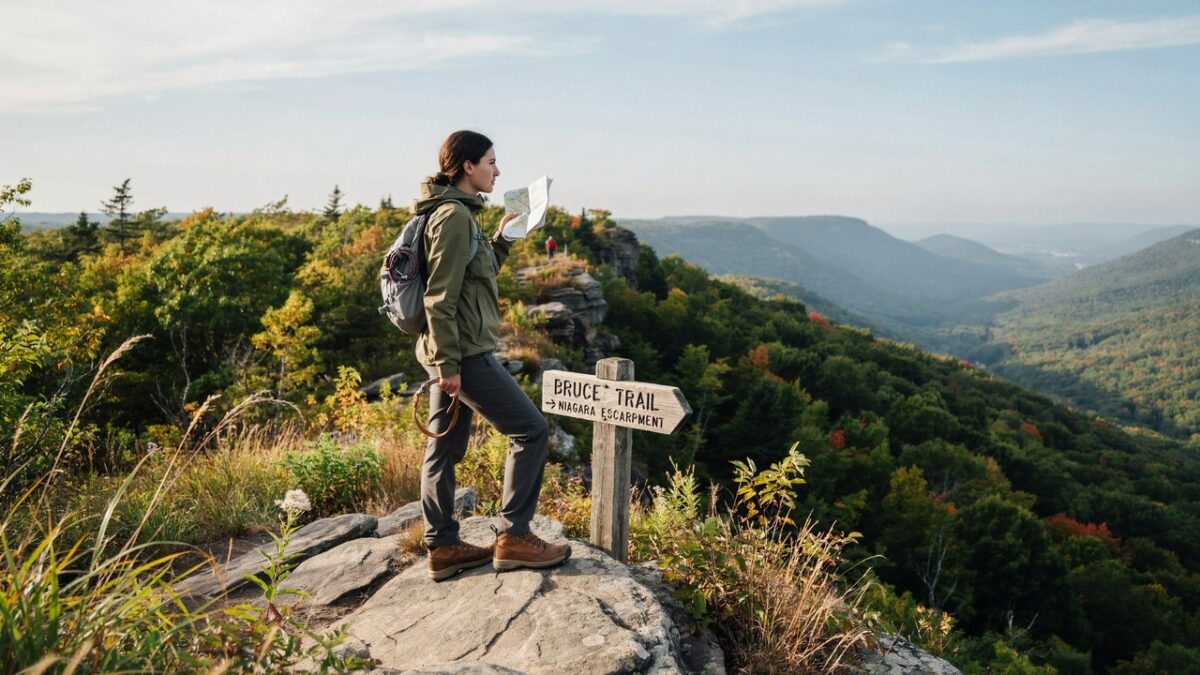
Image generated with Ai
Ontario is strengthening its position as an outdoor adventure destination as a dedicated group of volunteers helps hikers experience one of Canada’s most famous long-distance trails with greater confidence and accessibility. Known as Trail Angels, these volunteers provide essential transportation support for hikers exploring the 900-kilometre Bruce Trail, helping visitors overcome one of the biggest challenges of long-distance hiking: moving between trail sections.
The latest Ontario travel update highlights how community-led tourism initiatives are transforming outdoor travel by making nature experiences more welcoming and sustainable. Stretching from Niagara to Tobermory, the Bruce Trail crosses forests, conservation areas, scenic landscapes and the Niagara Escarpment, offering travellers a remarkable journey through Ontario’s natural heritage.
For adventure seekers, the Trail Angel programme represents more than transportation assistance. It reflects a growing movement where local communities actively support travellers, creating stronger connections between visitors and destinations.
Long-distance hiking provides unforgettable experiences, but it also creates practical challenges for travellers.
Advertisement
Advertisement
Unlike traditional holidays where visitors move easily between hotels and attractions, multi-day hiking requires careful planning around trail access, vehicles and transportation. Many trail sections are located away from urban areas, making it difficult for hikers to return to their starting points after completing a section.
Experienced hikers Ann and Jim Burkholder discovered these challenges while completing the Bruce Trail over multiple journeys. Their experience showed that transportation between trail sections could become complicated, expensive and time-consuming, especially when taxis or other services were unavailable in remote locations.
The Trail Angel concept created a simple but powerful solution by connecting hikers with volunteers willing to provide rides and local assistance.
The initiative demonstrates how community support can improve outdoor tourism while encouraging more people to explore natural destinations.
Advertisement
Advertisement
The Trail Angel programme developed from the experiences of hikers who recognised the need for better support along the Bruce Trail.
While hiking the Dufferin Hi-Lands section of the trail in 2019, Ann and Jim Burkholder learned about Trail Angels through fellow outdoor enthusiasts. They later explored how similar programmes operated and worked towards establishing a structured support network through the Blue Mountains Bruce Trail Club.
The programme officially began in February 2020 with a group of volunteers prepared to assist hikers by providing transportation between trail locations.
Although operations were affected temporarily by the pandemic, the initiative returned with renewed participation and expanded volunteer involvement.
Today, Trail Angels continue helping hikers navigate the logistical challenges of long-distance trekking, making the Bruce Trail more accessible for both experienced adventurers and visitors discovering the route for the first time.
The Bruce Trail has become one of Canada’s most significant hiking destinations because of its unique combination of natural beauty, accessibility and diverse landscapes.
Following the Niagara Escarpment, the trail passes through forests, cliffs, waterfalls, conservation areas and wildlife habitats.
The route provides travellers with opportunities for:
Nature exploration.
Scenic viewpoints.
Wildlife observation.
Photography.
Seasonal outdoor experiences.
The Niagara Escarpment itself is recognised as an important natural landscape, attracting visitors interested in hiking, conservation and outdoor recreation.
The Bruce Trail appeals to different types of travellers. Some hikers attempt the entire route as a major personal achievement, while others explore shorter sections during weekend trips or seasonal holidays.
For international visitors, the trail provides a chance to experience Ontario beyond major cities such as Toronto and discover Canada’s wilderness landscapes.
The Trail Angel programme addresses one of the most common challenges faced by long-distance hikers: transportation.
A hiker completing one section of the trail may finish several kilometres away from their vehicle or accommodation. Without support, they may need to arrange expensive transportation or coordinate multiple vehicles.
Trail Angels provide a practical solution by offering rides and local assistance.
Their support also creates a stronger connection between visitors and communities along the route.
Many volunteers share valuable local knowledge about:
Trail conditions.
Nearby attractions.
Hiking routes.
Community services.
Outdoor safety.
This personal connection enhances the overall hiking experience by helping travellers feel welcomed and supported.
The programme represents the traditional spirit of hiking culture, where outdoor communities help one another enjoy nature responsibly.
The growth of Trail Angel programmes reflects a wider change in global tourism.
Travellers are increasingly searching for authentic experiences that connect them with local communities rather than simply visiting attractions.
Community-based tourism creates benefits for both visitors and residents by encouraging meaningful interactions and supporting local economies.
For outdoor destinations, local initiatives can make travel experiences more memorable while reducing pressure on traditional tourism infrastructure.
The Bruce Trail demonstrates how volunteer networks can become an important part of a destination’s tourism ecosystem.
Instead of viewing hiking routes as simple pathways, communities are transforming them into complete travel experiences involving accommodation, food, culture and local connections.
One of the Bruce Trail’s biggest advantages is its flexibility.
Experienced hikers can challenge themselves by completing the entire 900-kilometre route, while casual visitors can explore shorter sections based on their interests, available time and fitness levels.
The trail passes through communities where travellers can discover local restaurants, small towns, accommodation options and cultural experiences.
This combination of wilderness and community access makes the Bruce Trail suitable for:
Weekend hikers.
Nature lovers.
Adventure travellers.
Photography enthusiasts.
Long-distance trekking enthusiasts.
The route provides opportunities throughout the year, with each season offering different landscapes and experiences.
Outdoor tourism plays an important role in promoting sustainable travel because hiking allows visitors to experience natural environments with minimal impact.
However, responsible hiking remains essential to protecting these landscapes.
Travellers are encouraged to respect wildlife, remain on designated trails, follow conservation guidelines and support local businesses.
The Trail Angel programme contributes to sustainable tourism by helping hikers travel safely while encouraging greater appreciation of Ontario’s natural areas.
As more travellers seek environmentally responsible holidays, hiking destinations supported by local communities are becoming increasingly valuable.
Visitors planning a Bruce Trail adventure should prepare carefully before starting their journey.
Weather conditions can change quickly, especially in forested and elevated areas. Travellers should research trail sections, carry appropriate equipment and understand transportation arrangements.
Connecting with local hiking communities can significantly improve the experience.
Trail Angel support provides additional confidence for visitors unfamiliar with the region and helps make long-distance hiking more accessible.
Travellers can also enhance their journey by combining hiking with local experiences, including small-town visits, regional food and cultural attractions.
The Bruce Trail is a 900-kilometre hiking route in Ontario that stretches from Niagara to Tobermory through forests, conservation areas and the Niagara Escarpment.
Trail Angels are volunteers who support hikers by providing transportation assistance and local guidance along the Bruce Trail.
Many trail sections are located away from towns, making transportation between starting points and finishing locations difficult without local assistance.
Yes. Visitors can choose shorter sections, while experienced hikers can complete longer journeys across the entire route.
Visitors can enjoy forests, wildlife, scenic viewpoints, waterfalls, seasonal landscapes and Ontario’s natural beauty.
The latest Ontario travel update reveals how community involvement is becoming a powerful force in outdoor tourism. The Trail Angel programme demonstrates that successful adventure destinations depend not only on spectacular landscapes but also on the people who help visitors experience them.
The Bruce Trail offers much more than a 900-kilometre hiking route through Ontario. It represents a connection between nature, communities and travellers seeking meaningful outdoor experiences.
As hiking and nature-based tourism continue growing worldwide, programmes like Trail Angels show how local support can make adventures safer, easier and more memorable.
Ontario’s future as an outdoor tourism destination will depend on protecting natural landscapes while creating welcoming experiences for visitors. Through volunteer networks, responsible travel practices and community engagement, the Bruce Trail is becoming a model for sustainable adventure tourism in Canada.
Advertisement
Tags: Bruce Trail, Canada, Niagara, Niagara Escarpment, Ontario
Advertisement
Advertisement













Sunday, September 6, 2026

Sunday, September 6, 2026

Sunday, September 6, 2026

Sunday, September 6, 2026

Saturday, September 5, 2026

Saturday, September 5, 2026

Sunday, September 6, 2026

Sunday, September 6, 2026



