
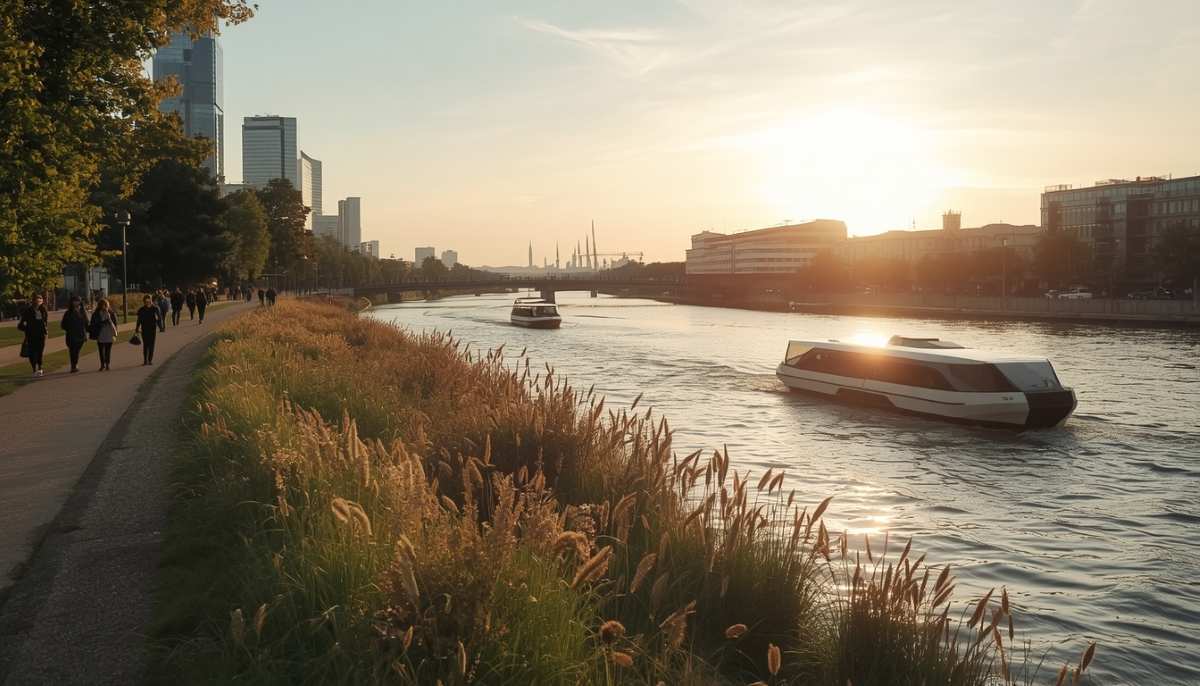
Image generated with Ai
The model of modern city travel has changed significantly, transitioning from crowded concrete jungles to healing, nature-based waterfronts. Today’s urban adventurers are looking for places that provide the metropolitan buzz along with ecological preservation, and so it’s important to understand how forward-thinking municipalities are reinventing their public spaces. As global urban centres face environmental pressures today, understanding these paradigm shifts is critical for both travellers and urban planners. Warsaw has been leading this global movement, hosting the flagship “United by Rivers” conference that puts river tourism and urban nature squarely in the centre of municipal planning and sustainable tourism development.
To fully capture the scope of this urban evolution, it is important to address several key questions that frequently arise among travelers and urban strategists:
Warsaw’s unique geographical layout, anchored by the magnificent Vistula River, provides an ideal laboratory for modern ecological city planning. Unlike many European capitals that historically turned their backs on their waterways behind industrial embankments, Warsaw has embraced its natural river artery. The city’s recent urban strategies emphasize the restoration of natural habitats along the banks, ensuring that wildlife corridors coexist harmoniously with recreational public zones.
Through collaborative panels at the United by Rivers summit, urban planners emphasized that revitalized waterfronts must be accessible to all demographics without compromising ecological integrity. Low-impact pedestrian bridges, floating educational centres, and carefully managed wildlife viewing platforms have been proposed as standard infrastructure for future river cities.
Advertisement
Advertisement
The integration of river tourism into municipal master plans yields substantial economic benefits while simultaneously safeguarding local ecosystems. Sustainable tourism models implemented in cities like Warsaw demonstrate that green infrastructure attracts conscientious travelers who stay longer and contribute more meaningfully to the local economy. Furthermore, investments in waterfront revitalization stimulate localized business growth, ranging from eco-friendly water transport to boutique hospitality venues designed with sustainable architectural principles.
Environmental monitoring systems are also being deployed to track the ecological health of urban rivers. By utilizing advanced data analytics, city planners can dynamically regulate tourist traffic and watercraft speeds during sensitive spawning seasons for local aquatic species. This meticulous balance ensures that tourism acts as a financial and social catalyst for conservation rather than a source of degradation.
Climate change and rapid urbanisation are global challenges that need coordinated responses and not ad hoc municipal responses. The Warsaw conference was a success, creating a collaborative network of river cities that will share technological innovations, policy approaches, and techniques for ecological restoration. Experts agree that in future city planning rivers should be viewed not just as geographical boundaries or transport routes but as living, breathing ecosystems that are vital to urban resilience.
The cities that combine urban nature and accessible waterfront tourism will be leading the global tourism market, given the worldwide trend of international visitors choosing destinations that exhibit authentic ecological stewardship. Warsaw’s proactive stance provides a compelling roadmap for metropolitan areas across the globe, proving that economic vitality and environmental preservation can successfully walk hand in hand along the water’s edge.
Advertisement
Advertisement
Advertisement
Advertisement
Advertisement












Friday, September 4, 2026
Friday, September 4, 2026
Friday, September 4, 2026

Friday, September 4, 2026

Thursday, September 3, 2026

Wednesday, September 2, 2026
Friday, September 4, 2026
Friday, September 4, 2026


