
Mongolia Faces A Transit Crisis As Frozen Fares And Soaring Fuel Costs Strain City Travel Infrastructure

Published
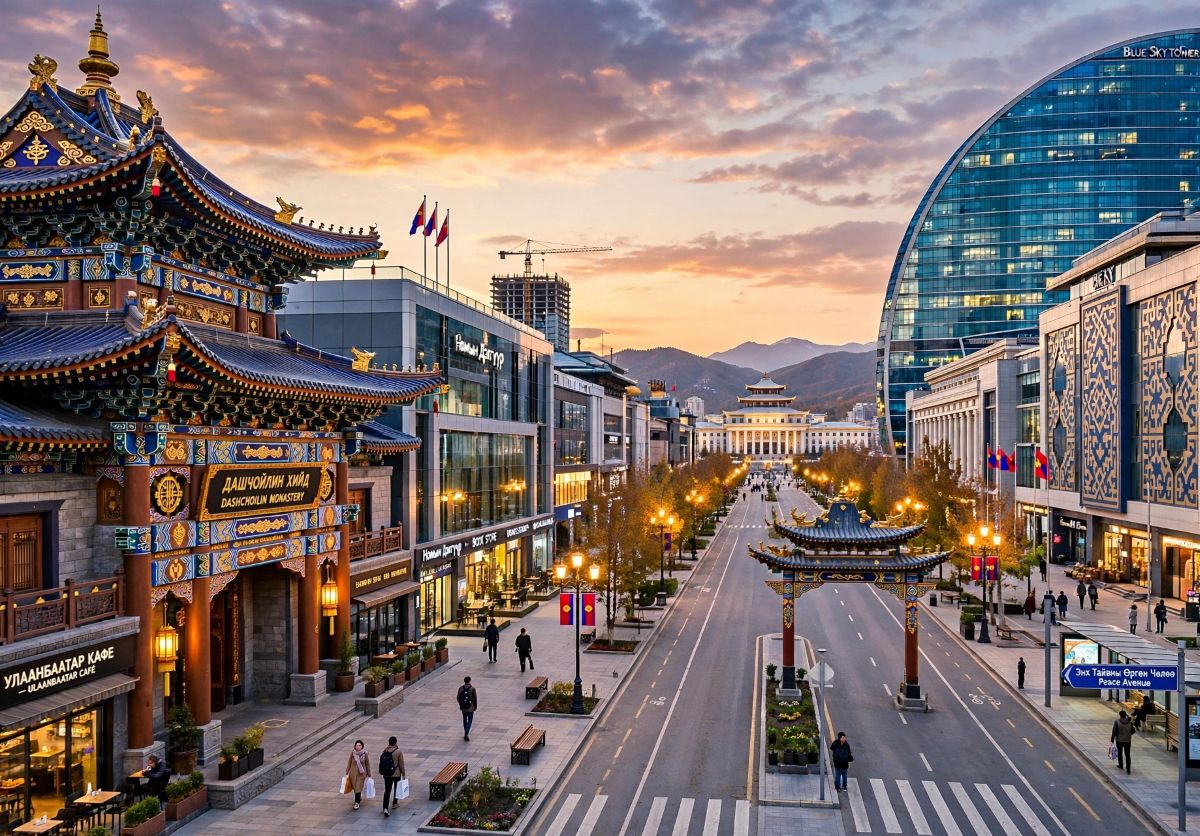
Image generated with Ai
Winter has brought Unprecedented problems to Infrastructure overcrowding in Ulaanbaatar. Imagine waiting at a Peace Ave Bus stop and sitting through the wind Chill -30 while you’re forced to wait an entire hour for an irregular and sluggish bus. It’s an excruciating wait to board a certain-never-to-come bus. Mongolia’s broken and overburst public transportation leaves millions of commuters waiting for the opportunity to ride on a broken and dysfunctional system and to witness the collapse of the country’s infrastructure. While the experience of Mongolia’s streets may be frightening, the reality is much worse. The reality is deaths from freezing to death, no public transportation, and a dysfunctional system.
Why is the capital city of Mongolia facing a complete paralysis of its public transport network, leaving thousands stranded in freezing temperatures?
The frozen streets of Ulaanbaatar are currently witnessing a massive urban transport crisis that threatens daily life and international tourism across Mongolia. Private bus companies, which carry most of the commuter traffic through freezing sub-zero conditions, face immediate financial collapse under the weight of unviable fare caps and delayed city subsidies. Passengers across key thoroughfares such as Peace Avenue now endure prolonged wait times in arctic conditions. This breakdown threatens local economic stability, urban mobility, and essential travel connections across the country.
Is the hybrid public transport structure in Ulaanbaatar failing private operators?
Advertisement
Advertisement
The transit infrastructure of Ulaanbaatar relies on a split model between municipal operators and over twenty private transport companies. State enterprises receive direct budget allocations for fuel and maintenance, whereas private concessionaires depend entirely on regulated ticket revenues and delayed government compensation. Private carriers operate heavily across extended, unpaved Ger districts like Songinokhairkhan and Chingeltei, where rough terrain severely accelerates mechanical wear and tears through vehicle components.
Advertisement
Advertisement
Consequently, private firms shoulder a disproportionate share of operational damage while receiving far less direct financial support than state fleets. Municipal vehicles enjoy privileged access to central paved routes, while private operators face high repair costs on outer suburban roads. This structural imbalance starves private concessionaires of vital capital, making it impossible to maintain reliable schedules or invest in basic fleet modernization.
How do long-term fare freezes compare against rising inflation and costs in Ulaanbaatar?
For over a decade, adult bus fares across Ulaanbaatar remained strictly capped at a minimal rate that failed to cover basic fuel consumption. Although municipal authorities recently introduced a modest price adjustment, private transport owners confirm that the revised revenue fails to match true operating costs. Independent estimates show that transporting a single passenger across the city costs double the allowed ticket price when factoring in debt service, labor, and vehicle repairs.
Advertisement
Advertisement
Every kilometer driven under current price caps generates an inescapable financial loss for private carriers. High inflation and the steady depreciation of the Mongolian Tugrik continuously drive up operational overheads across the sector. Trapped under fixed municipal price controls, private transport firms cannot adjust prices dynamically to match market realities, forcing them into severe debt simply to keep vehicles running.
Are surging fuel prices and sub-zero winter overheads crushing fleet survival in Bayanzürkh?
Advertisement
Advertisement
Mongolia depends almost entirely on imported refined petroleum, exposing urban transport operators to international price shocks and severe currency depreciation. Fuel purchases now account for nearly half of all daily running expenses for bus firms operating through districts like Bayanzürkh. Extreme arctic winters, where temperatures routinely drop below minus thirty degrees Celsius, place immense strain on engine block heaters, brake systems, suspension, and tires.
To prevent engine blocks from freezing solid overnight, operators must keep diesel engines idling continuously during deep winter months, sharply increasing fuel burn. Essential spare parts must be imported using foreign currencies, directly inflating repair costs as the national currency weakens. As cash reserves run dry, companies defer standard maintenance intervals, resulting in widespread mechanical breakdowns along primary suburban routes.
How are municipal subsidy delays and electronic ticket failures crippling cash flow in Khan-Uul?
Private operators depend on prompt per-kilometer financial disbursements from city hall to bridge the gap between fixed ticket fares and real expenses. However, municipal budget constraints routinely delay these subsidy payments for months at a time, leaving transport firms without liquid cash. Without predictable funding, bus companies operating through Khan-Uul struggle to procure bulk fuel supplies or meet basic monthly payroll obligations for their staff.
This liquidity crisis is further compounded by recurring technical failures within the municipal U-Money electronic ticketing system. Faulty card-readers on bus egress doors fail to log passenger transfers properly, resulting in thousands of unrecorded journeys every month. Because municipal compensation formulas rely strictly on digital validation data, these unrecorded rides translate directly into unrecoverable financial losses for private bus companies.
Advertisement
Advertisement
What are the severe consequences on transit safety and driver shortages in Bayangol?
Financial starvation forces transport companies to keep aging, highly polluting diesel buses on the road long past their safe service lifespans. Deferred capital investments mean passenger safety is increasingly compromised by worn braking systems and inadequate interior heating during harsh weather. Commuters traveling through Bayangol face higher exposure to hazardous diesel emissions as fleet quality steadily declines.
Simultaneously, wage stagnation caused by frozen revenues has triggered a massive labor drain across the transport sector. Skilled bus drivers are leaving urban public transit in large numbers to pursue higher-paying logistics jobs in the Gobi Desert mining industry. This acute shortage of qualified drivers forces operators to cut off-peak services and consolidate routes, leaving passengers stranded in extreme cold.
How does the urban transit collapse damage travel and tourism across Sükhbaatar Square?
The ongoing transport breakdown extends far beyond daily commuting, severely impacting Mongolia’s international tourism reputation. Foreign visitors arriving at Chinggis Khaan International Airport rely on local transport networks to access hotels, cultural sites, and central hubs around Sükhbaatar Square. Unreliable bus schedules and deteriorating vehicles create significant travel delays, making urban navigation frustrating and unpredictable for international tourists.
Advertisement
Advertisement
Tour operators and travel agencies face rising expenses as they are forced to hire costly private charter vehicles for group excursions. Independent travelers seeking affordable transit to iconic destinations like Gorkhi-Terelj National Park face sudden cancellations and overcrowded connections at major terminals like the Dragon Bus Terminal. This transportation bottleneck restricts tourist movement, reducing visitor spending at local businesses and dampening broader economic growth.
Can policy reform, e-mobility, and ADB-funded transit save public transport in Ulaanbaatar?
To resolve this systemic crisis, international institutions and city authorities are launching targeted infrastructure interventions. Backed by funding from the Development Bank of Mongolia, municipal initiatives have begun deploying modern electric buses to reduce diesel dependence and lower urban air pollution. Simultaneously, construction has commenced on a dedicated Bus Rapid Transit network supported by loans from the Asian Development Bank.
Transitioning to electric buses helps protect operators from volatile imported fuel prices, while dedicated transit corridors allow buses to bypass heavy traffic gridlock on central avenues. In addition, updates to the digital ticketing app aim to eliminate cash leakage and guarantee accurate passenger tracking. These structural reforms are essential to restore financial balance, protect operator viability, and ensure long-term urban mobility.
What severe economic toll does Ulaanbaatar’s traffic gridlock inflict on national GDP annually?
Advertisement
Advertisement
The overwhelming traffic gridlock across Ulaanbaatar inflicts an immense financial toll on Mongolia’s national economy, causing an estimated annual economic loss of 3.8 Trillion MNT (approximately $1.12 Billion USD). This severe urban bottleneck drains approximately 9% of Mongolia’s total GDP, representing a massive waste of national wealth tied up in lost worker productivity, idling engines, and constant transit delays.
Every year, the average Ulaanbaatar resident loses 717 hours equivalent to 31 full days trapped in stagnant bumper-to-bumper traffic. This congestion crisis stems from an explosion in vehicle ownership, which surged from 325,000 vehicles a decade ago to more than 720,000 registered vehicles today, completely overwhelming road networks built for far lower traffic volumes. Across business districts surrounding Sükhbaatar Square, slow transit speeds disrupt supply chains, delay employee shifts, and impose severe financial strain on small businesses dependent on timely city deliveries.
How are extreme winter temperatures accelerating vehicle depreciation and fleet failure rates in Bayanzürkh?
Operating a public bus fleet in Ulaanbaatar requires enduring some of the most severe climate conditions on Earth, where deep arctic winter temperatures drop between -30°C and -40°C. To prevent engine blocks from freezing solid, bus companies must run diesel engines continuously for 18 to 24 hours every day, causing extreme mechanical wear and accelerating corrosion across suspension systems and engine block heaters.
Freezing winter conditions also sharply increase vehicle emissions, pushing daily particulate matter exhaust to 166.15 grams per diesel bus compared to 141.3 grams during summer operation. With over 80% of active public buses in Mongolia operating past their standard 10-year service life, these aging vehicles struggle to complete their brutal 242-kilometer average daily routes over unpaved suburban roads in outer districts like Bayanzürkh and Songinokhairkhan, leading to widespread fleet failures and costly repair cycles.
Advertisement
Advertisement
Does the explosion in private car ownership threaten to completely choke public bus lanes along Peace Avenue?
The explosive growth of private passenger vehicles poses an existential threat to the efficiency of public transit lanes across central Ulaanbaatar. The capital city now records a motorization rate of 465 vehicles per 1,000 residents, marking one of the fastest vehicle growth rates across Central Asia. This rapid increase is fueled by a massive influx of roughly 80,000 imported second-hand cars entering the city each year.
This rapid motorization collides directly with Ulaanbaatar’s severely constrained infrastructure, which offers a road density ratio of just 4 kilometers of road per 1,000 capita. Cheap imported vehicles flood core arterial thoroughfares like Peace Avenue, completely overwhelming available street space and reducing public transit to a crawl. Consequently, while official schedules promise bus arrivals every 5 to 8 minutes, real-world commuter wait times routinely stretch to 60 minutes during peak winter freezes.
How heavily does the daily commuter volume strain Ulaanbaatar’s public transit infrastructure during winter peaks?
Ulaanbaatar’s public transit framework shoulders an immense operational load, logging over 140.2 million annual passenger journeys across the capital’s bus network. Daily boardings average between 480,000 and 700,000 passengers, surging to maximum capacity during the autumn and winter transition months from September through November.
Advertisement
Advertisement
This massive passenger volume must be carried by a constrained operational fleet of just 985 active municipal buses spread across roughly 98 active city transit routes. Vehicles face continuous mechanical strain as they navigate extended routes connecting outlying ger suburbs to the central city, with the longest commuter routes spanning 22 to 25 kilometers round-trip. During peak morning and evening rush hours, intense passenger overcrowding places extreme physical stress on bus door mechanisms and causes frequent digital card-reader errors.
Are toxic diesel emissions from aging transit fleets driving up capital city air pollution and public health costs?
The inability of transport companies to replace aging fleets creates severe environmental and public health hazards across the city. Mongolia maintains a 100% fossil fuel dependency for its road transport energy, relying entirely on imported petroleum with zero historical fleet electrification. Road transport vehicles consume a dominant 76% share of all national transport energy.
This heavy reliance on old diesel technology releases high concentrations of toxic exhaust across urban valleys like Khan-Uul and Chingeltei, where active diesel buses emit an average nitrogen oxide (NOx) concentration of 1,410 PPM. The resulting environmental degradation contributes directly to severe respiratory illness across the capital, where ambient air pollution exposure is linked to 2,245 premature deaths annually in Mongolia.
Will the influx of 846,000 international tourists expose critical transit bottlenecks across Chinggis Khaan International Airport routes?
Advertisement
Advertisement
Mongolia’s rapidly expanding tourism sector faces major operational obstacles due to citywide transport bottlenecks. International arrivals recently reached a record-breaking 846,103 visitors in a single year, representing a 16% year-on-year increase that tests the capital’s welcoming capacity.
Arriving visitors face immediate transit constraints, as only 503 registered taxis serve the entire capital city. Traveling along the vital 52-kilometer gateway route connecting the new Chinggis Khaan International Airport in Khushigt Valley to central Ulaanbaatar via Peace Avenue often results in severe delays. Without reliable high-capacity bus links, tour operators face 100% higher charter transport costs to move visitors to cultural landmarks like Gandan Monastery or onward to Gorkhi-Terelj National Park.
How can the MNT 420 Billion congestion reduction budget and smart congestion charges salvage private operator balance sheets?
Addressing Ulaanbaatar’s transit crisis requires decisive policy interventions backed by dedicated municipal and international capital. The Mongolian Government has committed an annual municipal budget of MNT 420 Billion ($123 Million USD) specifically targeted at relieving capital city congestion, alongside a $60 million Asian Development Bank (ADB) loan dedicated to constructing a modern Bus Rapid Transit (BRT) network.
To manage private vehicle usage and generate sustainable transit funding, authorities are implementing variable drive-zone congestion charges ranging from 0 to 27,000 MNT for private vehicles entering central zones. To protect local household budgets, residents living within designated urban zones receive a 90% local discount rate. Reinvesting these congestion revenues into automated smart-card tracking systems ensures private bus companies receive reliable, prompt per-kilometer compensation for their services.
Advertisement
Advertisement
The Final Verdict
This isn’t about the Financing, Mechanics, or local bylaws. This is about the many children waiting on streets that go on for miles. A failing Public Transport system forces a City’s vulnerable to resort to the elements. A stretched bus system means a mother running to make it before the elements, a student that has to skip class, and an elderly person that has to wait on Peace Avenue for assistance that will never come. Private businesses have to fill in the resulting gap, a burden that is not sustainable for them. If the mayors and council members continue to take no action, the hospitability of the Mongolians will forever be known for its coldness. This budget gap is not about economics, it is about Ethics. It is the right thing to do For Ulaanbaatar’s Citizens who the city has adopted.
Frequently Asked Questions
What is the primary cause of the transport deficit in Ulaanbaatar?
The deficit is caused by long-term ticket fare freezes, high inflation, currency depreciation, rising imported fuel costs, and chronic delays in city subsidy payments to private operators.
Advertisement
Advertisement
How does the public transport crisis affect international tourists visiting Mongolia?
Deteriorating bus fleets, cancelled routes, and severe delays make city navigation difficult, forcing tourists to arrange expensive private transport to reach destinations like Gorkhi-Terelj National Park.
What solutions are being implemented to resolve the transit crisis in Ulaanbaatar?
Key solutions include deploying electric buses funded by the Development Bank of Mongolia, constructing an Asian Development Bank-backed Bus Rapid Transit network, and updating digital fare systems.
Advertisement
