
Spain Aligns With France And More European Destinations Unveiling Seamless Cross-Border Rail Journeys

Published
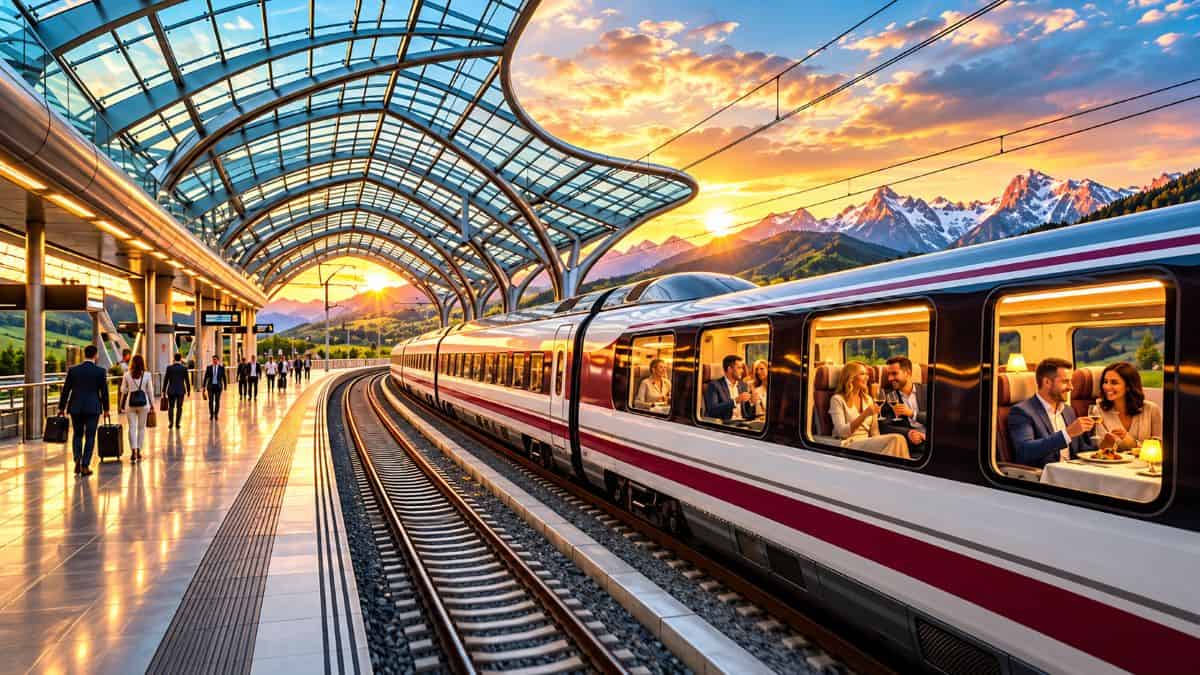
Image generated with Ai
Spain has formally coordinated alongside France and neighbouring continental transport networks to inaugurate integrated international railway itineraries across Europe. This wide-reaching consolidation establishes direct, high-speed rail connections designed to eliminate traditional transfer bottlenecks at national boundaries. Modern travellers moving between the Iberian Peninsula and central European capitals will now experience synchronised timetables, unified ticketing arrangements, and vastly reduced transit durations. As global tourism pivots increasingly toward low-carbon options, this strategic trans-European agreement provides international visitors with an efficient overland alternative to regional short-haul aviation. Transport authorities from all participating nations emphasise that passenger convenience remains the central focus, ensuring long-distance routes operate with enhanced punctuality, contemporary passenger lounges, and unified luggage carriage policies.
The collective initiative represents a decisive turning point for global tourists navigating European territories by passenger rail. Industry analysts and transport ministers highlight that the framework not only bridges historical technical divergences between different national track gauges, but also modernises customer booking interfaces. Holidaymakers seeking cultural exploration can now transition effortlessly from the historic boulevards of Madrid and Barcelona through southern French heritage centres directly into northern European hubs. By combining municipal resources, sharing real-time tracking data, and establishing interconnected station management protocols, this international network delivers a sophisticated, stress-free route map that meets rigorous ecological standards without compromising comfort, speed, or overall passenger reliability.
Expanding Continental Connectivity Across Western Europe
Cross-border mobility across Western Europe historically presented noticeable logistical friction for independent voyagers. Diverse operational regulations, disparate signalling architectures, and uncoordinated carrier schedules frequently mandated lengthy interchanges at border outposts such as Portbou and Hendaye. The recently agreed multilateral rail partnership directly resolves these issues through technological synchronisation and joint carrier operations. Modern high-speed trainsets equipped with multi-system electrical capabilities and interoperable automated safety signalling can now traverse international jurisdictions without locomotive replacements or extensive mid-journey safety pauses.
The strategic vision extends beyond capital connections to encompass regional tourism epicentres. Secondary cultural cities often bypassed by long-haul air itineraries are now directly linked along primary trunk lines. Travellers can effortlessly construct multi-destination holiday plans that incorporate provincial gastronomy, architectural landmarks, and regional heritage sites. Furthermore, ground-level transit through picturesque landscapes delivers an authentic sense of geographical progression that conventional air travel invariably strips away, restoring an enriching dimension to modern recreational journeys.
Advertisement
Advertisement
Comprehensive Corridor Overview And Route Comparison
| Route Corridor | Connecting Countries | Average Journey Time | Service Frequency | Primary Travel Benefit |
| Madrid to Paris Express | Spain, France | 9 hours 45 minutes | 3 daily direct services | Zero intermediate luggage re-checks |
| Barcelona to Lyon Intercity | Spain, France | 5 hours | 4 daily direct services | Direct city-centre station arrival |
| Mediterranean Coastline Link | Spain, France, Italy | 11 hours 15 minutes | 2 daily direct services | Panoramic scenic coastal transit |
| Iberian Atlantic Connector | Spain, France, Belgium | 13 hours 30 minutes | Daily overnight service | Optimised overnight sleeper berths |
| Central European Hub Line | Spain, France, Germany | 14 hours 20 minutes | 2 daily services | Integrated single-ticket verification |
Environmental Advantages And Sustainable Holiday Planning
Environmental sustainability forms the philosophical cornerstone of this collaborative cross-border rail expansion. Modern electrified railway corridors generate a negligible fraction of the carbon emissions produced by comparative passenger air routes or private vehicular journeys. European environmental bodies confirm that switching from short-haul regional flights to electrified high-speed rail reduces individual passenger carbon footprints by up to eighty-five percent along equivalent transit distances.
Conscious globetrotters actively seeking to reduce their environmental impact can now traverse the continent responsibly without sacrificing speed or travel efficacy. The deployment of energy-efficient rolling stock equipped with regenerative braking mechanisms ensures that overall energy consumption per passenger kilometre remains remarkably low. Moreover, railway terminals are situated within urban cores rather than peripheral suburban locales, eliminating the additional transit emissions and financial costs typically incurred when journeying between remote international airports and metropolitan downtown districts.
Advertisement
Advertisement
Operational Standards Station Services And Passenger Comfort
The consolidated operational framework introduces elevated guest service benchmarks across every participating transit provider. Modern high-speed train interiors feature ergonomic seating configurations, capacious dedicated storage areas for oversized luggage, robust continuous high-speed digital network access, and dedicated quiet zones tailored for uninterrupted relaxation. Dining compartments on international runs have been upgraded to highlight regional culinary specialities, offering passengers fresh local produce paired with regional beverages sourced from the territories traversed.
Station environments have similarly undergone comprehensive infrastructural modernisations to facilitate intuitive transit movements. Major termini have integrated multilingual navigational signage, universal step-free access for mobility-impaired passengers, and unified security clearance protocols that eliminate repetitive baggage examinations during international transfers. Dedicated customer service desks staffed by polyglot personnel ensure international tourists receive immediate itinerary guidance, local connections intelligence, and regional transit information upon arrival.
Economic Vitality And Regional Hospitality Development
The proliferation of streamlined railway links directly stimulates provincial economies situated beyond conventional commercial tourism corridors. Intermediate stops along high-speed routes frequently experience measurable upticks in independent traveller spending, boosting boutique accommodation providers, municipal heritage foundations, and regional gastronomy enterprises. By facilitating accessible point-to-point journeys, the railway network decentralises tourist concentration away from congested capital cities into culturally vibrant provincial communities.
Local commercial authorities throughout southern France and northern Spain report increased engagement with multi-day regional travel passes that interface cleanly with the expanded cross-border network. This commercial synergy encourages visitors to prolong their regional excursions, patronise family-owned hospitality businesses, and engage deeply with traditional craftsmanship. The resulting economic distribution provides dependable financial support for the preservation of regional historical monuments, natural park systems, and indigenous community customs.
Streamlined Ticketing And Unified Booking Protocols
A major breakthrough accompanying the international transport accord is the launch of fully unified booking interfaces. Historically, international voyagers were forced to consult multiple national rail websites, master disjointed currency conversions, and untangle contradictory ticketing conditions to assemble an international route. The new multilateral digital standard allows passengers to reserve multi-country rail segments across an intuitive, single-transaction portal.
This unified digital platform processes itinerary modifications, seat selections, and optional sleeper upgrades within a consolidated transaction. In the event of unforeseen weather disruptions or technical scheduling alterations, reciprocal passenger protection agreements guarantee automatic rebooking on subsequent international services at no additional cost. This operational cohesion builds deep consumer trust among global visitors unfamiliar with individual European corporate operators.
Advertisement
Advertisement
Frequently Asked Questions
Which European destinations are primarily included in the expanded cross-border rail initiative?
The initial rollout prominently links Spain and France, with scheduled interconnecting services extending across Germany, Italy, and Belgium.
How does international high-speed rail reduce the overall environmental footprint of European holidays?
Electrified rail transit produces up to eighty-five percent fewer greenhouse gas emissions per passenger kilometre compared to equivalent short-haul commercial flights.
Can passengers purchase single tickets for journeys spanning multiple countries?
Unified digital booking channels allow passengers to acquire one comprehensive itinerary ticket covering multiple national operators and transfers.
Advertisement
Advertisement
What passenger amenities are available aboard long-distance cross-border trains?
Services provide high-speed internet connectivity, ergonomic reclining seats, generous luggage racks, dining cars serving regional produce, and quiet working compartments.
Are railway terminals situated closer to city centres than commercial airports?
Major continental train stations are situated directly in downtown metropolitan districts, reducing transit times, taxi expenses, and airport shuttle requirements.
How do operators manage passenger rights and cancellations across different countries?
Reciprocal passenger protection agreements guarantee automatic rebooking on subsequent partner services without financial penalties if operational disruptions occur.
Advertisement
Advertisement
Is passport control necessary when travelling on cross-border European trains?
Travel within the Schengen Zone proceeds without standard border checkpoints, though passengers must carry valid international identification or travel visas for random verifications.
Are there special luggage restrictions similar to commercial airline allowances?
High-speed rail allows passengers to transport substantial luggage items without excess weight fees, provided items fit safely within designated luggage storage areas.
Do international services cater to passengers with restricted mobility?
All newly deployed rolling stock and renovated transit terminals feature step-free boarding access, dedicated wheelchair locations, and specialised passenger assistance services.
Advertisement
Advertisement
Are dining options available during extended journeys across borders?
Full-service buffet carriages and mobile refreshment trolleys offer hot meals, snacks, and regional beverages tailored to the countries along the route.
Advertisement
