
Singapore, Japan And More Countries Lead Asia’s Digital Border Revolution with Biometric E-Gates and Cyber Resilience

Published
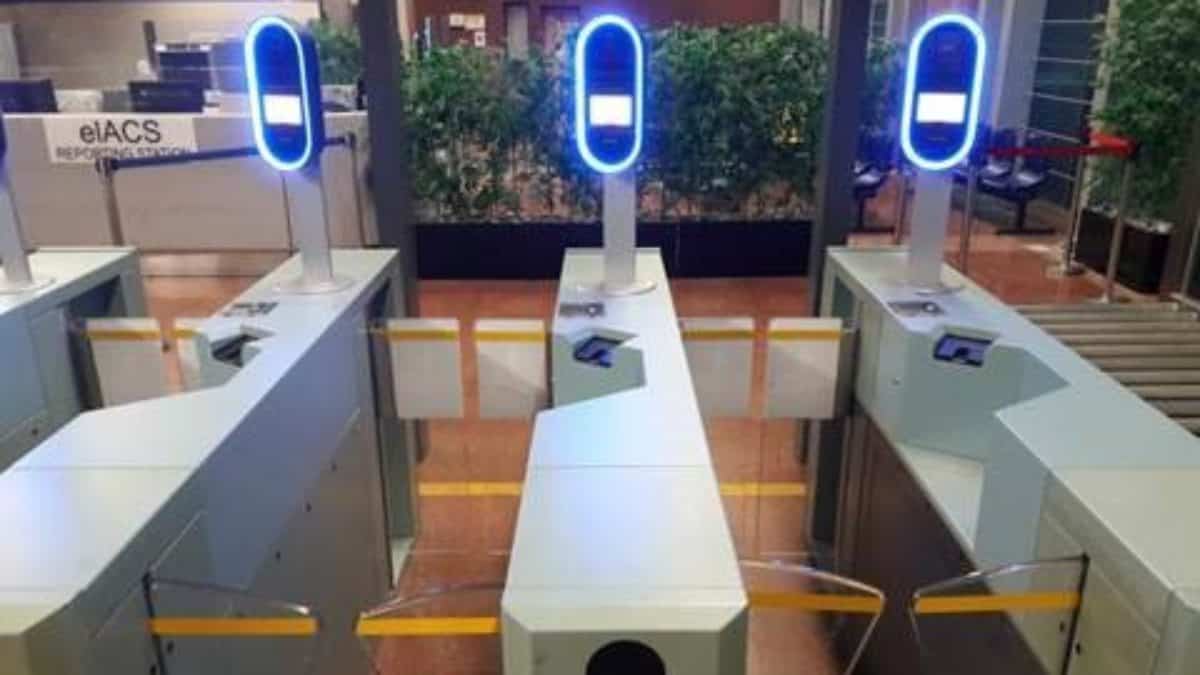
There has been an enormous change in the way security is handled with the increasing digitization of border controls in the Asia Pacific. With countries replacing the passport with biometric algorithms, international passenger manifests are being digitized. The reliance on the digital immigration stack creates huge problems from the geo-political perspective and the technical one. Cyber enemies launch attacks on centralized personal information databases, and the malfunction of the software causes immediate shutdown of airport gates. When there is a malfunction with the digital visa systems, budget airlines have to cancel flights and prevent people from entering the aircrafts.
The Geopolitical Re-Engineering of Sovereign Borders in the Asia-Pacific
Border security across the Asia-Pacific region has undergone a fundamental architectural transformation, shifting from physical checkpoint inspection to distributed, algorithmic pre-clearance. Sovereign nations are systematically replacing traditional passport control desks with complex digital processing pipelines designed to authenticate identity tokens, validate visa credentials, and interrogate international security watchlists in sub-second intervals. This transition represents far more than a standard operational modernization to handle expanding post-pandemic passenger volumes; it constitutes a profound geopolitical realignment where sovereign state authority is increasingly defined by cloud infrastructure, cryptographic key management, and data residency laws.
Historically, sovereign borders functioned under physical verification protocols established by the International Civil Aviation Organization (ICAO) Document 9303, which standardized optical machine-readable zones (MRZ) and cryptographic contactless chips embedded within physical passport booklets. Over the past three years, the deployment of interactive Advance Passenger Processing (APP), advance passenger information (API) feeds, and pre-arrival Electronic Travel Authorisations (ETAs) has detached border clearance from geographical arrival lines. Sovereign jurisdictions now project their immigration perimeters thousands of miles outward into remote visa web portals and cloud microservices, adjudicating a traveller’s right to enter long before an aircraft departs.
While this digital transition delivers substantial improvements in passenger throughput and operational agility, it simultaneously establishes an unprecedented, highly concentrated attack surface. When sovereign immigration agencies collect and store facial biometrics, dual-iris scans, travel itineraries, national identity records, and Personally Identifiable Information (PII) within centralised and hybrid cloud repositories, civilian aviation infrastructure becomes critical digital terrain. Hostile state-sponsored Advanced Persistent Threats (APTs) and international cybercrime groups view these aggregated identity stacks as prime targets for surveillance, espionage, and operational sabotage. Furthermore, the operational dependence of civil aviation on continuous cloud availability exposes international air transport networks to crippling disruptions whenever underlying immigration APIs experience server downtime or connectivity failures.
Advertisement
Advertisement
| Country | Anchor Border Platform | Primary Biometric Modalities | Technical Architecture | Statutory Governance Framework | Key Enterprise Tech Partners |
| Singapore | Token-Less Border Clearance (ICA) | Facial Recognition, Dual-Iris Biometrics | Sovereign Hybrid Cloud / Ephemeral Tokens | Amended Immigration Act, PDPA | NEC Corporation, IDEMIA, SITA |
| Japan | Visit Japan Web & Face Express | 2D/3D Facial Feature Extraction | Centralised Government Cloud / Local-Session E-Gates | Act on the Protection of Personal Information (APPI) | NEC Corporation, Narita/Haneda Airport Authorities |
| India | DigiYatra International Pilot | Facial Biometric Vectorization | W3C Self-Sovereign Identity (SSI) / Edge-Device | Digital Personal Data Protection (DPDP) Act | Digi Yatra Foundation, Data Sovereignty Consortium |
| Thailand | Thailand ETA Gateway & Smart Borders | Automated Border Control (ABC) Facial Matching | Centralised Thai E-Visa Cloud Microservices | Personal Data Protection Act (PDPA) | Regional Security System Contractors, Airports of Thailand |
Singapore: Token-Less Border Clearance and the Sovereign Data Fortress
Singapore has established the global standard for high-throughput automated border processing through its token-less immigration clearance programme, developed under the Immigration & Checkpoints Authority (ICA) New Clearance Concept. Rolled out across all passenger terminals at Singapore Changi Airport and extended to maritime facilities such as the Marina Bay Cruise Centre, the system allows departing and arriving Singapore residents—as well as all departing foreign visitors—to pass through border control without presenting physical passports.
The underlying engineering framework relies on generating an encrypted, single-token biometric session derived directly from pre-submitted commercial flight manifests. When international carriers transmit Advance Passenger Processing (APP) data to ICA cloud gateways prior to flight departure, back-end clearance engines match passenger identity records against civil databases, immigration permissions, and national security watchlists. As an eligible traveller steps into an automated border lane at Changi Airport, multi-spectrum camera pods capture concurrent facial and dual-iris scans. These live biometrics are vectorized and verified against the pre-cleared token cluster within fractions of a second, opening the barrier gates automatically.
Advertisement
Advertisement
Official data released by the ICA confirms that token-less automated lanes have reduced individual clearance times from an average of 25 seconds down to approximately 10 seconds, achieving a processing speed improvement of 60%. Within the first 15 days of pilot deployment at Changi Terminal 3, more than 1.5 million travellers cleared immigration using biometric verification alone. Commander Alan Koo of the ICA highlighted the strategic necessity of this automated transition, stating that the token-less framework allows immigration authorities to redeploy frontline personnel toward intelligence-driven risk profiling, addressing the operational challenges of expanding passenger volumes and an aging domestic workforce.
The legal foundation governing this biometric infrastructure is codified in statutory amendments to the Singapore Immigration Act. Under these legal provisions, Changi Airport Group and participating airline operators must adhere to an audited data-sharing framework under direct sovereign supervision. To maintain strict data sovereignty, passenger biometric records and sensitive identity data are isolated within sovereign cloud environments protected by dedicated hardware security modules (HSMs) and advanced cryptographic standards. Commercial cloud vendors and foreign contractors are legally prohibited from extracting, caching, or unencrypting raw passenger biometric templates, establishing a robust model of digital perimeter defence.
Advertisement
Advertisement
| Operational Stage | Input Trigger | Technical Verification Mechanism | Resulting State |
| Pre-Flight Manifest Submission | Commercial airline check-in close | Advance Passenger Processing (APP) manifest transmitted to ICA cloud | Pre-cleared encrypted biometric session token generated |
| Perimeter Approach | Passenger approaches automated lane | Optical infrared sensors detect passenger presence and alignment | Multi-spectrum camera array activates for iris and facial capture |
| Biometric Interrogation | Live facial and iris scan captured | Vector template matched against active flight session token in sovereign HSM | Identity authenticated; local gate barrier unlocks in 10 seconds |
| Post-Clearance Purge | Physical passage detected by gate sensors | Local gate cache registers completed transit event | Session biometric token purged from active memory; event logged to audit registry |
Japan: Visit Japan Web and Ephemeral Biometrics Under the APPI
Japan’s strategy for processing heavy international arrival volumes links pre-arrival web declarations through the Visit Japan Web service with automated airport walkthroughs enabled by NEC’s Face Express biometric architecture. Deployed across major international transit hubs including Tokyo Haneda, Tokyo Narita, and Kansai International Airport, this hybrid deployment unifies customs clearance, immigration pre-processing, and health credential validation into integrated two-dimensional QR codes and facial biometric tokens.
Under this framework, international travellers register their passport machine-readable zone data, personal declarations, and flight details into the sovereign cloud portal operated by Japan’s Digital Agency prior to embarkation. Upon arrival or initial terminal check-in at participating departure gates, passengers scan their digital boarding passes and physical passports at an automated biometric kiosk. The system captures high-resolution facial images, calculates vector geometric measurements, and links this biometric token to the traveller’s pre-cleared flight manifest. Subsequent touchpoints—including self-service baggage drop, security checkpoint screening entrances, and boarding bridges—use walk-through facial recognition cameras to authenticate passengers without requiring physical documents.
Privacy preservation within Japan’s digital border architecture is strictly regulated by the Act on the Protection of Personal Information (APPI). Under binding regulatory guidance issued by the Personal Information Protection Commission (PPC), biometric templates captured for airport walkthroughs are classified as ephemeral, session-based tokens. Unlike architectures that retain persistent facial profiles in central repositories, Japan’s airport e-gates store biometric templates strictly within local volatile memory caches.
As soon as an international flight departs or a passenger completes terminal exit, the underlying Face Express session data is automatically purged, preventing the permanent archiving of foreign biometric records. At the same time, back-end API integrations link the sovereign border gateway directly to internal National Police Agency and Interpol databases, conducting automated interdiction screening without exporting citizen or foreign traveller data outside sovereign Japanese cloud borders.
Advertisement
Advertisement
| System Component | Functional Role | Data Retention Policy | Statutory Basis |
| Visit Japan Web Portal | Pre-arrival digital intake of customs and immigration declarations | Stored securely in Digital Agency cloud until entry completion | Act on the Protection of Personal Information (APPI) |
| Face Express Kiosk | Physical passport capture and facial geometry extraction | Ephemeral registration token generated for terminal transit | APPI Enforcement Rules & Ministry of Justice Ordinances |
| Walkthrough E-Gates | Contactless passenger verification at security and boarding | Biometric vector discarded immediately following flight departure | PPC Data Minimisation Directives |
| Internal Watchlist API | Interdiction screening against Interpol and national police registers | Query transactions logged; raw biometrics not retained by external databases | National Police Agency Border Security Protocols |
India: DigiYatra’s Decentralised Identity and Cross-Border Interoperability
India has pioneered a fundamentally different architecture for digital passenger handling through its DigiYatra ecosystem, developed by the Ministry of Civil Aviation in coordination with the non-profit Digi Yatra Foundation. Having successfully processed more than 45 million passenger journeys across 24 domestic airports and registered over 11 million users, DigiYatra is expanding into outbound international flight operations from primary international gateways, including Delhi’s Indira Gandhi International (T3), Mumbai’s Chhatrapati Shivaji Maharaj International (T2), Bengaluru, and Hyderabad.
Architecturally, DigiYatra rejects the centralised database model utilized by traditional immigration systems, adopting instead a Self-Sovereign Identity (SSI) framework based on World Wide Web Consortium (W3C) standards for Verifiable Credentials (VCs) and Decentralised Identifiers (DIDs). During mobile onboarding, an Indian passenger verifies their legal identity using Aadhaar credentials pulled via the secure DigiLocker platform and captures a live facial image to validate biometric liveness. The resulting credential is mathematically signed and stored entirely within the secure enclave of the user’s personal smartphone.

When travelling, the passenger transmits an encrypted travel credential package containing their boarding pass and facial vector directly to the departure airport operator. Automated facial recognition pods installed at terminal entry gates, security check lanes, and boarding gates match the traveller’s live face against this temporary credential. Governed by statutory requirements enforced under India’s Digital Personal Data Protection (DPDP) Act, airport terminal servers are legally mandated to purge all passenger biometric tokens within 24 hours of flight clearance.
Suresh Khadakbhavi, Chief Executive Officer of the Digi Yatra Foundation, has emphasized the privacy advantages of this architecture, noting that the platform operates on absolute decentralisation: “We do not know you; we do not store your personal data centrally”. Addressing international expansion at civil aviation conferences, Khadakbhavi confirmed ongoing technical roadmaps to integrate DigiYatra with the International Air Transport Association (IATA) One ID framework and the ICAO Digital Travel Credential (DTC) Type 1 specifications. This expansion enables seamless cross-border biometric corridors between India and partner nations without granting foreign authorities direct access to India’s Aadhaar civil databases, safeguarding national data sovereignty while eliminating traditional terminal choke points.
| Processing Phase | Architectural Layer | Operational Mechanism | Cryptographic / Privacy Safeguard |
| Credential Creation | Passenger Mobile Device | Aadhaar verification via DigiLocker paired with facial liveness scan | W3C Verifiable Credential stored in device secure enclave |
| Flight Token Sharing | Ephemeral Peer-to-Peer Transit | Encrypted travel package pushed directly from phone to departure airport | Session-specific Decentralised Identifier (DID); no central cloud storage |
| Airport E-Gate Passage | Terminal Edge Pod | High-speed facial recognition matches live traveller to local flight token | Sub-second edge verification; checkpoint duration cut from 4 minutes to 45 seconds |
| Post-Flight Cleansing | Local Airport Server | Automated system routine purges passenger templates | Mandatory data deletion within 24 hours under DPDP Act compliance |
Thailand: The ETA Gateway and Sovereign Infrastructure Modernisation
Thailand has accelerated the modernisation of its national border architecture through the deployment of the Thailand Electronic Travel Authorization (ETA) platform and the nationwide installation of automated border control (ABC) biometric gates. Administered by the Ministry of Foreign Affairs (MFA) in coordination with the Immigration Bureau, the ETA mandate requires foreign nationals entering Thailand under visa exemption agreements to register pre-arrival authorisation via the official Thai E-Visa portal.
The integration of Thailand’s ETA system with automated biometric gates spans the country’s most heavily congested international aviation hubs:
Advertisement
Advertisement
- Bangkok Suvarnabhumi Airport (BKK)
- Bangkok Don Mueang International Airport (DMK)
- Phuket International Airport (HKT)
- Chiang Mai International Airport (CNX)
Historically, processing millions of visa-exempt leisure travellers across Thai airports required large contingents of immigration officers, leading to severe passenger congestion during seasonal arrival peaks. Under the modernized digital architecture, the ETA system cross-references applicant data against immigration overstay records, visa blacklists, and transnational law enforcement databases managed by the Royal Thai Police prior to passenger departure. When pre-authorised visitors arrive at Thai international airports, automated biometric gates verify their live facial features against the biometric profile captured during their digital ETA application, significantly accelerating arrival processing.
To address escalating risks surrounding the foreign hosting of passenger PII and national border records, the Thai government enforces strict data residency requirements within its technology procurement frameworks. Private systems integrators, software contractors, and cloud vendors are bound by Thailand’s Personal Data Protection Act (PDPA) to maintain all primary immigration databases within physical data centres located within the Kingdom. Any external API interactions with international watchlists are conducted via isolated, zero-trust security proxies that prevent foreign servers from caching or archiving traveller records.
| Implementation Parameter | Operational Requirement | Technical Standard | Administrative Authority |
| Pre-Travel Authorization | Mandatory digital clearance for visa-exempt foreign visitors | Web-based digital intake via Thai E-Visa portal | Ministry of Foreign Affairs (MFA) |
| Biometric Gate Verification | Automated Border Control (ABC) walk-through facial match | Automated facial feature matching against ETA registration | Immigration Bureau & Airports of Thailand (AOT) |
| Data Residency Compliance | All passenger PII and biometrics stored domestically | Sovereign in-country cloud hosting, encrypted at rest | Thailand Personal Data Protection Committee (PDPC) |
| Inter-Agency Vetting | Background screening against criminal watchlists | Real-time automated cross-referencing via secure APIs | Royal Thai Police & International Security Partners |
Cybersecurity Vulnerabilities in the Cloud-Based Immigration Stack
The migration of sovereign borders to software-defined architectures has introduced complex cybersecurity vulnerabilities that threaten national perimeters and aviation stability. Foreign intelligence agencies and sophisticated cyber syndicates have moved beyond basic distributed denial-of-service (DDoS) disruptions, engineering targeted exploits designed to defeat biometric authentication algorithms and penetrate sovereign database cores.
A major operational threat involves generative artificial intelligence and synthetic media spoofing. Attackers use generative adversarial networks (GANs) and advanced diffusion models to generate hyper-realistic facial deepfakes, digital injection video feeds, and high-precision 3D silicone masks designed to mimic legitimate travellers. When deployed against automated immigration kiosks or remote e-Visa application portals, these presentation attacks attempt to fool computer vision models into issuing unauthorized clearances or matching an imposter against a valid passport token.
To counter this threat landscape, sovereign border agencies mandate that all biometric capture hardware comply with international Presentation Attack Detection (PAD) standards, specifically the ISO/IEC 30107 framework. Modern border e-gates incorporate multi-spectrum imaging sensors—spanning visible RGB, near-infrared (NIR), and thermal infrared bands—to perform passive liveness detection.
These edge sensors examine sub-surface skin light scattering, micro-movement variances in facial tissue, and pulse-induced vascular fluctuations detected via remote photoplethysmography (rPPG). Deployments certified under iBeta Level 1 and Level 2 testing ensure that presentation attacks are detected and blocked at the physical gate sensor before raw image data is transmitted to the back-end immigration stack.
Advertisement
Advertisement
Simultaneously, the extensive web of application programming interfaces (APIs) connecting commercial airlines, airport concessionaires, global distribution systems, and national immigration databases creates significant architectural exposure. Broken object-level authorization, unpatched middleware, and insecure third-party software wrappers create pathways for malicious actors to intercept passenger manifests or launch credential stuffing attacks.
In response, sovereign aviation authorities are deploying Zero Trust Architecture (ZTA) standards aligned with NIST SP 800-207 guidelines. Within a zero-trust border stack, every system component—including airline check-in desks, automated baggage drop pods, and biometric boarding lanes—must authenticate dynamically via mutual Transport Layer Security (mTLS), strict micro-segmentation, and cryptographically signed session tokens. This design ensures that a breach within an airport contractor’s commercial network cannot compromise sovereign immigration databases.
| Threat Vector | Underlying Attack Mechanism | Primary Target Infrastructure | Operational Impact | Technical Defense Standard |
| Generative Deepfakes | Synthetic facial rendering and digital video stream injection | Remote digital visa portals and self-service kiosks | Identity theft, fraudulent travel authorization | ISO/IEC 30107-3 Level 2 PAD, passive liveness detection |
| Physical Facial Spoofs | High-definition 3D silicone masks and printed contact lenses | Automated border e-gates and walkthrough pods | Evading national criminal watchlists | Multi-spectrum NIR optics, skin light diffusion analysis |
| API Endpoint Exploits | Broken object authorization, JSON token manipulation | Airline Advance Passenger Processing (APP) gateways | Exfiltration of passenger travel manifests (PII) | Zero Trust Architecture (NIST SP 800-207), mTLS, dynamic JWTs |
| Cloud-Targeted DDoS | Volumetric traffic saturation via distributed botnets | Sovereign digital visa portals and verification APIs | Check-in system outages, terminal departure gridlock | Anycast DNS routing, automated edge rate-limiting |
| Hardware Supply Compromise | Malicious firmware implants in edge scanning devices | Physical biometric gate cameras and passport readers | Extraction of unencrypted biometric vectors | Secure cryptographic boot, signed vendor firmware, HSMs |
The Economic Fallout of Digital Border Outages on High-Volume Asian Low-Cost Carrier Routes
The total reliance of sovereign borders on cloud architectures has created an acute systemic risk: the absolute operational dependence of commercial aviation on continuous cloud availability. While digital travel authorizations and automated biometric gates improve terminal throughput during steady-state operations, they introduce single points of failure across regional transit routes. If an immigration cloud database, an API gateway, or a central identity registry suffers unexpected downtime, the disruption ripples immediately through airports, airlines, and logistics networks.
This operational fragility is especially severe for Asian low-cost carriers (LCCs). Airlines such as AirAsia, Cebu Pacific, Scoot, and IndiGo operate point-to-point business models characterized by low profit margins, intensive aircraft utilization, and tight turnaround windows restricted to 25 to 35 minutes. In a traditional analogue environment, a border processing delay at an arrival destination does not halt outbound flights at departure airports. Under interactive Advance Passenger Processing (APP) frameworks, however, commercial airlines are legally prohibited from issuing boarding passes or allowing passengers to board without an automated “OK-to-Board” confirmation from the destination country’s cloud immigration portal.
When an ETA database or central immigration API experiences downtime, passenger check-in desks and automated bag-drop belts freeze instantly. Aircraft remain stuck at departure gates, rapidly exceeding their scheduled gate occupancy windows and triggering escalating airport penalty charges. Because budget airlines route single aircraft across four to six flight sectors daily, a two-hour system outage at a regional hub causes cascading cancellations across the carrier’s broader flight network. Operating flight crews exceed strict regulatory flight duty period (FDP) limits, stranding aircraft and crews at outstations even after immigration cloud networks are restored.
The economic damage resulting from digital border failures places extreme financial strain on airline balance sheets. Under passenger rights regulations enforced across Southeast Asia and East Asia, airlines carry strict legal obligations to provide meals, ground transfers, and hotel accommodation to passengers affected by extended delays. Travel insurance underwriters face sudden surges in claims for missed flight connections and cancelled itineraries.
Advertisement
Advertisement
Furthermore, corporate risk adjusters point to growing disputes between insurers and airlines: standard travel insurance policies frequently contain exclusion clauses covering administrative border closures or sovereign IT disruptions, leaving carriers and passengers to shoulder millions of dollars in unrecoverable losses.
| Outage Phase | Immediate Operational Disruption | Secondary Network Repercussions | Direct Financial & Balance Sheet Impact |
| 0 to 30 Minutes | APP gateway freezes; automated check-in kiosks and web check-in halt | Turnaround schedules fail; aircraft remain held at terminal aerobridges | Airport gate overtime penalty fees begin accumulating |
| 30 to 90 Minutes | Check-in halls reach capacity; passenger congestion spills into public areas | Downstream rotation delays hit subsequent domestic and regional sectors | Ground handling overtime costs and gate change charges incurred |
| 90 to 180 Minutes | Flight crews exceed mandatory flight duty period (FDP) limits | Outstation airframes grounded; unscheduled aircraft repositions required | Mandatory passenger care liabilities: hotel rooms, meals, ground transit |
| Over 180 Minutes | Sovereign civil aviation authorities order regional ground-stops | Full multi-day fleet disruption; airline recovery takes up to 48 hours | Customer rebooking refunds, regulatory fines, surge in travel insurance claims |
Airport Contingency Frameworks: Offline Verification and Passenger Continuity Protocols
Repeated digital border disruptions have revealed critical vulnerabilities in airport operational resilience, prompting civil aviation regulators, airport authorities, and Destination Management Organisations (DMOs) to overhaul emergency contingency protocols. When cloud architectures fail, modern terminals face immediate safety hazards as passenger concourses quickly exceed designed crowd density limits.
A major structural challenge is the frequent absence of practical offline verification systems. When automated biometric walkthrough lanes and e-gates lose real-time connectivity to sovereign cloud endpoints, fail-safe security logic commands the gate barriers to lock shut, preventing potential watchlist evaders from entering sovereign territory. Airport security staff must then divert passengers to manual border desks.
However, because many modernized airports have demolished up to half of their physical immigration desks to install lucrative retail, duty-free, and dining venues, terminal operators lack the physical counters required to manually process diverted passenger flows.
To prevent dangerous terminal overcrowding and severe operational collapse during cloud outages, leading aviation hubs are implementing structured, three-tier contingency architectures. These frameworks enable airports to maintain acceptable security standards while sustaining passenger throughput during system disruptions:
Tier 1: Active Sovereign Connectivity
- Real-time cloud API transactions with national databases
- Sub-second biometric verification at automated e-gates
Tier 2: Degraded Cryptographic Edge Verification
- Secure gate pods with locally pre-cached passenger manifests
- Public-key authentication using ICAO Digital Travel Credentials (DTC)
- Offline edge matching without reliance on remote cloud systems
Tier 3: Emergency Manual Verification
- Mobile inspection stations and optical readers
- Physical passport verification and visual credential checks
- Deployment of additional border security personnel during surges
Under the Tier 2 degraded operational mode, airport edge servers automatically download cryptographically signed flight manifests before boarding procedures open. If wide-area cloud connections fail, local gate pods verify travellers by matching live facial biometrics against the local cryptographic cache using pre-stored public keys, completely eliminating real-time reliance on remote databases.
Advertisement
Advertisement
To support these fallback mechanisms, airport operators, national civil aviation departments, and regional airlines conduct regular failover drills. These protocols establish clear criteria for declaring digital service failures, triggering automatic queue re-routing, setting up mobile crowd-control barriers, and staffing manual inspection desks within 15 minutes of network degradation.
Sovereign Tech Alliances and Statutory Data Residency Mandates Across Asian Hubs
The procurement, deployment, and servicing of digital immigration infrastructure has generated a complex network of public-private alliances between Asian governments and multinational security-technology conglomerates. The global automated border control market—valued at $2.74 billion in 2026 and projected to expand to $5.76 billion by 2031—is dominated by enterprise providers including SITA, Thales Group, IDEMIA, and NEC Corporation. These technology partners develop the specialized computer vision algorithms, optical sensor hardware, passport readers, and sovereign cloud platforms required to screen millions of travellers.
However, the travel sector’s reliance on global technology supply chains creates an ongoing conflict with national data sovereignty. Governments must balance the benefits of cutting-edge foreign biometric solutions against the risk of technological dependency and extraterritorial data access. If an immigration platform uses proprietary cloud modules hosted on infrastructure subject to foreign legal jurisdictions, sovereign passenger records could theoretically be exposed to foreign subpoenas or intelligence mandates.
To prevent foreign data exposure, Asian governments require technology vendors to build air-gapped sovereign cloud systems. Under these agreements, international vendors install their biometric matching suites within dedicated, state-owned data centres or isolated cloud instances that operate behind national firewalls. Cryptographic keys and decryption privileges remain under the sole control of sovereign immigration and intelligence authorities; software vendors are denied administrative access to decrypted passenger manifests and active biometric registries.
| Sovereign Jurisdiction | Privacy & Residency Statute | Regulatory Enforcement Body | Statutory Cross-Border Data Restrictions | Ephemeral Biometric Storage Mandate |
| Singapore | Personal Data Protection Act (PDPA) & Immigration Act | Personal Data Protection Commission (PDPC) & ICA | Unencrypted export of border manifests and PII strictly prohibited | Single-token ephemeral sessions derived from APP manifests |
| Japan | Act on the Protection of Personal Information (APPI) | Personal Information Protection Commission (PPC) | Cross-border transfer prohibited without statutory adequacy or consent | Mandatory session memory purging upon flight departure |
| India | Digital Personal Data Protection (DPDP) Act | Data Protection Board of India | Critical personal data restricted to domestic sovereign infrastructure | Mandatory server deletion within 24 hours of flight clearance |
| Thailand | Personal Data Protection Act (PDPA) | Personal Data Protection Committee (PDPC) | Off-shoring of visa files and security databases prohibited | Session-based clearance at Automated Border Control gates |
These statutory restrictions directly influence regional intelligence sharing. Within the Association of Southeast Asian Nations (ASEAN), member states cooperate through multilateral security platforms such as ASEANAPOL, exchanging targeted counter-terrorism watchlists and criminal notices.
Because regional data protection statutes strictly forbid the open sharing of citizen travel histories, cross-border intelligence cooperation cannot rely on linked databases. Instead, regional security agencies use federated cryptographic queries and zero-knowledge data sharing. These protocols match one-way cryptographic hashes of suspect identities across borders without revealing the private travel records or biometric templates of other passengers.
Advertisement
Advertisement
Future Horizon: Cross-Border Biometric Corridors and Multilateral Travel Standards
The future of international passenger transit lies in establishing secure cross-border biometric corridors. Under these bilateral and multilateral frameworks, a digital identity token verified at a departure terminal is recognized by automated border control systems at the arrival destination, eliminating repetitive document checks throughout an international journey.
The technical foundation for this global interoperability is developing through the alignment of ICAO Digital Travel Credential (DTC) standards with the IATA One ID initiative. By converting physical passport booklets into tamper-proof cryptographic representations stored in mobile device secure enclaves, DTC frameworks permit travellers to share their credentials with destination immigration departments before departure. Pilot deployments connecting Asian hubs with European and Middle Eastern gateways demonstrate that decentralized models reduce terminal wait times while removing the need for destination nations to maintain permanent biometric databases of foreign visitors.
Nevertheless, expanding cross-border biometric corridors across the broader Asia-Pacific region will require resolving fundamental geopolitical and technological issues. Sovereign nations must establish mutual trust across disparate cryptographic public key infrastructures (PKIs), harmonize differing statutory privacy standards, and build resilient offline edge architectures capable of sustaining airport operations during international network disruptions. The success of future digital borders will not be defined solely by the speed of automated facial recognition lanes, but by their resilience against cyber warfare, their legal safeguards for personal data privacy, and their ability to protect sovereign territory in an increasingly volatile digital landscape.
Migration to digital borders in Asia is an inevitable technological revolution, but many vulnerabilities still need to be addressed. The experience of regional aviation routes shows that the use of an immigration stack in the cloud entails very serious national security and functional vulnerabilities. Although biometric automated gates expedite passenger flow at the peak performance, any failure of the cloud service causes grounding of commercial flights and leaves passengers waiting. In the future, it is necessary for civil aviation organizations and immigration departments to focus on air-gapped sovereign systems, zero trust verification, and secure offline mechanisms.
Advertisement
