
Asian Countries Unite at Vietnam’s Biggest International Travel Expo ITE HCMC 2026

Published
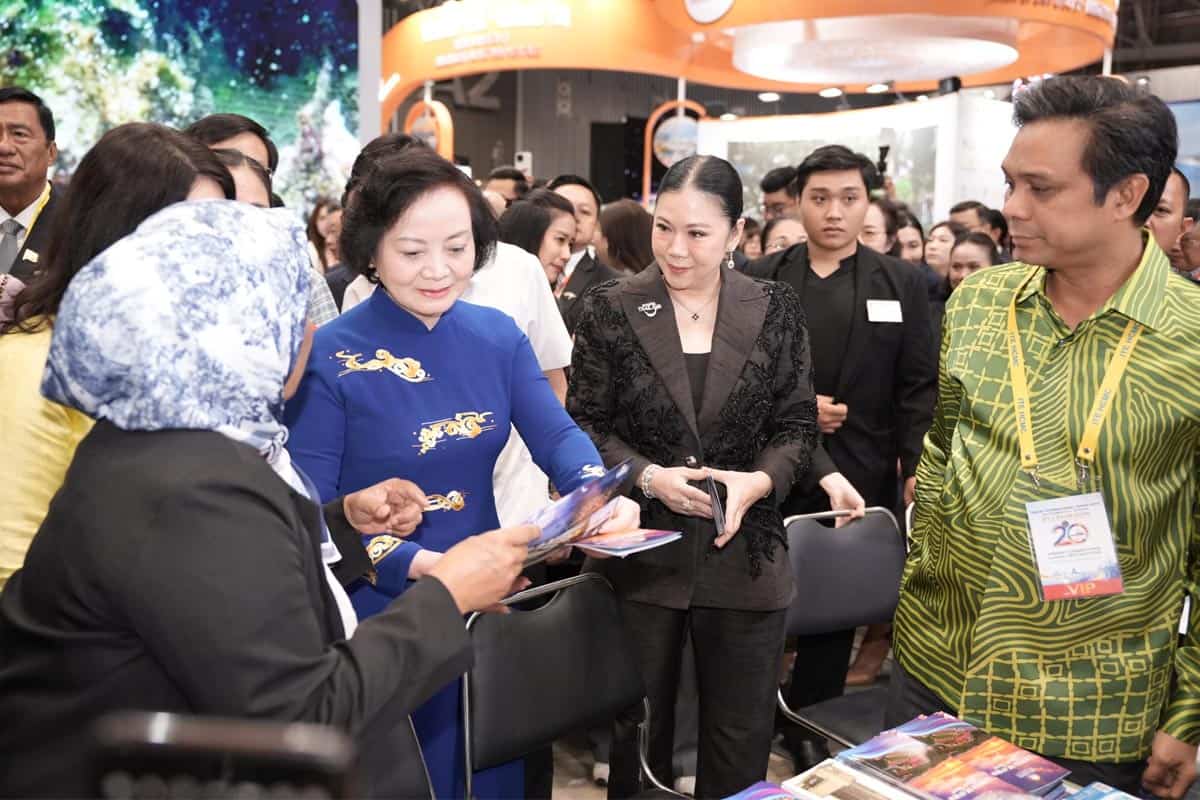
Asian countries are uniting at Vietnam’s biggest international travel expo, ITE HCMC 2026, as global tourism leaders, destinations and travel brands gather to unlock new opportunities across Asia.
Asian countries are coming together at Vietnam’s biggest international travel expo, ITE HCMC 2026, creating a powerful new meeting point for the region’s travel industry. The event brings destinations, tourism authorities, airlines, hotels, tour operators and international buyers under one roof. Meanwhile, Vietnam is using the expo to strengthen its position as a major tourism gateway. Asian markets are also seeking fresh partnerships, stronger connectivity and higher-value travellers. As competition intensifies, ITE HCMC 2026 offers a timely platform for businesses to build relationships and expand their reach. Therefore, this year’s expo could reshape how Asian destinations compete, connect and grow internationally.
Which Countries Are Participating in Vietnam’s Biggest International Travel Expo?
ITE HCMC 2026 is bringing together tourism organisations, destinations, travel companies and international buyers from more than 40 countries and territories, making its 20th edition one of the most internationally connected tourism trade events in Vietnam.
The 20th International Travel Expo Ho Chi Minh City (ITE HCMC 2026) is taking place from 27–29 August 2026 at the Saigon Exhibition and Convention Center (SECC), with the event operating under the theme “Vibrant Connections – Global Destinations”. The official organisers say the expo has attracted more than 520 exhibitors and brands, 260 international buyers and participation spanning more than 40 countries and territories, alongside 34 Vietnamese provinces and cities.
Advertisement
Advertisement
The international participation is particularly significant because ITE HCMC is increasingly positioned as a business platform linking Vietnam and the wider Mekong region with major tourism source markets, destination organisations and travel companies around the world. Among the markets and destinations publicly identified by the organisers are Cambodia, Germany, India, Indonesia, Japan, South Korea, Laos, Malaysia, Myanmar, the Netherlands, the Philippines, Russia, Singapore, Taiwan, Thailand, Türkiye and the United Arab Emirates, with additional markets included within the wider 40-plus-country participation figure.
ITE HCMC 2026 expands its international reach
The international scale of ITE HCMC 2026 reflects how Vietnam is using tourism trade events not simply to promote individual destinations, but to strengthen commercial relationships across the global travel industry. The organisers describe the 2026 edition as the largest in the expo’s history, with more than 520 exhibitors and brands, 260 international buyers from over 40 countries and territories, around 600 international delegates, 50 high-level delegations and more than 21,000 pre-scheduled B2B appointments.
Advertisement
Advertisement
The event is therefore much more than a conventional consumer travel exhibition, because its core purpose is to create direct business connections between tourism suppliers, destination authorities, airlines, hotels, travel agencies, tour operators, technology companies, MICE specialists and international buyers. That structure gives participating destinations an opportunity to develop partnerships, increase distribution, identify new source markets and respond to changing traveller demand across Asia and beyond.
Thailand, Japan and South Korea among prominent participants
Several major Asian tourism markets have a particularly visible presence at ITE HCMC 2026, including Thailand, Japan and South Korea, three destinations that compete strongly for regional travellers while also maintaining extensive tourism relationships with Vietnam. The expo’s official programme identifies the Korea Tourism Organization (KTO) and Japan National Tourism Organization (JNTO) among the leading National Tourism Organisations participating, while Thailand is represented by the Tourism Authority of Thailand (TAT) and related tourism businesses.
Advertisement
Advertisement
The presence of these markets demonstrates the increasingly regional nature of tourism competition in Asia, where destinations are seeking not only long-haul visitors but also short-haul, repeat and higher-value travellers. For businesses attending ITE HCMC, this creates opportunities to compare destination strategies, establish cross-border partnerships and develop packages that connect several Asian markets rather than treating each country as an isolated tourism proposition.
Southeast Asia forms the backbone of international participation
Southeast Asian destinations are among the most strategically important participants because Ho Chi Minh City functions as a major commercial and transport gateway for the region. The official ITE HCMC programme identifies tourism promotion organisations and partners from Malaysia, Thailand, Laos and Cambodia, while Indonesia, Myanmar, Singapore and the Philippines are also included among the international markets named by the organisers.
This regional concentration makes commercial sense, as ASEAN tourism markets have strong potential for short-haul travel, multi-destination holidays, business travel and MICE activity. For tourism businesses, proximity can also reduce travel friction and make it easier to develop frequent connectivity, joint promotions and itineraries that combine multiple destinations across Southeast Asia.
India is part of the growing international network
India is another important market identified in the official list of participating countries and territories at ITE HCMC 2026. India’s inclusion is notable because Indian outbound tourism has become an increasingly important source of international visitors for destinations across Southeast Asia, with demand extending beyond traditional leisure holidays into weddings, MICE, family travel, luxury tourism and longer multi-city itineraries.
Advertisement
Advertisement
For Vietnam and other participating destinations, engagement with Indian travel companies can therefore provide access to a large and increasingly diversified outbound market. The trade-focused format of ITE HCMC is particularly relevant because it allows suppliers to meet buyers and intermediaries who can convert destination interest into actual tour products, group movements and commercial bookings.
Europe and the Middle East are also represented
ITE HCMC 2026 is not limited to Asian tourism markets, with Germany, the Netherlands, Türkiye and the United Arab Emirates among the countries publicly listed by the organisers. Their participation adds a wider geographic dimension to the expo and demonstrates Vietnam’s ambition to connect its tourism industry with markets beyond its immediate neighbourhood.
European and Middle Eastern markets are strategically valuable because they can support Vietnam’s efforts to diversify visitor sources and strengthen demand across different travel seasons. For tourism businesses, international trade events such as ITE HCMC can also help develop specialist products for long-haul travellers, including luxury holidays, cultural tourism, wellness, MICE, cruises and extended Southeast Asian itineraries.
Russia, Bhutan and Nicaragua add further diversity
The 2026 edition also includes a number of less conventional tourism markets and destination representations, including Saint Petersburg in the Russian Federation, Bhutan and Nicaragua. The official ITE HCMC press release specifically identifies tourism promotion agencies from these destinations alongside organisations from Korea, Japan, Malaysia, Thailand, Laos and Cambodia.
Their participation is significant because destination diversification is becoming increasingly important for international tourism organisations, particularly as travellers seek new experiences and travel businesses look for emerging products. A trade show that brings together established tourism powerhouses and emerging destinations can create opportunities for niche partnerships, specialist itineraries and new distribution channels.
China and other international markets broaden the picture
The broader ITE HCMC ecosystem also includes international organisations and tourism businesses from markets beyond those specifically listed in the expo’s headline country examples. The organisers state that more than 500 exhibiting companies and brands are expected from 40 countries and territories, meaning the published list of named countries should not be interpreted as an exhaustive country-by-country register.
Advertisement
Advertisement
This distinction is important when reporting the event, because the official website uses wording such as “including” and “etc.” after naming selected international markets. The most accurate description is therefore that ITE HCMC 2026 has more than 40 participating countries and territories, with the organisers publicly highlighting markets such as Cambodia, Germany, India, Indonesia, Japan, South Korea, Laos, Malaysia, Myanmar, the Netherlands, the Philippines, Russia, Singapore, Taiwan, Thailand, Türkiye and the UAE.
Vietnam provides the largest domestic platform
While international participation is a major attraction, Vietnam itself remains at the centre of ITE HCMC 2026, with 34 Vietnamese provinces and cities participating. This gives international buyers a concentrated opportunity to discover destinations, hotels, attractions, transport providers and tourism products from across the country without having to conduct separate market visits.
The model also strengthens the role of Ho Chi Minh City as a gateway between international demand and Vietnam’s domestic tourism supply chain. By bringing provincial destinations together with global buyers, airlines, hotels and travel businesses, the expo can help distribute visitor flows beyond the country’s best-known destinations and encourage wider regional tourism development.
Why ITE HCMC 2026 matters to the travel industry
The scale of ITE HCMC 2026 reflects a broader shift in the international tourism industry towards business-to-business connectivity, destination diversification and higher-value travel. The organisers expect more than 21,000 pre-scheduled B2B appointments, while approximately 30,000 visitors and 60 international media outlets are expected to engage with the three-day event.
That commercial focus makes the expo relevant to airlines, hotels, destination management companies, tour operators, travel agencies, MICE organisers, technology providers and tourism authorities seeking measurable international exposure. Rather than relying solely on consumer awareness, participants can use the event to build relationships that may influence future tour programmes, flight demand, hotel distribution and destination marketing campaigns.
ITE HCMC reaches its 20th edition
The 2026 edition represents an important milestone because ITE HCMC has now reached its 20th edition, having begun in 2005. The organisers say the expo has grown from approximately 210 exhibitors and brands, 120 international buyers from 18 countries and territories, and around 3,200 B2B appointments during its initial period to more than 520 exhibitors and brands, 260 international buyers and more than 21,000 planned B2B appointments in 2026.
Advertisement
Advertisement
That growth illustrates the changing importance of Vietnam within the international tourism economy, while also showing how Ho Chi Minh City has developed its role as a meeting point for the regional travel trade. The 2026 theme, “Vibrant Connections – Global Destinations”, consequently reflects the expo’s central objective: connecting Vietnamese tourism supply with international demand through business, destination promotion and long-term industry cooperation.
Thailand Sharpens Vietnam Tourism Strategy With Young Travellers in Focus
Thailand is using ITE HCMC 2026 as a major platform to deepen its travel and tourism presence in Vietnam, with the strategy aimed at younger consumers, independent travellers and higher-value segments. The Tourism Authority of Thailand, or TAT, is combining business matching, consumer engagement, airline partnerships and destination promotion to turn strong regional interest into sustained tourism demand.
The 20th edition of the International Travel Expo Ho Chi Minh City runs from 27–29 August at the Saigon Exhibition and Convention Center, bringing together international destinations, travel businesses and buyers. Under the theme “Vibrant Connections – Global Destinations”, the event is expected to attract about 600 exhibitors and generate more than 26,000 business appointments, giving Thailand a sizeable platform for regional travel and tourism development.
TAT Brings a New Image of Thailand to Vietnam
At the centre of Thailand’s participation is a 54-square-metre Thailand Pavilion built around the concept “New Thailand: Modern Thai Market”. The design draws inspiration from Bangkok’s Song Wat neighbourhood, blending historic character with contemporary creative culture to show Vietnamese visitors that Thailand’s tourism offer extends well beyond familiar beach and city breaks.
The pavilion is designed to make travel discovery more interactive, particularly for younger visitors who increasingly respond to experiences, local culture and social content. Pop-culture keychain activities, Thai-language games, mango sticky rice and miang kham add a consumer-facing dimension, while participating tourism businesses demonstrate how travel products can be adapted to changing Vietnamese preferences.
Thai tourism businesses represented at the event include Thai Airways International, Gassan Legacy Golf Club, SAii Resort, Santiburi Koh Samui, Calypso Bangkok, Phuket Destination Co., Ltd., Mae Jo Golf Resort & Spa and Toscana Valley Country Club. Their presence gives buyers opportunities to discuss golf, luxury, leisure, hospitality, entertainment and destination experiences that can broaden the value of Vietnam–Thailand tourism flows.
Advertisement
Advertisement
Younger Vietnamese Travellers Become a Key Target
TAT Governor Thapanee Kiatphaibool said ITE HCMC provides an important opportunity to connect Thai tourism businesses directly with partners and travellers in a key short-haul market. She highlighted Vietnam’s young, experience-driven audience, geographic proximity and expanding air access as factors that could support higher-value travel to Thailand.
The strategy covers millennials, Gen Z travellers and families, while also targeting incentive travel, luxury tourism and sports tourism. This approach reflects a broader change in regional travel demand, where visitors are increasingly seeking personalised itineraries, entertainment, wellness, food, events and cultural experiences rather than relying only on conventional sightseeing.
Thailand Wants More Than One-Off Visits
Thailand’s tourism strategy in Vietnam is also being built around repeat demand and stronger trade relationships. TAT is working with travel agencies, airlines and other partners on sales incentives while promoting local lifestyles, culture, new destinations and experiences designed around evolving Vietnamese interests.
A major element will continue into late 2026 and 2027 through group travel privileges for parties of 30 travellers or more. The campaign “Thái Lan, càng hiểu càng yêu”, translated as “Thailand: The More You Know, The More You Love”, also connects tourism promotion with the 50th anniversary of Thailand–Vietnam diplomatic relations in 2026.
The campaign gives Thailand an opportunity to move travel conversations away from price alone and towards discovery, familiarity and emotional connection. By introducing different regions, lifestyles and tourism products, TAT can encourage Vietnamese visitors to return with new reasons to explore Thailand beyond their first destination.
Events Are Becoming a Strong Tourism Driver
Major festivals and international events are another important part of the strategy because they can create specific reasons for travellers to visit at different times of the year. TAT is promoting Loi Krathong, Vijit Chao Phraya, year-end celebrations, Tomorrowland Thailand, Wonderfruit and the Amazing Thailand Marathon as part of a broader year-round tourism proposition.
Advertisement
Advertisement
These events sit alongside Thailand’s established strengths in cuisine, wellness, sport and sub-cultures. For younger travellers, such experiences can turn a conventional holiday into a more distinctive travel story, while major events can also support longer stays and additional spending across accommodation, transport, restaurants and entertainment.
Air Connectivity Is Strengthening the Market
Better aviation access is giving Thailand’s tourism strategy practical support. Seven airlines are expected to operate 14,437 direct Thailand–Vietnam flights in 2026, representing a 7% increase and creating more opportunities for travellers to choose Thailand for short breaks, family holidays, events and business-linked travel.
The partnership between TAT and Vietnam Airlines has also produced new connectivity, following a memorandum of understanding signed in May. Vietnam Airlines began four-weekly Ho Chi Minh City–Phuket services in July, opening a direct route between one of Vietnam’s biggest travel markets and one of Thailand’s best-known tourism destinations.
Further opportunities are being explored across the aviation network, including potential VietJet Air services between Da Nang and Bangkok, Da Nang and Phuket, and Da Nang and Chiang Mai. Planned and developing services also include VietJet Air’s Ho Chi Minh City–Chiang Mai route, THAI’s Da Nang–Bangkok service and Nok Air’s Hanoi–Bangkok operation.
Vietnamese Demand Is Showing Stronger Momentum
The expansion in travel capacity is arriving as Vietnamese demand for Thailand strengthens. Air bookings from Vietnam for June–August increased 14.1%, while forward bookings covering the remainder of 2026 are forecast to rise between 9% and 23%, indicating continued interest in Thailand travel.
TAT is responding by combining seasonal promotions with experiences that can work across different traveller groups. Green Season tourism, nature-based trips, short breaks, family itineraries and festival travel provide additional reasons for Vietnamese consumers to consider Thailand throughout the year rather than concentrating demand around a narrow holiday period.
Advertisement
Advertisement
Independent Travellers Are Changing Tourism Demand
Vietnam is an especially important market because independent travellers represent around 71% of Vietnamese visitors to Thailand. That figure makes digital discovery, flexible products, accessible air routes and distinctive experiences increasingly important to Thailand’s tourism planning.
Bangkok, Chon Buri, Chiang Mai, Phuket and Krabi remain leading destinations for Vietnamese visitors. However, growing interest in Kanchanaburi, Rayong, Ayutthaya, Khao Yai and Phang-nga suggests that travel demand is gradually expanding beyond established gateways, giving Thailand more opportunities to spread tourism activity across a wider destination network.
Trust Remains Central to Thailand Tourism
TAT is also placing greater emphasis on traveller confidence through the “Trusted Thailand” initiative. The programme supports standards involving security, payment options, foreign-language communication and public transport access, while government measures include the Thailand Tourist Police application and Hotline 1155, Tourist Assistance Centres and the Tourist and Sports Volunteer network.
For international tourism markets, confidence can influence destination choice as strongly as price and connectivity. By addressing practical concerns alongside marketing, Thailand is seeking to make the entire travel journey easier for Vietnamese visitors, from planning and payment to transport, communication and assistance after arrival.
Editorial Perspective on Thailand’s Vietnam Push
Suggested editorial comment for Anup Kumar Keshan, Editor-in-Chief, Travel And Tour World, subject to approval:
“Thailand’s latest tourism strategy in Vietnam is significant because it recognises how quickly traveller expectations are changing across Southeast Asia. Young Vietnamese travellers are looking for experiences, convenience, culture, events and destinations that offer something beyond a standard holiday. Thailand has the depth to meet those expectations, but stronger connectivity and smarter market partnerships are equally important. The combination of new flight routes, festivals, wellness, sport, cuisine and emerging destinations gives Thailand a strong platform for sustained travel growth. ITE HCMC 2026 can therefore help convert consumer curiosity into commercial partnerships, repeat visits and broader tourism opportunities across Thailand.”
Advertisement
Advertisement
What Thailand’s Tourism Strategy Means for the Region
Thailand’s approach shows how short-haul tourism markets are becoming increasingly strategic for destinations across Asia. Proximity reduces travel friction, while frequent flights allow travellers to make shorter and more spontaneous trips without sacrificing the variety of experiences available after arrival.
For Thailand, Vietnam offers both volume and value potential because the market combines independent travellers, families, younger consumers and specialised segments. A successful tourism strategy therefore depends on reaching different audiences with different products rather than treating Vietnamese visitors as one uniform group.
The next stage will depend on whether the new routes, partnerships and promotional campaigns translate into sustained bookings. If demand continues to grow, Thailand could use Vietnam as a stronger source market for secondary destinations, premium experiences, events and repeat travel while reducing dependence on a small number of established tourism gateways.
The strategy also fits the wider direction of Thai tourism, where quality, diversity and visitor confidence are becoming increasingly important. Instead of simply seeking more arrivals, TAT is attempting to build tourism demand around experiences that encourage visitors to stay longer, spend across more sectors and return for different reasons.
Thailand’s 2026 Tourism Opportunity in Vietnam
Thailand welcomed 660,386 Vietnamese visitors in 2025, while 359,932 arrivals were recorded between 1 January and 18 August 2026. TAT expects at least 600,000 Vietnamese arrivals by the end of 2026, showing why Vietnam remains an important market within Thailand’s regional tourism strategy.
The opportunity is not limited to increasing visitor numbers. Thailand can also use Vietnam’s expanding interest in culture, events, sport, wellness, nature and food to diversify travel patterns, encourage visits outside peak periods and introduce destinations that have previously received less international attention.
Advertisement
Advertisement
With stronger aviation links, wider destination choices and a marketing strategy aimed at younger and higher-value consumers, Thailand is building a more targeted tourism proposition for Vietnam. The focus now is on converting connectivity and interest into bookings, partnerships, repeat travel and wider economic benefits across Thailand’s tourism industry.
ITE HCMC 2026 is attracting tourism participation from more than 40 countries and territories, with officially highlighted markets including Thailand, Japan, South Korea, India, Malaysia, Indonesia, Singapore, the Philippines, Cambodia, Laos, Myanmar, Taiwan, Germany, the Netherlands, Russia, Türkiye and the UAE, among others.
The event’s significance extends beyond the number of countries represented, because its 520-plus exhibitors, 260 international buyers, 34 Vietnamese provinces and cities and thousands of scheduled B2B meetings create a substantial commercial network for the tourism industry. As ITE HCMC enters its 20th year, its expanding international participation reinforces Ho Chi Minh City’s position as an important Southeast Asian meeting point for destination marketing, travel distribution and global tourism partnerships
The growing importance of Asian travel is the main reason countries are uniting at Vietnam’s biggest international travel expo, ITE HCMC 2026. Demand is changing, and destinations must compete for travellers, investment and international partnerships. Consequently, tourism authorities are using the event to promote new experiences, strengthen business networks and reach valuable source markets. The answer lies in closer regional cooperation, because shared connectivity can create stronger tourism flows and wider commercial opportunities. ITE HCMC 2026 provides that platform by connecting Asian countries with buyers and travel businesses. Ultimately, the reason is simple: stronger connections can deliver stronger tourism growth.
ITE HCMC 2026 shows why Asian countries are increasingly joining forces to capture the next wave of international travel demand. Vietnam’s biggest international travel expo has evolved into an important business platform where destinations can showcase products, meet buyers and develop commercial partnerships. At the same time, Asian tourism markets are competing more aggressively for high-value and repeat visitors. ITE HCMC 2026 therefore offers more than exposure; it creates opportunities for practical cooperation and market expansion. As the regional travel industry grows, this gathering highlights a clear trend: Asian countries are becoming more connected, more competitive and increasingly influential in global tourism.
Frequently Asked Questions
Why is Vietnam important to Thailand tourism?
Vietnam is a major short-haul source market with strong air connectivity and a large independent travel segment. Its younger consumers, families and higher-value groups give Thailand several opportunities to expand tourism beyond traditional package holidays.
Advertisement
Advertisement
What is Thailand promoting at ITE HCMC 2026?
Thailand is promoting culture, wellness, sport, cuisine, festivals, lifestyle experiences, emerging destinations and specialised tourism products. The “New Thailand: Modern Thai Market” pavilion also presents contemporary Thai culture alongside established tourism attractions.
Which Vietnamese travellers is TAT targeting?
TAT is focusing on millennials, Gen Z travellers, families, incentive groups, luxury travellers and sports tourists. Independent travellers are particularly important because they represent around 71% of the Vietnamese market visiting Thailand.
Are Thailand–Vietnam flights increasing?
Yes. Seven airlines are expected to operate 14,437 direct Thailand–Vietnam flights during 2026, a 7% increase. New and planned services are also expected to strengthen links between cities such as Ho Chi Minh City, Da Nang, Hanoi, Bangkok, Phuket and Chiang Mai.
Which Thai destinations are popular with Vietnamese visitors?
Bangkok, Chon Buri, Chiang Mai, Phuket and Krabi remain leading destinations. Interest is also increasing in Kanchanaburi, Rayong, Ayutthaya, Khao Yai and Phang-nga, supporting Thailand’s effort to broaden tourism beyond established gateways.
Thailand’s stronger Vietnam tourism push is being driven by rising travel demand, younger consumers and expanding air connectivity. The answer is a broader tourism strategy that combines new destinations, cultural experiences, wellness, sport, cuisine, festivals, luxury travel and improved trade partnerships. The reason is clear: Vietnamese travellers are increasingly independent, experience-focused and willing to explore beyond traditional gateways. Stronger direct flights can make those choices easier, while major events can create additional reasons to travel throughout the year. Together, these factors give Thailand a stronger opportunity to increase visitor numbers, attract higher-value spending, encourage repeat travel and distribute tourism benefits across more destinations.
Advertisement
