
Switzerland And Sweden Travel Charge Rumours About Compulsory Social Media Reviews Cleared Up By Actual Facts, Here’s The Update

Published
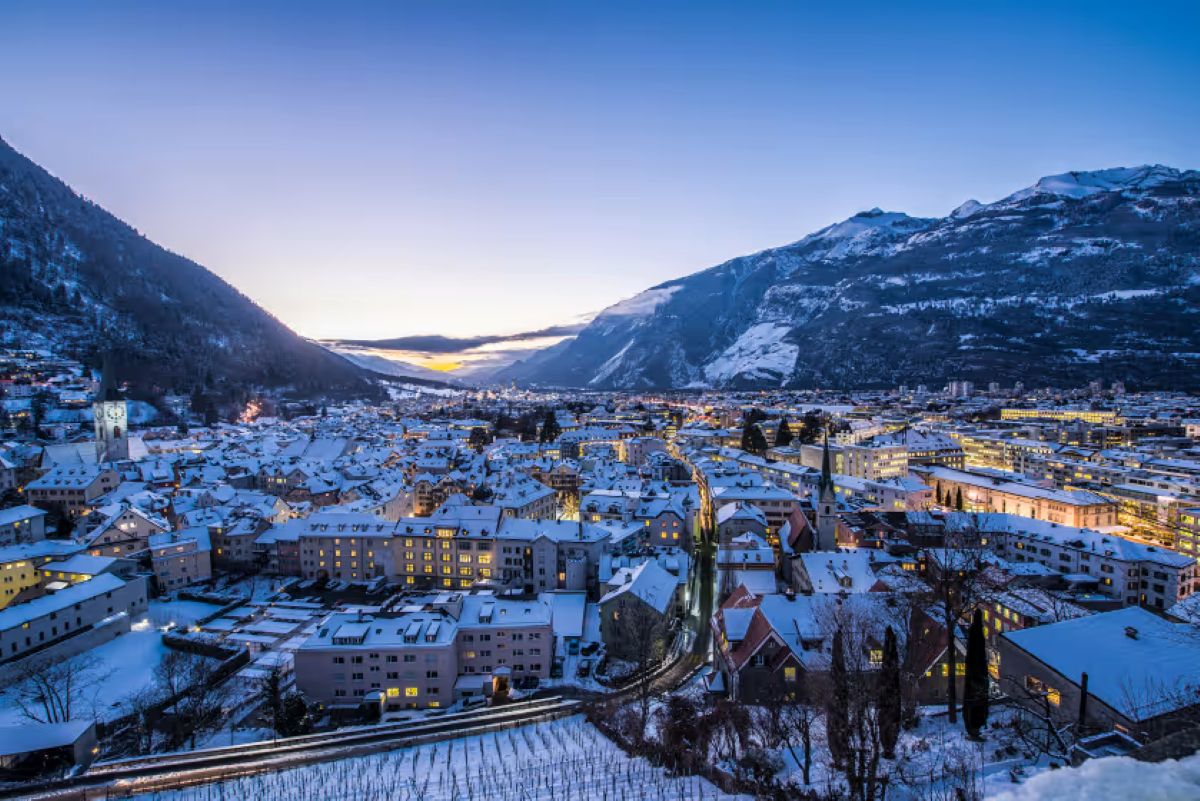
Planning a dream getaway to the snow‑capped Swiss Alps or the dreamy candle‑lit streets of Stockholm? Imagine arriving at border control luggage, in tow only to be told your entry hinges on a forced Instagram review or an unexpected online rating fee. Sounds like a travel nightmare does not it? Panic swept through millions of travellers recently as viral rumours claimed Switzerland and Sweden were forcing tourists to review their trips online to boost tourism coffers. Take a breath: it is completely untrue. Here is what is actually happening at borders.
The Ultimate Truth Behind Swiss and Swedish Travel Rules: Are Social Media Checks and Fees Real?
Have you ever wondered if popular European holiday hotspots like Switzerland and Sweden are secretly demanding forced social media inspections or charging fees for online reviews? This heavy clickbait claim has recently taken the internet by storm, leaving globetrotters completely baffled about their upcoming holiday plans. The reality behind these viral rumors is that misinterpretations and exaggerated headlines have twisted standard bureaucratic updates into bizarre urban myths. Switzerland and Sweden do not require travelers to hand over their social media profiles or write online reviews to dodge extra costs. Instead, these nations follow strict European travel frameworks and local accommodation laws designed to protect public security and upgrade regional infrastructure. Every single traveler must understand the authentic facts to avoid falling victim to online misinformation before booking their next grand vacation.
Why Are Viral Rumours About Forced Social Media Inspections Completely False?
Advertisement
Advertisement
Can border authorities legally demand access to your personal digital footprint before granting entry into Switzerland or Sweden? Official legislative sources confirm that no European Union regulation, Schengen border directive, or national law requires travelers to submit social media handles. The entire narrative stems from online misinterpretations, clickbait headlines, and satirical articles meant to generate sensational traffic.
The security vetting process relies exclusively on automated checks against major law enforcement databases rather than personal digital profiles. While global adventurers cross borders, they can rest assured that their private online accounts remain completely off-limits to immigration officers.
Advertisement
Advertisement
What Exactly Is the ETIAS Fee and Who Needs to Pay It?
How does the official European travel authorization system impact your upcoming holiday budget across Switzerland and Sweden? Non-EU, visa-exempt foreign nationals traveling from countries like the United States, the United Kingdom, Canada, and Australia must obtain authorization prior to arrival.
This standardized travel authorization carries a standard fee of €20 per applicant, which remains valid for three years or until passport expiration. Travelers under eighteen or over seventy years of age, alongside qualified family members of EU citizens, enjoy full exemptions from this charge.
How Do Local Tourist Taxes and Accommodation Rules Actually Work?
What are the actual financial contributions required when checking into hotels across Switzerland and Sweden? Switzerland enforces a municipal visitor tax known as the Kurtaxe, which ranges between one and seven Swiss Francs per person per overnight stay.
These local funds go directly toward maintaining regional tourist infrastructure, public transport discounts, and alpine amenities for visitors. Conversely, Sweden currently does not levy a general national tourist tax, though accommodation providers must collect standard guest registration details for law enforcement compliance.
Advertisement
Advertisement
What Is the True Impact of Modern Travel and Tourism on Local Economies?
How do these regulatory frameworks and tourist contributions actively shape the sustainable future of global exploration? Travel and tourism serve as the vital lifeblood for countless communities across Switzerland and Sweden, generating millions in revenue for small businesses.
When visitors pay local accommodation taxes or authorized border fees, they directly finance the upkeep of pristine natural landscapes and advanced public transit systems. This delicate economic balance ensures that world-class destinations can preserve their unique cultural heritage while welcoming millions of enthusiastic explorers every single year.
Macroeconomic Tourism Revenue Performance and GDP Contributions Across Switzerland and Sweden
The macroeconomic landscape of European travel demonstrates the vital role international arrivals play in sustaining national financial health. Switzerland reached a milestone by recording 43.9 million total hotel overnight stays, reflecting a 2.6% year-on-year growth trajectory. Foreign travellers generated 22.8 million of these nights, reinforcing international visitor demand for Swiss destinations. In monetary terms, direct travel activity generates over CHF 45 billion in annual gross output, accounting for approximately 2.9% of Switzerland’s total gross domestic product.
In Northern Europe, Sweden reflects a similar reliance on international visitor spending. Sweden generated $10.7 billion in foreign tourism receipts, backed by more than 65.7 million total overnight stays across hotel and commercial lodging sectors. Direct industry contributions account for 2.8% of Swedish national GDP while providing employment for approximately 2.6% of the domestic workforce. These economic benchmarks demonstrate how both nations utilize structured travel mechanisms to protect their national revenue bases without resorting to arbitrary social media entrance fees.
Advertisement
Advertisement
Implementation Schedule and Financial Architecture of the EU Biometric Entry/Exit System
The digital transformation of European border control centres on the Schengen area’s Entry/Exit System, designed to modernize border crossings by replacing manual passport stamps with biometric tracking. The operational rollout commenced progressively on 12 October 2025, culminating in complete deployment across 29 participating Schengen nations by 10 April 2026. This system establishes a uniform digital perimeter to monitor non-EU short-stay visitors accurately across external frontiers.
The underlying technical infrastructure collects four digital fingerprints alongside a 3D facial scan from non-EU citizens upon arrival. Designed to handle over 700 million annual entries and exits, the centralized database automatically calculates permitted stay durations under the 90-day limit. The system addresses overstays and identity fraud directly, replacing speculative surveillance methods with standardized data collection.
Financial Mechanics and Revenue Allocation Framework for ETIAS Travel Authorisations
Non-EU visa-exempt citizens entering the Schengen Area must secure a digital pre-travel authorization via the European Travel Information and Authorisation System. Applicants pay a standard processing fee of €20, which grants a travel authorization valid for three consecutive years or until the registered passport expires. To keep travel accessible, the regulation grants a 100% fee waiver to applicants under 18 or over 70 years of age, as well as qualifying family members of EU citizens.
The funds generated by this authorization fee feed into a dedicated operational revenue pool projected to exceed €200 million annually. Rather than entering general state budgets, these revenues are earmarked specifically for maintaining the digital security infrastructure overseen by eu-LISA. Funding guarantees continuous technical upkeep and seamless data integration across major European security frameworks, including the Schengen Information System, Visa Information System, and Interpol databases.
Advertisement
Advertisement
Swiss Cantonal Micro-Taxation Structures and Local Infrastructure Funding
Switzerland’s overnight tourist fees operate under a decentralized model managed by individual cantons and local municipalities. Local overnight levies, known as Kurtaxe or Taxe de séjour, range between CHF 1.00 and CHF 7.00 per person per night. In the Valais Canton, encompassing alpine hubs like Zermatt and Saas-Fee, nightly charges between CHF 3.00 and CHF 7.00 directly fund mountain rescue operations, trail upkeep, and resort safety.
In Geneva Canton, daily visitor charges of CHF 3.75 to CHF 4.00 include a local transport pass granting unlimited access to municipal public transit during the visitor’s stay. Zurich Canton maintains a tax rate between CHF 2.50 and CHF 3.50 per night to support local amenities. Additionally, Switzerland supports its hospitality sector through a reduced 3.8% VAT rate on hotel accommodation, positioned well below the standard national VAT rate of 8.1%.
Compliance Frameworks Under the Swedish Aliens Ordinance and Privacy Protections
Sweden approaches tourism management without levying a national lodging or overnight hotel tax. International visitors staying in Swedish cities like Stockholm, Gothenburg, or Malmö incur no added municipal stay surcharges at check-in. This zero-tax lodging strategy keeps Swedish destinations competitive within Northern Europe while maintaining clear separation between public revenue collection and private accommodation costs.
However, lodging operators must observe strict guest registration protocols governed by the Swedish Aliens Ordinance. Accommodation providers must record every foreign guest’s full name, date of birth, nationality, home address, and passport details. These registration records are retained for exactly three months to accommodate official law enforcement audits. Following this statutory window, European Union GDPR rules mandate the permanent deletion of all guest records, strictly prohibiting commercial profiling or background data harvesting.
Advertisement
Advertisement
Seasonality Patterns and Geographic Concentration in Alpine and Nordic Travel
Travel demand across Switzerland and Sweden reveals distinct seasonal distributions that shape regional infrastructure management. In Sweden, visitor numbers peak sharply during the midsummer months. July alone accounts for 22.4% of all annual foreign overnight stays, while the broader summer quarter spanning June through August drives 50.3% of annual international visits. Conversely, Sweden’s winter quarter handles a smaller 14.6% share of annual arrivals.
Switzerland exhibits a balanced dual-season model, maintaining high visitor volumes across both summer hiking and winter sports periods. The Swiss summer season, running from May to October, registers 25.2 million overnight stays, while the winter season, from November to April, generates 18.6 million nights. This consistent year-round traffic allows Swiss cantons to distribute infrastructure maintenance costs evenly across both major travel seasons.
Security Database Vetting Versus Rumours of Social Media Review Vetting
Allegations that Schengen border officials evaluate travellers’ social media activity or require online reviews are unsubstantiated by statutory regulations. Background checks for non-EU visitors entering Switzerland or Sweden rely entirely on automated data verification through established international security networks. The ETIAS framework cross-references applicant data against four primary databases: the Schengen Information System, the Visa Information System, the Interpol Stolen and Lost Travel Documents database, and the European Criminal Records Information System for Third-Country Nationals.
Official screening protocols assign zero weight to personal social media handles, online ratings, or internet feedback. The automated vetting process completes in under 10 minutes for more than 95% of applicants, verifying passport validity, security alerts, and travel eligibility without assessing personal social media activity.
Advertisement
Advertisement
Public Transit Cross-Subsidization and Municipal Mobility Allocations
A core feature of the Swiss local accommodation tax model is the direct allocation of guest levies into regional public transportation networks. In urban destinations like Geneva, Basel, and Bern, municipal authorities reallocate visitor tax proceeds to provide registered hotel guests with complimentary local transport passes. This arrangement enables foreign visitors to travel seamlessly across municipal buses, trams, and rail networks using their accommodation registration cards.
This integrated funding model supports high net room occupancy rates across major Swiss urban centers. Geneva leads national occupancy metrics with a net room occupancy rate of 67.9%, followed by Basel at 60.3%, against a national average of 56.8%. Converting visitor stay taxes directly into public transit passes reduces urban congestion, supports local mobility infrastructure, and enhances visitor access to regional cultural sites.
Comprehensive Summary Matrix of Supplementary Analytics
| Element Topic | Regional Scope | Benchmark Metrics | Primary Operational Focus |
| Macroeconomic Output | Switzerland & Sweden | CHF 45B Output / $10.7B Receipts | GDP reliance & foreign earnings |
| Biometric EES Rollout | 29 Schengen States | Full deployment by April 2026; 700M annual entries | Replacing physical stamps with digital scans |
| ETIAS Allocation | Non-EU Visa-Exempt | €20 fee, 3-year term; €200M+ security pool | Funding eu-LISA systems and databases |
| Swiss Micro-Taxation | Switzerland | CHF 1–7 per night; reduced 3.8% hotel VAT | Municipal infrastructure and trail upkeep |
| Swedish Compliance | Sweden | 0% hotel tax; 3-month guest data retention | GDPR-compliant law enforcement checks |
| Seasonality Pressure | Sweden & Switzerland | 50.3% Swedish summer stays; dual-season Swiss stays | Balancing peak regional capacity |
| Security Vetting | Schengen Area | Automated vetting across 4 security databases | Identity checks without social media tracking |
| Transit Integration | Switzerland | 100% tax conversion to transport passes in major cities | Converting hotel taxes into transit access |
The Final Horizon
At the end of the day travel is about magic, connection and the pure joy that comes from discovering horizons—not about jumping through algorithmic hoops or pleading for passage on social media. While shifting border rules and tiny processing fees can feel overwhelming when planning a dream getaway travel can rest easy knowing that travel’s private digital life stays travel’s. So go ahead. Pack those bags for the serene Swiss peaks or Sweden’s tranquil archipelagos without fear. Travel’s European adventure awaits, on travel’s own terms.
Advertisement
Advertisement
Frequently Asked Questions
Do Switzerland and Sweden require social media reviews for entry?
No, claims regarding forced social media inspections or tourist charges tied to online reviews are entirely false and stem from internet misinterpretations.
How much is the ETIAS travel authorization fee?
The standard ETIAS fee is €20 per applicant for non-EU visa-exempt travelers, with exemptions available for minors and seniors.
Does Sweden charge a national tourist tax?
Advertisement
Advertisement
No, Sweden does not levy a national tourist tax or general lodging tax, unlike the cantonal visitor taxes enforced across Switzerland.
How long are visitor registration records kept in Sweden?
Accommodation providers in Sweden securely retain mandatory guest registration records for three months to comply with local laws and GDPR guidelines.
Advertisement
