
Istanbul Hotel Market Shows Strong 2026 Occupancy Recovery as Can Erdem Highlights Positive Rebound

Published
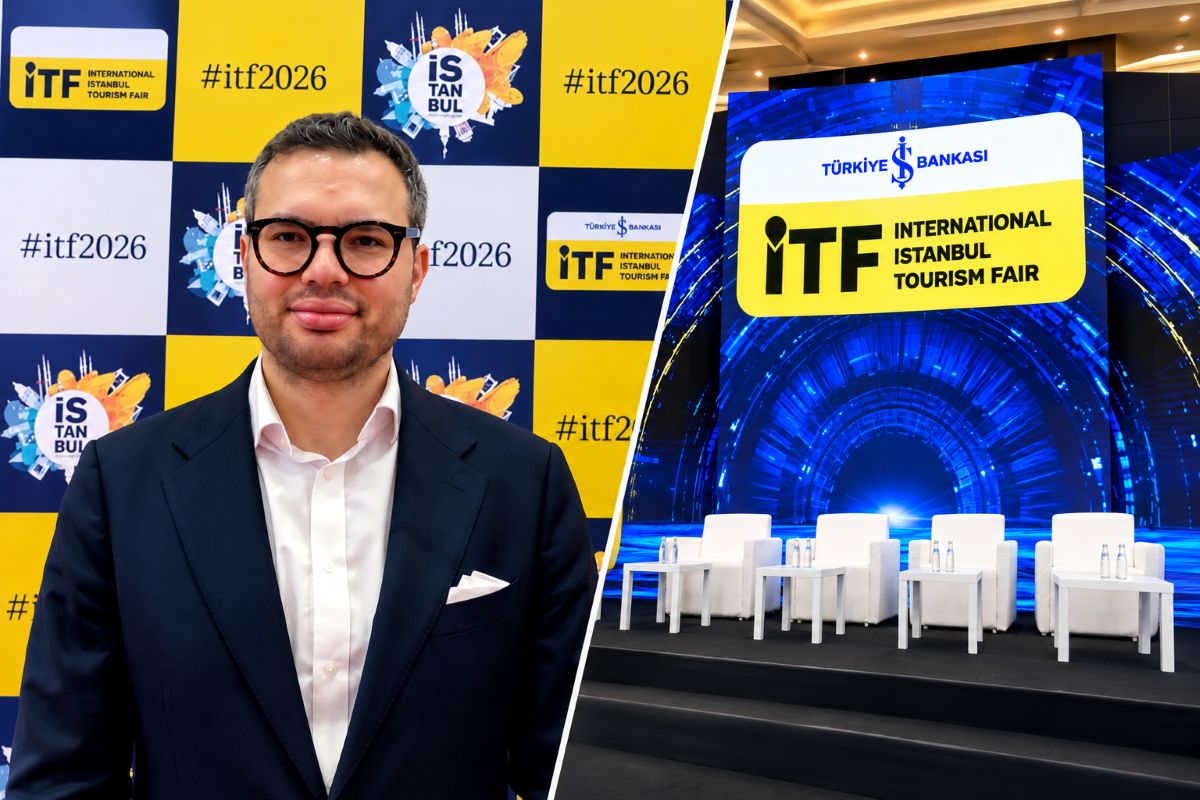
Istanbul Hotel Market Shows Strong 2026 Occupancy Recovery as Can Erdem Highlights Positive Rebound as Istanbul’s hotel market recovers after regional turmoil affected performance during the first half of 2026. Speaking exclusively to Travel And Tour World at the Istanbul Tourism Fair 2026, Can Erdem, Associate Account Director, Hotel at DACH, STR, part of CoStar Group, said Istanbul’s strategic position as a gateway between Asia and Europe left its hotels exposed to regional developments. However, he highlighted that occupancy “has recovered significantly” during May, June and July. September and October bookings were also described as healthy. The outlook for November and December remains less certain because booking windows are still very short.
Istanbul’s Gateway Position Leaves Hotels Exposed to Regional Turmoil
Istanbul’s geographical role was central to Erdem’s assessment of the hotel market. He described in the interview with Tuhin Sarkar, from Travel and Tour World, that the city as a connection point between major regions, explaining that this position can create both opportunity and exposure.
“Istanbul is as I said the gateway between Asia and Europe.”
The statement is important because Istanbul’s hotel demand is influenced not only by local tourism conditions but also by developments across surrounding markets. Erdem directly connected the city’s performance with the regional situation.
Advertisement
Advertisement
“It has been impacted because of the turmoil in the region.”
His comments indicate that the first half of 2026 was challenging for Istanbul’s hotel sector. However, he did not describe the disruption as permanent. Instead, his assessment moved towards a recovery story, particularly as the year progressed.
Advertisement
Advertisement
For the hospitality industry, this means Istanbul’s geographical position remains both an asset and a vulnerability. Its ability to connect Europe and Asia supports its importance, but regional instability can quickly influence travel behaviour and hotel demand.
Hotel Occupancy Recovered Significantly During May, June and July
The strongest positive message in the interview concerned occupancy.
Advertisement
Advertisement
Erdem explained that Istanbul’s hotel market began recovering during the second half of the year after experiencing difficulties earlier in 2026.
“In the second half of the year going forward May, June, July, it has recovered significantly in occupancy.”
He immediately described the improvement as encouraging for the city.
“So, that’s a good news for Istanbul.”
Advertisement
Advertisement
The wording matters because Erdem did not provide a specific occupancy percentage or year-on-year increase. Therefore, the interview supports a qualitative assessment of significant recovery, rather than a numerical claim.
The recovery nevertheless represents a meaningful change in direction. The market moved from the effects of regional turmoil towards stronger occupancy performance during the middle months of the year.
For hotel operators, improved occupancy can provide greater confidence when planning operations, staffing and commercial strategies for the months ahead.
Healthy September and October Bookings Strengthen the Immediate Outlook
Erdem also highlighted the forward booking position for September and October.
“The best on the books is very healthy and looking forward to a good end of September and then good October.”
This statement provides another positive indicator for Istanbul’s hotel market.
Advertisement
Advertisement
The phrase “on the books” refers to reservations already recorded by hotels. Erdem’s assessment suggests that the booking position for September and October was healthy when the interview took place.
That gives hotel operators more visibility for the immediate future. It also suggests that the recovery seen in occupancy during May, June and July was not viewed as an isolated development.
However, Erdem did not claim that the same confidence extended throughout the rest of the year.
His comments therefore provide a balanced outlook. September and October appear encouraging, while November and December remain less certain.
This distinction is important because forward bookings provide hotels with only a snapshot of future demand.
Short Booking Windows Keep November and December Uncertain
The biggest limitation in the forward outlook is the short booking window.
Advertisement
Advertisement
Erdem said:
“Really depends on November and December, but that’s yet to be seen as the booking windows remain very very short still.”
This is one of the most important observations in the interview.
A short booking window means hotels have less advance visibility over future occupancy. That makes it harder to assess demand several months ahead and can complicate operational planning.
Erdem did not identify a specific reason for the shorter booking windows. Therefore, it would be inappropriate to attribute them to a particular factor without additional evidence.
What the interview does establish is that September and October had healthier bookings, while November and December remained difficult to forecast.
Advertisement
Advertisement
For Istanbul’s hotel industry, this creates a two-speed outlook. The immediate booking position is encouraging, but longer-range visibility remains limited.
Regional Recovery Could Support Istanbul’s Hotel Trajectory
Erdem also broadened his assessment beyond Istanbul to the wider Middle East and Eurasian markets.
He acknowledged that the region had experienced significant disruption but expressed confidence in its ability to recover.
“The Middle East region is the region known to recover fastly and react good on prices.”
The quote reflects Erdem’s view that regional hotel markets can respond quickly when conditions change, particularly through pricing.
He went further by expressing confidence in the direction of recovery.
Advertisement
Advertisement
“I’m certain it will go up this trajectory very very soon.”
This is an important professional assessment, but it should not be treated as a formal numerical forecast. Erdem did not provide occupancy projections or specific growth percentages for the Middle East or Eurasian markets.
The value of the statement lies in showing how an industry professional views the region’s capacity to recover from disruption.
AI Is Emerging as a Major Hotel Industry Tool
Artificial intelligence was another significant theme in the interview.
Erdem acknowledged that AI is influencing multiple industries and that hospitality is no exception.
“It’s definitely a topic that’s shaping many many industries and the tourism industry is no exception for this the main purpose is to increase efficiency.”
Advertisement
Advertisement
The central word in this statement is efficiency.
Erdem’s comments suggest that AI should primarily help hotels and tourism businesses operate more effectively. He did not identify specific AI systems or applications during the interview, so it would be inaccurate to attach particular technologies to his comments.
Instead, his point was broader. AI is becoming part of the industry’s development, with efficiency serving as an important objective.
For hotel businesses dealing with changing demand, shorter booking windows and operational pressures, technology could become increasingly relevant.
However, Erdem made clear that efficiency should not come at the expense of hospitality’s human character.
Human Touch Remains at the Centre of Hospitality
Erdem’s strongest warning about AI was that technology should not overshadow people.
Advertisement
Advertisement
“We are an industry that flourishes with human touch.”
This quote provides an important counterbalance to the industry’s growing interest in artificial intelligence.
Hotels are fundamentally service businesses. Guests interact with employees throughout their stays, from arrival to departure. Erdem’s position is that technology can improve efficiency while the human element remains central to the experience.
He also expressed satisfaction that human focus and sales remain important within the industry’s discussions.
“I’m very pleased to see that the human focus and the sales element isn’t in the first place here.”
The broader message is that AI should support hospitality rather than redefine it as a technology-only business.
Advertisement
Advertisement
Erdem’s comments do not reject AI. Instead, they place it within a model where technology and human service work alongside each other.
Istanbul Tourism Fair Creates Stronger Industry Connections
Erdem also offered a positive assessment of the Istanbul Tourism Fair 2026 itself.
It was his first year attending the conference. He described the gathering as an opportunity to meet professionals from both the local and international tourism industries.
“It’s my first year at this conference and I am very excited to see so many people from the industry local but also international having meetings discussing.”
He also expressed optimism about the event’s future.
“You can really definitely feel the very exciting and I hope for many many success for years to come.”
Advertisement
Advertisement
The comments suggest that the fair provided a platform for industry conversations at a time when Istanbul’s hospitality sector is navigating recovery, technology changes and evolving demand.
For Erdem, the event was therefore not simply an exhibition. It was also a meeting point for tourism professionals discussing the direction of the industry.
2027 and 2028 Outlook Remains Positive but Not Quantified
The discussion also looked towards the future of Istanbul’s hotel industry.
Erdem’s comments indicate cautious optimism rather than a firm numerical forecast.
The significant occupancy recovery during May, June and July provides a positive foundation. Healthy September and October bookings add another encouraging signal.
However, short booking windows create uncertainty for November and December.
Advertisement
Advertisement
The interview does not provide specific occupancy targets, revenue forecasts or growth percentages for 2027 or 2028. Any numerical projection would therefore go beyond the source material.
What the interview does support is a broader interpretation. Istanbul’s hotel market is recovering from regional disruption while adapting to changing booking behaviour and the increasing role of artificial intelligence.
That combination will shape the industry’s next phase.
Istanbul Hotel Market Moves Forward With Cautious Confidence
Can Erdem’s interview presents a hotel market that has experienced pressure but is now showing encouraging signs.
Regional turmoil affected Istanbul during the first half of 2026. The city’s role as a gateway between Asia and Europe made it particularly exposed to those developments.
Yet the situation improved.
Advertisement
Advertisement
Occupancy recovered significantly during May, June and July. September and October bookings were described as healthy. November and December remain harder to predict because booking windows are still short.
At the same time, AI is becoming increasingly important to the hospitality industry, with efficiency emerging as a major objective. But Erdem’s message is clear: technology should not replace human hospitality.
For Istanbul, the immediate direction is therefore cautiously positive. The city’s hotel industry appears to be recovering, but its future performance will continue to depend on regional conditions, booking behaviour and the ability of hotels to combine technology with genuine human service.
Conclusion
“It Has Recovered Significantly in Occupancy”: Can Erdem Highlights Istanbul Hotel Market’s Strong 2026 Rebound because the city moved from regional disruption during the first half of 2026 towards stronger occupancy during May, June and July. Healthy September and October bookings add further confidence, although short booking windows leave November and December uncertain. Erdem’s comments also show that Istanbul’s hotel industry is entering a period where artificial intelligence and human hospitality must develop together. His strongest message is that technology should increase efficiency without removing the personal interaction that defines the hotel experience. The interview does not provide numerical forecasts for 2027 or 2028, but it offers a cautiously positive assessment of Istanbul’s recovery and future direction.
Comment from Anup Keshan, Founder and Editor-in-Chief of Travel And Tour World
“Can Erdem’s assessment offers an important perspective on Istanbul’s hotel market because it balances recovery with the uncertainties still facing the industry. The significant occupancy improvement during May, June and July is encouraging, while healthy September and October bookings suggest stronger immediate demand. Yet the short booking window remains a reminder that the market can change quickly. His comments on artificial intelligence are equally relevant. Hotels can use technology to improve efficiency, but hospitality cannot lose the human interaction that creates meaningful guest experiences. Istanbul’s next phase will therefore depend not only on occupancy recovery, but also on how effectively hotels respond to changing demand while preserving the human character of hospitality.”
Image Credit: TTW
Advertisement
