
Morocco Alongside South Africa and Other African Countries Face Tourism Crisis as Crowds and Rentals Squeeze Major Cities

Published
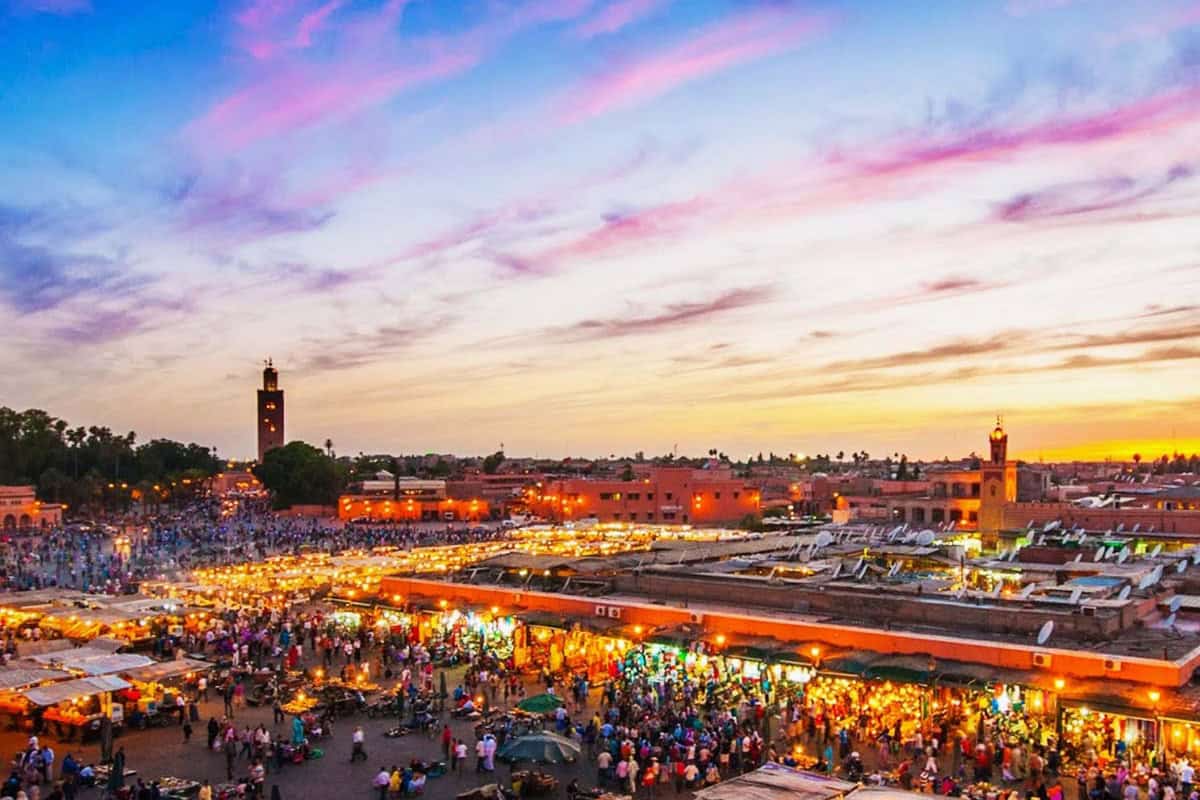
The post-pandemic travel boom has brought unprecedented economic gains to the continent, but it has simultaneously triggered a severe African cities tourism housing crisis. In bustling metropolises like Marrakech and Cape Town, an exponential rise in short-term tourist rentals is ruthlessly squeezing local housing markets. While governments celebrate record-breaking international arrivals, working-class residents face skyrocketing rents and dwindling property availability. Unregulated accommodation platforms have transformed residential neighbourhoods into transient hotel zones, forcing authorities to scramble for legislative solutions. As visitor influx shows no signs of slowing down, the delicate balance between lucrative tourism and sustainable urban living remains completely shattered.
Background: The Unprecedented Surge of Post-Pandemic Tourism in Africa
The landscape of global travel has undergone a seismic shift in the wake of the pandemic, and the African continent stands at the very epicentre of this resurgence. By the third quarter of 2026, the influx of international holidaymakers into Africa has shattered historical records, bringing with it a complex dual narrative. On the one hand, national economies are reaping the rewards of an extraordinary influx of foreign capital, which has bolstered national reserves, stimulated job creation in the hospitality sector, and injected unparalleled vitality into local businesses. On the other hand, the sheer volume of arrivals has created an enormous logistical and social bottleneck in urban centres. The once-celebrated travel renaissance has inadvertently laid the groundwork for an African cities tourism housing crisis, a phenomenon that is systematically reshaping the demographic and architectural fabric of the continent’s most beloved destinations.
As flight connectivity improves and international marketing campaigns by respective national tourism boards yield unprecedented returns, major urban centres are bearing the brunt of this success. Cities that were originally designed to accommodate a steady, manageable flow of transient visitors are now being inundated by a relentless wave of global nomads, digital workers, and short-stay holidaymakers. This rapid demographic shift has fundamentally altered the real estate dynamics, pulling properties away from the long-term residential market and thrusting them into the lucrative short-term rental sphere.
The Allure of the African Continent in 2026
The appeal of the African continent in 2026 is multifaceted, driven by a combination of favourable exchange rates, aggressive international marketing, and a global pivot towards experiential travel. The United Nations World Tourism Organisation (UN Tourism) has documented a consistent upward trajectory in African arrivals, noting that the continent is one of the fastest-recovering regions globally. Travellers from Europe, North America, and Asia are increasingly bypassing traditional saturated markets in favour of the rich cultural tapestries, diverse landscapes, and historical profundity offered by African nations. From the vibrant medinas of North Africa to the breathtaking coastal vistas of the Southern tip, the continent presents an irresistible proposition for the modern explorer.
Advertisement
Advertisement
However, this surging popularity is highly concentrated. Rather than dispersing evenly across nations, tourists are congregating in established urban hubs—cities that boast robust infrastructure, culinary excellence, and immediate access to iconic landmarks. This intense geographical concentration acts as a pressure cooker for local resources, most notably housing. The irresistible allure of these cities has transformed them into victims of their own success, as the sheer density of visitors completely overwhelms the available urban infrastructure.
From Hotels to Short-Term Rentals: A Shift in Accommodation Preferences
Simultaneous to the surge in visitor numbers is a profound transformation in traveller behaviour. The traditional model of booking a classified hotel room has been aggressively supplanted by the demand for short-term residential rentals. Platforms such as Airbnb, Vrbo, and Booking.com’s residential arm have democratised accommodation provision, allowing independent property owners to directly tap into the lucrative tourism market. For travellers, these platforms offer the illusion of “living like a local,” providing greater space, kitchen facilities, and an integrated neighbourhood experience that standard hotels struggle to replicate.
Advertisement
Advertisement
For property owners, the financial arithmetic is overwhelmingly persuasive. By converting a standard residential apartment into a short-term holiday let, landlords can often triple or quadruple their monthly yield compared to securing a traditional long-term tenant. Consequently, huge swathes of residential property have been quietly withdrawn from the local housing stock. This mass conversion of homes into unregulated hotels is the primary catalyst driving the African cities tourism housing crisis, as the supply of affordable homes for indigenous populations evaporates at an alarming rate, forcing blue-collar workers and middle-class professionals completely out of the urban core.
Latest Official Developments: Evaluating the Overtourism Threshold
As of October 2026, the situation has escalated from a simmering urban planning issue to a full-blown national emergency in several African nations. Official bodies are no longer merely monitoring the situation; they are actively acknowledging that the threshold for overtourism has been breached in multiple critical zones. Government ministries and national statistical offices are publishing data that paints a stark picture of the immense pressure being exerted on major cities, forcing a rapid re-evaluation of tourism strategies that previously prioritised volume over sustainability.
Advertisement
Advertisement
The shift in official rhetoric is palpable. Where once the success of a tourism minister was judged solely by the year-on-year increase in arrival statistics, the metric of success is now being forcibly broadened to include social impact, housing affordability, and infrastructure resilience.
Morocco’s Staggering Visitor Numbers
The Kingdom of Morocco has positioned itself as an absolute powerhouse in the global tourism market. Official data released by the Moroccan Ministry of Tourism reveals staggering growth. In 2025, the country welcomed an all-time high of 19.8 million tourists, fundamentally obliterating previous records. This phenomenal momentum carried seamlessly into 2026, with the first quarter alone witnessing 4.3 million arrivals—a 7% increase compared to the same period in the previous year. The government’s ambitious strategy, which initially aimed for 17.5 million visitors by 2026, has been comfortably surpassed long before the year’s end.
While these figures represent a triumph for the national exchequer, they have placed intolerable strain on specific localities, most notably Marrakech. The “Ochre City” has become the epicentre of Morocco’s hospitality boom, absorbing a disproportionate share of the national tourist influx. The sheer volume of footfall has stretched the city’s housing market to breaking point, prompting urgent, albeit delayed, official scrutiny regarding the sustainability of such aggressive expansion.
South Africa’s Arrival Records and the Strain on Cape Town
At the opposite end of the continent, South Africa is experiencing a mirrored phenomenon. Statistics South Africa (Stats SA) and the Department of Tourism reported that the nation welcomed a record-breaking 10.5 million international visitors in 2025. The data for early 2026 demonstrates no loss of momentum, with 1.8 million tourists arriving in just January and February, and the month of August 2026 alone accounting for over a million international arrivals. The nation’s post-pandemic recovery has been spectacular, yet highly centralised.
Advertisement
Advertisement
Cape Town, the jewel of South Africa’s tourism crown, has absorbed the vast majority of this pressure. The city’s scenic beauty, coupled with its highly developed hospitality infrastructure, makes it the primary port of call for international visitors. However, this success has directly birthed a severe housing emergency. The proliferation of short-term rentals has penetrated deeply into residential suburbs, systematically eroding the availability of long-term leases for the local workforce. The disparity between tourist purchasing power and local wages has created an incredibly hostile real estate environment for native Capetonians.
Ripple Effects in Nairobi and Cairo
While Morocco and South Africa dominate the headlines, the African cities tourism housing crisis is rapidly metastasising across other major continental hubs. In Kenya, Nairobi’s status as the ‘Silicon Savannah’ has attracted a massive influx of international corporate travellers, digital nomads, and expatriate workers. The affluent neighbourhoods of Kilimani and Westlands are experiencing a profound surge in short-term rental conversions, rapidly pricing out the local middle class and straining the city’s infrastructure. Similarly, in Egypt, the sprawling metropolis of Cairo is grappling with identical pressures. The government’s aggressive push to revitalise cultural tourism has led to a speculative real estate boom in central districts and around the Giza plateau. Independent landlords are hoarding apartments for short-stay international guests, exacerbating Cairo’s already critical urban density challenges. The widespread nature of this phenomenon confirms that overtourism and the subsequent residential displacement is not a localised anomaly, but a structural crisis affecting the entire African urban landscape in 2026.
Government Announcements and Legislative Pushbacks
Recognising the severity of the crisis, national and municipal governments are attempting to formulate legislative responses. However, introducing regulations into an incredibly lucrative and rapidly evolving digital market has proven remarkably difficult. Bureaucratic inertia, conflicting legislative frameworks, and the powerful lobbying efforts of the short-term rental industry have complicated the rollout of meaningful interventions.
Authorities find themselves walking a tightrope: they must protect the housing rights of their citizens without suffocating a tourism industry that provides vital foreign exchange and employment. The resulting legislative efforts have often been characterised by grand announcements followed by sluggish, highly compromised implementation.
Morocco’s Decree 2.23.441 and the Enforcement Gap
In an attempt to regulate the spiralling situation, the Moroccan government introduced Decree 2.23.441. This legislation mandates that any property owner renting their premises to tourists for more than 120 days a year must officially register as a tourist business, adhere to strict safety protocols, and pay applicable commercial taxes. On paper, this decree represents a robust mechanism for controlling the short-term rental explosion and mitigating the African cities tourism housing crisis.
However, the reality on the ground tells a vastly different story. The enforcement mechanism for this decree is alarmingly under-resourced. Reports indicate that in Marrakech, a city with thousands of listings, there are fewer than 40 active inspectors available to police the regulations. Although digital systems flagged nearly 4,800 non-compliant properties over the past year, only a negligible fraction actually faced financial penalties or platform delisting. This glaring enforcement gap has allowed landlords to operate with near impunity, rendering the protective decree largely symbolic thus far.
Advertisement
Advertisement
South Africa’s Tourism Act and the Struggle for Local Regulation
In South Africa, the legislative battle is equally fraught, albeit complicated by structural legal impediments. The national Department of Tourism, under the stewardship of Minister Patricia de Lille, has attempted to introduce frameworks to manage the proliferation of platforms like Airbnb. The government published a policy paper for public comment aimed at defining thresholds for short-term rentals.
Yet, as of late 2026, these efforts have hit a massive legal roadblock. Minister de Lille has publicly acknowledged that the overarching Tourism Act of 2014 only empowers the ministry to establish voluntary codes of conduct, rather than to enforce binding municipal regulations. Consequently, the national government is severely restricted in its ability to impose hard caps on rental densities. This legislative shortfall has left local municipalities, particularly the City of Cape Town, fighting a complex legal and administrative battle to implement bylaws that can survive constitutional scrutiny, leaving residents stranded in a highly volatile housing market in the interim.
Verified Statistics: The Short-Term Rental Explosion
To fully comprehend the magnitude of the African cities tourism housing crisis, one must examine the verified data surrounding short-term rental platforms. The statistics are not merely alarming; they represent a fundamental restructuring of urban housing economies. Independent data aggregators and official municipal audits have revealed listing densities in African cities that now rival or completely surpass those of Europe’s most notorious overtourism hotspots.
The numbers dictate a clear narrative: the financial incentives for property owners to abandon the long-term rental market are so overwhelming that the transition has become structural rather than cyclical.
Marrakech’s Accommodation Market Overheated
The statistical reality of Marrakech’s housing market is a masterclass in market distortion. By mid-2026, data analysis revealed that more than 21,400 short-term rental listings were active in the city. To put this in perspective, this number vastly exceeds the total number of officially classified hotel rooms within the metropolis. Marrakech now boasts a higher density of short-stay listings than several major European capitals that have historically struggled with the same issue.
The financial metrics driving this surge are irrefutable. A standard two-bedroom apartment in the popular Gueliz district traditionally rented to a local family for approximately 4,500 Moroccan Dirhams (MAD) per month. By transitioning that exact same property to a short-term rental platform, a landlord can generate roughly $1,600 (USD) per month, assuming a conservative occupancy rate of 64%. This represents a revenue multiplier of more than 300%. Unsurprisingly, landlords are systematically removing their properties from the residential market, waiting for leases to expire, and instantly converting them into tourist accommodation.
Advertisement
Advertisement
Cape Town Surpasses Global Short-Term Rental Hubs
The data emerging from Cape Town is equally sobering. According to comprehensive market audits conducted in 2025 and 2026, the city hosts a staggering 26,484 active short-term rental listings. This figure is not just a domestic anomaly; it is a global statistical outlier. Cape Town’s listing volume comfortably surpasses that of globally recognised tourist hubs such as San Francisco (7,888), Amsterdam (9,310), Sydney (15,548), and even Barcelona (18,925)—a city that has famously implemented blanket bans on new short-term rental licenses.
This immense concentration of tourist accommodation is heavily clustered in the City Bowl, the Atlantic Seaboard, and the Southern Suburbs. These areas, which once housed a vibrant mix of working professionals and families, have been hollowed out. The sheer volume of listings acts as a vortex, sucking up any available property and artificially inflating property valuations far beyond the reach of the domestic economy, thereby cementing the African cities tourism housing crisis in the legislative capital.
Policy Implications for Housing and Urban Planning
The uncontrolled expansion of the short-term rental market carries profound implications for urban planning, civic infrastructure, and long-term national housing policies. When a substantial percentage of a city’s residential footprint is silently converted into commercial hospitality space, the foundational assumptions of urban planning—from waste management to public transport provisioning—are rendered obsolete.
Planners are now tasked with retrofitting regulations onto a phenomenon that has already established a dominant market position. The policy implications extend far beyond simple real estate management; they strike at the heart of civic identity, social cohesion, and the fundamental right to accessible urban shelter.
The Erosion of the Long-Term Rental Supply
The most immediate and devastating policy implication is the complete erosion of the long-term rental supply. In cities like Marrakech, average residential rents crossed the MAD 8,000 threshold in 2023 and have surged well past MAD 10,000 for standard furnished apartments in central districts by 2026. These figures vastly exceed the average middle-class salary in Morocco.
A secondary, highly destructive phenomenon has emerged: the “frozen market effect”. Because Moroccan law caps residential rent increases at a modest percentage over multi-year periods, tenants currently holding older, affordable leases are utterly terrified to move. They know that relinquishing their current lease means facing a modern open market where prices have doubled or tripled. Consequently, families remain crammed into properties they have outgrown, young professionals cannot establish independent households, and social mobility within the city grinds to an absolute halt. The housing ladder has essentially been pulled up, creating a stagnant, highly stressed residential demographic.
Advertisement
Advertisement
Zoning and the Push for Sustainable Urban Development
To combat this, urban planners are desperately pushing for aggressive zoning interventions. The current regulatory environment, which generally allows residential properties to be used as commercial tourist lets with minimal friction, is widely recognised as unsustainable. Policy experts are advocating for the creation of dedicated “tourism zones” where short-term rentals are permitted, whilst simultaneously banning them entirely in designated residential sanctuaries.
Furthermore, there is a growing consensus that planning permissions for new residential developments must include strict, unalterable covenants prohibiting their future conversion into short-term rentals. This push for sustainable urban development requires immense political will, as it directly confronts the financial interests of wealthy property developers, international investors, and the global platform economy. The challenge for African policymakers in 2026 is to enact these zoning laws retroactively without triggering massive legal challenges from property owners claiming expropriation of commercial rights.
Industry Impact: Hospitality vs. The Sharing Economy
The dramatic rise of the unregulated short-term rental market has not only impacted local residents but has also sent shockwaves through the traditional hospitality industry. The dynamic between established hotels and the decentralised sharing economy has evolved from cautious coexistence to outright hostility. Traditional hoteliers argue that they are operating at a severe competitive disadvantage, saddled with heavy taxation, stringent labour laws, and rigorous safety compliance, while the sharing economy operates in a highly lucrative, deregulated grey area.
Hotel Sector Strains and Opportunities
For the traditional hotel sector in Africa, the current climate presents a complex paradox. While overall tourist numbers are breaking records, hotel occupancy rates in certain categories are stagnating or declining as visitors flock to private rentals. Budget and mid-tier hotels are particularly vulnerable to this shift. In response, international hotel chains and local hospitality groups are aggressively lobbying governments to level the playing field. They are demanding that platforms be subjected to the exact same taxation, health and safety inspections, and zoning restrictions as formal hotels.
Conversely, the luxury and ultra-luxury hotel segments remain relatively insulated. Visitors seeking five-star amenities, high-end security, and comprehensive service continue to patronise premium hotels. Some progressive hotel groups have even begun integrating short-term rental models into their own portfolios, acquiring residential blocks to operate as serviced apartments, thereby blurring the lines between the two competing sectors.
The Gig Economy’s Role in Tourism Management
The explosion of short-term rentals has concurrently birthed a massive, unregulated gig economy designed to service these properties. A vast network of freelance cleaners, key-holders, amateur property managers, and unofficial tour guides has emerged to support the decentralised hospitality sector. While this has undeniably created income opportunities for thousands of local workers, this employment is deeply precarious.
Advertisement
Advertisement
Gig workers in the tourism sector lack basic labour protections, health insurance, and job security. Their income is entirely dependent on algorithm-driven platform bookings and seasonal fluctuations. Furthermore, the reliance on gig workers actively undermines the formal hospitality labour market, driving down wages and eroding hard-won union standards. The African cities tourism housing crisis is therefore deeply intertwined with a broader crisis of informal labour, creating a highly volatile shadow economy that governments are struggling to quantify, let alone regulate.
Economic Implications: Revenue Generation vs. Local Affordability
At the macroeconomic level, the debate surrounding overtourism in Africa is defined by a fierce tension between national revenue generation and local affordability. Governments, ministries of finance, and national tourism boards rightly celebrate the massive influx of foreign currency. Tourism is a critical pillar of GDP for both Morocco and South Africa, providing essential balance-of-payments support and funding national infrastructure projects.
However, the distribution of this wealth is deeply asymmetrical. The economic gains are heavily concentrated in the hands of property owners, international booking platforms, and large tourism operators. Meanwhile, the negative externalities—hyper-inflated property markets, strained infrastructure, and increased cost of living—are borne entirely by the local working class.
Inflated Real Estate Markets and Resident Displacement
The financialization of residential housing has turned homes into highly speculative financial assets. International investors and wealthy diaspora populations are increasingly purchasing real estate in cities like Cape Town and Marrakech purely for the purpose of operating them as short-term rentals. This influx of foreign capital artificially inflates property values far beyond what the domestic economy can sustain.
The immediate result is resident displacement on a massive scale. Long-standing communities are being gentrified out of existence, forced to relocate to poorly serviced urban peripheries. This displacement carries a heavy economic cost; as workers are pushed further from the city centre, their commuting times and transportation costs soar, reducing their disposable income and negatively impacting the broader local economy. The very individuals who staff the city’s restaurants, clean its streets, and maintain its infrastructure can no longer afford to live within its boundaries.
Weighing the GDP Boost Against Social Costs
Economists and policy analysts are increasingly questioning the true net benefit of an unregulated tourism boom. While the headline GDP figures appear robust, the hidden social costs are mounting rapidly. The requirement for municipalities to invest heavily in public transport, waste management, and security to accommodate transient populations drains local budgets.
Advertisement
Advertisement
Furthermore, the destruction of social cohesion and the hollowing out of communities create long-term social vulnerabilities that cannot be easily repaired. The challenge for African finance ministries in the latter half of the decade is to develop sophisticated economic modelling that accurately calculates the social cost of overtourism. Only by understanding the true, holistic impact of the African cities tourism housing crisis can governments implement taxation and redistribution policies that ensure the benefits of tourism are equitably shared amongst the broader populace.
Tourism, Business, and Public Impact
The realities of overtourism extend into the daily lives of the public, fundamentally altering the way citizens interact with their own cities. A metropolis stripped of its residential heart rapidly devolves into a sterile, theme-park iteration of its former self. The authentic local culture that initially attracted tourists is the very thing being destroyed by their uncontrolled volume.
The Lived Reality for Locals in Major Cities
For residents in Marrakech’s medina or Cape Town’s City Bowl, the lived reality of 2026 is one of constant disruption. Residential apartment blocks resemble busy transit lounges, with a daily procession of strangers dragging suitcases through hallways. The noise, the increased refuse generation, and the total loss of neighbourly familiarity have drastically reduced the quality of life for permanent residents.
Local businesses that cater to the daily needs of residents—such as greengrocers, hardware stores, and local bakeries—are being relentlessly replaced by high-end cafes, souvenir shops, and boutique tourist agencies. This commercial gentrification ensures that even those locals who manage to hold onto their homes find that their neighbourhoods no longer serve their practical, day-to-day requirements.
Infrastructure Strain and the Call for Responsible Travel
The physical infrastructure of these cities is also buckling under the pressure. Water resources, already severely strained by regional climate challenges in both North and South Africa, are being consumed at unsustainable rates by a transient population accustomed to high usage. Traffic congestion has reached unprecedented levels, heavily driven by the demand for tourist transport.
This undeniable infrastructure strain has sparked a vocal grassroots movement demanding a pivot toward responsible travel. Civic organisations and resident action groups are protesting against municipal inaction, demanding that authorities prioritise the needs of citizens over the profit margins of international tech platforms. The message from the streets is unequivocal: tourism must serve the city, the city must not merely serve tourism.
Advertisement
Advertisement
Expert and Official Statements on the Crisis
The discourse surrounding the housing emergency has evolved past denial, with official entities explicitly acknowledging the severity of the problem. Statements from government ministries reflect a growing urgency to recalibrate the national tourism apparatus before irreversible damage is done to the social fabric of key destinations.
Voices from the Ministry of Tourism in Morocco
Moroccan officials have begun adopting a decidedly more cautious tone regarding unrestricted growth. Fatim-Zahra Ammor, the Minister of Tourism, alongside urban planning officials, have consistently stressed that strategy must evolve responsibly. While celebrating the triumphant achievement of securing nearly 20 million visitors, internal governmental dialogue in 2026 indicates deep concern regarding the destabilisation of the housing market.
Official statements now frequently emphasise the necessity of “sustainable value creation” over mere volume metrics. There is a concerted rhetorical push from Rabat to diversify tourism away from the saturated hubs, encouraging investment and visitor dispersal into emerging regions. However, experts note that rhetorical shifts must be matched by rigorous enforcement of Decree 2.23.441 to yield any tangible relief for struggling renters.
Perspectives from South African Authorities
In South Africa, the frustration of local authorities is palpable. Geordin Hill-Lewis, the Mayor of Cape Town, and various municipal housing officials have been highly vocal about the legislative handcuffs placed upon them by national frameworks. Municipal leaders argue that they are essentially fighting a raging fire with a garden hose, lacking the constitutional authority to decisively regulate tech platforms.
National Tourism Minister Patricia de Lille’s public admission regarding the limitations of the 2014 Tourism Act has amplified calls for immediate parliamentary reform. Urban planners and housing advocates operating within the South African government are demanding a swift legislative overhaul that grants sweeping, decentralised powers to individual municipalities, allowing them to implement bespoke, hyper-local zoning laws to combat the short-term rental explosion effectively.
Future Outlook: Managing Growth Without Alienating Residents
Looking ahead to 2027 and beyond, the trajectory of African tourism relies entirely upon the willingness of governments to execute aggressive, highly unpopular regulatory interventions. The era of passive observation has comprehensively ended. Resolving the African cities tourism housing crisis requires a multi-pronged approach that embraces technology, legislative reform, and a fundamental paradigm shift in how tourism success is measured.
Advertisement
Advertisement
Implementing Technology for Better Enforcement
To overcome the current enforcement gap, municipalities must aggressively leverage technology. Relying on a handful of human inspectors to monitor tens of thousands of digital listings is an exercise in futility. Progressive cities must implement automated data-scraping tools and establish mandatory, API-level data-sharing agreements with major rental platforms.
By forcing platforms to share exact booking data and host identities directly with municipal tax authorities, governments can instantly identify non-compliant properties. Furthermore, implementing automated delisting protocols—whereby platforms are legally compelled to remove any listing lacking a verified, valid municipal registration number—has proven highly effective in European cities and must be urgently adopted across the African continent.
Towards a Sustainable African Tourism Blueprint
Ultimately, surviving this crisis requires the creation of a uniquely African sustainable tourism blueprint. This blueprint must rigidly protect the residential integrity of urban centres through non-negotiable zoning, cap the total number of allowable rental days for entire-home listings, and implement severe, punitive taxation on properties removed from the long-term rental market. Revenue generated from these taxes must be explicitly ring-fenced to fund affordable, state-subsidised social housing projects for displaced local workers.
The allure of the African continent will only continue to grow. If left unchecked, the current trajectory guarantees the cultural and demographic hollowing out of its most iconic cities. Only through fearless, decisive regulation can governments guarantee that the economic bounty of global tourism enriches, rather than entirely displaces, the citizens who call these extraordinary destinations home.
Advertisement
