
Hong Kong and Macao Follow a Wider Wave of Entertainment Cities Expanding Tourism Beyond Casinos

Published
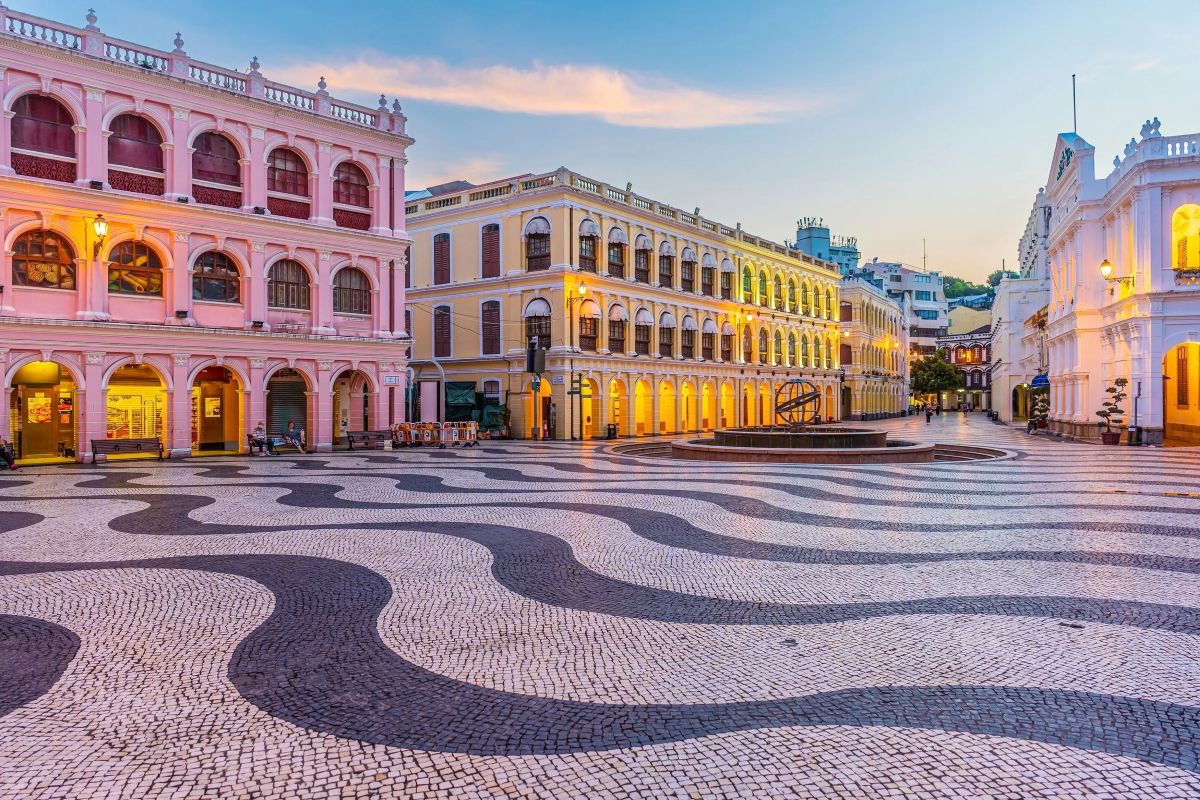
The world’s entertainment capitals are entering a new phase as tourism ecosystems move beyond casinos towards gastronomy, luxury retail, MICE, family attractions and major events. Hong Kong, Macao, Singapore and Las Vegas illustrate four distinct versions of this shift, although their tourism structures remain very different. In 2025, Hong Kong recorded 49.9 million visitor arrivals, while Macao welcomed 40.07 million. Singapore attracted 16.9 million visitors and generated a record S$32.8 billion in tourism receipts, while Las Vegas received 38.55 million visitors. The more revealing numbers concern spending, conventions and length of stay, showing how destinations are trying to capture a larger share of the visitor economy beyond gaming.
The New Economics of Entertainment Travel
For decades, Las Vegas and Macao were strongly identified with gaming, while Hong Kong and Singapore built broader urban tourism propositions. That distinction is becoming less useful as destinations increasingly develop multi-layered visitor economies combining accommodation, dining, shopping, events, attractions and business travel.
Advertisement
Advertisement
The strategic change is important for travellers because a destination becomes less dependent on one reason for visiting. A convention can generate restaurant demand, a concert can fill hotels, and a family attraction can extend a weekend itinerary. In turn, these overlapping activities create more opportunities for visitors to stay longer and spend across several sectors.
The four destinations, however, are not pursuing identical strategies. Macao is attempting to expand a tourism economy where gaming remains exceptionally significant, Singapore has embedded integrated resorts within a wider national tourism strategy, Las Vegas has expanded its convention and entertainment proposition, and Hong Kong is using culture, events and MICE tourism to deepen visitor spending.
Advertisement
Advertisement
Four Cities Reveal Four Tourism Models
The headline visitor figures show the extraordinary scale of these destinations, but they do not tell the entire story. Their statistical frameworks also differ, so the figures should be read as indicators rather than a direct performance league table.
Advertisement
Advertisement
| Destination | 2025 visitor arrivals | Major diversification lever | Important 2025 indicator |
|---|---|---|---|
| Hong Kong | 49.9m | MICE, culture, mega-events, gastronomy | 2.51m MICE visitors |
| Macao | 40.07m | MICE, retail, dining, entertainment | MOP80.12bn non-gaming spending |
| Singapore | 16.9m | MICE, attractions, integrated resorts | S$32.8bn tourism receipts |
| Las Vegas | 38.55m | Conventions, sports, shows, dining | US$50.8bn direct visitor spending |
Hong Kong recorded about 49.9 million arrivals in 2025, representing 12% growth over 2024. Mainland arrivals reached around 37.8 million, while non-Mainland arrivals climbed about 15% to 12.1 million. The destination also welcomed 2.51 million MICE visitors, with 1.43 million staying overnight and generating around HK$10.7 billion in spending.
Macao’s 40.07 million arrivals rose 14.7% in 2025, but the composition tells a more complicated story. Same-day visitors reached 23.52 million, compared with 16.54 million overnight visitors, pushing the average stay down to 1.1 days.
That distinction matters because visitor volume does not automatically equal deeper tourism value. A destination receiving millions of short visits faces a different commercial challenge from one attracting fewer visitors who stay several nights.
Advertisement
Advertisement
Macao Tests Life Beyond Gaming
Macao provides perhaps the clearest real-world laboratory for diversification because its traditional gaming identity remains powerful. In 2025, non-gaming visitor spending reached MOP80.12 billion, increasing 6.3% year-on-year, even though per-capita non-gaming spending fell 7.3% to MOP2,000.
The spending mix also reveals where the visitor economy is concentrating. During the fourth quarter, shopping accounted for 45.4% of non-gaming expenditure, accommodation represented 25%, and food and beverages contributed 20.6%.
Advertisement
Advertisement
Macao’s MICE segment offers another important signal. The city staged 1,861 MICE events in 2025, up 22.1%, while participants and attendees increased 10.7% to 1.473 million. MICE-driven receipts for non-gaming industries rose 16.4% to MOP6.28 billion.
The contrast becomes sharper when visitor purpose is considered. MICE visitors recorded per-capita non-gaming spending of MOP4,572 in 2025, more than twice the overall visitor average of MOP2,000. That suggests business events can help destinations capture higher-value spending beyond their traditional entertainment base.
Yet diversification should not be confused with replacement. Macao’s gaming economy remains enormous, making its transformation a story about adding revenue channels rather than simply removing gaming from the equation.
Singapore Builds the Integrated Visitor Economy
Singapore offers a different model because its integrated resorts were conceived as broad tourism developments rather than standalone casinos. The Singapore Tourism Board describes Marina Bay Sands and Resorts World Sentosa as developments combining hotels, convention facilities, attractions, luxury retail, fine dining and entertainment.
Both resorts have committed approximately S$10 billion to expansion plans. Marina Bay Sands’ programme includes a 15,000-seat entertainment arena and a luxury all-suite hotel, while Resorts World Sentosa is developing attractions including the Singapore Oceanarium, Illumination’s Minion Land and Super Nintendo World.
Advertisement
Advertisement
The wider tourism numbers show why this strategy matters. Singapore welcomed 16.9 million international visitors in 2025 and recorded a record S$32.8 billion in tourism receipts. MICE tourism receipts reached S$2.3 billion, rising 35% from S$1.7 billion in 2024.
Singapore is also looking beyond the existing integrated-resort footprint. Its proposed Downtown MICE Hub would combine meetings, accommodation, dining, retail, entertainment and attractions within one integrated development. STB intends to launch the development tender in 2027.
The direction is therefore broader than casino diversification. Singapore is designing connected visitor districts where business, leisure and entertainment can reinforce one another.
Las Vegas Turns Conventions Into Tourism Fuel
Las Vegas demonstrates how an entertainment capital can evolve without abandoning its signature identity. In 2025, the destination welcomed 38.55 million visitors and 5.99 million convention delegates, while direct visitor spending reached US$50.8 billion. The total tourism economic impact stood at US$80.9 billion.
The city’s accommodation infrastructure also shows the scale of this ecosystem. Las Vegas had about 150,300 hotel rooms in 2025, with annual occupancy at 80.3% and approximately 44 million occupied room nights. Its meeting inventory totalled more than 14.5 million square feet.
Advertisement
Advertisement
Visitor behaviour further illustrates the diversification. About 21% of visitors attended a show in 2025, while 5% attended a sporting event. The average trip lasted 3.2 nights, and 14% of visitors travelled with someone under 21.
Gaming remains important, with Clark County gaming revenue reaching US$13.7 billion in 2025. However, the broader tourism figures show that Las Vegas now operates as a substantial convention, hospitality, entertainment, dining and sports economy alongside gaming.
Hong Kong Expands the Experience Economy
Hong Kong presents the strongest contrast because it does not depend on casino tourism. Its strategy instead connects shopping, gastronomy, culture, sports, business events and major international occasions.
In 2025, more than 360 MICE events took place at the Hong Kong Convention and Exhibition Centre and AsiaWorld-Expo. The government has also sought to connect MICE organisers with mega-events and seasonal activities, encouraging business visitors to extend their itineraries.
The city’s approach reflects a broader shift towards experience-led urban tourism. Gastronomy has become part of destination branding, while art, sporting occasions and cultural programming increasingly function as visitor magnets rather than supporting activities.
Advertisement
Advertisement
That strategy can alter the traveller’s itinerary. A visitor attending a convention can add a food district, cultural attraction or major event, while leisure travellers can combine shopping with dining and entertainment.
MICE Becomes the High-Value Connector
Business events deserve particular attention because they connect several parts of the tourism supply chain. Delegates need accommodation, meeting facilities, transport and restaurants, while many also consume leisure experiences before or after an event.
Singapore has made this segment central to its long-term tourism planning. STB says MICE visitors spend about twice as much as leisure visitors on average and has set an ambition to triple MICE tourism receipts by 2040.
The current trajectory is already substantial. Singapore generated S$2.3 billion in MICE tourism receipts in 2025, while Macao generated MOP6.28 billion in non-gaming receipts from MICE activity. Las Vegas attracted almost six million convention delegates.
| MICE indicator | Hong Kong | Macao | Singapore | Las Vegas |
|---|---|---|---|---|
| 2025 MICE visitors/participants | 2.51m visitors | 1.473m participants | MICE receipts S$2.3bn | 5.99m delegates |
| Key economic role | Overnight spending | Non-gaming receipts | High-value tourism | Hotel and convention demand |
| Strategic direction | More international events | Larger exhibitions | Triple receipts by 2040 | Large-scale conventions |
The figures use different statistical definitions, but the underlying pattern is clear. Business travel has become a bridge between tourism categories, allowing destinations to capture spending beyond the event itself.
Advertisement
Advertisement
Families Change the Destination Equation
Family attractions provide another route away from casino-centred positioning. Singapore’s Resorts World Sentosa is expanding its attraction portfolio with the Oceanarium and themed experiences, while Sentosa already combines beaches, hotels, golf, dining, wellness and entertainment.
The city is also developing entirely new tourism categories. A planned wellness attraction at Marina South is expected to attract around two million visitors annually at full capacity, with nearly half projected to be international visitors. It is scheduled to open by 2030.
Las Vegas is following a different route through sports and entertainment. Its 2025 visitor data show that shows and sporting events already form meaningful parts of visitor itineraries. The city can therefore sell experiences to different demographic groups without discarding its established entertainment identity.
For travellers, this means the traditional question of whether a destination is “for gamblers” or “for families” is becoming increasingly inadequate. Modern entertainment districts are assembling multiple reasons to visit within the same urban footprint.
What The Numbers Mean for Travellers
The diversification trend has practical consequences for trip planning. Visitors can increasingly combine business, leisure, food, shopping, culture and entertainment within one trip, potentially reducing the need to choose between specialist destinations.
Advertisement
Advertisement
For short-break travellers, the density of attractions can be particularly useful. However, Macao’s 1.1-day average stay shows that having more attractions does not automatically translate into longer visits. Destinations still need compelling reasons for travellers to convert day trips into overnight stays.
For business travellers, the opportunity is even clearer. MICE calendars can create access to restaurants, exhibitions, cultural events and entertainment that may otherwise require a separate leisure trip.
| Traveller type | Emerging opportunity |
|---|---|
| Leisure traveller | Combine attractions, dining, shopping and events |
| Family traveller | Access themed attractions and entertainment |
| Business traveller | Extend conferences into leisure stays |
| Luxury traveller | Combine hotels, dining, retail and entertainment |
| Short-break visitor | Build dense multi-experience itineraries |
The Next Race Is for Extra Nights
The most significant lesson from these four destinations is not that casinos are disappearing. Instead, the evidence points towards a more sophisticated visitor-economy architecture, where gaming, entertainment, conventions, gastronomy, retail and attractions feed one another.
Singapore’s Tourism 2040 roadmap captures that longer-term direction particularly clearly. The city aims to lift tourism receipts to S$47 billion–S$50 billion by 2040 while growing receipts faster than international visitor arrivals.
Macao faces a different challenge because same-day visitation remains dominant. Hong Kong is seeking more high-value overnight visitors, while Las Vegas has already built a huge convention and entertainment machine around its established resort infrastructure.
Advertisement
Advertisement
For the wider travel industry, the lesson is increasingly relevant. The strongest entertainment destinations may not be those with the biggest single attraction, but those that connect the greatest number of visitor experiences into one economic ecosystem.
The transformation also changes what travellers should look for when choosing a destination. A city with concerts, exhibitions, distinctive restaurants, family attractions, luxury retail and walkable entertainment districts can create more itinerary flexibility than a destination built around one signature product.
The next stage of urban tourism will therefore be measured less by arrivals alone. Length of stay, non-core spending, MICE receipts, repeat visitation and the breadth of visitor activity will increasingly reveal how deeply tourism is embedded in the wider city economy. Hong Kong, Macao, Singapore and Las Vegas are already demonstrating different versions of that model, making entertainment city tourism an increasingly important blueprint for destinations seeking resilient growth.
Advertisement
