
UAE Joins Iran, Saudi Arabia, US, Germany, Spain, France, India, Japan and Others in Monumental Global Drive to Open Alternative Oil, LNG and Jet Fuel Supply Corridors Beyond the Strait of Hormuz to Sustain Travel Recovery and Prevent Tourism Collapse in 2026

Published
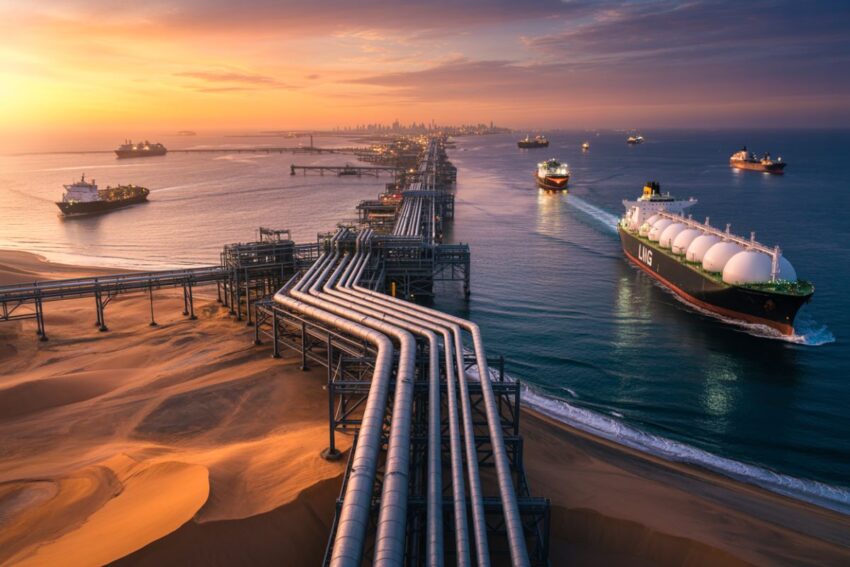 Image generated with Ai
UAE joins Iran, Saudi Arabia, US, Germany, Spain, France, India, Japan and others in a global initiative to open alternative oil, LNG, and jet fuel supply corridors beyond the Strait of Hormuz, ensuring stable energy flow to sustain travel recovery and prevent tourism collapse in 2026. In 2026, the endurance of global travel and tourism increasingly hinges on the security and diversity of energy supply systems. The Strait of Hormuz, a narrow maritime gateway between the Persian Gulf and the Gulf of Oman, has historically been the most significant global chokepoint for oil and liquefied natural gas (LNG) exports. According to the U.S. Energy Information Administration (EIA), approximately one‑fifth of the world’s crude oil and nearly 20 % of global LNG transit these waters under normal conditions. This dependence places immense pressure on import‑dependent economies and sectors like aviation, hospitality, and long‑distance travel, which require stable fuel supplies to operate and grow. Governments and intergovernmental coalitions across the globe have been actively planning and investing in alternative energy export routes that do not depend on passage through the Strait of Hormuz. These initiatives span new pipeline infrastructure, expanded storage and transshipment facilities, and coordinated international energy cooperation frameworks designed to sustain international travel demand and avert large‑scale disruptions in tourism markets.
Global Push for Alternative Oil, LNG, and Jet Fuel Corridors to Secure Energy Supply in 2026
In 2026, countries across the globe are rapidly expanding alternative energy corridors to reduce dependency on the Strait of Hormuz, a chokepoint critical for about 20% of global oil and LNG trade. Governments are investing in pipelines, storage facilities, and coordinated export routes to maintain uninterrupted delivery of crude, refined products, and LNG. According to the International Energy Agency (IEA), these corridors are essential for stabilizing fuel availability for airlines, shipping, and transport sectors that underpin tourism. This global strategy ensures energy security and market resilience during prolonged disruptions.
- Expanding pipelines, storage, and LNG export routes.
- Coordinated international stock releases to stabilize markets.
- Crude and refined fuel flows diversified across multiple corridors.
- Multilateral energy agreements to mitigate chokepoint risks.
- Supports aviation and transport sectors critical to tourism.
| Metric | Details |
|---|---|
| Global corridor investments | Rising 2026 |
| New pipeline capacity | ~12 mbpd added |
| Strategic reserve releases | Multinational programs |
| LNG export relocations | Gulf Coast & Atlantic routes |
Why Bypassing the Strait of Hormuz is Critical for Global Energy Security
The Strait of Hormuz, connecting the Persian Gulf to the Gulf of Oman, is the world’s most vital energy transit point. Roughly 20% of crude oil and a significant share of global LNG flows rely on this narrow waterway. Any disruption triggers sharp price volatility and supply shortages, impacting aviation, shipping, and tourism-dependent economies. Alternative corridors, including pipelines, overland routes, and coordinated export strategies, reduce this vulnerability. According to the U.S. Energy Information Administration (EIA), creating redundancies is crucial for ensuring stable jet fuel and transport fuel availability worldwide.
- ~20% of global crude passes through Hormuz.
- LNG shipments from Qatar and UAE also transit Hormuz.
- Disruptions cause immediate price spikes and supply gaps.
- Aviation and tourism sectors are highly energy-sensitive.
- Alternative corridors enhance global supply reliability.
| Metric | Hormuz Flux |
|---|---|
| Crude oil transit dependency | ~20% |
| LNG transit through Hormuz | ~18–20% |
| Price sensitivity | High |
| Travel fuel risk exposure | High |
UAE’s Expanded Bypass Strategy to Sustain Global Fuel Flows in 2026
The United Arab Emirates is accelerating construction of a second major oil pipeline designed to bypass the Strait of Hormuz entirely, responding to sustained closures that have suppressed roughly one‑fifth of global seaborne oil flows. This West‑East Pipeline will expand export capacity from Abu Dhabi’s Habshan fields to Fujairah on the Gulf of Oman by 2027, effectively raising available export volumes well beyond the current capacity of the 1.8 million barrels per day (bpd) Habshan‑Fujairah line. The UAE and Saudi Arabia remain the only Gulf producers capable of routing crude outside Hormuz without maritime transit.
Advertisement
Advertisement
- UAE accelerating oil bypass pipeline to double export capacity by 2027.
- Existing Habshan‑Fujairah line handles ~1.8 mbpd today.
- Reduced reliance on Hormuz increases energy export resilience.
- Fujairah becomes strategic export hub for crude and refined products.
- Project directive from UAE Cabinet prioritises export security amid crisis.
| Metric | Value |
|---|---|
| Current Bypass Capacity | ~1.8 mbpd |
| Planned Capacity With Expansion | ~3.6 mbpd |
| Target Commissioning | 2027 |
| Strategic Goal | Bypass Hormuz exports |
Iran’s Strategic Energy Transit Control and New Corridor Negotiations
Despite geopolitical turmoil, Iran has leveraged its control over the Strait of Hormuz to shape energy trade arrangements while seeking alternative transit agreements. Tehran is actively negotiating bilateral energy corridors with neighbouring importers such as Iraq and Pakistan to secure deliveries of crude and LNG despite the disrupted maritime routes. Iran also continues to develop the Goreh‑to‑Jask pipeline to export oil through the Gulf of Oman, lessening, but not eliminating, reliance on Hormuz shipping lanes. These government‑level engagements aim to stabilise Iran’s energy exports while providing import flexibility for partners.
- Iran negotiates energy transit rights with Iraq, Pakistan.
- Iran’s Goreh‑Jask pipeline offers a non‑Hormuz export option.
- Bilateral deals protect revenue streams amid conflict.
- Control over Hormuz gives Tehran leverage in energy diplomacy.
- Export strategies target continuity rather than full route restoration.
| Metric | Status |
|---|---|
| Iran‑Iraq energy agreements | Active |
| Iran‑Pakistan LNG deliveries | Secured |
| Goreh‑Jask pipeline utilisation | Moderate |
| Hormuz control impact | High leverage |
Saudi Arabia’s East‑West Pipeline Emerges as a Major Crude Diversion Bypass
Saudi Arabia operates the East‑West oil pipeline network, which transports crude from eastern oil fields across the Arabian Peninsula to terminals on the Red Sea at Yanbu. In 2026, that system has reached full operational capacity of roughly 7 million bpd, enabling crude exports to Europe, North America and Asia without transiting the Strait of Hormuz. While this capacity does not fully replace the normal ~20 million bpd flow through Hormuz, it significantly mitigates the disruption’s impact on global supply security, supporting aviation fuel and refined product availability in key markets.
Advertisement
Advertisement
- Saudi East‑West pipeline at ~7 mbpd throughput.
- Bypasses Strait of Hormuz to reach Red Sea ports.
- Supplies crude for overseas refineries and bunkering.
- Offset is partial relative to Humorz’s 20 mbpd.
- Critical to stabilising refined product flows.
| Metric | Value |
|---|---|
| East‑West Pipeline Capacity | ~7 mbpd |
| Export Volume via Yanbu | ~5 mbpd |
| Relative to Hormuz Normal Flow | <50% |
| Operational Status | Full capacity |
United States’ Energy Export Surge and Strategic Diversification
The United States has rapidly increased crude oil and LNG exports as global markets adjust to the protracted closure of the Strait of Hormuz. US strategic petroleum reserves and commercial export licences have been deployed to augment global supplies, particularly to Asia and Europe. In addition, US LNG export terminals along the Gulf Coast are operating at high utilisation, helping offset part of the lost GCC gas volumes from Qatar and UAE, which historically moved about 20 % of global LNG through Hormuz. This diversification supports global transport fuel availability and helps moderate jet fuel supply shortages crucial for the travel sector.
- US LNG export capacity expanded to meet international demand.
- Strategic reserve releases help stabilise crude markets.
- US crude now redirected to Asian and European buyers.
- Reduced GCC dependency provides alternative supply.
- Supports aviation fuel needs in 2026 travel recovery.
| Metric | Status |
|---|---|
| US LNG export growth | Strong |
| SPR releases | Employed |
| Destination markets | Asia, Europe |
| Impact on fuel supply | Moderating shortages |
Germany’s Policy Response to Energy Supply Shocks
Germany has been affected indirectly by the Strait of Hormuz crisis primarily through rising global fuel prices and refined product competition. While Germany’s domestic crude production is modest, Berlin has prioritised diversification of energy imports and utilisation of Strategic Fuel Reserves under EU frameworks. Policy responses include accelerating LNG terminal readiness on the North Sea and fostering bilateral supply agreements with Atlantic Basin producers to hedge against Middle East chokepoint risks. These measures aim to preserve jet fuel and transport energy security for aviation and tourism continuity.
Advertisement
Advertisement
- Germany focuses on LNG import diversification.
- Strategic reserve policies support fuel continuity.
- EU coordination under energy shock frameworks.
- Reduced reliance on single energy chokepoint.
- Aviation and tourism sectors benefit indirectly.
| Metric | Strategy |
|---|---|
| LNG diversification | Active |
| Strategic reserves use | Prepared |
| EU policy alignment | Strong |
| Impact on travel fuels | Stabilising |
Spain’s Emergency Oil Releases and Supply Measures
Spain has participated in coordinated emergency releases of crude oil reserves with over 30 other nations to alleviate supply shocks from the Strait of Hormuz disruption. In March 2026, Spain backed a historic release of 400 million barrels of collective strategic reserves over 90 days, aiming to temper global price volatility and preserve refined product availability, including jet fuel critical for aviation. These measures assist Spanish airlines and tourism operators coping with elevated costs, supporting broader travel recovery goals.
- Spain backed release of 400 million strategic barrels.
- Coordinated with 32 other nations.
- Aims to stabilise global fuel price spikes.
- Supports aviation and transport sectors.
- Short‑term relief measure amid protracted chokepoint crisis.
| Metric | Data |
|---|---|
| Strategic oil release | 400 million barrels |
| Duration | 90 days |
| Participating countries | 32 |
| Targeted products | Crude & refined products |
France’s Strategic Energy Coalition and Reserve Policies
France has responded to global energy supply uncertainty with strategic coordination through EU mechanisms and national reserve policies. Paris advocates for collective emergency stock releases and fuel‑saving measures at the European level, aiming to mitigate jet fuel supply pressures that could otherwise compromise airline schedules and tourism demand. While France is not a major crude producer, its policies focus on energy market stability, transitional fuel supply agreements, and cross‑border coordination to ease price volatility.
- France pushes EU coordinated energy stock policies.
- Emphasis on stabilising jet fuel availability.
- Supports member states’ diversified imports.
- Focus on price moderation and supply security.
- French aviation sector resilience priority.
| Metric | Approach |
|---|---|
| EU strategic coordination | High |
| Jet fuel focus | Priority |
| Reserve utilisation | Prepared |
| Cross‑border alliances | Strengthened |
India’s Bilateral and Strategic Supply Negotiations
India is pursuing bilateral negotiations to secure alternatives to Hormuz‑dependent supply, including talks about Iran‑backed corridors and expanded import agreements with Gulf producers, as full recovery of Hormuz transit levels remains distant in 2026. The Indian government also monitors domestic petroleum stock levels to reassure short‑term fuel availability, protecting aviation and logistics sectors crucial to tourism recovery. New Delhi’s approach underscores strategic diversification and diplomatic energy partnerships.
- India may negotiate direct Iran‑linked supply corridors.
- Domestic fuel inventories deemed sufficient short‑term.
- Focus on import diversification with Gulf partners.
- Aviation sector protected with strategic monitoring.
- Energy security critical for tourism and transport.
| Metric | Status |
|---|---|
| Iran corridor talks | Ongoing |
| Domestic stockpiles | Stable |
| Import diversification | Strategic priority |
| Tourism support focus | High |
Japan’s Alternative Sourcing and Strategic Releases
Japan’s refining sector has adjusted sharply to the Hormuz disruption by increasing refinery utilisation to over 70 % through alternative crude sources and significant releases from its strategic oil reserves, amounting to supplies equivalent to roughly 75 days of consumption. Japanese refiners have sourced crude from the U.S., Caspian region, Latin America, and non‑sanctioned Russian producers, while its LNG supply has remained steady with only a small fraction transiting Hormuz. These adaptations have helped maintain fuel supplies for transport and aviation critical to Japan’s travel sector.
Advertisement
Advertisement
- Japanese refineries increasing runs above 70 %.
- Alternative crude imports from multiple global sources.
- Strategic reserves released to bolster supply.
- Only ~6 % of LNG transited through Hormuz historically.
- Preserves jet fuel and transport energy security.
| Metric | Impact |
|---|---|
| Refinery utilisation | >70 % |
| Strategic reserve drawdown | ~75 days consumption |
| Alternative crude sources | Expanded |
| LNG disruption impact | Limited |
How Alternative Energy Corridors Ensure Aviation and Travel Recovery in 2026
Alternative energy corridors stabilize the availability of jet fuel and refined products essential for global aviation networks. By creating pipeline and LNG export routes outside Hormuz, and coordinating emergency stockpile releases, governments provide airlines with predictable supply, supporting flight schedules and pricing stability. The International Civil Aviation Organization (ICAO) confirms that fuel predictability is critical for airline route planning. Reliable energy flows allow airlines to maintain capacity, prevent cancellations, and sustain long-distance travel. This ensures tourism sectors remain operational even during prolonged disruptions to traditional maritime channels.
- Diversified fuel supply reduces operational risk for airlines.
- Stable jet fuel availability maintains flight schedule reliability.
- Prevents travel demand contraction due to sudden shortages.
- Reduces costs for airline operations and ticket pricing.
- Supports international tourism recovery and connectivity.
| Metric | Impact |
|---|---|
| Jet fuel supply buffer | Increased |
| Airline operational resilience | Enhanced |
| Schedule reliability | Improved |
| Tourism destination access | Broader |
Preventing Tourism Collapse: The Role of Alternative Oil, LNG, and Jet Fuel Routes
Reliable energy underpins tourism infrastructure, from airports and hotels to cruise ships and local transport. Interruptions or price spikes threaten travel demand, reduce airline frequency, and strain hospitality operations. Alternative oil, LNG, and jet fuel corridors provide redundancy to ensure consistent supply. According to the World Tourism Organization (UNWTO), predictable fuel availability is a key factor in maintaining tourism revenue and economic stability. By bypassing Hormuz, governments protect aviation networks, reduce price shocks, and safeguard global tourism, preventing potential economic losses that could arise from prolonged fuel disruptions. (UNWTO)
- Predictable energy prices support consumer travel confidence.
- Ensures operational stability for hotels and transport services.
- Reduces risk of abrupt tourism downturns.
- Supports long-distance travel, cruise, and airline networks.
- Provides redundancy in critical fuel supply chains.
| Metric | Tourism Impact |
|---|---|
| Fuel price stability | Critical |
| Airline route sustainability | Essential |
| Hotel operational resilience | Enabled |
| Cruise network reliability | Supported |
In conclusion, UAE alongside Iran, Saudi Arabia, US, Germany, Spain, France, India, Japan and others have collectively advanced a monumental global drive to open alternative oil, LNG, and jet fuel supply corridors beyond the Strait of Hormuz, ensuring resilient energy flow, stabilizing fuel availability, sustaining travel recovery, and preventing tourism collapse in 2026. By diversifying routes, expanding pipelines, and coordinating reserves, these nations strengthen global transport and aviation networks, mitigate chokepoint risks, and provide the logistical foundation required for stable tourism economies and uninterrupted international mobility.
Advertisement
