
Plovdiv, Bulgaria Emerges as Europe’s Ancient Tourism Powerhouse With 48-Hour Cultural Route Through Roman Ruins, Old Town Heritage and Creative District Revival

Published
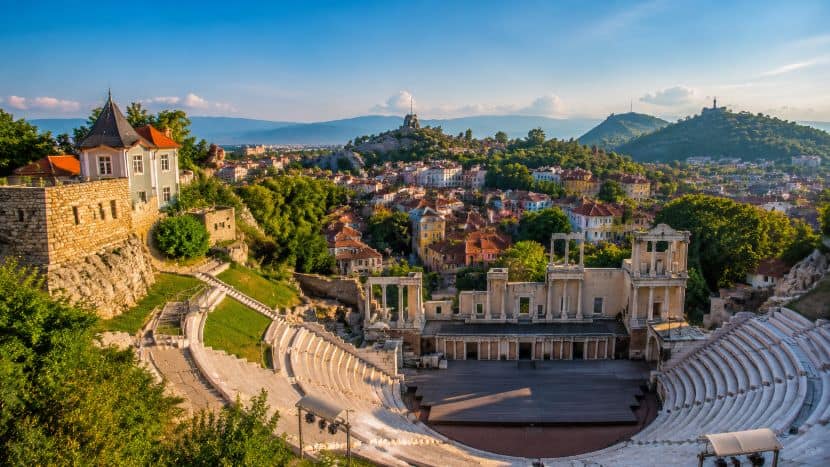
Plovdiv in Bulgaria is increasingly positioned as one of Europe’s most historically layered urban destinations, with official cultural and tourism institutions recognising its significance as a continuously inhabited settlement for millennia. The city of Plovdiv offers a compact, structured tourism experience that can be explored effectively within 48 hours, combining Thracian origins, Roman architectural heritage, Ottoman-era urban development and modern creative districts. The Bulgarian tourism framework highlights Plovdiv as a key cultural tourism hub, supported by heritage preservation policies and urban regeneration initiatives that align with national tourism development strategies.
Plovdiv’s tourism appeal is anchored in its UNESCO-recognised cultural zones, archaeological conservation areas and pedestrian-friendly city structure. The destination integrates ancient ruins with contemporary urban life, creating a continuous historical landscape that remains accessible within walking distance.
Plovdiv Old Town Preserves Multi-Layered Civilisation Through Restored Architectural Heritage Zones
The Old Town of Plovdiv forms the core of its cultural tourism identity and is officially protected as an architectural and historical reserve under Bulgaria’s national heritage conservation framework. The district is characterised by cobblestone streets, restored merchant houses from the Bulgarian National Revival period and archaeological remains that reflect earlier Thracian and Roman settlement layers.
The area demonstrates how urban conservation policy has preserved historic residential structures while maintaining public access for cultural tourism. Houses such as traditional 18th and 19th-century merchant residences display wood-carved interiors, frescoed walls and period architecture that reflect the economic and cultural development of the region during the Ottoman and post-Ottoman eras.
Advertisement
Advertisement
The elevated sections of the Old Town, particularly Nebet Tepe, provide archaeological evidence of one of the earliest fortified settlements in the region. Official cultural heritage documentation identifies this site as a key stratified archaeological zone where Thracian, Roman and medieval remains coexist within a single urban landscape.
The Old Town remains a central component of Plovdiv’s tourism strategy due to its accessibility and concentration of preserved heritage assets within a compact geographical area.
Advertisement
Advertisement
Ancient Roman Infrastructure in Plovdiv Reinforces Its Role as a Living Archaeological City
Plovdiv’s Roman heritage represents one of the most significant preserved ancient urban systems in Southeastern Europe. The Ancient Theatre of Philippopolis, constructed in the 1st century AD during Roman rule, remains one of the best-preserved ancient theatres in the region. According to Bulgarian cultural heritage authorities, the structure continues to function as a performance venue, reflecting adaptive reuse principles in heritage conservation.
The Roman Stadium, partially integrated beneath the modern pedestrian zone, illustrates how ancient infrastructure has been incorporated into the contemporary urban fabric. Only sections of the stadium are visible above ground, while the majority remains preserved beneath commercial and pedestrian developments. This layered integration demonstrates a planning model where archaeological preservation coexists with modern infrastructure.
Advertisement
Advertisement
The presence of Roman urban planning elements, including streets, public buildings and entertainment structures, highlights Plovdiv’s historical role as Philippopolis, an important provincial centre in the Roman Empire. The city’s archaeological zones are managed under strict preservation guidelines established by Bulgaria’s national cultural heritage legislation.
Kapana Creative District Transforms Industrial Heritage Into a Modern Cultural Economy Zone
Kapana district represents Plovdiv’s contemporary cultural and economic transformation. Official urban development programmes classify Kapana as a creative industries zone, where former industrial and commercial buildings have been repurposed into cultural spaces. The district is now a hub for design studios, artisan workshops, galleries and small-scale cultural enterprises.
The urban layout of Kapana is defined by narrow interconnected streets that encourage pedestrian movement and social interaction. This structure supports local tourism development strategies focused on experiential travel and cultural immersion. The district also contributes to Bulgaria’s broader creative economy initiatives, which aim to revitalise urban centres through cultural investment and small business development.
Kapana’s transformation reflects a shift in urban policy where historic districts are not only preserved but actively integrated into modern economic systems. The district functions as a transitional zone between Plovdiv’s ancient heritage core and its contemporary urban expansion.
Advertisement
Advertisement
Plovdiv’s Hilltop Geography and Green Urban Spaces Enhance Its Tourism Accessibility
Plovdiv is geographically defined by a series of hills that have historically influenced its settlement pattern and urban development. Bunardzhika Hill and Sahat Tepe are among the most accessible elevated areas, providing panoramic views of the city and surrounding plains. These natural formations are integrated into municipal urban planning as protected green zones and recreational areas.
Public parks such as Tsar Simeon Garden serve as key urban leisure spaces within the city centre. The garden, developed in the late 19th century and maintained under municipal governance, includes landscaped pathways, fountains and public recreational infrastructure. It plays a role in enhancing the city’s tourism accessibility by offering rest areas within walking distance of major heritage sites.
These green spaces contribute to Plovdiv’s classification as a walkable tourism destination, where cultural, historical and natural assets are concentrated within a compact urban footprint.
Integrated Heritage Model Positions Plovdiv as a High-Value Short-Stay Cultural Destination
Plovdiv’s tourism framework demonstrates a fully integrated heritage model supported by national and municipal policies. The combination of preserved archaeological sites, regulated Old Town conservation zones, creative district redevelopment and accessible public spaces positions the city as a leading short-stay cultural tourism destination in Europe.
The 48-hour exploration model reflects the city’s compact geography and dense concentration of heritage assets. This structure allows for sequential cultural immersion across multiple historical layers, including Thracian settlement zones, Roman infrastructure, Ottoman-era architecture and contemporary creative industries.
Plovdiv continues to strengthen its role within Bulgaria’s national tourism strategy as a destination that balances heritage preservation with modern urban development. Its layered historical identity and accessible infrastructure reinforce its position as a significant European cultural tourism hub.
Advertisement
