
France CAF Tram-Train Witnesses a Boost as T13 Line Expansion Transforms Yvelines Travel in 2026

Published
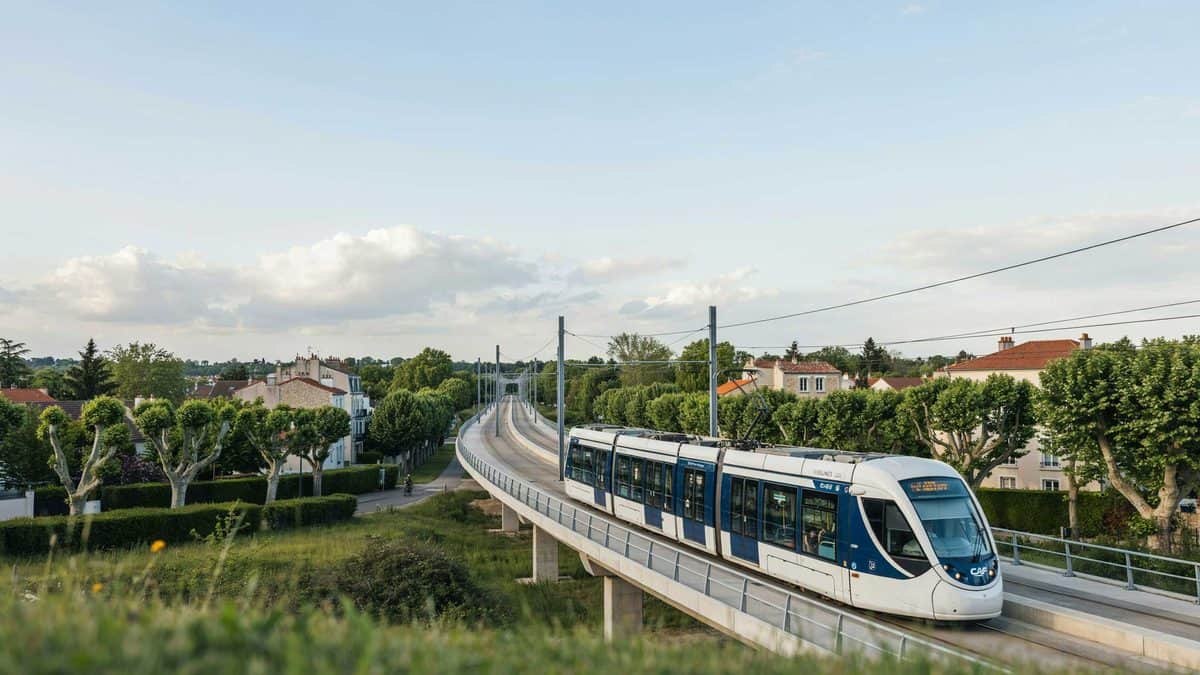
Image generated with Ai
The Île-de-France region’s regional transport agency recently committed to a €150 million contract with CAF to purchase 15 tram-trains. The new trains should be on track by the time services extend the T13 tram-train line towards Achères, a suburban town, in 2028. The project will be the first part of a much larger overhaul of regional transport systems of the Paris region. The tram-train system will provide faster and newer transport services to connect people and communities across and beyond the region, thus, improving and enhancing current transport services. Commuters, residents, and tourists will appreciate the contract when they begin to enjoy the improved services and connectivity between Paris and its suburban communities.
Though the project will take about a year to appreciate, this contract will help establish regional transport systems for the Paris region. The contract will establish the infrastructure of urban tram-based transport systems, and together with the accessibility and transport services of the Saint-Germain-en-Laye, Poissy, and Achères rail corridor and transport accessibility corridor, will improve regional transport and reduce the burden of private vehicular transport.
The new CAF vehicles will also improve and provide a basis for efficient and sustainable transport services in the region for a long time with high transport capacity and superior comfort.
The €150 Million Investment Behind Paris Region’s Next Transport Leap
The contract awarded to CAF includes the supply of 15 tram-train units based on the company’s URBOS platform. The agreement also includes options covering spare parts and additional vehicles, creating flexibility for future passenger demand growth.
Advertisement
Advertisement
The investment comes as Île-de-France Mobilités continues upgrading transport connections outside central Paris. The goal is to create a network where passengers can move more easily between suburban towns without needing to travel through major city interchange points.
Advertisement
Advertisement
The T13 line already plays an important role in western Paris mobility. Since opening in 2022, it has connected Saint-Germain-en-Laye and Saint-Cyr-l’École in the Yvelines department, serving areas including Mareil-Marly, L’Étang-la-Ville, Noisy-le-Roi, Bailly and Versailles.
The planned extension towards Achères will expand the line’s influence and strengthen links with major regional transport services.
The project’s key figures highlight its scale:
| Project Element | Details |
|---|---|
| Location | Yvelines, Île-de-France, France |
| Operator Network | Île-de-France Mobilités regional transport system |
| Supplier | CAF |
| Investment Value | More than €150 million |
| Number of New Tram-Trains | 15 units |
| Vehicle Platform | CAF URBOS |
| Vehicle Length | 42 metres |
| Passenger Capacity | 86 seated and 170 standing passengers |
| Low-Floor Accessibility | Around 75% of vehicle area |
| Expected Extension Opening | 2028 |
Why the T13 Extension Could Change Travel Across Yvelines
The biggest impact of the project will come from the planned extension of the T13 line from Saint-Germain-en-Laye to Achères through Poissy. The extension is designed to improve north-south movement across Yvelines and create new connections with existing transport services.
According to Île-de-France Mobilités, the extension will create approximately 10 kilometres of additional tram infrastructure, introduce four new stations and support an expected daily ridership of around 17,000 passengers.
Advertisement
Advertisement
The future service pattern will also improve convenience. During peak periods, passengers are expected to benefit from a tram every 10 minutes, creating a more reliable alternative for commuters travelling across the region.
The new connection will also strengthen links with:
- RER A services at Poissy and Achères.
- RER E connections at Poissy.
- Transilien Line L and other regional transport services.
- Local bus networks supporting surrounding communities.
This is the hidden advantage of the project. The value is not only measured by the number of trains delivered. The real transformation comes from creating a connected transport ecosystem.
What Others Get Wrong About Tram-Trains in Modern Cities
Many transport projects focus only on speed or capacity. However, the T13 expansion demonstrates a different approach.
Tram-trains combine the flexibility of urban trams with the capability of railway vehicles. They can operate through city streets while also using dedicated railway infrastructure. This makes them particularly valuable for regions where communities are spread across suburban areas.
Advertisement
Advertisement
The T13 system is designed to improve regional accessibility without requiring passengers to rely on central Paris as the only connection point.
For travellers and visitors, this could create easier access to destinations beyond the traditional tourist centre. Western Paris contains historic towns, cultural attractions and green spaces that can become more accessible through stronger public transport links.
For residents, the benefits are even broader:
- Shorter and more predictable journeys.
- Improved connections between residential areas and employment centres.
- Better access to education, healthcare and leisure facilities.
- Reduced pressure on road networks.
The project reflects a growing European transport trend where regional mobility investments are becoming central to sustainable urban development.
CAF URBOS Tram-Trains Bring Accessibility and Passenger Comfort Upgrade
The new CAF vehicles will be designed around passenger comfort and accessibility.
Advertisement
Advertisement
Each tram-train will feature seven modules mounted on five bogies, creating a 42-metre-long vehicle capable of carrying 256 passengers in total based on seated and standing capacity figures.
Around 75% of the vehicle will use a low-floor design, helping passengers with reduced mobility, families with pushchairs and travellers carrying luggage move more easily.
The trains will also include:
- Air conditioning systems.
- Dynamic passenger information displays.
- Modern interior layouts.
- Design elements matching Île-de-France Mobilités’ visual identity.
These features reflect changing passenger expectations. Modern travellers increasingly expect public transport to provide comfort, digital information and accessibility rather than simply moving people from one location to another.
The manufacturing process will also support French industrial activity. CAF plans to produce the vehicles at its facility in Bagnères-de-Bigorre in the Hautes-Pyrénées region of France.
Advertisement
Advertisement
The Tourism and Economic Impact Hidden Behind the Railway Investment
Although the project is primarily a transport development, its effects could extend into tourism and regional economic growth.
Better connections often influence how visitors explore destinations. When smaller towns become easier to reach, tourism activity can spread beyond major city centres.
The T13 extension could improve access to western Paris attractions, local heritage sites and surrounding leisure destinations.
The wider economic benefits include:
- Supporting local businesses through improved visitor movement.
- Increasing access to employment areas.
- Encouraging sustainable tourism choices.
- Strengthening connections between communities.
Travel analytics increasingly show that visitors prefer destinations offering simple, connected and reliable mobility options. A destination with strong public transport infrastructure has a competitive advantage because travellers can explore more areas without depending on private vehicles.
Advertisement
Advertisement
The T13 project fits into this wider movement towards connected regional travel.
Paris Region’s Transport Strategy Moves Beyond Traditional Rail Expansion
The CAF order is part of a broader strategy by Île-de-France Mobilités to modernise mobility across the region.
The organisation has focused on improving connections between different transport modes while expanding accessibility and reliability.
The T13 extension is scheduled to progress through infrastructure works before testing and trial operations ahead of the planned 2028 opening.
The project will eventually connect nine municipalities across Yvelines, benefiting more than 316,000 residents and around 138,000 jobs located along the wider corridor.
Advertisement
Advertisement
This demonstrates how regional transport projects are becoming economic development tools.
Rather than viewing rail investment only as infrastructure spending, governments and transport authorities increasingly see it as a way to improve quality of life, support businesses and encourage sustainable growth.
CAF Strengthens Its Position in France’s Growing Mobility Market
The T13 contract also strengthens CAF’s presence in France’s transport sector.
The Spanish rail manufacturer has continued expanding its role in European mobility projects, supplying solutions ranging from trams to regional trains.
The agreement follows another CAF contract to supply additional Régiolis regional trains for SNCF Voyageurs in Nouvelle-Aquitaine, further expanding the company’s involvement in France’s railway market.
Advertisement
Advertisement
The latest order shows increasing demand for flexible transport solutions that can serve both urban and regional environments.
For CAF, the T13 project represents another opportunity to demonstrate how modern rolling stock can support metropolitan growth.
Editorial Perspective: Why This Tram-Train Project Matters for Future Travel
The example of adding tram-trains to the Paris region by CAF shows how transport systems of the future will be efficient, easy to use, and flexible.
In terms of travel, if a system connects cities, suburbs, and places of interest, travelers will be more inclined to go to that destination which in turn will drive the local economy and increase the population.
The advantage of transport networks’ Connectivity is illustrated by the T13 line where ease of travel and price parity will determine a traveler’s destination choice.
Advertisement
Advertisement
Though only adding fifteen new tram-trains may seem like an upgrade to a regional transport system, the transport system has the potential to change how people live and work in western Paris.
The success of the transformation of transport systems to give customers more benefits will depend on how well this investment is used.
During the preparations for the 2028 expansion of the transport system, transport networks have become increasingly intelligent to connect more people to places and offer them various travel experiences.
Advertisement
