
Flight Disruptions across China Creates Travel Hell in Beijing, Shanghai, Chengdu, Chongqing, Guangzhou and Several other Cities as China Eastern, Air China, China Southern, Hainan Airlines and others Face 268 Cancellations 2,425 Delays, New Update

Published
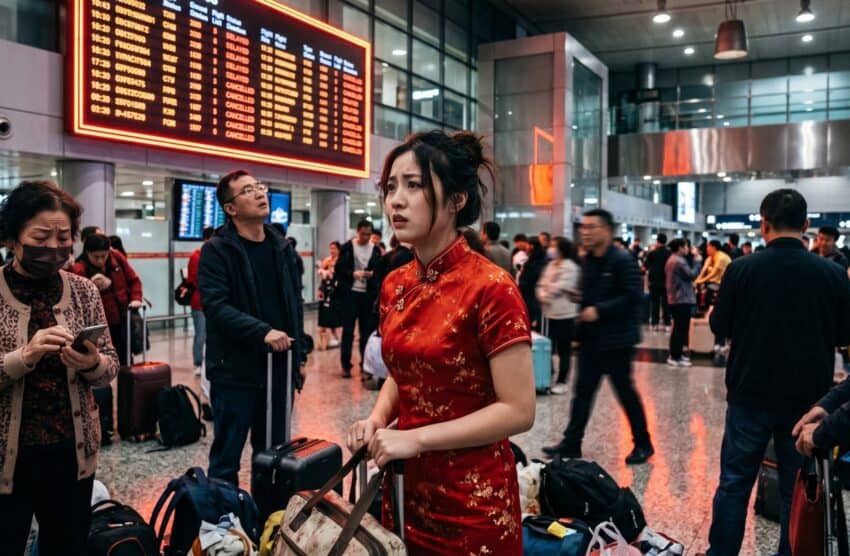
Image generated with Ai
A massive wave of operational instability has swept across the Chinese aviation network on 16th June, 2026, leaving thousands of passengers stranded and schedules severely compromised. A total of 268 flight cancellations and 2,425 flight delays were recorded across the country’s primary aviation hubs, creating severe logistical bottlenecks for domestic and international travellers alike. Major carriers, including China Eastern, Air China, China Southern, and Hainan Airlines, alongside several other regional operators, have been forced to navigate a rapidly compounding backlog of disrupted services. The scale of the disruption has impacted key economic and administrative corridors. Prolonged waiting times have been experienced by commuters traveling through major urban centers such as Beijing, Shanghai, Chengdu, Chongqing, Guangzhou, Guiyang, Haikou, Hangzhou, Hohhot and Nanchang. Terminal buildings across these regions became heavily congested as ground handling teams and airline customer service agents worked to process re-bookings, luggage claims, and alternative transport arrangements.
For an industry that relies heavily on precision scheduling and tight aircraft rotation cycles, a disruption of this magnitude triggers a cascade effect across the entire continent. When an aircraft is delayed or cancelled at a primary hub early in the day, subsequent legs of that aircraft’s scheduled rotation are inevitably compromised. This structural dependency explains why smaller regional gateways were plunged into operational difficulties alongside the country’s largest mega-airports.
Major Airports Affected
The impact of these operational backlog was felt unevenly across the country, though severe pressure was placed on both the capital region and the primary commercial hubs of the east coast. The specific data recorded for each of the affected gateways is detailed below:
- Beijing Capital International Airport: This primary northern hub faced the most extensive delay log of the day, with 405 flights delayed and 58 services cancelled entirely, causing significant difficulties for business and diplomatic travellers in Beijing.
- Beijing Daxing International Airport: The capital’s newer mega-hub was also heavily impacted, with 225 delays and 60 total cancellations recorded, further exacerbating the travel gridlock across the broader Beijing metropolitan area.
- Shanghai Pudong International Airport: As a critical international gateway, this facility saw 249 flights delayed and 12 flights cancelled, disrupting vital long-haul and regional connections centered in Shanghai.
- Shanghai Hongqiao International Airport: Primarily serving high-frequency domestic and corporate routes, this secondary hub in Shanghai recorded 185 delays and 16 cancellations, leaving many business commuters stranded.
- Guangzhou Baiyun International Airport: Situated as a vital southern gateway, this airport registered the highest overall number of delays in the country, with a staggering 479 flights delayed alongside 35 cancellations, severely impacting transport links in Guangzhou.
- Hangzhou Xiaoshan International Airport: Significant operational friction was experienced at this eastern hub, where 252 delays and 27 cancellations were documented, complicating travel plans throughout Hangzhou.
- Chongqing Jiangbei International Airport: Serving as a vital link for the western interior, this major facility in Chongqing recorded 179 delays and 10 cancellations over the 24-hour period.
- Chengdu Shuangliu International Airport: Regional connectivity was further strained in Chengdu, where 143 flight delays and 8 complete cancellations were officially registered.
- Haikou Meilan International Airport: Travel to and from the southern island province was disrupted in Haikou, with 101 flights affected by delays and 15 operations cancelled.
- Hohhot Baita International Airport: Northern regional routes faced setbacks in Hohhot, where 91 delays and 14 flight cancellations were logged by airport authorities.
- Guiyang Longdongbao International Airport: Commuters traveling through Guiyang were met with 59 delayed flights and 7 complete cancellations.
- Nanchang Changbei International Airport: The quietest of the affected hubs still experienced notable disruption in Nanchang, with 57 delays and 6 cancellations recorded by the end of the day.
Impact on Tourism
The immediate logistical chaos seen is highly likely to have a lingering effect on consumer confidence and future tourism patterns across the country. When widespread cancellations and delays occur simultaneously across primary tourist transit hubs like Beijing, Shanghai, Chengdu, Chongqing, Guangzhou, Guiyang, Haikou, Hangzhou, Hohhot, and Nanchang, the reliability of the entire transport infrastructure is brought into question by prospective travellers.
Advertisement
Advertisement
For international visitors, who frequently plan complex, multi-city itineraries involving tight connections, the fear of becoming stranded can lead to a reassessment of travel itineraries. Tourism hot spots that rely heavily on smooth, predictable transfers between domestic flights may see a temporary cooling in forward bookings. Furthermore, the financial premium paid by leisure travellers for holiday packages can feel compromised when significant portions of a trip are spent waiting inside crowded terminal buildings rather than exploring cultural destinations.
Advertisement
Advertisement
The business tourism and corporate travel sectors are also sensitive to these systemic shocks. Major conferences, trade expos, and corporate gatherings are hosted weekly in commercial engines like Shanghai, Beijing, Guangzhou, and Chengdu. When corporate commuters face hundreds of delays, expensive hotel bookings are missed, event attendance drops, and international business confidence can be eroded. Over time, carriers and tourism boards are forced to dedicate substantial marketing resources to reassure the traveling public that operational stability has been fully restored.
What Affected Passengers Can Do
What are the immediate steps that should be taken if a flight is cancelled? If a flight is officially cancelled by a carrier, passengers should immediately check their airline’s mobile application or visit the airport service desk to initiate the re-booking process. Because thousands of travellers are often trying to secure a limited number of alternative seats simultaneously, speed is essential. It is also advisable to contact the airline’s customer service hotline while waiting in line at the airport, as telephone agents can often process changes more rapidly.
Is accommodation provided if a delay extends overnight? Under standard aviation guidelines, if a flight is delayed overnight or requires an extended wait due to factors within the airline’s control, complimentary hotel accommodation and transport to the venue are typically arranged by the carrier. Passengers should locate the duty manager or ground handling staff representing their airline (such as Air China or China Southern) to secure an official accommodation voucher before leaving the secure airside zone of the terminal.
Advertisement
Advertisement
How can passengers stay informed about real-time flight status changes? Relying solely on airport departure screens is often insufficient during a widespread crisis. Passengers are strongly encouraged to download the official mobile applications of their respective airlines and enable push notifications. Additionally, digital flight-tracking platforms can be utilized to monitor the inbound status of the specific aircraft assigned to the flight, providing an early indication of potential incoming delays.
Can a refund be claimed if a passenger decides not to travel after a long delay? Yes, if a flight is cancelled entirely or subjected to a severe delay, passengers generally retain the right to cancel their ticket and claim a full refund of the unused portion of the fare. This request can be processed through the original point of purchase, whether directly via the airline’s website or through a third-party travel agency. However, if an alternative flight is accepted, the right to a refund for the original ticket is forfeited.
Advertisement
Advertisement
What documentation should be kept for travel insurance claims? To successfully lodge a claim for missed connections, hotel expenses, or food costs through an independent travel insurance policy, comprehensive documentation must be gathered. Passengers should request an official “Flight Delays/Cancellation Certificate” from the airline’s airport desk. Furthermore, all physical boarding passes, booking confirmations, and receipts for out-of-pocket expenses incurred during the delay must be retained for submission.
-The flight information is based on data sourced directly from FlightAware. Please note that airlines frequently adjust schedules and routes to prioritize operational safety. In the event of a change, passengers should remain calm and explore alternative flight options. To ensure a smooth journey, it is highly recommended to monitor real-time flight status, understand your carrier’s rebooking policies and maintain a flexible itinerary.
Advertisement
