
Al Maktoum International Airport in Dubai South Set for Mega 2032 Launch as UAE Builds World’s Largest Aviation Hub with 260 Million Passenger Vision

Published
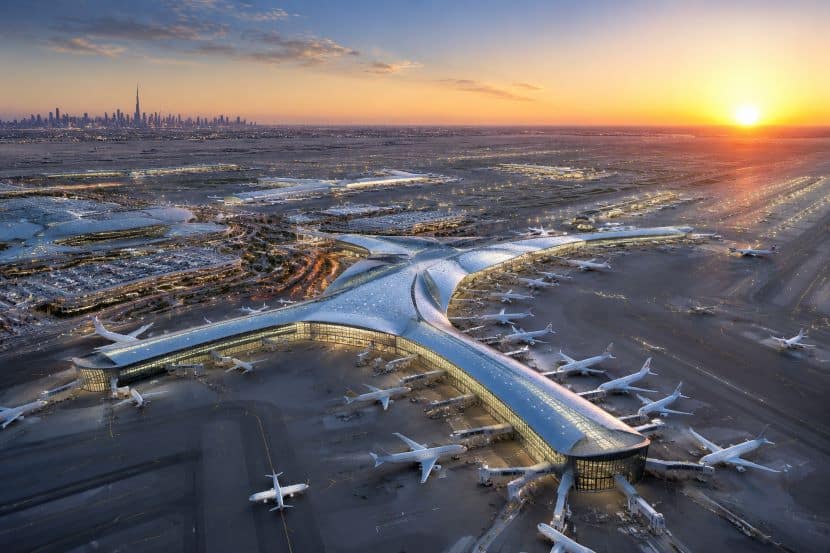
Dubai South in the United Arab Emirates is undergoing a major transformation as Al Maktoum International Airport (DWC) expands into one of the most ambitious aviation infrastructure projects in the world. Positioned within the Dubai World Central development zone, the airport is being designed as a long-term global aviation hub that will reshape international passenger and cargo movement patterns.
According to official Dubai Government Media Office updates and Dubai Aviation Engineering Projects data, the airport is progressing steadily toward its first operational phase scheduled for 2032. The development represents a strategic shift in Dubai’s aviation framework, aimed at supporting rising global travel demand and reinforcing the emirate’s position as a leading international transit hub.
Advertisement
Advertisement
The airport is not a standalone project but a central component of the broader Dubai South master plan, which integrates aviation, logistics, residential districts, and commercial infrastructure into a unified economic ecosystem.
Mega Infrastructure Build Designed for Global Aviation Scale
Al Maktoum International Airport is being constructed with a long-term vision that places it among the largest airport developments globally. Official project specifications confirm that the airport will include five parallel runways, enabling simultaneous aircraft operations and significantly increasing air traffic handling capacity.
Advertisement
Advertisement
This multi-runway system is designed to reduce congestion and enhance operational efficiency, particularly for long-haul and high-frequency international routes. The airport layout also includes two major passenger terminals and seven concourses, forming an extensive passenger processing network capable of handling extremely high volumes of travellers.
More than 430 aircraft stands are planned within the airport complex, allowing simultaneous accommodation of wide-body and narrow-body aircraft fleets. Supporting infrastructure includes advanced baggage handling systems, automated passenger transport networks, and smart aviation technologies designed to streamline airport operations.
Advertisement
Advertisement
Large-scale construction activity is already visible across the site, including excavation works, foundation piling, and structural development of terminal zones.
2032 Operational Phase Marks First Stage of Aviation Shift
The first operational phase of Al Maktoum International Airport is officially targeted for 2032, marking a significant milestone in Dubai’s long-term aviation strategy. This phase will introduce initial passenger and cargo operations while gradually expanding capacity over subsequent development stages.
Advertisement
Advertisement
At launch, the airport is expected to handle up to 150 million passengers annually, placing it among the largest operational airports globally even in its early phase. This capacity will be progressively increased through future expansions aligned with global aviation demand growth.
The long-term vision aims for a total capacity exceeding 260 million passengers per year, positioning the airport as one of the most significant air transport hubs in the world. Cargo operations are also expected to reach 12 million tonnes annually, strengthening Dubai’s role in global logistics and trade networks.
This phased approach ensures operational continuity while enabling controlled expansion of aviation infrastructure.
Smart Airport Systems and Future Mobility Integration
Al Maktoum International Airport is being developed as a next-generation smart aviation hub integrating advanced digital and automated systems. The airport design includes fully integrated passenger flow management systems, automated baggage handling, and high-tech operational control platforms.
Advertisement
Advertisement
A major feature of the development is the inclusion of automated people mover systems that will connect terminals and concourses, ensuring fast and efficient passenger movement across the airport. These systems are designed to reduce transfer times and improve overall travel experience efficiency.
The airport will also be supported by extensive road infrastructure upgrades and planned rail connectivity, enabling seamless integration with Dubai’s wider transport network. This multimodal approach ensures smooth access for passengers, cargo operators, and logistics providers.
Dual-Airport Strategy Ensures Smooth Aviation Transition
Dubai is implementing a dual-airport operational strategy during the transition phase, with both Dubai International Airport and Al Maktoum International Airport functioning in parallel. This approach ensures that existing aviation operations continue without disruption while new capacity is gradually introduced.
Dubai International Airport will continue to handle significant international traffic while select operations are progressively transferred to DWC as capacity expands. This structured transition allows airlines, passengers, and logistics operators to adapt gradually to the new aviation ecosystem.
Infrastructure enhancements at existing airport facilities are also being carried out to maintain efficiency during this transition phase. These include system upgrades, terminal improvements, and baggage handling enhancements.
Aviation City Vision Driving Dubai’s Long-Term Growth
The development of Al Maktoum International Airport extends beyond traditional airport infrastructure, forming part of a wider aviation city concept within Dubai South. The airport is being designed to integrate seamlessly with logistics hubs, free zones, residential communities, and commercial districts.
Advertisement
Advertisement
This integration supports Dubai’s long-term economic diversification strategy, positioning aviation as a central pillar of growth. The airport’s scale and design reflect a broader ambition to establish Dubai as a leading global node for passenger travel, cargo movement, and international trade connectivity.
The aviation city model also supports job creation, industrial expansion, and foreign investment attraction, reinforcing Dubai’s global economic competitiveness.
Conclusion: A Global Aviation Landmark in the Making
Al Maktoum International Airport in Dubai South represents one of the most significant aviation infrastructure developments currently underway worldwide. With a planned operational launch in 2032 and a long-term capacity target of 260 million passengers annually, the project is set to redefine global aviation standards.
Its large-scale infrastructure, advanced smart systems, and integrated transport connectivity position it as a future global aviation powerhouse. As construction continues under official government frameworks, the airport is steadily moving toward becoming the central hub of Dubai’s aviation future and a key driver of international travel connectivity.
Advertisement
