
Helsinki Outshines Gothenburg, Copenhagen and More as World’s Most Sustainable Travel Destinations Transform Global Tourism in 2026

Updated
Published
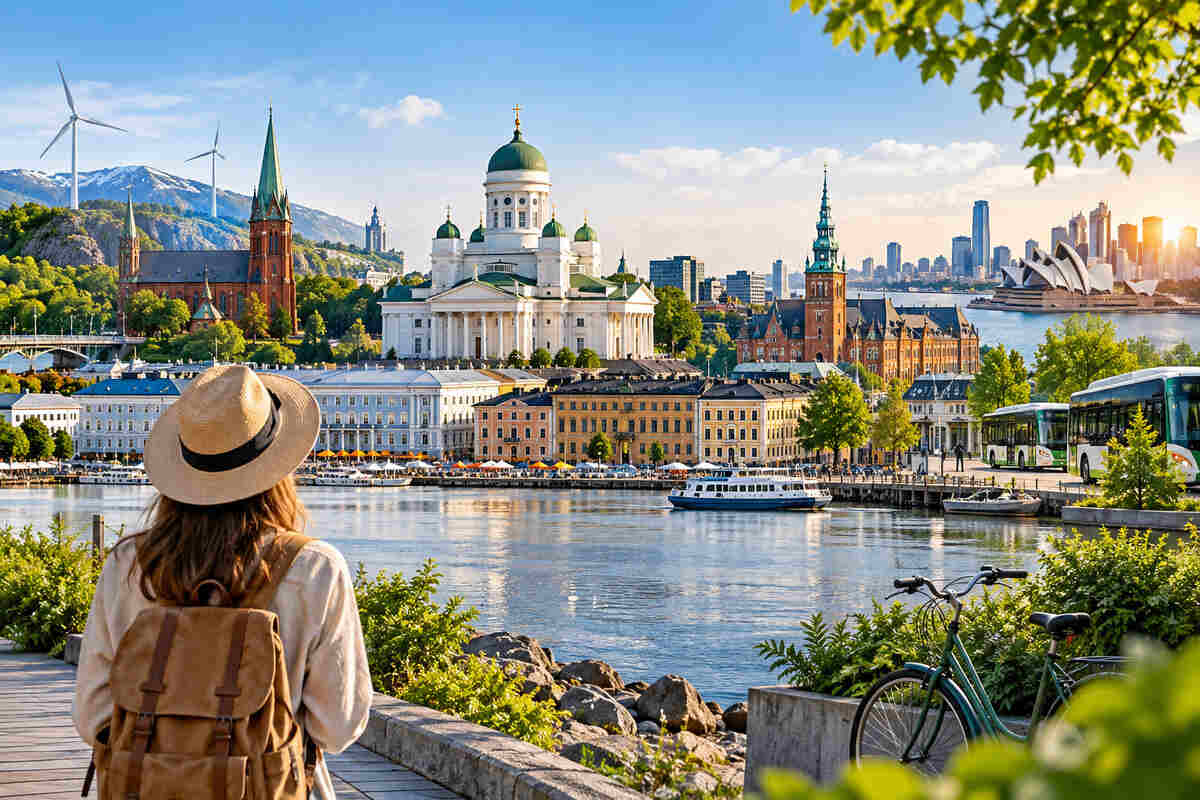
Image generated with Ai
While Gothenburg, Copenhagen and others vie for top position, Helsinki leads in sustainability by scoring an impressive 92.94%. Climate change policies, eco-hotels, efficient transportation and destination management have seen Helsinki emerge as the leader in the sustainability index.
Nearly 89% of participating destinations improved their scores compared with the previous year. The overall average score also reached its highest level recorded by the programme, while the performance gap between the top 10 destinations and the rest of the ranking narrowed to its smallest level yet.
Advertisement
Advertisement
Nordic cities remain particularly prominent. Finland, Sweden, Denmark and Iceland all appear among the leading destinations, supported by policies covering climate action, transport, environmental management, tourism planning and cooperation with local businesses.
However, the geographical spread is becoming wider. Destinations in the United Kingdom, Australia and Canada also secured prominent positions, indicating that sustainability-focused destination management is becoming more competitive internationally.
Advertisement
Advertisement
Here are the 10 destinations achieving the strongest results in the 2026 ranking.
Helsinki, Finland – 92.94%
Helsinki maintained its position at the top of the ranking with a score of 92.94%, securing first place for a third consecutive year.
Advertisement
Advertisement
The Finnish capital recorded consistently strong results across the assessment categories. Its performance is supported by an established climate strategy, extensive environmental certification within the hotel sector, efficient public transport and structured destination-management policies.
An important element of Helsinki’s approach is the integration of tourism with wider urban sustainability objectives. Instead of treating visitor growth separately from city development, destination planning increasingly considers the requirements of residents alongside those of travellers.
Advertisement
Advertisement
Strategic planning and transparency remain particularly important strengths. These factors have helped Helsinki maintain an advantage even as competition among Nordic destinations becomes increasingly close.
Gothenburg, Sweden – 91.29%
Gothenburg secured second place with a score of 91.29%, reinforcing Sweden’s position among the world’s strongest-performing countries for sustainable destination development.
Sweden’s second-largest city has developed a coordinated approach involving destination authorities, tourism businesses and suppliers. Environmental performance and supplier management remain central elements of its strategy.
Collaboration between the destination management organisation and local businesses has also helped sustainability policies move beyond government planning and into the wider visitor economy.
Advertisement
Advertisement
This coordinated model allows hotels, venues, transport providers and other tourism businesses to contribute towards shared sustainability objectives while strengthening Gothenburg’s international competitiveness.
Copenhagen, Denmark – 90.35%
Copenhagen secured third position with a score of 90.35%, placing Denmark firmly among the dominant countries in the 2026 ranking.
The Danish capital performed strongly across the major sustainability categories, supported particularly by environmental initiatives and improvements in destination management.
Copenhagen has spent years developing a tourism model that connects environmental objectives with the everyday visitor experience. Transport, urban infrastructure, tourism suppliers and destination planning increasingly operate within a broader sustainability framework.
Recent improvements in management practices have strengthened the city’s overall performance and kept Copenhagen within the world’s highest-scoring destinations.
Aarhus, Denmark – 90.12%
Aarhus followed closely behind Copenhagen with a score of 90.12%, giving Denmark two destinations above the 90% threshold.
Advertisement
Advertisement
The city achieved particularly strong results in destination management and supplier management. Its performance reflects a structured sustainability policy designed to incorporate environmental and operational objectives across the tourism economy.
Aarhus has steadily strengthened its position against other established Nordic destinations. Its progress demonstrates how smaller cities can compete internationally when sustainability policies extend across tourism authorities, businesses and suppliers.
The result further strengthens Denmark’s position as one of the most heavily represented countries near the top of the ranking.
Aalborg, Denmark – 88.24%
Denmark’s strong showing continued with Aalborg, which recorded 88.24% and secured fifth position.
Environmental performance is one of the city’s strongest areas. Aalborg has combined these efforts with a strategic approach to destination management, helping it compete with larger and more internationally recognised Nordic cities.
Its position also highlights the increasing importance of sustainability outside major capital cities. Environmental management, local cooperation and long-term tourism planning can give smaller urban destinations a significant competitive advantage.
Advertisement
Advertisement
With Copenhagen, Aarhus and Aalborg all occupying leading positions, Denmark emerged as one of the standout countries in the 2026 results.
Glasgow, United Kingdom – 87.53%
Glasgow emerged as the highest-ranked British destination, achieving a score of 87.53%.
The Scottish city recorded particularly strong results in destination management and environmental performance, helping it outperform other participating UK destinations.
Glasgow’s position illustrates the growing role of sustainability in Britain’s urban visitor economy. Cities are increasingly incorporating environmental considerations into event planning, tourism development, transportation and relationships with hospitality suppliers.
Its sixth-place finish also puts the United Kingdom firmly among the countries challenging the traditional dominance of Nordic destinations.
Sydney, Australia – 87.06%
Sydney secured seventh place with 87.06%, marking an important advance for Australia and giving Oceania representation among the global leaders.
Advertisement
Advertisement
The Australian city recorded substantial improvements in environmental categories and significantly strengthened its overall performance compared with the previous year.
Sydney’s progress is particularly significant because the upper reaches of sustainability rankings have traditionally been dominated by European destinations.
Its rise suggests that sustainable destination management is developing into a genuinely global competition as major cities outside Europe strengthen climate strategies, environmental policies and tourism-management systems.
Belfast, United Kingdom – 87.06%
Belfast shared a score of 87.06% with Sydney, giving the United Kingdom a second destination among the global top 10.
The Northern Irish capital demonstrated considerable improvement across several assessment categories. Destination management and supplier management have been important components of its progress, accompanied by stronger environmental performance.
Belfast’s rise demonstrates how destination sustainability involves considerably more than reducing emissions. Effective tourism governance, responsible supplier networks and long-term strategic planning increasingly influence how destinations perform.
Advertisement
Advertisement
Together with Glasgow, Belfast’s position gives the United Kingdom a strong presence among the world’s leading sustainable urban destinations.
Montreal, Canada – 86.59%
Montreal reached ninth position with an overall score of 86.59%,providing North America with a prominent place among the international leaders.
The Canadian city performed strongly across the major sustainability categories, but destination management was particularly notable. Montreal achieved an exceptionally high result in this area, reflecting its emphasis on strategic tourism planning.
Canada’s wider representation within the upper reaches of the ranking also signals growing sustainability momentum across North America.
Montreal demonstrates that environmental performance alone does not determine sustainable tourism leadership. Governance, planning, cooperation and the ability to manage tourism strategically are becoming equally important.
Reykjavik, Iceland – 86.59%
Reykjavik completed the top 10 with a score of 86.59%, matching Montreal and reinforcing the continued strength of Nordic destinations.
Advertisement
Advertisement
Iceland’s capital achieved strong environmental results and improved its overall sustainability performance compared with earlier assessments.
The country’s geography and extensive use of renewable energy provide Reykjavik with distinctive environmental advantages. However, sustainable destination management also requires careful planning around tourism growth, infrastructure and the relationship between visitors and local communities.
Reykjavik’s position therefore reflects both Iceland’s environmental characteristics and continued efforts to develop a more responsible visitor economy.
Nordic Cities Continue to Set the Global Benchmark
The 2026 results underline the extraordinary concentration of sustainable tourism leadership across Northern Europe. Helsinki, Gothenburg, Copenhagen, Aarhus, Aalborg and Reykjavik collectively occupy six of the first 10 positions.
Denmark is particularly prominent with three cities in the top five.
However, the emergence of Glasgow, Belfast, Sydney and Montreal shows that the competitive landscape is widening. Sustainability strategies are increasingly being adopted by major urban destinations far beyond Scandinavia and the Nordic region.
Advertisement
Advertisement
This broader geographical representation could make future rankings considerably more competitive.
Sustainable Tourism Moves Deeper Into Destination Planning
One of the clearest messages from the 2026 ranking is that sustainability is becoming embedded within mainstream destination management rather than operating as a separate environmental initiative.
The strongest destinations combine climate action with public transport, supplier standards, hotel certification, governance, strategic planning and cooperation with local businesses.
The improvement recorded by nearly 89% of participating destinations reinforces that shift.
At the same time, the shrinking performance gap between the top 10 and other participating cities suggests that sustainability standards are becoming more competitive across the tourism industry.
For travellers, the development could mean more destinations where tourism growth is increasingly balanced against environmental responsibilities and the quality of life of local communities.
Advertisement
Advertisement
For destinations, however, the message is more demanding. Achieving a high sustainability score is no longer enough. Maintaining leadership will require continuous improvements in environmental performance, transparency, tourism governance and cooperation across the visitor economy.
Helsinki leads the world’s most sustainable travel destinations in 2026 with a 92.94% score, outshining Gothenburg, Copenhagen and more through strong climate action, greener tourism and strategic destination management.
The rankings for 2026 clearly demonstrate that sustainable tourism is fast becoming a priority in the world, where Helsinki has raised the bar while cities like Gothenburg and Copenhagen have raised the standards even higher. With many tourist destinations getting better at implementing environmental practices, it is increasingly becoming a driving force for future tourism.
Advertisement
