
Travelers can stumble across an unexpected overnight stop at a surprising modern airport due to extended connecting flights. Many of the major; international airports in Asia allow passengers to experience unique after-dark activities. Incheon International Airport handled 74.07 million passengers compared to Singapore Changi Airport at 70 million. Tokyo Haneda Airport dealt with 91.68 million passengers as per the Airports Council International data. Passenger data, however, is not a reliable source for telling travellers whether they can avail themselves of airport facilities such as sleeping, showering, eating, or charging devices at 3 am. The key information is which facilities remain open after midnight. Free resting zones are just one example of the broad range of facilities available, with many offering transit hotels. Understanding the opacity of airport infrastructure can help travellers avoid a long, overnight, uncomfortable stay in an airport with an additional, exhausting travel leg.
At midnight, an airport changes character. The crowds thin, retail shutters descend and the loud rhythm of departures gives way to scattered announcements. However, the building does not necessarily become easier to navigate. A terminal can remain operational while many restaurants, shops and passenger services close for the night.
Advertisement
That distinction matters because 24-hour airport operations do not guarantee 24-hour passenger comfort. Travellers must separate the airport’s operating status from the availability of individual facilities. A transit hotel may operate around the clock, while a shower counter closes. A lounge may remain open, while a particular terminal zone becomes inaccessible.
This is why an overnight connection should be treated as a small logistical exercise. The traveller needs to know where they can remain, what they can access and when those services restart. That becomes particularly important for connections lasting eight hours or more.
Advertisement
Advertisement
The overnight question matters more as international aviation expands. ACI World estimates that global passenger traffic reached 9.8 billion in 2025, up 3.7% from 2024. International passenger traffic reached approximately four billion, rising 6.1% year on year.
Several Asian gateways now sit among the world’s busiest airports. Haneda ranked third globally with 91.68 million passengers in 2025. Incheon handled 74.13 million, while Changi recorded 69.98 million. Kuala Lumpur reached 63.41 million passengers.
The international figures are even more revealing. Incheon handled about 73.55 million international passengers, followed by Changi at 69.40 million. Hong Kong recorded 60.81 million, while Bangkok handled 50.47 million international passengers.Airport 2025 Total Passengers 2025 International Passengers Overnight relevance Tokyo Haneda 91.68m Major international gateway Terminal 3 operates 24 hours Incheon 74.13m 73.55m 24-hour rest and hotel options Singapore Changi 69.98m 69.40m Extensive overnight facilities Kuala Lumpur 63.41m 45.48m Major Southeast Asian connection point Hong Kong — 60.81m Numerous designated resting areas
These numbers explain why overnight infrastructure deserves more attention. Millions of international passengers pass through hubs where connection schedules can span the entire night.
Advertisement
Advertisement
The most useful way to assess an airport is not by its daytime reputation. Instead, travellers should examine the terminal at four distinct points: 10pm, midnight, 2am and 5am.
At 10pm, dining and retail options may still be plentiful. By midnight, the choice can narrow dramatically. At 2am, the decisive question becomes whether a traveller has access to a proper sleeping surface or only conventional seating.
By 5am, the airport begins another transformation. Early departures bring security queues, boarding announcements and renewed foot traffic. Therefore, the quietest period is not necessarily the best period for sleeping. A three-hour sleep window can disappear quickly if the traveller has to relocate before the morning rush.Time What Travellers Should Check 10pm Food, showers, lounge access and terminal connections Midnight Open seating, rest areas and hotel availability 2am Actual sleeping conditions and security restrictions 5am First departures, queues and reopening services 6am onwards Food, shops, transport and renewed passenger traffic
This “midnight test” also reveals a common misconception. An airport can be comfortable at 11pm and considerably less useful at 3am.
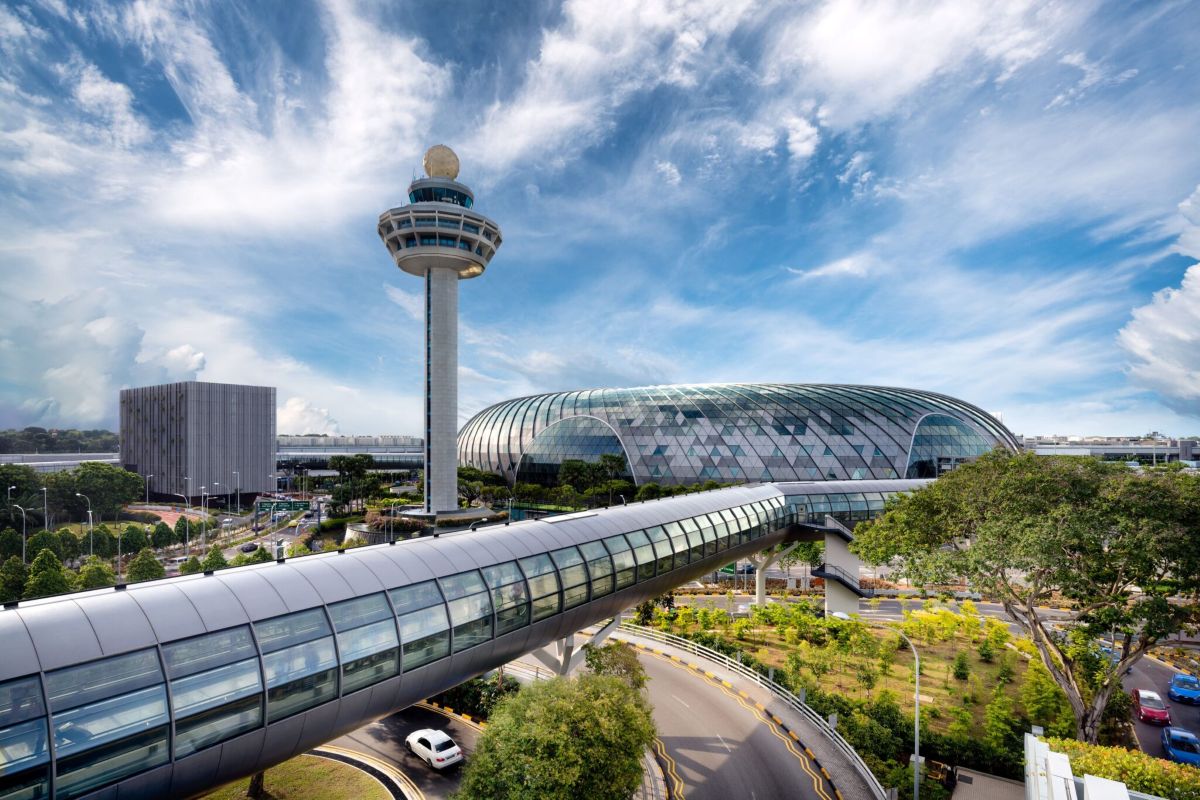
Singapore Changi provides one of Asia’s clearest examples of an airport designed around extended passenger stays. Its official facilities directory lists free snooze lounges operating 24 hours across several transit areas. The airport also lists 24-hour transit hotels in Terminals 1, 2 and 3.
The distinction between free and paid options is particularly useful. A traveller can attempt to rest without purchasing a lounge. Those seeking greater privacy can instead book a transit room. Changi also provides 24-hour paid lounge options with showers, while its transit hotels provide rooms and shower facilities.
However, even Changi demonstrates why terminal geography matters. The Changi Transit Hotel sits within the transit area. Travellers using it are specifically advised not to clear immigration. YOTELAIR, by contrast, sits in Jewel’s public area. Passengers using it must clear immigration and leave the transit zone.
That small distinction can completely change the practicality of a connection.
Seoul’s Incheon International Airport offers another revealing model. The airport’s current facility listings include 24-hour NAP Zones, Relax Zones and Refresh Zones within Terminal 1’s transfer area. It also lists 24-hour transit hotels and capsule accommodation.
The airport’s 24-hour facilities are especially relevant because Incheon is overwhelmingly international in character. ACI recorded 73.55 million international passengers there in 2025. The airport operator separately reported 74.07 million total passengers, its highest annual figure since opening in 2001.
Yet travellers should not confuse overnight availability with unrestricted access to every amenity. Incheon lists shower rooms in its transfer areas from 5am to 11pm, while certain lounges operate throughout the night. That creates a useful lesson: sleeping may be possible after midnight, but freshening up may have a different timetable.
For a traveller arriving at 1am, that difference matters.
Tokyo Haneda offers perhaps the clearest warning against making assumptions. Terminal 3 is open 24 hours, but the airport states that overnight stays there are permitted for passengers who have used or plan to use international flights. Domestic Terminal 1 and Terminal 2 areas generally close around midnight.
That means an airport itinerary must be examined by terminal, flight type and passenger status, not merely by airport name.
Terminal 3 nevertheless provides substantial overnight support. Its shower facility operates 24 hours and includes 21 shower rooms plus five refresh rooms with reclining chairs. The airport charges ¥1,500 for 30 minutes in a shower room and ¥3,000 for a 60-minute refresh room.
Several Terminal 3 lounges also operate 24 hours. The TIAT Lounge has 80 seats, while SKY LOUNGE has 89. Some facilities include showers, although lounge usage periods and eligibility rules apply.
For travellers, the message is simple. Haneda can work exceptionally well overnight, but only when the itinerary places them in the right terminal.
Hong Kong International Airport takes a different approach. Its official passenger guide identifies resting lounges across the airport, including areas near numerous departure gates. These spaces are specifically designed for passengers to unwind during transit or before departure.
That distributed model matters in a large hub. Travellers do not necessarily need to cross the terminal repeatedly to find a place to rest. The airport also lists complimentary shower facilities among its passenger amenities.
The scale of demand is substantial. HKIA handled 61 million passenger trips in 2025, up 15% year on year. It also recorded 394,730 flight movements and more than five million tonnes of cargo.
The result is an airport where overnight comfort increasingly functions as part of a wider international transfer proposition.
Travellers often treat “airport facilities” as one category. In practice, overnight comfort consists of several independent systems.
A free sleeping area does not guarantee food. A 24-hour lounge does not guarantee unrestricted entry. A transit hotel does not necessarily work for a passenger who has already cleared immigration. A shower may exist, but its opening hours may not match the connection.Need What Can Go Wrong Overnight Better Planning Approach Sleeping Armrests, noise and bright lighting Locate designated rest areas first Food Restaurants close after midnight Eat before late closures Shower Limited operating hours Verify exact opening time Charging Popular sockets become occupied Carry a charged power bank Privacy Open seating offers little security Consider a nap suite or hotel Immigration Leaving airside may require entry clearance Check transit requirements Terminal access Some areas close overnight Confirm terminal-specific rules
This scenario is where travellers can save both money and frustration. The best overnight strategy is often a combination of free and paid facilities, rather than automatically buying a premium lounge.
The most consequential detail is often immigration.
Airside accommodation allows a passenger to remain within the secure transit environment. That can eliminate immigration procedures, baggage complications and visa concerns. Landside accommodation offers more choice, but it may require formal entry into the destination country.
Changi illustrates the difference particularly well. Its transit hotels remain inside the departure transit area, while YOTELAIR at Jewel sits in the public zone.
For travellers with separate tickets, checked baggage or restrictive transit arrangements, this distinction becomes even more important. Never assume that an airport hotel is automatically accessible without immigration clearance.
An eight-hour connection rarely provides eight hours of usable rest. Travellers must account for disembarkation, walking, security, gate changes and the time required before the next flight.
A passenger arriving at 11.30pm may realistically have only five or six hours before needing to prepare for departure. Therefore, the location of the sleeping facility matters almost as much as the facility itself.
The practical hierarchy is straightforward. A bed near the departure zone is usually more valuable than a better room requiring a lengthy terminal transfer. Likewise, a free recliner beside the correct gate can be more useful than an attractive lounge elsewhere.
The industry has traditionally sold airport comfort through shopping, dining and premium lounges. Overnight travel suggests another measure of airport quality: how effectively a hub helps passengers recover between flights.
That recovery includes sleep, hygiene, quiet, hydration, connectivity and predictable access. It also has implications for airlines. A poorly rested passenger arrives at the next destination with a very different travel experience from one who had a proper sleep.
For tourism boards and destination marketers, this matters too. Long-haul visitors increasingly judge a journey as one continuous experience. The airport is therefore part of the destination’s first and final impression.
Travellers should investigate overnight conditions before selecting a cheap itinerary with an attractive fare. The critical questions concern terminal access, immigration, baggage handling, sleeping areas, shower hours and early-morning security.
A connection that saves £80 on airfare can become poor value if it forces a passenger into an expensive landside hotel. Conversely, a slightly longer connection can become attractive when the airport provides free rest zones and reliable overnight facilities.
The cheapest flight is not always the cheapest journey.
The growth of international aviation is turning overnight passenger care into a strategic airport service. Changi now records almost 70 million annual passengers, Incheon has exceeded 74 million and Hong Kong reached 61 million in 2025.
Yet there is no universal Asian model. Some airports excel through free sleeping infrastructure. Others rely on transit hotels, paid lounges or designated rest areas. Haneda demonstrates how terminal rules can be as important as facilities, while Incheon shows how rest infrastructure can become an integral part of a major international hub.
For travellers, the emerging lesson is therefore more useful than any airport ranking. Do not ask whether an airport is open overnight. Ask what you can actually do there at 2am. That is the point at which the brochure version of an airport gives way to the real journey.
You don’t have to endure eight miserable hours on a cold, metal seat anymore for an overnight layover. Many of Asia’s major air hubs provide resting facilities, overnight guest rooms, showers, and 24-hour services. That said, the amenities are still based heavily on your status, time of day that you arrive, and whether the airport and customs services are even open.
Smart passengers plan their night time layovers the same way they would plan a flight. Check what terminal you are on and protect your sleep window. Have a backup plan if things don’t go as planned. Lastly, check the website again right before your flight to see if there any changes to availability and services. The overnight airport is starting to become an extension of a travel experience, rather than just an inconvenience between flights.
Yes, but conditions vary significantly. Major hubs such as Singapore Changi and Seoul Incheon provide designated rest areas and overnight accommodation, while other airports may offer only conventional seating. Travellers should always check terminal-specific overnight access before relying on an airport for sleep.
Not necessarily. Passengers with eligible international connections can often remain airside, but the rules depend on the airport, terminal, itinerary and ticket arrangement. Leaving the secure transit area can trigger immigration or visa requirements, so travellers should verify this before booking accommodation outside the terminal.
Sleep areas, showers, food, charging points and reliable Wi-Fi are the essentials. Transit hotels or sleep pods can provide better recovery, while free rest zones can make an overnight stay considerably cheaper. Importantly, opening hours differ between facilities, even when the airport itself operates 24 hours.
Some major international terminals operate throughout the night, but this does not mean every terminal, shop, lounge or passenger facility remains open. Tokyo Haneda, for example, has different overnight arrangements across its terminals. Travellers should therefore check the exact terminal and operating hours for their flight.
It can be, particularly when an airport provides free sleeping areas and overnight passenger facilities. However, a paid transit hotel or landside hotel may offer significantly better sleep and privacy. The right choice depends on layover length, immigration requirements, baggage arrangements and departure time.
The most important checks are whether they can remain airside, where they can sleep, when showers operate, which food outlets remain open and how early they must reach the departure gate. They should also confirm baggage transfer arrangements and terminal access, then recheck official airport information shortly before travelling because overnight facilities can change.
Advertisement
Tags: airport sleeping facilities, Asian airport layovers, long-haul transit, overnight airport travel
Advertisement
Advertisement













Sunday, September 6, 2026

Sunday, September 6, 2026

Sunday, September 6, 2026

Sunday, September 6, 2026

Saturday, September 5, 2026

Saturday, September 5, 2026

Sunday, September 6, 2026

Sunday, September 6, 2026



