
Jet Aviation Unveils Groundbreaking AI Drone Aircraft Inspection Breakthrough That Will Change U.S. Aviation Forever

Published
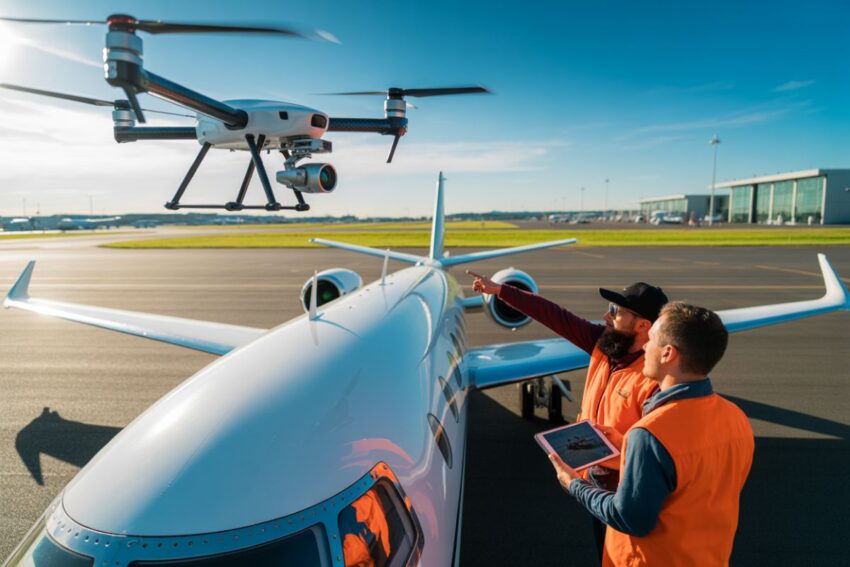
Image generated with Ai
In the heart of the United States aviation sector, Jet Aviation has just rolled out a dramatic tech advancement that feels more like science fiction than routine aerospace services. For pilots, aircraft owners, operators, and aviation businesses across the nation, digitised aircraft inspections conducted by automated drones and powered by artificial intelligence (AI) mark a new era of safer, faster, and more precise aircraft condition reporting. This announcement arrives at a time when the Federal Aviation Administration (FAA) is steadily integrating unmanned aerial systems into the U.S. national airspace system — ensuring safety while boosting innovation across the skies.
Jet Aviation’s new service goes well beyond the traditional walk‑around inspection. Utilising commercial‑grade drones equipped with high‑resolution imaging and AI analytics, the company can now produce detailed digital inspection reports of aircraft exteriors, benefitting operators with clearer documentation, faster turnaround, and unprecedented precision for aviation condition assessments. Early adopters in the U.S. are already hailing this as a “transformational leap” in aircraft maintenance and operational transparency.
Advertisement
Advertisement
How the Automated Drone Inspection Service Works in the U.S.
Jet Aviation’s new capability uses autonomous drones guided by artificial intelligence to map and inspect aircraft surfaces. These drones fly systematic patterns around jets, capturing images and data that advanced software analyses with high accuracy. The result is a digitally compiled exterior surface report that can be archived, referenced, or shared with third parties for a range of purposes — from pre‑purchase evaluations to insurance and warranty documentation.
This technology was first introduced at the company’s global maintenance, repair, and overhaul (MRO) hub in Basel, Switzerland — where it underwent real‑world deployment and refinement. Now, the same system is available to Jet Aviation’s U.S. clients, representing a tangible extension of global innovation into the heart of American business aviation.
Advertisement
Advertisement
Key benefits include:
- Rapid capture of exterior data that would take hours using traditional manual methods
- Detailed digitised reports that reduce chance of human error
- A consistent record of aircraft condition over time
- Enhanced transparency in buyer, insurer, and maintenance interactions
FAA Regulations Provide the Framework for Safe Drone Operations
In the United States, all drone operations — including commercial inspections — must align with FAA rules and safety frameworks governing unmanned aircraft systems (UAS). The FAA actively educates and regulates drone usage through guidelines that distinguish recreational and commercial activities under the small UAS rule known as 14 CFR Part 107. This regulation outlines requirements such as pilot certification (Remote Pilot Certificate) and operational limits for small drones used in professional environments.
Advertisement
Advertisement
Under Part 107, certificated remote pilots can conduct work‑related drone flights, including aircraft inspection missions, provided they meet criteria such as registration, remote ID compliance, and airspace authorisations. The FAA’s integration of UAS operations into the National Airspace System (NAS) aims to balance safety and innovation, creating an environment where companies like Jet Aviation can use advanced technology without compromising flight safety.
Why This Matters for Aircraft Owners and Operators
Aircraft inspections are a cornerstone of safe aviation. Traditionally, exterior inspections are performed manually by technicians who physically walk around an aircraft, visually checking for anomalies such as corrosion, dents, loose fasteners, or structural issues. While effective, this method can be time‑consuming, labour‑intensive, and sometimes subjective.
Jet Aviation’s drone‑powered approach significantly speeds up the inspection process while reducing human exposure to repetitive tasks. The drones are capable of capturing imagery from angles and distances that may be difficult for humans to achieve safely, and AI helps flag potential areas of concern with precision.
For aircraft owners and operators, this means:
- Reduced aircraft downtime during inspections
- Greater confidence in report accuracy
- Digital archives of past inspections for trend analysis
- Stronger evidence for insurance or resale negotiations
This combination of speed, safety, and accuracy can produce real time and cost efficiencies in aviation operations that were previously unattainable with only conventional techniques.
Safety, Technology, and the Future of Aviation Inspections
The aviation industry has a longstanding record of prioritising safety above all else. As drone technology becomes more sophisticated and widely adopted, safety frameworks like those outlined by the FAA remain central to its integration into everyday operations. The FAA’s emphasis on education, pilot certification, and airspace authorisation helps ensure that innovative practices such as drone‑based inspections strengthen rather than compromise safety in flight environments.
Advertisement
Advertisement
Jet Aviation’s new service dovetails with this regulatory backdrop. It not only enhances maintenance practices but also demonstrates how digitisation and automation can work hand in hand with regulatory compliance. By applying commercial drones under FAA‑approved standards, the company is setting a precedent for how modern technologies can be responsibly integrated into the aviation lifecycle.
Voices from the Field: What Operators Are Saying
Industry insiders and early users in the U.S. have voiced strong support for the new inspection service. Many see it as a competitive advantage for operators who need fast, reliable condition assessments ahead of major transactions, routine checks, or when facing warranty and insurance cases.
One operator noted that digital inspection reports had already uncovered subtle surface irregularities that might have gone unnoticed during manual checks, allowing maintenance teams to address issues proactively rather than reactively. This blend of proactive problem detection and clear documentation is especially valuable for organisations that manage fleets with diverse aircraft types and operational histories.
The Broader Impact on Aviation Innovation
Jet Aviation’s adoption of automated drone inspections is part of a wider shift in aviation technology. Beyond MRO enhancements, drone applications are expanding into areas such as infrastructure monitoring, logistics support, and even military fuel line inspection programs — all backed by official agencies exploring how unmanned aerial systems can make aviation safer and more efficient.
In parallel, NASA and other bodies have funded research into drone applications for aircraft inspection, emphasising the potential for such technology to reduce maintenance hours from several to mere minutes. This cumulative innovation across the sector reinforces the idea that today’s breakthrough solutions may become tomorrow’s standard practice.
Conclusion: A New Chapter in U.S. Aviation Maintenance
Jet Aviation’s introduction of AI‑powered drone aircraft inspections in the United States is a major milestone with implications far beyond the company and its clients. It represents how regulatory compliance, advanced technology, and operational necessity are converging to transform how aviation maintenance is conducted. As the FAA continues to refine UAS integration, and as operators embrace the potential of automated inspections, the industry moves closer to a future where digital precision, safety, and speed define the next generation of aviation services.
For operators, pilots, and aviation enthusiasts alike, this development is more than a technical upgrade — it is a sign of progress that makes air travel safer, maintenance smarter, and the skies more connected than ever.
Advertisement
