
US Gains Most as Autumn Festivals Power Local Spending While UK Strengthens Cultural Tourism Demand in 2026

Published
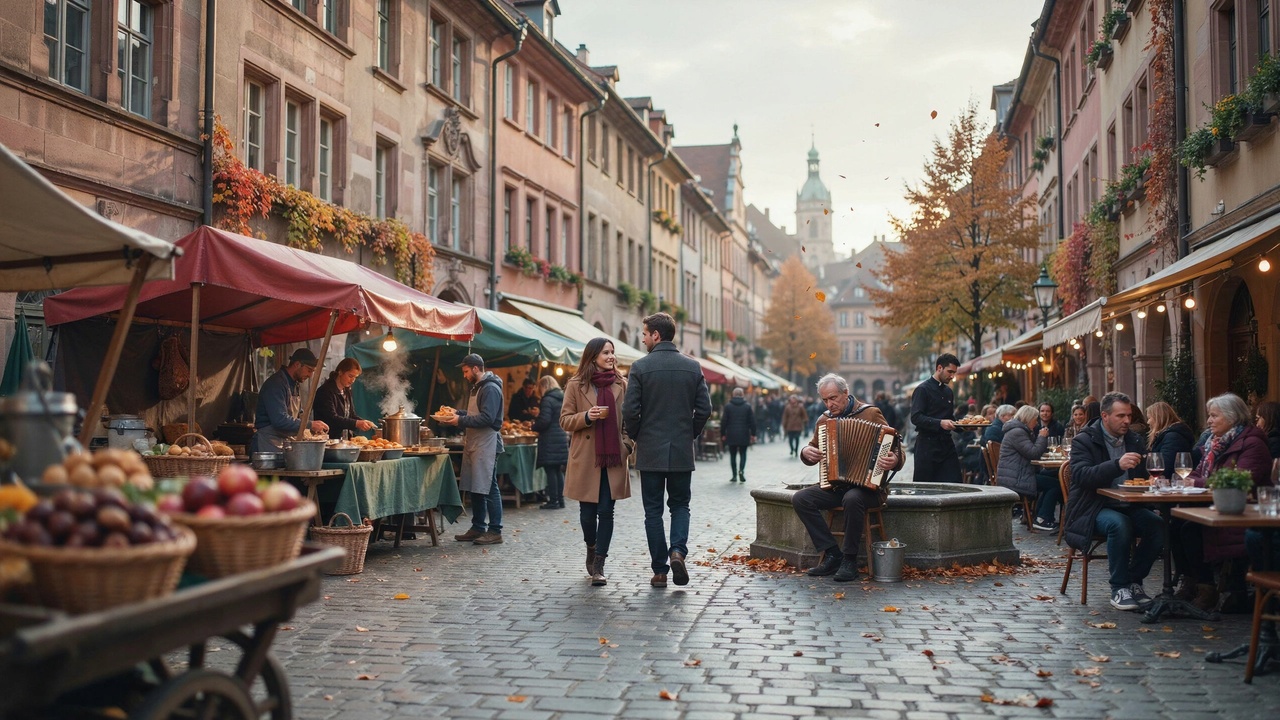
Image generated with Ai
US Gains Most as Autumn Festivals Power Local Spending While UK Strengthens Cultural Tourism Demand. Across destinations such as Evansville and Sacramento, autumn events are helping extend travel beyond the summer peak while supporting restaurants, hotels and community organisations. In the UK, London and Belfast are using cultural festivals to attract visitors, strengthen local businesses and improve seasonal demand. Together, these events show how destination managers are shifting from mass visitor numbers towards higher-value, locally distributed tourism spending.
Destination management organizations (DMOs), municipal planners, and regional economic bureaus across the globe are executing a structural recalibration: pivoting away from raw, unmanaged visitor volume toward high-yield spending, seasonal dispersal, and local economic resilience. Rather than depending entirely on peak summer leisure congestion, municipalities are turning to curated autumn events to stimulate hotel occupancy, elevate Average Daily Rates (ADR), and channel consumer dollars directly into small businesses and community initiatives.
Advertisement
Advertisement
What Is Driving the Structural Shift Across Autumn Travel Corridors?
For decades, regional tourism success was benchmarked against sheer foot traffic. However, rising infrastructure pressures, inflationary operating costs, and localized bottlenecks have forced regional authorities to shift their economic blueprints.
- Shoulder-Season Revenue Stabilization: The post-summer window (late September through October) historically experienced steep declines in visitor occupancy. Regional destination managers are countering this cycle by anchoring niche, culture-first showcases that attract higher-spending travelers.
- Decentralized Urban Staging: Modern festivals increasingly avoid gated, single-site compounds. By embedding programming into historic city quarters, neighborhood high streets, and suburban hubs, foot traffic circulates directly past local retailers, independent restaurants, and cultural landmarks.
- High-Yield Experiential Tourism: Travelers seeking authentic food, sports, screen culture, and oral heritage demonstrate significantly higher per-trip expenditures than traditional mass-market holidaymakers, supporting regional transit lines and local payrolls without requiring massive public infrastructure projects.
Where Are These Signature Events Taking Place?
Rather than confining visitors to isolated convention centers, host cities across North America and the United Kingdom are converting their civic landscapes into open-access staging grounds:
Advertisement
Advertisement
- Trafalgar Square, London: Hosts marquee public cultural events such as Japan Matsuri, transforming central London’s primary civic square into an international culinary and cultural diplomacy forum.
- West Franklin Street, Evansville, Indiana: Spans a four-block historical commercial corridor for the West Side Nut Club Fall Festival, mobilizing more than 130 non-profit culinary stands.
- Belfast Cultural Quarters, Northern Ireland: Spreads youth screen showcases, including the Cinemagic International Film and Television Festival, across the Queen’s Film Theatre, the Ulster Museum, and community venues along the River Lagan.
- County-Wide Kitchens, Sacramento, California: Activates more than 50 independent dining establishments across Midtown, Downtown, East Sacramento, and surrounding suburban districts for the month-long Sacramento Vegan Chef Challenge.
- The Causeway Coast, Bushmills, Northern Ireland: Distributes cookery theatres, craft hubs, and coastal wellness workshops throughout the village and along Portballintrae for the Bushmills Salmon & Whiskey Festival.
Who Is Participating in These Decentralized Programs?
The modern autumn festival model blends community-level volunteerism, celebrated artists, and commercial operators:
- Civic and Non-Profit Organizers: The West Side Nut Club Fall Festival operates entirely through local civic groups, scout troops, church networks, and booster clubs, directing 100% of food booth revenues back into community youth programs and public safety equipment.
- Culinary Artisans and Independent Chefs: In Sacramento and Bushmills, regional head chefs—often operating non-vegan or traditional dining establishments—formulate innovative local tasting menus to test new culinary products and attract flexitarian diners.
- Creative and Film Industry Mentors: Global cinema patrons and Oscar- or BAFTA-winning talent mentor rising screen creators at events like Belfast’s Cinemagic, bridging the gap between grassroots creative education and commercial studio pipelines.
- International Cultural Performers: London’s Japan Matsuri convenes traditional Wadaiko drummers, martial artists, and prefectural tourism delegations (such as the Hokkaido Tourism Organization) directly engaging prospective travelers.
Why Are Travellers Increasingly Drawn to Regional Autumn Events?
Changing consumer motivations are accelerating the growth of autumn travel:
Advertisement
Advertisement
- Avoidance of Peak Crowds and Reservations: Navigating off-peak travel allows visitors to bypass summer heat, dense theme-park crowds, and strict national park vehicle reservation limits.
- Desire for Hyper-Local Provenance: Inbound travelers seek out regional heritage—from authentic Sandhills migrations in Nebraska and Maine lobster rolls at regional expositions to Appalachian storytelling and Midwest street culinary traditions.
- Immersive Walkability: Urban festivals that use decentralized trails, open-air pedestrian malls, and “Munchie Maps” offer visitors an unhurried, neighborhood-scale exploration that corporate resort hotels cannot replicate.
How Are Local Host Economies Benefiting?
The economic ripple effect of decentralized autumn programming extends deep into host municipalities:
| Festival / Regional Focus | Estimated Attendance Footprint | Key Economic & Tourism Mechanics | Primary Beneficiary Economy |
|---|---|---|---|
| West Side Nut Club Fall Festival (Evansville, IN) | ~280,000–285,000 visitors | $8.3M+ total economic impact; $3.8M in grassroots F&B; 90%+ county hotel occupancy | Local non-profits, public schools, and Vanderburgh County hospitality |
| Sacramento Vegan Chef Challenge (Sacramento, CA) | County-wide dining patrons | $3.8M–$4.6M consumer spending; 60%–70% of dishes retain permanent menu placement | Independent restaurateurs, urban kitchens, and Central Valley agriculture |
| Japan Matsuri (Trafalgar Square, London) | 35,000+ single-day attendees | £4.5M–£6.0M West End retail & dining injection; 66% of attendees plan future travel to Japan | Central London hospitality and Japanese bilateral trade/tourism |
| Cinemagic Youth Film Festival (Belfast, NI) | Thousands of families & delegates | Shoulder-season hotel ADR compression; workforce training for local screen production | Belfast hospitality, independent cinemas, and Northern Ireland Screen |
| Bushmills Salmon & Whiskey Festival (Causeway Coast, NI) | ~5,000 benchmark attendees | Extends Causeway Coast season beyond summer; disperses spend to Portballintrae | County Antrim independent food producers and coastal lodging |
Which Key Regions Serve as Primary Travel Feeders?
Inbound mobility telemetry underscores that autumn event tourism is powered by two distinct travel segments:
- Short-Haul Regional Drive Corridors: Events in the American Midwest and Western Europe rely heavily on a 2-to-4-hour drive radius. Evansville captures visitors traveling down I-69 and I-64 from Louisville, Indianapolis, Nashville, and St. Louis. Similarly, Welsh festivals draw day-trippers and weekenders from Bristol, Birmingham, and the M4 corridor.
- Specialist Out-of-State & International Travelers: Culture-specific programming unlocks valuable national and international arrivals. Over two-thirds of London Japan Matsuri attendees report active travel plans linked to Japan, while premier culinary, film, and sports showcases routinely attract overseas industry delegates, international food lovers, and touring fans.
When Will This Model Define Long-Term Tourism Policy?
As destination management organizations plan through 2026 and toward 2030, the emphasis on high-yield, decentralized event programming is becoming standard municipal policy. Rather than expanding costly physical infrastructure to handle unmanageable mid-summer peaks, cities are discovering that empowering local non-profits, independent culinary spaces, and cultural venues creates a durable, four-season visitor economy that protects community character while maximizing economic retention.
US Gains Most as Autumn Festivals Power Local Spending While UK Strengthens Cultural Tourism Demand. The emerging autumn festival model shows how destinations can generate stronger economic value without relying only on peak-season crowds. American cities are recording notable local spending and hospitality gains, while British destinations are using cultural programming to deepen visitor engagement and extend seasonal activity. As tourism strategies evolve, decentralised festivals could become an increasingly important tool for supporting small businesses, improving hotel demand and building resilient year-round visitor economies.
Advertisement
