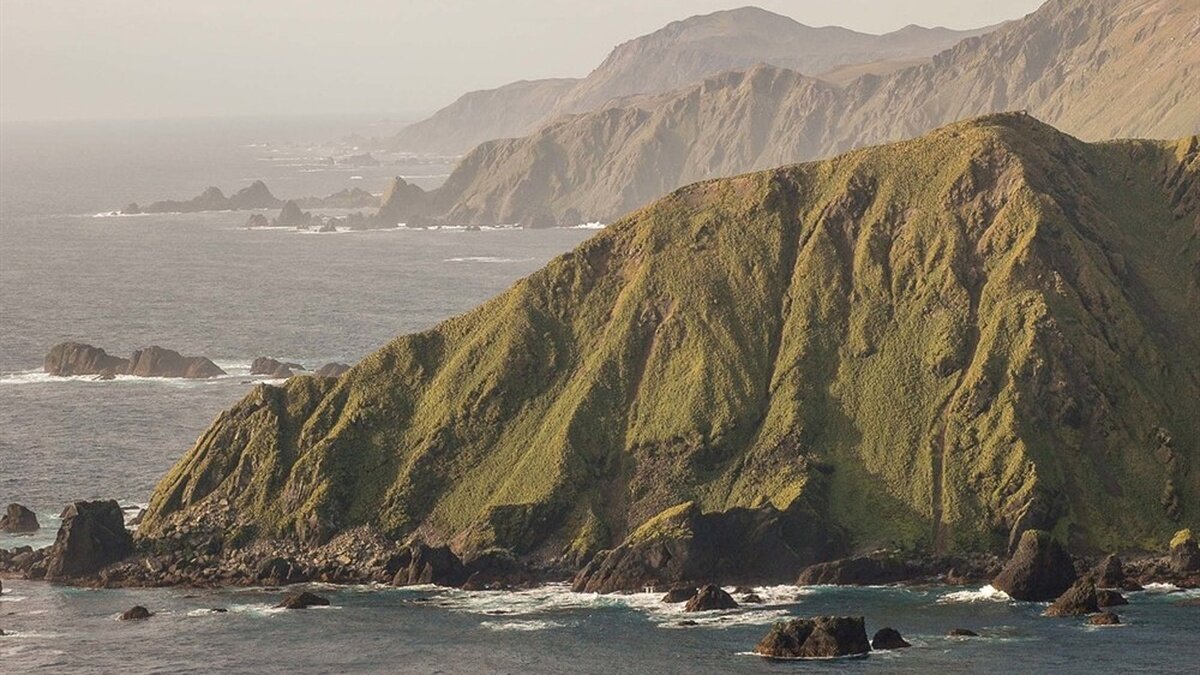
Australia’s Macquarie Island is approaching its November 2026–March 2027 expedition-tourism season under one of its tightest combinations of visitor controls and biosecurity contingency powers. Tasmania Parks and Wildlife Service currently lists Heritage Expeditions, PONANT and Aurora Expeditions as approved operators, while commercial educational tourism remains capped at up to 12 ships with no more than 200 visitors per vessel. Crucially for travellers and travel sellers, current rules allow Tasmania to stop landings or restrict ships from reserve waters if H5 avian influenza creates an unacceptable wildlife or operational risk.
For years, scarcity has been the defining commercial characteristic of tourism to Macquarie Island. The World Heritage-listed sub-Antarctic reserve is not an open-access cruise destination. Commercial visitors must travel with approved educational tourism operators, and each operator needs quota, a Parks and Wildlife Service business licence and an Access Authority before entering the reserve.
Advertisement
For the coming season, however, another issue has become at least as important as obtaining a scarce ship allocation: whether environmental and biosecurity conditions will permit the planned Macquarie Island experience to proceed when a vessel arrives.
According to the Tasmania Parks and Wildlife Service, the November 2026 to March 2027 season currently has three approved commercial educational tourism operators: Heritage Expeditions Ltd, Compagnie du Ponant Pty Ltd and Aurora Expeditions Pty Ltd. The current government page advertises available quota for seasons beginning in 2027–28, but does not advertise additional availability for 2026–27.
Advertisement
The March 2026 government Expression of Interest process is particularly revealing. Five ship allocations were placed on offer for 2026–27, with the document specifying that these allocations would fill the available quota for that season. The wider regulatory ceiling is up to 12 educational tourist ships and no more than 200 visitors aboard each ship entering the reserve during a season.
That makes Macquarie Island a deliberately capacity-constrained tourism product rather than a destination pursuing conventional volume growth.2026–27 tourism control Official operating position Significance for the travel trade Season November 2026–March 2027 Concentrates access into a short Southern Hemisphere summer window Approved operators currently listed Heritage Expeditions, PONANT, Aurora Expeditions Travellers cannot simply arrange independent commercial access Overall commercial quota Up to 12 ships Creates deliberate low-volume supply Passenger ceiling Maximum 200 visitors per ship Prevents large-volume expedition visitation 2026 EOI allocation Five ship allocations offered Government documentation states these would fill remaining 2026–27 availability Ships inside reserve One educational tourism ship at a time Reduces simultaneous visitor pressure Standard operating window Four days for a planned two-day visit Weather or other disruption can consume the available opportunity Shore operating hours 07:00–19:00 local station time No overnight visitor accommodation ashore Overnight arrangements All visitors and crew remain aboard ship Macquarie remains a ship-supported destination
The underlying operating conditions come directly from Tasmania’s March 2026 visitor guidelines.
The most important new tourism issue is contained deep within those March guidelines.
According to the Tasmania Parks and Wildlife Service, if Macquarie Island rangers determine that HPAI H5N1 is likely to have been detected among wildlife on the island, shore landings may not be permitted. The restriction can extend further: ships may also be prevented from entering Macquarie Island Nature Reserve waters for small-boat cruising, including activity near Lusitania Bay.
The provision is broader than an outbreak physically occurring on Macquarie Island.
PWS can also prevent entry where likely H5 presence elsewhere is assessed as presenting a risk to the reserve or as having the potential to significantly affect ranger operations and response capacity. The official guidelines specifically identify New Zealand and other parts of Tasmania as examples of external locations that could become relevant to that assessment.
This provision has acquired considerably greater relevance since the guidelines were published.
According to Tasmania’s Department of Natural Resources and Environment, the state had recorded 28 H5 bird-flu events by 4 September 2026. New detections included a silver gull at Strahan, a black-faced cormorant near Currie on King Island and a peregrine falcon at Britton’s Swamp. The department reported no mass wildlife mortality in Tasmania and no detection in Tasmanian poultry at that date.
Those mainland and island-state detections do not automatically trigger a Macquarie Island tourism closure. The decisive point is that PWS retains discretion to determine whether developments elsewhere present a sufficient conservation or operational risk.
The latest specific Australian Government update located for Macquarie Island, dated 28 August 2026, reported that H5 had not yet been detected on the island. However, the Department of Climate Change, Energy, the Environment and Water assessed a high likelihood of a significant wildlife mortality event during the approaching breeding season.
That assessment has already produced an extraordinary operational response outside tourism. The Australian Government is temporarily withdrawing the 24 tradespeople, scientists and support personnel based at Macquarie Island research station, with RSV Nuyina expected to retrieve personnel and essential cargo in late September or early October.
An Australian Antarctic Program project update published on 2 September confirms that the withdrawal is affecting the timing of the Macquarie Island Station Project, a programme backed by A$370 million over nine years. Project activity will slow while the consequences are assessed.
As of 6 September 2026, the official PWS page continues to list the three 2026–27 tourism operators, and no Tasmanian Parks and Wildlife Service or Australian Government source reviewed for this report announces cancellation of the forthcoming commercial educational tourism season.
The accurate travel message, therefore, is conditional access rather than a current closure.
The risk assessment is not theoretical.
According to the Australian Antarctic Program, H5N1 clade 2.3.4.4b was confirmed in six vertebrate species tested following work at Heard Island and McDonald Islands, another remote Australian sub-Antarctic territory.
Drone analysis from Heard Island estimated average southern elephant seal pup mortality at 76 per cent during final October 2025 surveys, reaching 97 per cent in one area. Approximately 17,000 pups were estimated to have been produced, with island-wide mortality of around 13,000. Widespread mortality was subsequently observed across surveyed breeding areas in January 2026.
This matters directly to Macquarie Island because thousands of elephant seals are born close to its research station every spring, while the island supports exceptionally dense populations of seals, penguins and seabirds.
The Heard Island experience therefore explains why the Macquarie tourism rules are designed to permit intervention before a conventional tourism operation becomes more important than disease containment or conservation.H5 indicator Official position relevant to 6 September 2026 Tourism implication Macquarie Island Latest specific federal update reported no H5 detection as of 28 August No automatic tourism closure established Tasmania 28 H5 events by 4 September External detections can form part of PWS risk assessment Macquarie research station Temporary withdrawal of 24 personnel planned Demonstrates elevated operational preparedness Likely wildlife impact Federal assessment anticipates potentially significant mortality Landing decisions could change rapidly Heard Island evidence 76% average elephant-seal pup mortality in final Oct surveys; up to 97% locally Provides evidence behind precautionary management Tourism authority PWS can stop landings or restrict reserve-water entry Cruise departure does not guarantee Macquarie access
Macquarie Island is accessible only by ship. There is no independent transport network, no conventional harbour or visitor terminal and no medical or emergency facility available to support expedition tourism. Operators are therefore required to remain self-sufficient.
That makes Hobart in Australia and Dunedin in New Zealand commercially relevant to the story rather than decorative geographical additions.
According to the Australian Antarctic Program, Macquarie Island is included in two broad expedition patterns. Longer East Antarctica and Ross Sea voyages can depart from Hobart or New Zealand’s South Island and use Macquarie as a one- or two-day stop. Shorter sub-Antarctic voyages can also depart from Hobart or New Zealand’s South Island with Macquarie and New Zealand’s sub-Antarctic islands forming the principal destinations.
Dunedin has a direct 2026–27 commercial link. PONANT, one of the three operators presently approved by PWS, lists a 15-day Dunedin-to-Dunedin sub-Antarctic expedition departing on 28 December 2026 within its Macquarie Island cruise programme.
Hobart also retains its strategic role in Australian Southern Ocean logistics. The Australian Antarctic Program’s 2026–27 schedule includes an RSV Nuyina Macquarie Island resupply voyage departing Hobart in March 2027 and returning there in April.
For travel advisers, this gateway structure matters because a change to Macquarie access would not necessarily cancel the complete voyage. It could instead alter one remote component of a much longer Hobart- or New Zealand-linked expedition itinerary.
This is where the 2026–27 story gains its greatest information value for travel sellers.
A confirmed expedition departure, an approved operator and even an allocated Macquarie Island quota do not amount to a guaranteed shore experience.
There are several independent layers of conditionality. Weather can prevent landing. Only one educational tourism ship can operate inside the reserve at a time. Australian Antarctic Division vessels receive operational priority. Station construction can restrict access around the Isthmus. PWS can cancel visits for environmental or safety reasons. H5 can remove shore access and, under more serious circumstances, access to reserve waters themselves.
For the expedition-cruise distribution chain, that distinction should influence product descriptions, pre-departure documents, insurance discussions and traveller expectations.
Macquarie Island should be sold as a regulated expedition opportunity subject to real-time conservation approval, not as a conventional port call whose principal uncertainty is arrival time.
That approach also protects the commercial value of the broader voyage. If passengers understand from the booking stage that wildlife protection can override a landing, an operator is better placed to manage itinerary changes without turning a conservation decision into a customer-expectation failure.
Macquarie Island’s tourism-management model continues after a vessel receives access.
At the Isthmus, no more than 100 visitors and guides can be ashore at one time. Sandy Bay has a lower maximum of 75. Groups at shore-landing locations cannot exceed 15 people and must include at least one guide for every 14 visitors.
Lusitania Bay operates differently. Shore landings are prohibited there. Visitors can observe the landscape and the major king penguin colony by ship or controlled small-boat cruising, with boats required to remain 50 metres offshore from king penguin colony areas.
The guidelines also limit tourism to designated activity. Walking follows shore areas and dedicated routes. Diving, snorkelling and most other water activities are prohibited. Research, commercial filming, drone activity and underwater remotely operated vehicle use require separate consideration and approvals.
These controls reinforce the underlying tourism model: Macquarie Island is not expanding visitation by adding attractions or infrastructure. Its value is being managed through scarcity, tightly bounded activities and conservation-led access.
The long-term significance of the 2026–27 season goes beyond one isolated Australian island.
Macquarie Island shows how places that are environmentally sensitive can still support tourism. It does this by setting limits. There are hard capacity ceilings. There are landing zones. There are guide ratios. There is biosecurity screening.. There is clear regulatory power to withdraw access if ecological conditions start to decline. This model proves that careful planning and strong rules can protect nature while still allowing people to visit.
For global expedition tourism, that model is increasingly important. Climate volatility, wildlife disease and pressure on remote ecosystems mean destination access may need to become more dynamic rather than simply being licensed months in advance.
Australia’s approach effectively separates the commercial right to offer an expedition from an automatic right to enter a fragile ecosystem on the day of arrival.
That is the defining B2B tourism issue for Macquarie Island in 2026–27. Hobart and Dunedin can continue to feed specialised Southern Ocean itineraries, approved operators can continue preparing voyages, and strict quotas can preserve scarcity. Yet the final visitor experience remains subordinate to the condition of the reserve.
For travellers seeking one of the world’s rarest sub-Antarctic wildlife experiences, that uncertainty is not a flaw in the destination-management system. It is increasingly the mechanism that allows such tourism to exist at all.
Advertisement
Advertisement
Advertisement












Sunday, September 6, 2026
Sunday, September 6, 2026

Sunday, September 6, 2026

Saturday, September 5, 2026
Saturday, September 5, 2026

Sunday, September 6, 2026
Sunday, September 6, 2026