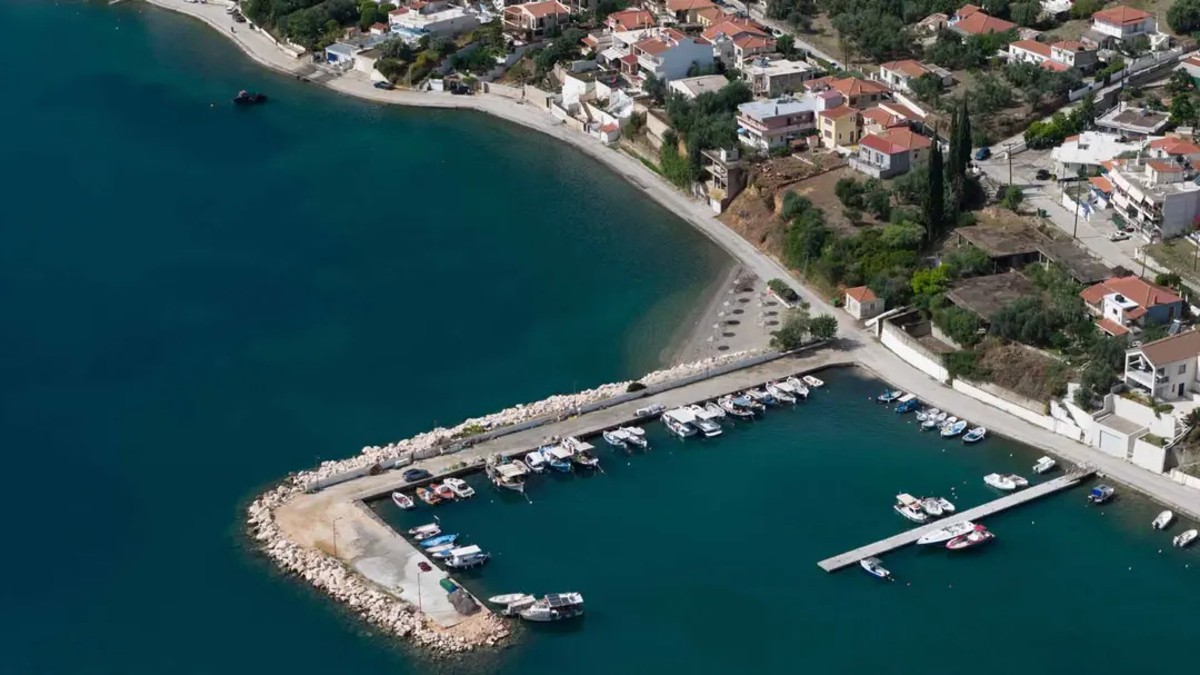
Astakos is rapidly becoming one of mainland Greece’s most interesting undiscovered coastal getaways, thanks to its Ionian port charm, ease of ferry traversing, tranquil beaches, local seafood culture and surrounding beautiful nature. The official tourism site of Greece calls it the calm entrance from the western direction of the country, while a €524 million strategic tourism initiative in Platygiali is being pushed through the planning stage. In terms of tourist value, Astakos offers an attractive option of a quieter Greek abode with immediate access to Kefalonia and Ithaca.
Astakos sits amphitheatrically around a natural bay on the western coast of Aitoloakarnania, facing the Ionian Sea. The Greek National Tourism Organisation describes a coastal settlement shaped by maritime tradition, sailboats, turquoise water, nearby peaceful beaches and a dramatic meeting of mountains and sea. The result feels surprisingly island-like, despite visitors remaining firmly on the Greek mainland.
Its tourism profile also has a major investment angle. Greece’s Ministry of Development lists a €524 million strategic project to convert the Platygiali maritime industrial area in the Astakos Gulf into a mega-yacht tourist port, with 350 planned berths, including 105 for vessels exceeding 40 metres. Environmental consultation concluded in June 2026; importantly, this remains a development project, not an operating attraction.
Travellers without a car have a clear public-transport option. Visit Greece states that intercity KTEL buses connect Astakos with Athens, Patra, Agrinio and nearby towns, with the Athens journey taking roughly 4.5 hours. The official KTEL Aitoloakarnania website also provides online ticket issuance, letting visitors check current departures and secure seats before travelling instead of depending solely on station purchases.
Advertisement
Advertisement
Drivers can approach through western mainland Greece and combine Astakos with a wider Aitoloakarnania road trip. Official Ionion P. Lines travel information directs motorists from Athens along the Athens–Patras route, continuing from Rio–Antirrio towards Aitoliko and Astakos. Travellers should still confirm road conditions and final connections near departure, particularly around public holidays, because local transport schedules can change.
International travellers can also consider Aktion Airport, coded PVK, as a regional gateway. Fraport Greece operates Aktion among its regional airports, while official airport information places it near Preveza on Greece’s western mainland. Ionion P. Lines says Astakos is about 70 kilometres from Preveza, so a road transfer from the airport area can support an itinerary focused on Aitoloakarnania and the Ionian coast.
This air-and-road combination may suit travellers planning several western Greece stops. Instead of arriving in Athens and travelling across the country, passengers finding a suitable seasonal flight to Aktion can continue south towards Astakos and later use ferries for the islands. Airfares vary considerably by airline and date, so compare the full journey cost, including onward road transport, rather than judging flights alone.
Astakos offers island-hoppers a practical advantage because it functions as an active Ionian ferry gateway. Visit Greece lists routes from Astakos to Sami on Kefalonia and Pisaetos on Ithaca. For September 2026, official Ionion P. Lines timetables show a 13:00 departure from Astakos on both routes daily, with extra 20:30 departures to Sami on Fridays and Sundays during the month.
Advertisement
Advertisement
Current official fares make these links easy to price. Ionion P. Lines lists regular passenger tickets at €13 for Astakos–Ithaca and €13 for Astakos–Kefalonia. A car costs €40 to Ithaca and €43 to Kefalonia, while bicycles cost €8 on either route. Visit Greece gives indicative crossing times of about 2 hours 32 minutes to Ithaca and 2 hours 12 minutes to Kefalonia.
The most unusual reason to explore beyond the waterfront is the wider Xeromero landscape. Visit Greece identifies the nearby Xeromero oak forest as the largest oak forest in the Balkans. That gives Astakos a rare tourism combination: Ionian coastline, ferry connectivity and exceptional woodland scenery within the same wider area, creating a strong niche for nature-focused, slower mainland itineraries.
Astakos also carries a story reaching far beyond modern tourism. The official destination guide places it near ancient Astacus, once an important centre, and records a legend linking the town’s name to King Astacus, a son of Poseidon. The modern settlement took shape in the early eighteenth century, while the surrounding area later played a role during the Greek War of Independence in 1821.
Astakos works best for travellers who value space, local rhythm and simple coastal experiences. Visit Greece highlights peaceful beaches, clear Ionian waters and a strong fishing tradition. Local gastronomy brings together fresh fish and seafood with agricultural produce from Aitoloakarnania, giving visitors a convincing regional experience without depending on large resorts, nightlife districts or heavily packaged attractions.
The practical benefit is flexibility. Visitors can stay beside the harbour, explore nearby coast and countryside, then continue by ferry to Kefalonia or Ithaca without returning to a major city. Astakos therefore suits slower itineraries combining mainland Greece and the Ionian Islands. Its strongest assets are not crowds or spectacle, but connections, landscape, history, local food and a quieter sense of place.
In doing so, Astakos will not substitute famous islands of Greece; that is why it is interesting. It has a calm Ionian experience on the mainland, the reliable operations of coaches, affordances of ferries (clear prices), a stunning background of oak forests, and a real historical significance. Moreover, on the one hand, the proposal to build a big tourism port in Platygiali is evidence of the growing interest paid to the Gulf of Astakos by the authorities. On the other hand, travellers who arrive there can enjoy what they have now: the atmosphere of the port, beaches, local cuisine, nature, and the rich history of the place.
Advertisement
Advertisement
Advertisement












Sunday, September 6, 2026
Sunday, September 6, 2026

Sunday, September 6, 2026
Saturday, September 5, 2026
Saturday, September 5, 2026
Sunday, September 6, 2026

Sunday, September 6, 2026