
Thailand Turns Japan’s Unwanted Boats Into Fresh Opportunities for Marine Tourism

Updated
Published
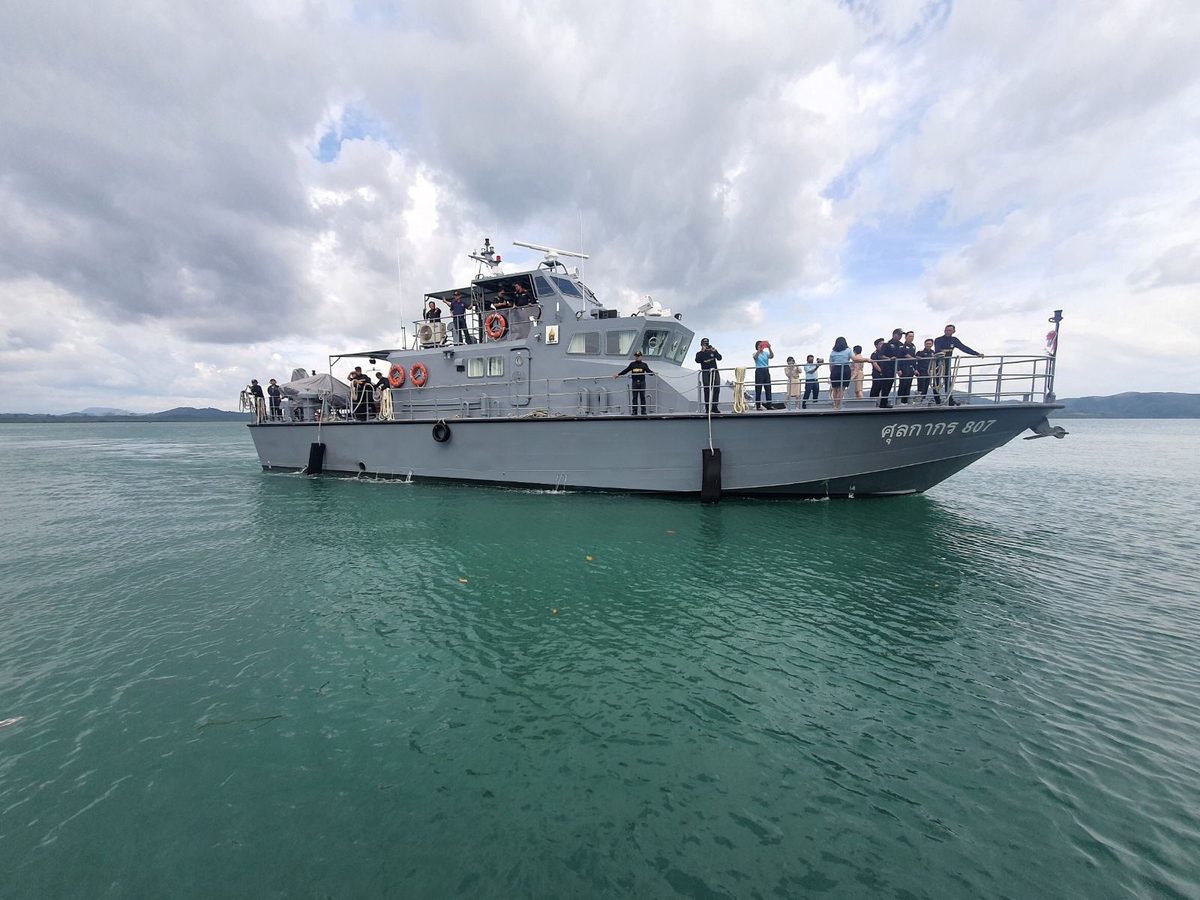
Image Credit: Thailand Marine Department
Thailand is getting more attention as a new country to which older boats from Japan can be sold. Boats from Japan’s leisure and fishing boat markets that are no longer needed are showing up to Thailand as boats built for a new purpose in the growing resale market. It may affect the way island tours and other fishing boat-based activities like charters are handled in the coastal areas of Thailand’s marine tourist spots. There were 32.97 million international tourists in Thailand in 2022. Tourism contributed about 2.7 trillion baht. In 2026, with yacht and cruise tourism as a developing niche, it further supports the second-hand boat trading industry beyond shipping and resale. For travellers, boat safety and registration are more important than a boat’s country of origin.
Japan’s Ageing Boats Find Thai Buyers
An unusual maritime trade is gathering pace between Japan and Thailand. Boats that no longer have a place in Japan’s leisure or fishing economy are finding buyers in Thailand, where traders see value in vessels that can still operate.
The boats are appearing at auction sites around Bangkok, including locations roughly an hour south of the capital. Their appeal lies in their potential rather than their age, particularly when engines, hulls and onboard equipment remain serviceable.
Advertisement
Advertisement
The trend reflects a broader economic reality. An ageing vessel can become an unwanted asset in one market while remaining useful in another.
Thailand has a large coastal tourism economy that creates demand for boats of many sizes. Operators need vessels for fishing, sightseeing, transfers, diving, private trips and island excursions.
Advertisement
Advertisement
However, a Japanese boat does not automatically become a tourism vessel after arriving in Thailand. Registration, inspection, licensing and intended use determine whether a craft can legally operate in a particular role.
Thailand’s Marine Department documentation shows that a vessel licence records key details. These include vessel type, navigation area, passenger capacity, engine information, survey certification and insurance.
That regulatory framework is especially important as more second-hand craft enter the market. For travellers, the story is therefore less about cheap boats and more about how unused maritime assets could support a growing tourism ecosystem.
Thailand’s Tourism Boom Creates Demand
The timing of the trade is significant for Thailand’s travel industry. The country welcomed 32.97 million international visitors in 2025, according to the Tourism Authority of Thailand.
Long-haul markets delivered a record 10.8 million visitors during the year. Domestic tourism also remained substantial, with 202 million domestic trips recorded in 2025.
Tourism activity generated approximately 2.7 trillion baht in total revenue. Consequently, even specialised travel sectors can become commercially significant when they capture a share of such a large visitor economy.
Advertisement
Advertisement
Thailand is now pursuing a more value-led tourism model. Its 2026 strategy targets higher-quality travel rather than relying solely on increasing visitor numbers.
The strategy specifically identifies yacht and cruise tourism among high-potential niche segments. It also seeks stronger sustainability, regional income distribution and more meaningful travel experiences.
That creates a natural opening for marine tourism. More capable boats can help operators develop experiences that extend beyond conventional beach holidays.
The opportunity is particularly relevant to destinations where water is central to the visitor experience. Phuket, Krabi, Phang-Nga and Pattaya all have established marine leisure markets.
| Tourism Indicator | Latest Official Figure | Relevance To Marine Tourism |
|---|---|---|
| International visitors, 2025 | 32.97 million | Large potential customer base |
| Long-haul visitors, 2025 | 10.8 million | Strong premium-experience market |
| Domestic trips, 2025 | 202 million | Significant domestic demand |
| Tourism revenue, 2025 | About 2.7 trillion baht | Large supporting economy |
| 2026 tourism ambition | Up to 3 trillion baht | Continued emphasis on value |
| Targeted niche | Yacht and cruise tourism | Direct relevance to marine experiences |
The figures show why Thailand’s boating economy matters to tourism. Even a relatively small increase in marine capacity can support several interconnected businesses.
From Auction Yard To Island Excursion
The path from a Japanese auction to a Thai tourist excursion involves several stages. A trader first acquires a vessel, after which the craft may undergo transportation, customs procedures, inspection and mechanical work.
Advertisement
Advertisement
The final owner may use it for fishing, private recreation or commercial tourism. Therefore, not every imported boat will enter the tourism sector.
Still, the potential is considerable. A small leisure boat can support private island-hopping, sunset cruises, fishing trips and coastal sightseeing.
A refurbished vessel can also give a smaller operator access to a market dominated by larger companies. That matters because marine tourism is not limited to luxury yachts.
Thailand’s coastal destinations also depend on smaller craft. These boats can reach shallow waters, quieter coves and smaller islands that larger vessels cannot easily serve.
For travellers, that can translate into more personalised itineraries. A private group may prefer a smaller craft over a large excursion vessel with a fixed schedule.
Yet operators must calculate more than the purchase price. Engines, hulls, electrical systems, navigation equipment and safety installations can all require investment.
Advertisement
Advertisement
The economics therefore depend on the vessel’s condition and intended purpose. A low auction price does not necessarily mean a low final operating cost.
What The Japanese Market Reveals
Japan has an established administrative framework for transferring ownership of used small vessels. The Japan Craft Inspection and Registration Association states that buyers may need ownership-transfer procedures and, where applicable, vessel inspections.
Its guidance also distinguishes between vessels requiring registration and those outside the registration system. Inspection requirements can apply when an inspection has expired or when the next inspection becomes due.
This helps explain why documentation matters when older boats change hands. Ownership records and inspection documents provide a paper trail that can support subsequent transactions.
The process can become more complicated when boats cross international borders. Exporters and importers must deal with separate national requirements rather than simply transferring domestic ownership.
Thai Customs also distinguishes pleasure or sports boats from vessels imported for commercial purposes. Its guidance covers customs procedures for yachts, sports boats and fishing vessels arriving from overseas.
Advertisement
Advertisement
The result is a chain of compliance extending from Japan to Thailand. Traders must consider ownership, customs, technical condition and the eventual use of each vessel.
Why Travellers Should Look Beyond Price
Travellers rarely know the history of the boat carrying them between Thai islands. They may notice its appearance, seating and size, but those details reveal little about its regulatory status.
The most important questions concern the vessel’s present operation. Travellers should favour established operators that can demonstrate appropriate licensing, insurance and safety procedures.
Thailand’s official vessel-licence documentation includes a dedicated section for passenger numbers. It also records insurance information and the validity period of the authorisation.
That provides a useful framework for evaluating commercial marine excursions. A boat carrying passengers should have documentation appropriate to its operation.
Thailand’s regulatory framework also places importance on technical certification and competent personnel. Official Marine Department material states that vessels involved in water transport must meet applicable technical requirements and hold valid technical certificates. Passenger transport also requires carrier-liability insurance or an appropriate guarantee.
Advertisement
Advertisement
Consequently, travellers should not assume that an attractive boat represents a safe operation. The operator and the vessel’s compliance record matter far more than whether the craft looks modern.
| What Travellers Should Check | Why It Matters |
|---|---|
| Operator credentials | Helps establish accountability |
| Vessel authorisation | Confirms the craft’s approved operating status |
| Passenger capacity | Prevents inappropriate overcrowding |
| Safety equipment | Provides essential emergency protection |
| Insurance arrangements | Adds financial protection for passengers |
| Weather assessment | Helps reduce exposure to dangerous conditions |
| Crew competence | Supports safe navigation and emergency response |
| Clear itinerary | Shows where and how the vessel will operate |
These checks are especially useful for private charters and smaller excursions. Travellers should also reconsider trips when operators appear unwilling to explain basic safety arrangements.
Marine Tourism Fits Thailand’s New Strategy
Thailand’s tourism strategy provides an important backdrop to the boat market. TAT’s 2026 framework moves away from a simple volume-driven model and towards higher-value travel.
Its Sub-Culture Economy specifically includes yacht and cruise tourism. The wider strategy also emphasises sustainability, meaningful travel and geographic distribution of tourism income.
Marine experiences can support all three objectives when managed carefully. They can encourage higher visitor spending while directing revenue towards coastal communities and specialist operators.
Private excursions can also create a different type of tourism demand. Visitors may spend more on a tailored experience rather than joining a standardised mass-market tour.
Advertisement
Advertisement
At the same time, Thailand must manage environmental pressure. More vessels can mean greater fuel consumption, marine traffic, waste and disturbance around sensitive coastal ecosystems.
Therefore, expanding boat numbers should not become an objective by itself. The stronger opportunity lies in improving the quality and range of marine experiences.
Phuket And Krabi Could Gain Most
Thailand’s leading island destinations are likely to remain important markets for refurbished vessels. Phuket provides a major base for private charters, fishing trips and excursions around the Andaman Sea.
Krabi and Phang-Nga offer another powerful combination. Dramatic islands, limestone formations and sheltered waters create strong demand for short marine journeys.
Pattaya presents a different market. Its proximity to Bangkok supports weekend and short-break tourism, while recreational boating already forms part of the destination’s visitor economy.
Smaller coastal destinations could also benefit. A boat can connect communities that sit outside conventional tourist routes with established destination networks.
Advertisement
Advertisement
That possibility aligns with Thailand’s broader effort to distribute tourism activity geographically. TAT’s 2026 strategy includes destination development and initiatives designed to spread travel beyond the country’s best-known centres.
A refurbished vessel could therefore become more than a commercial asset. It could function as a link between visitors and smaller coastal businesses.
Restaurants, guides, fishermen, marinas and local attractions can all benefit when marine excursions bring visitors into less crowded areas.
Reuse Brings A Sustainability Question
The second-hand boat trade also raises an interesting sustainability issue. Reusing an existing vessel can extend its productive life instead of sending it directly towards disposal.
However, older boats are not automatically greener. Engine efficiency, maintenance standards and fuel consumption can vary considerably between individual vessels.
A poorly maintained older engine could undermine the environmental benefit of reuse. Conversely, a carefully refurbished craft may remain productive for many additional years.
Advertisement
Advertisement
Thailand’s tourism strategy increasingly places sustainability alongside economic value. Its 2026 framework incorporates circular-economy principles and promotes more balanced tourism growth.
That gives refurbishment an opportunity to become part of a wider circular model. Operators could combine vessel reuse with engine upgrades, responsible waste systems and better operational practices.
The tourism industry should therefore measure the environmental performance of refurbished boats rather than relying on the word “used” as a sustainability claim.
Safety Must Grow With Capacity
The expansion of marine tourism also makes safety increasingly important. More vessels create greater choice for travellers, but they also create more responsibility for operators and regulators.
Thailand’s Marine Department maintains a formal system covering vessel surveys and certification. Its regulatory framework allows authorised organisations to conduct surveys and issue certificates under Marine Department oversight.
That system becomes particularly relevant when older vessels enter new commercial roles. A boat that was previously suitable for fishing may require different considerations if its use changes.
Advertisement
Advertisement
The Japanese inspection system illustrates the same principle. Its guidance notes that changing the ownership or status of used vessels can trigger registration or inspection procedures.
For travellers, the practical message is simple. Age should not be the deciding factor; suitability, inspection and responsible operation should be.
This distinction will become more important if Thailand’s marine tourism ambitions continue to expand.
More Boats Could Mean More Choices
The immediate impact on international travellers is unlikely to be dramatic. Most visitors will never know whether the boat beneath them originally operated in Japan.
Over time, however, the trade could influence the availability of marine excursions. More vessels can give operators greater flexibility when designing routes and experiences.
Competition may also encourage businesses to specialise. One operator could focus on private island tours, while another could target fishing or diving.
Advertisement
Advertisement
That differentiation fits Thailand’s broader shift towards niche tourism. It can create experiences that appeal to travellers willing to spend more for privacy, authenticity or specialised activities.
There is also a potential benefit for local employment. Boat operations require skippers, mechanics, guides, marina workers and maintenance specialists.
Consequently, the economic impact can extend well beyond the person selling the vessel. A single boat can support an entire network of tourism-related services.
What The Trend Means For Visitors
Japanese boats arriving in Thailand show the value of cross-border movement of tourism-related assets. It can provide established service life extensions in one country, but provide new service opportunities in another country.
For Thailand, this could extend the marine tourism supported by millions of international and domestic visitors. Thailand’s tourism plan for 2026 supports this by focusing on the development of yacht and cruise-based marine tourism.
For visitors, marine tourism development may mean more options. These may include private cruises, fishing, and small boat trips to more distant islands in previously established coastal tourism areas.
Advertisement
Advertisement
Ultimately, a boat’s country of origin is not as relevant as other factors. Potential customers should assess operator business, boat permissions, fittings, and passenger planning.
The ideal outcome of this strategy would be a larger marine tourism boat operation serving Thailand’s coastal tourism zone with systems that meet Thailand’s standards. Japanese boats may provide Thailand with an opportunity to develop a new phase of coastal tourism.
Advertisement
