
Malaysia Teams Up with Singapore And More Expanding Airline Alliances Before Direct Airport Train Fares Rise

Published
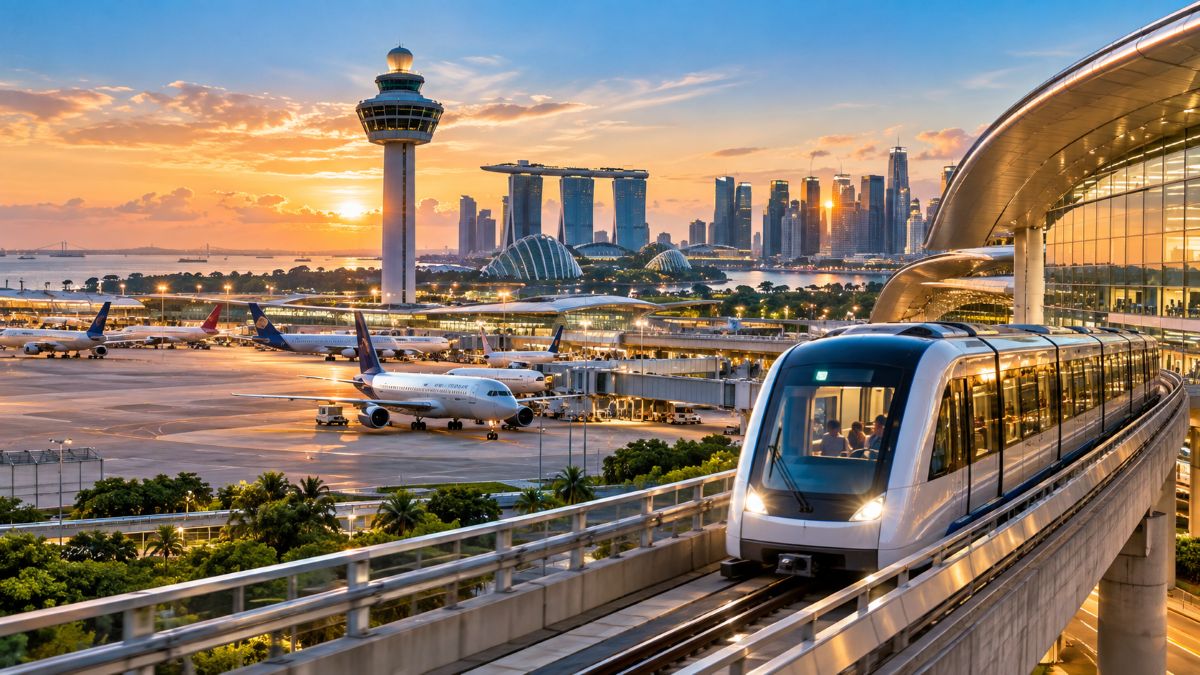
Image generated with Ai
Malaysia is preparing for an extensive overhaul of its flagship international gateway connections as major transit operators assemble wide regional tourism partnerships ahead of impending transport tariff adjustments. Travellers flying into Kuala Lumpur International Airport will soon experience major operational shifts across the primary rail corridor connecting modern air terminals with the heart of the federal capital. Express Rail Link, the official operating authority behind both express and commuter airport railway lines, has announced its first foundational fare update in over a decade. The planned fiscal transition aligns with broader strategic efforts across Southeast Asia to integrate regional airline code-shares, hospitality distribution systems, and streamlined transit booking pathways.
For international passengers touching down at terminal facilities, the rail link represents the quickest, most dependable arterial pathway directly into the metropolitan core. Alongside scheduled base fare updates across direct lines and intermediate transit routes, railway planners are actively collaborating with prominent regional partners across Singapore, Thailand, and international booking engines to assemble coordinated travel packages. These upcoming commercial alliances aim to soften the direct passenger impact through exclusive advanced purchase concessions, combined urban sightseeing passes, and bundled transit options. As Malaysia cements its reputation as a prominent international aviation junction, comprehending the upcoming fare matrix, multimodal transport trade-offs, and advance ticketing methods becomes essential for budget-conscious international visitors.
Historical Concession Realities Behind the First Fare Revision in Eleven Years
The upcoming tariff revision marks the first structural baseline modification to airport railway journeys since early 2016, ending an eleven-year period of sustained price freezes. Operating under long-term infrastructure concession agreements monitored by the Malaysian federal government, the railway administrator faces mounting operational overheads, including electricity consumption tariffs, advanced signaling upgrades, and rolling stock maintenance overhauls. Throughout twenty-four years of continuous public operations, the network has safely shuttled more than one hundred and forty-one million passengers along the vital high-speed transport corridor.
Maintaining high-specification electric multiple units requires constant capital reinvestment, particularly as aviation passenger traffic rebounds across primary terminals. By adjusting tariff thresholds, transport administrators seek to maintain world-class safety standards, punctuality metrics exceeding ninety-nine per cent, and continuous onboard amenities like high-speed wireless connectivity and dedicated luggage carriage spaces. The revision applies comprehensively to the non-stop express link and the multi-stop commuter network serving commercial and governmental growth sectors across the Klang Valley basin.
Advertisement
Advertisement
Complete Station by Station Rail Tariff Restructuring for 2027
Passengers planning journeys must account for a tiered price framework that varies depending on departure platforms and intermediate stops. The signature non-stop run linking the primary railway hub at Kuala Lumpur Sentral with airport terminals will see standard adult single journeys set at sixty-five ringgit, with corresponding return arrangements adjusted to one hundred and eighteen ringgit. For regional commuters and tourists moving between administrative capitals and southern transit exchanges, intermediate ticketing reflects proportionate distance calculations.
| Journey Sector Route | Revised Adult Single Fare | Revised Child Single Fare (Ages 6 to 15) | Revised Adult Return Fare |
| Kuala Lumpur Sentral to KLIA Terminal 1 or Terminal 2 | RM 65.00 | RM 29.00 | RM 118.00 |
| Kuala Lumpur Sentral to Bandar Tasik Selatan | RM 7.70 | RM 3.50 | Not Applicable |
| Kuala Lumpur Sentral to Putrajaya and Cyberjaya | RM 16.60 | RM 7.50 | Not Applicable |
| Kuala Lumpur Sentral to Salak Tinggi | RM 21.60 | RM 9.70 | Not Applicable |
| Bandar Tasik Selatan to Putrajaya and Cyberjaya | RM 9.50 | RM 4.30 | Not Applicable |
| Bandar Tasik Selatan to Salak Tinggi | RM 14.70 | RM 6.60 | Not Applicable |
| Putrajaya and Cyberjaya to Salak Tinggi | RM 5.60 | RM 2.50 | Not Applicable |
| Bandar Tasik Selatan to KLIA Terminal 1 or Terminal 2 | RM 45.40 | RM 20.50 | Not Applicable |
| Putrajaya and Cyberjaya to KLIA Terminal 1 or Terminal 2 | RM 11.50 | RM 5.20 | Not Applicable |
| Salak Tinggi to KLIA Terminal 1 or Terminal 2 | RM 5.80 | RM 2.60 | Not Applicable |
| KLIA Terminal 1 to Terminal 2 Inter-Terminal Transfer | RM 2.00 | RM 1.00 | Not Applicable |
Young children below the age of six continue to enjoy complimentary passage throughout the entire network, providing substantial relief for families travelling with infants. Concession tariffs for children between six and fifteen years are calibrated specifically to lessen the overall economic burden on domestic family travel and inbound holidaymakers alike.
Advertisement
Advertisement
Strategic Airport Ground Transport Comparisons for Overseas Visitors
Navigating ground transport alternatives requires weighing absolute speed against passenger party size and luggage volumes. The non-stop train remains the undisputed benchmark for rapid airport egress, completing the journey in twenty-eight minutes to Terminal 1 and thirty-three minutes to Terminal 2 without vulnerability to notorious highway traffic gridlocks along southern motorways. Solo travellers, business executives on rigid appointment schedules, and those holding connecting flight itineraries will find the rail link uniquely dependable during morning and evening rush hours.
Conversely, private e-hailing alternatives and metered airport limousines present an intriguing economic dynamic for couples and larger family contingents. A standard private hire ride between central Kuala Lumpur hotels and terminal forecourts typically fluctuates between sixty-five and eighty-five ringgit before applicable expressway toll surcharges. When two or more individuals travel collectively with heavy luggage, a private car can prove more cost-effective on a per-person ledger, albeit carrying an extended travel duration of forty-five to seventy-five minutes depending entirely on fluctuating weather and congestion patterns.
Budget travellers, backpackers, and solo transit passengers prioritizing financial prudence over transit velocity retain access to established airport bus operators running out of southern bus terminals and the basement concourse of the primary city station. With bus tickets consistently priced between twelve and fifteen ringgit, highway coach transit offers unbeatable frugality, taking roughly sixty to ninety minutes. Discerning tourists frequently adopt a hybrid methodology, using rapid rail during high-congestion periods to guarantee flight check-in windows, while relying on road travel during quiet midnight corridors.
Cross-Border Commercial Partnerships and Digital Ticketing Discounts
To balance tariff increases, rail administrators are formalising commercial alliances with international flight carriers, regional hotel conglomerates, and global travel technology platforms. Inbound foreign guests booking integrated vacation packages will gain access to promotional rail ticket discounts reaching up to thirty per cent off published counter prices. Integrating rail vouchers directly into long-haul flight itineraries or regional boutique hotel reservations ensures overseas visitors retain seamless, economical transfers from the point of entry.
Travel planners consistently recommend that independent arrivals secure passage via verified digital ticketing software, mobile travel applications, or direct contactless bankcard taps at access gantries. Digital purchases frequently bypass peak counter queues while capturing early booking incentives and promotional cashbacks. Travellers can also explore integrated urban transport passes that bundle airport train transfers with unrestricted multi-day light rail, monorail, and bus rapid transit access across the wider metropolitan transit system.
Practical Terminal Navigation and In-Town Aviation Facilities
Selecting the correct train service requires basic familiarity with railway terminology at the platform edge. The dedicated non-stop express link connects the main city terminal directly to the two airport aviation terminals without pause, providing uninterrupted speed. In contrast, the parallel commuter transit service stops progressively at designated stations including Bandar Tasik Selatan, the administrative centers of Putrajaya and Cyberjaya, and the aviation town of Salak Tinggi before reaching final airport gates.
Advertisement
Advertisement
Passengers utilizing the non-stop route from the central rail terminus can also utilize in-town check-in facilities for select full-service carriers, permitting early baggage drops before boarding the train. Seamless transfers between the primary international terminal and the low-cost carrier terminal remain swift and affordable at two ringgit, enabling smooth transit connections across differing airlines without relying on external road shuttles. Advanced preparation and digital booking remain the most effective methods for navigating the updated fare structure efficiently.
Frequently Asked Questions
When does the revised airport railway fare structure take effect across the network?
The updated ticket pricing schedule across all express and intermediate transit routes officially comes into force starting 1 January 2027.
What will an adult passenger pay for a single journey between Kuala Lumpur Sentral and the airport terminals?
A standard adult single one-way journey will cost sixty-five ringgit, representing a ten ringgit increase over previous baseline fares.
What is the price of an adult return ticket between the city center and the airport?
Advertisement
Advertisement
The revised adult return ticket will cost one hundred and eighteen ringgit, providing a savings advantage over purchasing two separate one-way passes.
How much will tickets cost for children aged between six and fifteen years?
Children within the six to fifteen age bracket will pay twenty-nine ringgit for a single airport trip and fifty-three ringgit for a return journey.
Do infants and young children require paid tickets on the airport train network?
Children below six years of age travel free of charge across all lines and intermediate sectors without requiring ticket purchases.
What is the core reason provided by the railway operator for adjusting tariffs?
Advertisement
Advertisement
The adjustment addresses substantial escalations in power, maintenance, and overall operational expenditures accumulated over an eleven-year price freeze since 2016.
What travel discounts are anticipated alongside the fare adjustment?
The rail operator is collaborating with regional airlines and travel platforms to introduce integrated partner concessions offering savings of up to thirty per cent.
How long does the direct non-stop railway trip take from the city to the airport?
The non-stop service reaches Terminal 1 in twenty-eight minutes and continues to Terminal 2 in thirty-three minutes under normal operations.
Are intermediate commuter stations between the city and airport also subject to price adjustments?
Advertisement
Advertisement
Yes, intermediate stations including Bandar Tasik Selatan, Putrajaya, Cyberjaya, and Salak Tinggi feature adjusted distance-based ticket tariffs.
Can passengers check their flight luggage at the city center railway terminal?
Ticketed passengers on the direct express service flying with participating airlines can check their baggage directly at city center check-in counters.
Advertisement
