
UK Moves to Protect Wheelchairs and Improve Airport Support for Disabled Passengers

Published
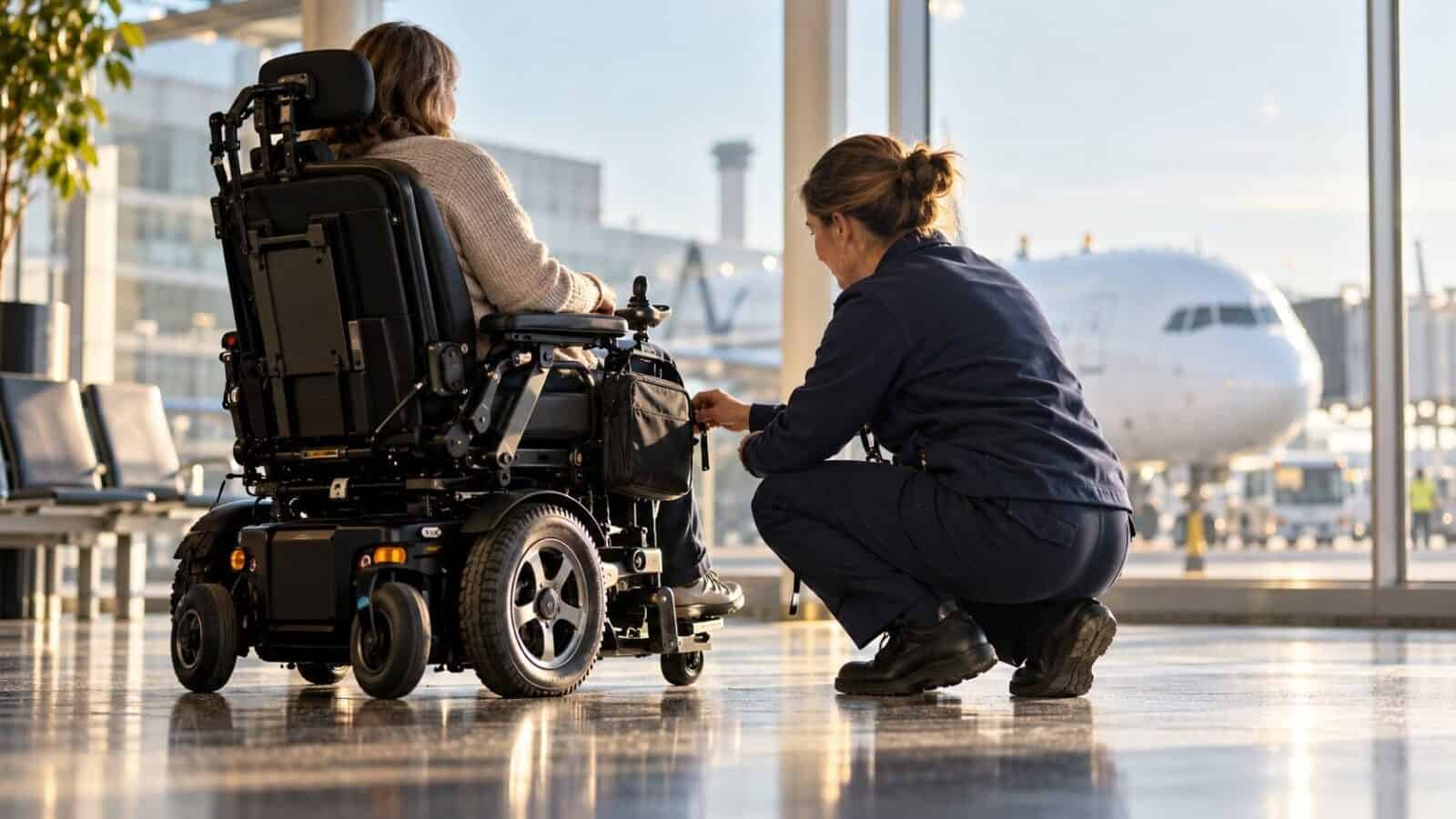
The UK is moving to protect wheelchairs and strengthen disabled air passenger support, with improvements announced by the Department for Transport on 19 October 2026. The programme brings together safer equipment handling, better staff training and plans to test a digital platform for sharing assistance needs. For travellers who depend on mobility aids, the stakes extend beyond airport convenience: damaged equipment can disrupt independence, work and holidays. Some practical changes are already underway, while stronger enforcement and compensation measures remain before Parliament. The immediate challenge is making assistance more consistent across airlines, airports and each stage of an international journey.
What changes for disabled air passenger support
The Department for Transport announcement describes progress across the aviation industry, alongside further work on passenger protection. Its priorities include reducing damage to mobility equipment and helping staff understand individual assistance needs.
The distinction between operational improvements and legislation matters. Passengers should not assume that every measure announced today has become an enforceable new right.
The department says more than 1,000 wheelchairs were damaged in transit in 2023, equivalent to over 80 each month. That historical figure explains the concern; it does not measure performance in 2026. GOV.UK
Advertisement
Advertisement
Wheelchair information becomes part of journey preparation
A standardised form introduced in March allows passengers to share wheelchair battery and handling information before flying. This gives operators practical details about equipment requiring careful preparation and loading.
The accompanying implementation report identifies the Flier Friendly Programme as a voluntary industry initiative. Its electric mobility aid travel pack includes passenger guidance and a technical information form.
Advertisement
Advertisement
Crucially, these tools complement airline approval procedures and regulatory requirements. Completing a form does not replace the need to confirm arrangements with the operating carrier. assets.publishing.service.gov.uk
Staff training moves beyond general awareness
The programme follows work by an accessibility task group established in October 2024 and chaired by Baroness Tanni Grey-Thompson. An implementation group now brings together aviation businesses, regulators and accessibility specialists.
Advertisement
Advertisement
Its 2026 implementation report describes reviews of training content and staff responsibilities. Further work will develop shared materials with contributions from people who have lived experience of disability.
This is a phased programme. The report does not establish that every airport employee has already completed a uniform new course. assets.publishing.service.gov.uk
What is available and what remains planned
| Measure | Position on 19 October 2026 | Meaning for travellers |
|---|---|---|
| Wheelchair information form | Introduced in March | Supports advance handling preparation |
| Enhanced training programme | Development and implementation continuing | Delivery will depend on staff roles and operators |
| Assistance information platform | Proof of concept being developed | No universal passenger service confirmed |
| Stronger regulator powers | Included in legislation before Parliament | Proposed protections remain subject to legislation |
Source: Department for Transport announcement and Aviation Accessibility Implementation Group report. GOV.UK
Digital assistance sharing remains a development project
The proposed platform would help booking agents, airlines and airport teams exchange more detailed information about passenger requirements. The objective is to prepare assistance before travellers reach unfamiliar terminals.
Advertisement
Advertisement
However, the report identifies unresolved delivery and funding questions. It also acknowledges the difficulty of connecting different aviation systems.
The next stage is to develop and test a proof of concept in an operational setting. No firm timetable for nationwide availability is confirmed. assets.publishing.service.gov.uk
Record assistance demand raises operational pressure
Separate Civil Aviation Authority figures published on 4 August show that 5.9 million passengers used UK airport assistance services in 2025. This measures assistance use, rather than international visitor arrivals or unique holidaymakers.
The regulator assessed 28 airports for performance between April 2025 and March 2026. Nineteen received a “Very Good” rating and nine were rated “Good”.
These findings show progress, but airport ratings cannot guarantee an identical experience on every journey. The regulator also reported lower overall travel satisfaction among passengers with accessibility or disability needs. UK Civil Aviation Authority
Airlines and tourism businesses face a coordination test
The practical issue reaches beyond the assistance desk. Booking teams need clear information, handlers need equipment instructions, and airport staff need to understand the support requested.
Advertisement
Advertisement
For tour operators, this makes the booking conversation particularly important. A traveller may require help with walking distances, boarding arrangements or transferring between services.
Hotels and local transport providers also form part of the journey. Editorially, the business opportunity lies in dependable coordination; the announcement provides no quantified forecast for additional tourism revenue, employment or investment attributable to these measures.
Proposed compensation changes need careful explanation
The government says the Civil Aviation Bill would strengthen the regulator’s ability to act when passenger protections fail. Proposed measures include removing the compensation cap for lost or damaged wheelchairs and mobility aids on domestic UK flights.
These provisions remain legislative proposals. They should not be presented as an immediate guarantee of uncapped compensation across international routes.
The department also plans a consultation on accessibility reforms within 12 months of royal assent. That is a future commitment tied to the bill’s progress. GOV.UK
Traveller questions
When should I request airport assistance?
Advertisement
Advertisement
The CAA advises requesting assistance when booking, or at least 48 hours before departure, through the airline, travel agent or tour operator. Keep written confirmation and describe your requirements clearly. UK Civil Aviation Authority
Can I use my wheelchair until the departure gate?
CAA guidance says passengers using their own mobility aid should be able to use it up to the departure gate before it is stored in the hold. Confirm equipment arrangements with your airline beforehand. UK Civil Aviation Authority
Will I lose assistance rights if I book late?
Government guidance says reasonable efforts must still be made when passengers provide shorter notice or none. Advance notice remains advisable because it helps providers prepare suitable assistance. GOV.UK
What passengers can expect next
The UK’s accessibility programme addresses a basic requirement of travel: reaching a destination with essential equipment intact and appropriate help available. Its strongest immediate value lies in clearer preparation, better communication and more informed handling. The proposed digital platform and legislative protections could extend that work, but neither should be described as universally available today. Travellers should continue arranging assistance early and confirming wheelchair requirements with their airline. For airports and operators, the published programme sets a practical direction. Its effectiveness will depend on whether improvements reach passengers consistently, including during busy periods, connections and disruption across the whole journey.
Advertisement
Advertisement
Official Sources
- Department for Transport: https://www.gov.uk/government/news/stronger-safeguards-for-wheelchair-users-and-better-trained-staff-to-support-disabled-air-passengers
- Department for Transport — implementation report: https://www.gov.uk/government/publications/aviation-accessibility-implementation-group-update
Advertisement
