
Mexico Tourism Is Serving A Luxe Wine-and-Food Escape Beyond The Beach

Published
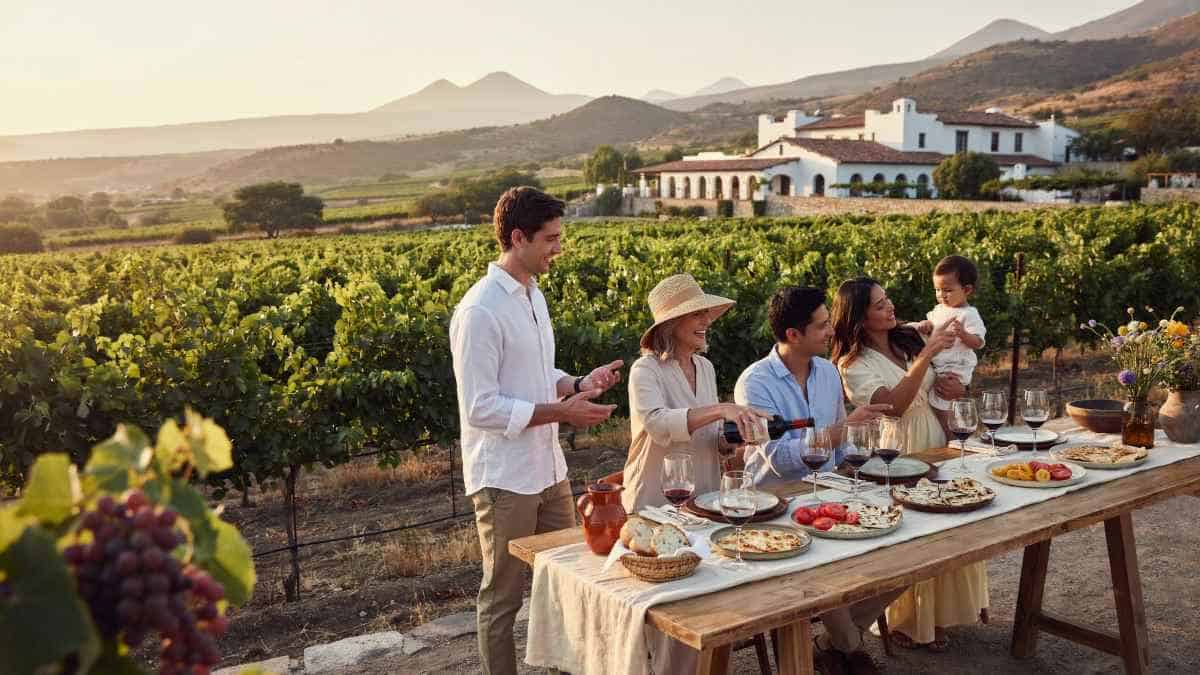
Image generated with Ai
Luxury travel to Mexico is always thought of as the transition from beach destinations to new types of resorts that exist in Valle de Guadalupe in Baja California and also Querétaro for cheese and wine tours, where tourists have a chance to experience the cuisine and wine of that destination. It is offering a new perspective to the Mexican tourism industry, which has always been associated with beach destinations. It is fairly simple. The tourists can visit different vineyards, hotels, restaurants, cheese producers, and small towns without following any vacation plan.
Valle de Guadalupe Is Mexico’s Wine Star
Valle de Guadalupe, in Baja California, has become the country’s best-known wine tourism destination. Located near Ensenada, the valley is home to a large concentration of wineries, restaurants and accommodation properties spread across a landscape of vineyards and Mediterranean-style terrain. The region produces a substantial share of Mexico’s wine and has developed a sophisticated hospitality ecosystem around it. Visitors can build itineraries around winery tastings, vineyard tours, chef-led meals and boutique accommodation. The destination’s proximity to the Pacific coast also creates a useful connection between wine and beach tourism. Travellers can combine Ensenada and Valle de Guadalupe with coastal experiences, creating a multi-stop holiday rather than choosing between inland gastronomy and the sea.
Food Is Part Of The Destination
Wine alone is not driving Valle de Guadalupe’s tourism growth.
The region has developed a strong culinary identity, with restaurants incorporating Baja California ingredients, seafood, locally grown produce and Mexican culinary traditions into contemporary menus.
Advertisement
Advertisement
That creates a tourism product in which dining becomes an attraction rather than simply a necessity between sightseeing stops.
Advertisement
Advertisement
For long-stay travellers, this matters.
A vineyard visit may take several hours, while a destination restaurant can anchor an entire evening. Add accommodation, cooking experiences and nearby attractions, and visitors have plenty of reasons to stay multiple nights.
This helps distribute tourism spending across wineries, restaurants, hotels, guides, transport providers and agricultural producers.
Querétaro Is Building Its Own Food-And-Wine Route
Central Mexico offers a different version of the same trend.
Querétaro’s cheese and wine route connects vineyards with traditional cheese producers, historic towns and rural landscapes.
Advertisement
Advertisement
The route covers several destinations around the state, creating opportunities for visitors to move between wineries, dairies, restaurants and cultural attractions.
The experience is less about one concentrated wine valley and more about a regional journey.
That makes it particularly suitable for travellers who enjoy road trips and multi-stop itineraries.
Visitors can spend one day exploring vineyards, another discovering local cheese production and another visiting historic towns.
Tequisquiapan Adds The Boutique-Heritage Element
Tequisquiapan is one of the best-known stops associated with Querétaro’s wine and cheese tourism.
Advertisement
Advertisement
The town combines colonial architecture, artisan markets, restaurants and access to nearby vineyards and cheese producers.
Its historic centre provides a natural base for visitors who want to mix food and wine with cultural sightseeing.
The combination also supports boutique accommodation.
Rather than staying inside a large resort complex, travellers can choose smaller hotels and guesthouses that place them closer to town centres, wineries and rural attractions.
This is exactly the type of tourism that can encourage longer stays without relying on traditional beach infrastructure.
Advertisement
Advertisement
Bernal Brings Culture Into The Itinerary
Another important destination is Bernal, known for its enormous monolith, the Peña de Bernal.
The town’s cobbled streets, traditional architecture and regional food add another layer to the wine-route experience.
Visitors can combine a vineyard itinerary with outdoor activities and cultural exploration, turning a tasting trip into a broader regional holiday.
That variety is important for affluent travellers. Luxury tourism increasingly depends on experiences that feel distinctive and difficult to replicate, rather than simply offering expensive accommodation. A vineyard lunch beside a Mexican landscape, followed by a historic-town stay, provides a very different proposition from a conventional international resort.
Long-Stay Tourism Is The Bigger Opportunity
Wine and culinary tourism can naturally encourage longer visits because experiences are spread across several locations.
Advertisement
Advertisement
A traveller might spend three nights in Baja California visiting vineyards and restaurants before moving towards the coast.
In Querétaro, a visitor could create a four- or five-day itinerary combining wineries, cheese producers, historic towns, food experiences and outdoor attractions.
That increases the number of nights spent in regional accommodation and gives more businesses access to visitor expenditure.
It also reduces dependence on a single tourism season.
While beach tourism remains a major part of Mexico’s international appeal, food and wine destinations can attract travellers at different times of year depending on harvests, festivals and culinary calendars.
Advertisement
Advertisement
The Luxury Market Is Getting More Experiential
The rise of gastronomic and oenological travel fits into a wider shift towards experience-led luxury tourism.
Affluent travellers increasingly look for destinations where accommodation, food, culture and landscape are integrated.
Valle de Guadalupe delivers this through vineyards, restaurants and boutique properties.
Querétaro provides a broader combination of wine, cheese, history and countryside.
Neither destination needs a beach to create a premium travel experience.
Advertisement
Advertisement
That is important for Mexico because it allows tourism spending to reach inland communities and agricultural regions rather than remaining concentrated in major coastal resort areas.
Travel Details For A Mexican Wine Holiday
Valle de Guadalupe is easiest to explore with a car, private driver or organised wine-tour operator because wineries are distributed throughout the valley.
Travellers should arrange tastings and restaurants in advance, particularly during busy periods.
For Querétaro’s wine and cheese route, a private vehicle or organised tour makes it easier to connect vineyards and producers across the region.
A typical itinerary can combine Santiago de Querétaro, Tequisquiapan and Bernal with nearby wineries and cheese producers.
Advertisement
Advertisement
Visitors should allow enough time between tastings and arrange responsible transportation when consuming alcohol.
Key Stats And Tourism Indicators
Primary Baja wine hub: Valle de Guadalupe.
Main Baja gateway: Ensenada.
Major central wine region: Querétaro.
Signature regional product: Querétaro cheese and wine route.
Advertisement
Advertisement
Key heritage towns: Tequisquiapan and Bernal.
Major tourism niches: Wine, gastronomy, boutique stays, culinary experiences and rural tourism.
Core market: Affluent and experience-focused long-stay travellers.
Strategic benefit: Greater tourism activity beyond Mexico’s traditional beach-resort corridors.
FAQ: Mexico Wine And Culinary Tourism
1. Where is Mexico’s most famous wine region?
Valle de Guadalupe in Baja California is the country’s best-known wine tourism destination, with wineries, restaurants and boutique accommodation.
Advertisement
Advertisement
2. What is Querétaro’s wine and cheese route?
It is a regional tourism circuit connecting wineries, cheese producers, historic towns and countryside experiences across Querétaro.
3. Can travellers combine food and wine with cultural tourism?
Yes. Tequisquiapan and Bernal allow visitors to combine vineyards and gastronomy with historic architecture, local markets and regional cultural experiences.
Timeline And Key Travel Windows
Year-round: Valle de Guadalupe and Querétaro support wine, culinary and rural tourism.
Harvest periods: Vineyard activity and wine-related experiences can become particularly prominent.
Ongoing: Luxury accommodation and destination restaurants are expanding the premium food-and-wine offer.
Advertisement
Advertisement
Current: Gastronomic and oenological corridors are helping diversify Mexico’s tourism economy beyond traditional beach resorts.
Conclusion
The story of tourism in Mexico is not confined only to its sunny beaches. Valle de Guadalupe has transformed Baja California into a charming wine and food tour, while Querétaro is building a tour that involves its local vineyards and cheese makers. The attraction of such tours for the premium tourist sector is the blend of good food, special wines, and local culture. However, even more significant from the standpoint of the future of Mexican tourism is that such tours offer an incentive to stay longer and spend more.
Advertisement
