
Hundreds of Passengers Stranded Across China, Argentina, Indonesia, Japan and More as China Eastern, Flybondi, Air China, Batik Air, Hainan Airlines, ANA, Tibet Airlines and Shanghai Airlines Cancel 84 and Delay 1,421 Flights, Causing Major Travel Difficulties in Beijing, Shanghai, Buenos Aires, Jakarta, Tokyo and Beyond

Updated
Published
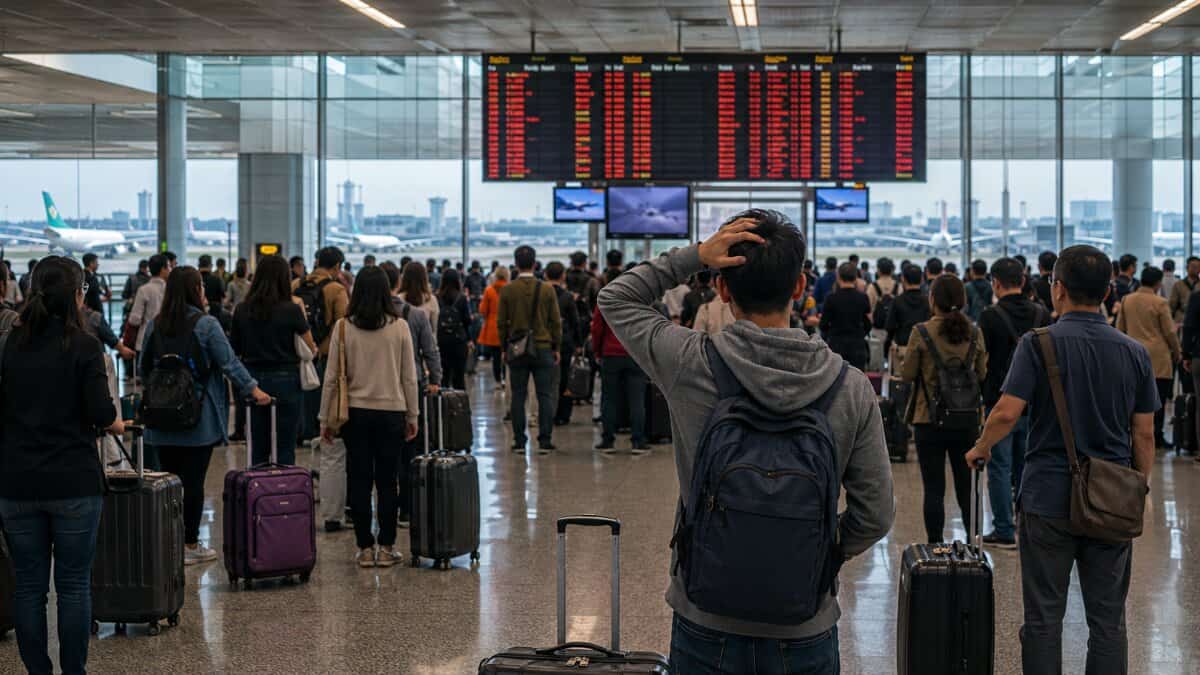
A sharp wave of flight disruption hit major aviation corridors across China, Argentina, Indonesia, Japan and Canada, as eight airlines recorded a combined eighty-four cancellations and one thousand four hundred and twenty-one delays, creating pressure across domestic, regional and international travel networks.
The disruption affected China Eastern, Flybondi, Air China, Batik Air, Hainan Airlines, All Nippon Airways, Tibet Airlines and Shanghai Airlines. The heaviest cancellation impact was seen across Chinese carriers, while the most visible international knock-on came through All Nippon Airways services between Tokyo Narita and Vancouver.
For passengers, the disruption meant missed connections, longer airport waits, baggage uncertainty, rebooking pressure and sudden schedule changes. The impact was especially visible at high-traffic hubs including Beijing Capital, Beijing Daxing, Shanghai Pudong, Shanghai Hongqiao, Guangzhou Baiyun, Haikou Meilan, Jakarta Soekarno-Hatta, Buenos Aires Jorge Newbery, Tokyo Narita and Vancouver International Airport.
Airline-Wise Cancellation and Delay Overview
| Airline | Country / Main Market | Cancelled Flights | Delayed Flights | Main Impact |
|---|---|---|---|---|
| China Eastern | China | 20 | 690 | Heavy disruption across Chinese domestic routes |
| Flybondi | Argentina | 13 | 4 | Major domestic cancellation pressure from Buenos Aires |
| Air China | China | 20 | 336 | Strong impact across Beijing, Chengdu, Wuhan and Hangzhou routes |
| Batik Air | Indonesia | 10 | 21 | Domestic Indonesia operations affected |
| Hainan Airlines | China | 16 | 161 | Haikou and regional China routes disrupted |
| All Nippon Airways | Japan / Canada | 2 | 80 | Tokyo Narita and Vancouver long-haul link affected |
| Tibet Airlines | China | 1 | 58 | Lhasa to Xian service affected |
| Shanghai Airlines | China | 2 | 71 | Shanghai, Tianjin and Xiamen routes affected |
| Total | Multiple Countries | 84 | 1,421 | Wide passenger disruption across Asia and South America |
China Eastern and Air China recorded the highest number of cancellations, with twenty each. China Eastern also carried the biggest delay burden, with six hundred and ninety delayed flights, making it the most disrupted airline in the group by delay volume.
Advertisement
Advertisement
Air China followed with three hundred and thirty-six delays, while Hainan Airlines recorded one hundred and sixty-one delays. Together, these three Chinese carriers formed the core of the disruption, reflecting heavy pressure on domestic Chinese air corridors.
China Eastern Sees Major Disruption Across Domestic Network
China Eastern faced one of the most serious operational impacts, with twenty cancellations and six hundred and ninety delays. The affected routes included services involving Lanzhou Zhongchuan, Harbin Taiping, Beijing Daxing, Guangzhou Baiyun, Taiyuan Wusu, Jieyang Chaoshan, Qingdao Jiaodong, Zhanjiang Wuchuan, Nanchang Changbei, Hefei Xinqiao, Hohhot Baita, Jinan Yaoqiang, Changchun Longjia, Shanghai Pudong and Shanghai Hongqiao.
Advertisement
Advertisement
The affected flight pattern showed disruption across both north-south and east-west domestic links. Beijing Daxing and Guangzhou Baiyun were especially important because both airports handle high-volume domestic and connecting traffic. Any delay or cancellation at these points can quickly affect onward schedules.
China Eastern passengers travelling through Shanghai, Guangzhou, Beijing, Harbin, Qingdao and Taiyuan faced higher risk of late departures, rebooking queues and aircraft rotation delays.
Air China Hit by Beijing and Regional Route Pressure
Air China also recorded twenty cancellations and three hundred and thirty-six delays, making it another major source of passenger disruption. The affected services included flights connected with Beijing Capital, Beijing Daxing, Wuhan Tianhe, Shenzhen Baoan, Hangzhou Xiaoshan, Tianjin Binhai, Chengdu Shuangliu, Chengdu Tianfu, Chongqing Jiangbei, Xian Xianyang, Guangzhou Baiyun and Kashgar.
The concentration around Beijing Capital and Beijing Daxing is particularly important. These airports serve as major national gateways. When cancellations build at Beijing-linked airports, passengers can face widespread delays across northern, central and southern China.
Air China’s disruption also touched key inland growth markets such as Chengdu, Wuhan, Hangzhou and Chongqing, where strong domestic demand often leaves limited spare capacity during peak travel periods.
Flybondi Cancellations Disrupt Argentina Domestic Travel
In Argentina, Flybondi recorded thirteen cancellations and four delays, creating a different kind of travel problem. Unlike the Chinese carriers, Flybondi’s issue appeared more concentrated in cancellations rather than delays.
Advertisement
Advertisement
Affected routes included services involving Jorge Newbery Airport in Buenos Aires, Libertador General Jose de San Martin Airport, Martin Miguel de Guemes International Airport, Ministro Pistarini International Airport, Domingo Faustino Sarmiento Airport, Vicecomodoro Angel de la Paz Aragones Airport and Lt Gen Benjamin Matienzo International Airport.
For passengers, the disruption would have been particularly difficult because Flybondi operates as a low-cost airline. Travellers often build tight itineraries around low fares, weekend trips and domestic connections. A cancellation can therefore affect hotel bookings, airport transfers, business plans and regional tourism movement.
Indonesia Routes Face Batik Air Disruption
Batik Air recorded ten cancellations and twenty-one delays, affecting Indonesia’s domestic aviation network. Services involving Jakarta Soekarno-Hatta, Ahmad Yani International, Sultan Thaha, Sultan Hasanuddin, Halim Perdanakusuma, Sam Ratulangi and Adisumarmo International appeared among the disrupted routes.
The impact around Jakarta Soekarno-Hatta was especially important. Jakarta acts as Indonesia’s busiest aviation hub, and disruption there can affect passengers travelling onward to Sulawesi, Java, Sumatra and other regional destinations.
For tourism, this matters because Indonesia depends heavily on air connectivity between islands. Even a limited number of cancellations can create missed onward connections, especially for travellers moving between Jakarta, Makassar, Semarang, Jambi and Manado.
Hainan Airlines Adds More Pressure Across China
Hainan Airlines recorded sixteen cancellations and one hundred and sixty-one delays, affecting routes linked with Haikou Meilan, Guiyang Longdongbao, Zhengzhou Xinzheng, Hohhot Baita, Zhuhai, Nanjing Lukou, Shenyang Taoxian, Taiyuan Wusu, Xian Xianyang and Changchun Longjia.
Advertisement
Advertisement
Haikou Meilan appeared as a major affected point. This is significant because Hainan is both a domestic leisure destination and an important aviation market in southern China. When Haikou flights are disrupted, holidaymakers, business travellers and connecting passengers can all face delays.
The airline’s disruption also affected several regional city pairs, making the impact more widespread than a single-hub problem.
ANA, Tibet Airlines and Shanghai Airlines Add International and Regional Impact
All Nippon Airways recorded two cancellations and eighty delays, with the visible disruption affecting the Tokyo Narita to Vancouver corridor. This carried wider importance because long-haul cancellations are harder to recover than short domestic delays. Passengers may need hotel support, long rebooking windows and revised onward connections.
Tibet Airlines recorded one cancellation and fifty-eight delays, including disruption on the Lhasa Gonggar to Xian Xianyang route. Flights involving high-altitude airports such as Lhasa can be more sensitive to weather, operational limits and timing restrictions.
Shanghai Airlines recorded two cancellations and seventy-one delays, with affected links including Tianjin Binhai to Shanghai Pudong and Xiamen Gaoqi to Shanghai Hongqiao. Any disruption involving Shanghai can carry broader consequences because the city remains one of China’s most important business and tourism gateways.
Major Airports Affected
| Airport | Country | Airlines Affected | Why It Matters |
|---|---|---|---|
| Beijing Capital | China | Air China | Major national and international hub |
| Beijing Daxing | China | China Eastern, Air China | High-volume domestic and transfer airport |
| Shanghai Pudong | China | China Eastern, Shanghai Airlines | Key international and domestic gateway |
| Shanghai Hongqiao | China | China Eastern, Shanghai Airlines | Major business travel airport |
| Guangzhou Baiyun | China | China Eastern, Air China | Major southern China hub |
| Haikou Meilan | China | Hainan Airlines | Leisure and island tourism gateway |
| Hangzhou Xiaoshan | China | Air China | Important eastern China airport |
| Wuhan Tianhe | China | Air China | Central China connectivity hub |
| Jorge Newbery | Argentina | Flybondi | Core Buenos Aires domestic airport |
| Jakarta Soekarno-Hatta | Indonesia | Batik Air | Indonesia’s main air gateway |
| Tokyo Narita | Japan | All Nippon Airways | Long-haul international hub |
| Vancouver International | Canada | All Nippon Airways | Key transpacific arrival point |
Major Reasons Behind the Cancellations
No single uniform cause appeared to explain all cancellations across every airline. The disruption covered different countries, airline types and route structures. However, several operational factors commonly drive this kind of large-scale cancellation and delay pattern.
Advertisement
Advertisement
The first likely factor is air traffic flow pressure. Major airports such as Beijing Capital, Beijing Daxing, Shanghai Pudong, Guangzhou Baiyun, Jakarta Soekarno-Hatta and Tokyo Narita operate with dense schedules. When traffic flow slows, aircraft queues build quickly.
The second factor is weather disruption. Summer flying across Asia often faces thunderstorms, heavy rain, visibility issues and wind-related restrictions. Even short weather holds can damage aircraft rotations for the rest of the day.
The third factor is aircraft rotation failure. A delayed aircraft on an early sector can cause multiple later flights to run late or be cancelled. This is especially severe for airlines with tight aircraft utilisation.
The fourth factor is crew duty limits. If a flight is delayed for too long, pilots and cabin crew may exceed legal duty time. That can force cancellations even when aircraft are available.
The fifth factor is maintenance and operational checks. Airlines may cancel flights when technical inspections require more time. Safety checks always take priority over schedule recovery.
Passenger Tips During Flight Disruption
| Passenger Situation | Best Action |
|---|---|
| Flight cancelled | Contact the airline immediately through app, website, airport desk or call centre |
| Flight delayed | Keep checking departure boards and airline alerts before leaving for the airport |
| Connecting flight at risk | Ask for protected rebooking on the next available connection |
| Hotel booking affected | Inform the hotel early and request flexible arrival support |
| Baggage already checked | Speak to airline ground staff before leaving the airport |
| International connection missed | Check visa, transit and re-entry rules before accepting rerouting |
| Long airport wait | Keep receipts for meals, transport and accommodation |
| Travel insurance held | Contact insurer quickly and record delay proof |
| Low-cost airline booking | Review baggage, refund and rebooking terms carefully |
| Group or family travel | Rebook together early before seat availability tightens |
Passengers should avoid relying only on airport screens. Airline apps often update faster. Travellers should also avoid deleting boarding passes, delay alerts or cancellation emails because these may be needed for refunds, insurance claims or compensation requests.
Advertisement
Advertisement
Conclusion
The disruption across China, Argentina, Indonesia, Japan and Canada shows how quickly airline problems can spread when busy airports, tight aircraft rotations and heavy passenger demand collide. With eighty-four cancellations and one thousand four hundred and twenty-one delays, the operational impact was significant across both domestic and international routes.
China Eastern, Air China and Hainan Airlines carried the largest delay burden, while Flybondi faced a heavy cancellation hit in Argentina. Batik Air added pressure in Indonesia, while ANA’s Narita-Vancouver cancellation created long-haul disruption for transpacific travellers.
For passengers, the message is clear. Check flight status early. Stay flexible. Keep records. Move quickly when rebooking opens. In a crowded summer travel environment, one cancelled flight can become a full-day journey problem.
Author’s Observation: All flight cancellation and delay information in this report has been manually sourced from the official FlightAware website. As airline operations are updated in real time, schedules, routes and departure timings remain subject to change at short notice. Airlines may revise services, adjust itineraries or cancel flights when required to maintain passenger safety, operational stability and regulatory compliance. Travellers are advised to remain calm, follow real-time updates from airlines and airports, review rebooking and refund policies carefully, and keep their travel plans flexible. Passengers should also consider suitable alternative travel options where necessary to reach their destinations safely and with minimal inconvenience.
Source: Different airports and FlightAware
Advertisement
