
Emirates Enters Winter Travel Season With Strong Bookings as India and Key Global Markets Drive Demand
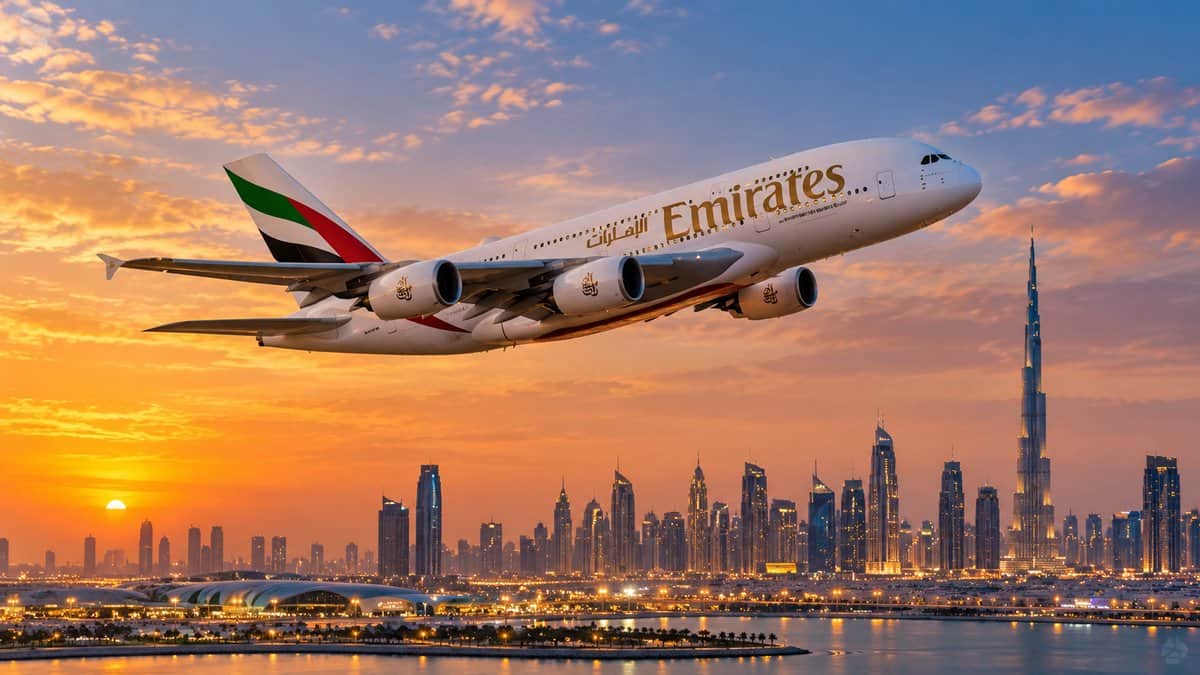
Emirates is entering the winter travel season with renewed confidence after recording a stronger-than-expected summer performance and carrying more than 8.6 million passengers during July and August.
The Dubai-based airline is currently operating at around 93% of its pre-disruption capacity, while bookings for the winter season are showing positive momentum across several important international markets. India is among the markets where demand is currently tracking ahead of the same period last year, highlighting the continuing importance of the Indian outbound travel market to Dubai and the wider Emirates network.
The airline’s latest performance comes as international travel continues to recover from earlier disruptions affecting aviation across the region. Emirates is responding by restoring capacity, adding new destinations, increasing frequencies and introducing more aircraft equipped with its latest onboard products.
More Than 8.6 Million Passengers Travelled With Emirates in July and August
Emirates carried more than 8.6 million passengers across July and August, maintaining healthy seat load factors across its global network.
Advertisement
Advertisement
The airline said routes connecting West Asia, Europe, the Middle East, the Americas and Africa recorded seat load factors above 75% during the summer period. Strong performance was particularly evident on services connected to Indonesia, Côte d’Ivoire and the United Kingdom.
Dubai also recorded strong inbound traffic through Emirates towards the end of the summer. More than 500,000 passengers arrived in Dubai on Emirates flights during the second half of August alone, representing a 7% increase compared with the corresponding period in 2025.
Advertisement
Advertisement
The figures point to continued demand for Dubai as both a holiday destination and an international connecting hub.
For Emirates, the performance is also significant because it comes at a time when travellers are increasingly making reservations closer to their departure dates. The airline said winter bookings are nevertheless tracking positively, suggesting that delayed booking behaviour has not prevented demand from building.
Advertisement
Advertisement
India Emerges as an Important Winter Growth Market
India remains one of the key markets contributing to Emirates’ winter booking momentum.
The airline said demand is currently ahead of last year in markets including India, South Africa, Brazil, Portugal, Egypt, Ghana, Colombia, Saudi Arabia and Pakistan.
India’s importance extends beyond direct travel to Dubai. Emirates’ extensive Dubai hub gives Indian travellers access to destinations across Europe, North America, Africa, Australia and other parts of Asia through a single connecting point.
The winter period is traditionally important for Indian outbound travel, with travellers taking advantage of the festive season, school holidays and cooler weather to plan international trips.
Advertisement
Advertisement
Dubai is also positioned as a short-haul international destination for Indian travellers, while Emirates’ network allows the city to function as a gateway for longer-haul journeys.
For example, a traveller from India can use Dubai as a connecting point for destinations such as London, Frankfurt, Paris, Rome, New York, Toronto, Sydney or Johannesburg. This hub-based model remains a central part of Emirates’ global strategy.
New Helsinki Service to Strengthen European Connectivity
Emirates is also expanding its network ahead of winter.
Helsinki will join the airline’s network from October 1, with daily services operated by the Airbus A350. The new service will strengthen connectivity between Finland and Dubai while also creating additional connection opportunities between Northern Europe and destinations across Asia, Africa, the Middle East and Australia.
The Helsinki launch is part of a broader network expansion programme.
Emirates is increasing frequencies on several routes, including Accra, Tokyo Narita, Ho Chi Minh City and Hanoi. One of the airline’s daily Delhi services is also scheduled to receive an A380 upgrade, increasing capacity on an important India-Dubai route.
Advertisement
Advertisement
The airline is additionally deploying newer aircraft on selected routes, including services to Larnaca, Malta, Nairobi and Hamburg from late October, followed by Mauritius in November.
Emirates Expands Premium Travel Offering
The airline’s winter strategy is not focused solely on adding seats.
Emirates is also investing heavily in its onboard experience, with Premium Economy continuing to gain momentum across its network.
The airline has now retrofitted 104 aircraft, while Premium Economy is available on 137 aircraft. Emirates has also introduced new products including its U-Dream headrest for Economy Class and upgraded Premium Economy seating with privacy dividers.
Premium travel has been an increasingly important component of the airline’s strategy, particularly as travellers continue to place greater value on comfort and flexibility.
The Americas have recorded particularly strong growth in Premium Economy bookings, while premium demand overall continues to increase across Emirates’ network.
Advertisement
Advertisement
The airline is also expanding its new-generation lounge concept, with upgraded facilities already operating in several international destinations.
Dubai Continues to Benefit From Emirates’ Global Network
Emirates’ performance is closely connected to Dubai’s role as an international aviation and tourism hub.
The airline operates alongside its strategic partner flydubai, creating connectivity to more than 214 unique destinations across more than 100 countries. Together, the two airlines provide thousands of possible connections through Dubai.
Since the partnership began in 2017, Emirates and flydubai have carried more than 28 million passengers across their integrated network.
This connectivity is particularly relevant during the winter season, when demand for European city breaks, long-haul holidays, Middle Eastern destinations and warm-weather escapes traditionally increases.
Dubai is also benefiting from the return of international visitors. Dubai Airports expects to handle approximately 70 million passengers during 2026 as aviation traffic continues to recover.
Advertisement
Advertisement
What the Winter Season Could Mean for International Travel
Emirates’ latest figures provide an indication of how international travel patterns are evolving as the industry moves into the final months of 2026.
Travellers are booking closer to departure, but demand remains strong across multiple regions. At the same time, airlines are responding by increasing flexibility, restoring capacity and introducing newer aircraft and upgraded products.
For Dubai, the combination of Emirates’ extensive network, increasing inbound traffic and winter travel demand could provide important support for hotels, attractions, retail, restaurants and other tourism businesses.
The Indian market is particularly significant in this environment. With Emirates increasing capacity on selected Indian routes and winter demand from India tracking ahead of last year, the country is expected to remain an important source market for Dubai’s tourism ecosystem.
As the winter season begins in late October, Emirates’ expanding network and improving capacity will place Dubai in an increasingly central position for travellers moving between India, Europe, Africa, Asia, the Americas and Australia.
The airline’s latest performance therefore represents more than a recovery in passenger numbers. It signals a broader effort to rebuild international connectivity, strengthen Dubai’s position as a global gateway and prepare for another major winter travel period
Advertisement
