
Moscow Leads 60+ Regions in Culinary Tourism Revolution: Russia’s Food Empire Explodes in 2026 Into a Power Play
Published
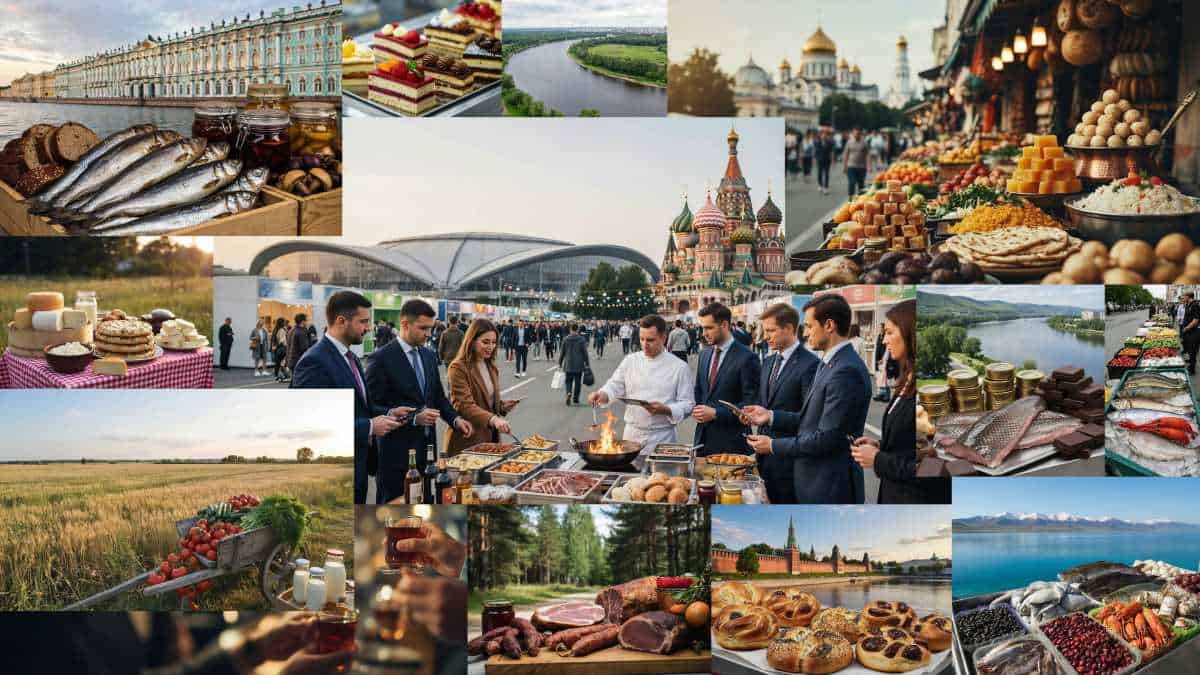
Image generated with Ai
Moscow is leading 60+ regions in a stunning culinary tourism revolution as the food empire of Russia takes off in 2026. The country is converting its vibrant food culture into a powerful gastronomy powerhouse. Besides, Moscow is at the heart of this amazing food movement, while other major Russian food regions such as St Petersburg, Krasnodar, Kazan, Yekaterinburg and others strengthen the culinary profile of the nation. WorldFood Moscow 2026 gives an excellent example of this powerful story with the involvement of over 1,100 exhibitors, 26,300+ visitors and 60+ regions of Russia. The event gathers food producers, retailers, distributors, chefs, and hospitality professionals. It also opens up new prospects in food tourism and regional promotion. With Russia taking its food industry towards international markets, its cities try to demonstrate their unique flavors, products, and culinary traditions. Travel And Tour World encourages its readers to read the whole story.
WorldFood Moscow 2026: Russia’s Food Tourism Powerhouse Roars Into Action as 60+ Regions, 1,100+ Exhibitors and 26,300+ Buyers Turn Moscow Into a Global Food Business Battlefield
Russia is preparing for a major food-industry spectacle as WorldFood Moscow 2026 returns from 15–18 September 2026. The 35th edition will take place at Crocus Expo and will bring together more than 1,100 exhibitors, 26,300+ visitors, 30+ countries and more than 60 Russian regions. But WorldFood Moscow is more than a food exhibition. It is a huge business meeting point. It connects producers, retailers, wholesalers, distributors, restaurants and hospitality professionals. It also gives Russia’s regional food businesses a powerful stage in front of international buyers.
For travellers, the event adds another layer. Moscow becomes a meeting point for food, culture, hospitality and business travel. From Moscow to St Petersburg, Krasnodar, Kazan and other Russian cities, the country’s diverse food identity can be understood through the people and products arriving at this major event.
Leading Russian Cities and Regional Food Hubs Connected to the WorldFood Story
| City / Region | Position in Russia’s Food & Tourism Story | WorldFood Relevance |
|---|---|---|
| Moscow / Moscow Region | National business, retail and hospitality centre | Main WorldFood Moscow location; Crocus Expo is in Krasnogorsk |
| St Petersburg | Major hospitality, restaurant and tourism centre | Featured through WorldFood HoReCa and professional programmes |
| Krasnodar / Krasnodar Krai | Major southern agricultural and food-production hub | Regional food businesses and organic-food activity represented in WorldFood content |
| Kazan / Republic of Tatarstan | Strong regional gastronomy and hospitality identity | Featured in WorldFood discussions on gastronomy and territorial development |
| Yekaterinburg / Sverdlovsk Region | Major Urals commercial and distribution centre | Connected with Russia’s regional food-business network |
| Nizhny Novgorod Region | Important central Russian industrial and consumer market | Appears in the wider WorldFood regional business ecosystem |
| Samara / Samara Region | Major Volga-region commercial and industrial centre | Part of the wider regional food-business landscape |
| Penza Region | Agricultural and food-production region | Represented within Russia’s broad regional producer base |
| Tver Region | Central Russian food-production and distribution area | Connected with regional food-industry representation |
| Tyumen Region | Important Siberian commercial centre | Part of the broader Russian regional business network |
| Irkutsk Region | Major Eastern Siberian market | Connected with WorldFood’s wider culinary and regional ecosystem |
Why Is WorldFood Moscow Becoming Russia’s Biggest Food Business Magnet?
WorldFood Moscow has built a strong position in Russia’s food and beverage industry. The 2026 exhibition will run for four days at Crocus Expo. Official figures show more than 1,100 exhibitors, 26,300+ visitors, 30+ participating countries, and more than 60 Russian regions. That scale matters. A visitor can meet suppliers from different parts of Russia without travelling across the enormous country. A buyer can compare products. A producer can meet a retailer. A restaurant owner can discover new ingredients. The event also creates a strong bridge between Russian regions and international markets. WorldFood Moscow says its purpose is to help businesses find clients, develop partnerships, study the market, present new products and expand export opportunities. For business travellers, that makes Moscow more than a destination. It becomes a gateway into Russia’s food economy.
Advertisement
Advertisement
Which Russian City Hosts WorldFood Moscow 2026?
The answer is Moscow, but there is an important geographical detail. WorldFood Moscow is promoted as a Moscow exhibition, while its venue address is in Krasnogorsk, Moscow Region. The official contact information lists Crocus Expo at 16, 18 and 20 Mezhdunarodnaya Street, Krasnogorsk, Moscow Region.
Advertisement
Advertisement
The exhibition itself will occupy Pavilion 3, Halls 14 and 15 at Crocus Expo. It will open from 10:00 to 18:00 on 15, 16 and 17 September, and from 10:00 to 16:00 on 18 September. The venue is also connected to Moscow through public transport. Visitors can use Myakinino Metro Station on the Arbatsko-Pokrovskaya Line. So, for travel planning, the practical destination is the Moscow metropolitan area, with the exhibition physically located in Krasnogorsk.
How Does St Petersburg Add Another Flavour to Russia’s Food Story?
St Petersburg is one of the most important cities appearing in the wider WorldFood ecosystem. The city has featured food, restaurant and hospitality professionals in WorldFood programmes, including specialists from St Petersburg in HoReCa and culinary discussions.
This gives the city an important place in the broader story of Russian food tourism. St Petersburg combines historic architecture, restaurants, cafés and a strong hospitality culture. WorldFood Moscow does not mean that the exhibition physically moves to St Petersburg. It does not. Moscow remains the host location. However, St Petersburg represents one of the major urban markets connected with the exhibition’s professional audience. For visitors, that creates an interesting travel opportunity. Moscow can become the business base, while St Petersburg can offer a separate cultural and culinary extension. The two cities show how Russia’s food economy mixes regional identity with modern hospitality.
Advertisement
Advertisement
Can Krasnodar Put Southern Russia’s Food Identity On The WorldFood Map?
Krasnodar adds a very different flavour to the story. It is strongly connected with food production, agriculture, restaurants, and southern Russian cuisine. WorldFood materials have featured companies and culinary professionals from Krasnodar.
The city also appears in WorldFood’s wider discussions about organic products and food businesses. One WorldFood feature, for example, references Krasnodar as a market for organic products. That makes Krasnodar valuable when looking at WorldFood Moscow through a regional lens. The exhibition brings regional products towards major buyers, while cities such as Krasnodar provide the production and culinary stories behind them. For food-focused travellers, this is where business travel can become tourism. The journey is no longer only about a trade hall. It can become a way to understand how Russia’s southern food culture reaches national and international markets.
Advertisement
Advertisement
Why Does Kazan Matter In Russia’s Growing Food And Gastronomy Network?
Kazan is another important city in the wider Russian food and hospitality landscape. WorldFood programming has previously included discussions involving representatives connected with Kazan and the Republic of Tatarstan. These sessions examined gastronomy, restaurants, regional development and food tourism. Kazan offers something especially valuable for food tourism: a strong regional identity. Its culinary scene reflects the meeting of different cultural influences.
WorldFood Moscow provides a national business platform where such regional identities can meet buyers and professionals from elsewhere. That matters because food tourism increasingly depends on a sense of place. A product is not simply a product. Its story can include its region, producers, ingredients, traditions and restaurants. Kazan demonstrates how a city can turn food into part of a broader tourism experience. For international visitors, the event can therefore become a starting point for discovering Russia beyond Moscow.
What Other Russian Cities Are Connected With The WorldFood Network?
WorldFood Moscow brings together producers from more than 60 Russian regions, making the exhibition far wider than Moscow alone. WorldFood materials and programmes have referenced cities including Yekaterinburg, Samara, Nizhny Novgorod, Penza, Saranск, Tver, Tyumen, Irkutsk and Krasnodar, among others.
This is important for understanding the phrase “citywise Russia”. WorldFood Moscow is not a travelling exhibition held separately in each of these cities. Instead, these cities and regions can appear through exhibitors, speakers, restaurants, producers, distributors and industry professionals. The result is a national food map inside one exhibition. That gives visitors a rare advantage. They can see how food businesses from different parts of Russia compete, collaborate and present their products. It also creates an opportunity to discover regional food stories without crossing thousands of kilometres.
What Food Categories Will WorldFood Moscow 2026 Showcase?
WorldFood Moscow will cover a remarkably broad food and beverage spectrum. Official information lists 16 exhibition sections covering major categories of the food market. These include beverages, grocery products, frozen food, convenience and ready-to-eat products, confectionery and bakery, canned food, oils and sauces, dairy and cheese, meat, poultry and eggs, organic and healthy food, fish and seafood, fruit and vegetables, halal products, tea and coffee, ingredients and non-food products.
Advertisement
Advertisement
The variety is one of the event’s biggest strengths. It allows retailers to compare suppliers. Restaurants can explore ingredients. Distributors can discover new brands. International visitors can understand consumer trends. The autumn timing also creates a special advantage for the fresh fruit and vegetable section, which WorldFood says is presented at an unusually large scale for a Russian exhibition.
Russia Food & Beverage Market — Key 2026 Statistics
| 2026 Indicator | Latest Available Figure | What It Shows |
|---|---|---|
| Food, beverages and tobacco share of Russian retail turnover | 50.1% in May 2026 | Food remains half of total retail turnover |
| Food, beverage and tobacco retail-network share | 61.5% in May 2026 | Large retail chains dominate food distribution |
| Retail-chain share of total retail turnover | 39.7% in May 2026 | Modern organised retail remains significant |
| Russian retail turnover, Jan–Mar 2026* | 129.223 trillion? | Official Rosstat table reports 129,223,017.3 million RUB for the covered economic activities |
| Restaurant and food-delivery activity, Jan–Mar 2026* | 4,667,866.7 million RUB | Strong activity in restaurants and food delivery |
| 2026 food-production statistics | Available by federal subject | Rosstat is publishing operational food-production data by Russian region |
What Business Perks Do Visitors Get At WorldFood Moscow?
The biggest perk is access. Visitors can meet more than 1,100 exhibitors in one location. They can search for suppliers, compare offers, discuss cooperation directly, and evaluate products. That direct contact can save time. Instead of sending endless emails, buyers can speak face-to-face with companies. Another advantage is product discovery. Visitors can see new products and assess whether they fit their businesses. Retailers can compare suppliers. Restaurants can examine ingredients. Distributors can identify potential partnerships.
The event also offers professional networking. WorldFood’s digital community, WorldFood Connect, extends networking beyond the physical exhibition. The platform provides networking, meetings, workshops and access to industry content. For business travellers, this creates a useful combination: meetings in person and connections that can continue after the exhibition.
Does WorldFood Moscow Offer Free Business And Learning Programmes?
Yes. The business programme is one of the major perks. Official information says the programme runs across all four exhibition days and includes 50+ events and 150+ speakers across four platforms. The programme includes the Forum of Food Business Leaders, Retail Academy, WorldFood HoReCa and the Culinary Marathon.
Visitors can hear market analysis, discuss retail trends and explore practical business problems. The Retail Academy focuses on category development, including dairy, fruit and vegetables, ready meals, confectionery and private-label products. The WorldFood HoReCa programme is designed for hospitality professionals. In 2026, its sessions are available free with prior registration, and participants can receive speaker materials and certificates for completing the daily track. That makes the exhibition useful for learning, not simply networking.
Advertisement
Advertisement
Why Is The Culinary Marathon A Major Attraction?
Food business can sound serious. The Culinary Marathon makes it delicious. WorldFood Moscow’s Culinary Marathon brings chefs onto the stage to prepare dishes using products from participating companies. Visitors can watch cooking demonstrations and take part in tastings. The 2026 programme runs throughout the exhibition, with chefs and culinary professionals appearing across the four days. The official programme highlights specialists connected with Moscow, St Petersburg, Irkutsk and other locations. This is important for food tourism because travellers often want experiences, not just statistics. A tasting can communicate a product faster than a brochure. A chef can show how an ingredient works in a real dish. A regional product can become part of a modern restaurant concept. For visitors, therefore, the Culinary Marathon adds entertainment, education, and sensory discovery to the business environment.
How Does WorldFood Moscow Help Russia’s Regional Food Businesses?
WorldFood Moscow gives regional producers a direct route towards major buyers. The official exhibition says participants can use the event to find clients, expand sales geography inside Russia, present new products, study competitors and explore export opportunities.
That is particularly important in a country as geographically large as Russia. A producer from a distant region does not need to build separate business meetings in every major city. WorldFood Moscow creates one concentrated professional environment. The exhibition also attracts retail, wholesale, and HoReCa professionals, distributors, and manufacturers. This makes the event a bridge between regional production and national distribution. For tourism, the effect is equally interesting. Food can act as a cultural ambassador. A regional product can create curiosity about its origin. A buyer can discover a producer. A traveller can discover a destination. That is how food business and tourism begin to overlap.
WorldFood Moscow 2026 — Event Power Statistics
| WorldFood Moscow 2026 Metrics | Figure |
|---|---|
| Edition | 35th |
| Dates | 15–18 September 2026 |
| Main venue | Crocus Expo |
| Physical location | Krasnogorsk, Moscow Region |
| Exhibition halls | Pavilion 3, Halls 14 & 15 |
| Exhibitors | 1,100+ |
| Visitors | 26,300+ |
| Russian regions represented | 60+ |
| Countries represented | 30+ |
| Exhibition sections | 16 |
| Business-programme events | 50+ |
| Business-programme speakers | 150+ |
| Main business platforms | 4 |
| Culinary Marathon | Yes |
| WorldFood HoReCa | Yes |
| Retail Academy | Yes |
| Forum of Food Business Leaders | Yes |
| Networking platform | WorldFood Connect |
Can WorldFood Moscow Strengthen Russia’s Food Tourism Potential?
Yes, although the exhibition’s primary purpose is business rather than leisure tourism. WorldFood Moscow brings together food products, chefs, restaurants, hospitality professionals and regional stories. That combination can strengthen interest in gastronomic travel. WorldFood programmes have directly discussed gastronomy tourism and territorial development, showing how food products can help develop the identity and tourism potential of regions.
This is where the event becomes particularly interesting for travel writers. Moscow provides the central stage. St Petersburg adds a major hospitality market. Krasnodar brings southern food production. Kazan contributes regional culinary identity. Other Russian cities add their own producers, chefs and products. The exhibition therefore creates a snapshot of Russia through food. It cannot replace visiting those cities. But it can inspire the next journey. One tasting can create a travel idea. One supplier can reveal a region. One chef can introduce a new culinary tradition.
Advertisement
Advertisement
What Makes Moscow The Strategic Gateway For International Visitors?
Moscow offers the most practical gateway because WorldFood Moscow is located in the Moscow metropolitan area. The exhibition provides international businesses with direct access to Russian food professionals and regional suppliers.
The event also has international reach. WorldFood Moscow reports participation from more than 30 countries, while its English-language platform highlights 81 countries represented in its broader event statistics. For international visitors, this creates a concentrated meeting environment. The city itself also adds tourism value. Visitors can combine professional meetings with Moscow’s museums, architecture, restaurants, cultural attractions and hospitality scene. That combination matters. Business travel is no longer simply about sitting inside a conference hall. When food, culture and destination experiences meet, the trip becomes more memorable. WorldFood Moscow sits directly inside that intersection.
What Should Visitors Know Before Travelling To WorldFood Moscow 2026?
Planning matters because the event is large. WorldFood Moscow 2026 runs from 15 to 18 September at Crocus Expo, Pavilion 3, Halls 14 and 15. Visitors should register before travelling and check the latest official programme. The organisers have announced free visitor registration through a promotional code on the official website.
Business travellers should also plan meetings early. With more than 1,100 exhibitors and thousands of professional visitors, the exhibition can become overwhelming without a clear schedule. The official website also guides visitors and exhibitors, including accommodation information and logistical support. For international travellers, visa requirements, entry rules, flights, accommodation and insurance should be checked using current official government and organiser information before departure. A little planning can turn four busy days into four productive days.
Why Could WorldFood Moscow 2026 Become A Major Russia Travel Story?
WorldFood Moscow 2026 is much bigger than a traditional food fair. It is a meeting point for Russia’s regions, global suppliers, retailers, distributors, restaurants and hospitality professionals. Its numbers are already powerful: more than 1,100 exhibitors, 26,300+ visitors, 30+ countries and 60+ Russian regions.
Moscow provides the stage. Krasnogorsk provides the venue. St Petersburg, Krasnodar, Kazan and many other Russian cities contribute to the wider food story through companies, chefs, experts and regional products.
Advertisement
Advertisement
The real perk is connection. A visitor can discover a product. A buyer can discover a supplier. A chef can discover an ingredient. A traveller can discover a destination. That is the hidden tourism power of WorldFood Moscow. It turns food into a map of Russia—and puts that map in front of the world.
WorldFood Moscow 2026 Could Turn Russia’s Regional Food Power Into A Tourism Boom
WorldFood Moscow 2026 is ready to put Russia’s food identity under the spotlight. The event will bring together more than 60 Russian regions, international exhibitors and thousands of professional visitors in one powerful four-day platform.
Moscow will lead the show, but the story will stretch far beyond the capital. St Petersburg, Krasnodar, Kazan and other cities demonstrate the depth of Russia’s culinary and hospitality network. The perks are clear. Buyers get suppliers. Businesses get contacts. Chefs get products. Visitors get knowledge, tastings and fresh ideas. Most importantly, food can inspire travel. So, if you want to understand how Russia is connecting regional food, business, hospitality and tourism, WorldFood Moscow 2026 is one event worth watching closely.
Russia’s Food Power Is Just Getting Started
Eventually, the food empire of Russia will be at the forefront of an amazing revolution of food tourism in 2026. WorldFood Moscow gathers around 60+ regions, 1,100+ exhibitors, and thousands of visitors that form the perfect platform of food, business, and tourism. In addition, cities like St. Petersburg, Krasnodar, Kazan, and Yekaterinburg contribute to the unique regional touch of the growing gastronomy story. Thus, WorldFood Moscow is an exhibition that demonstrates how food can unite producers, buyers, chefs, and tourists while promoting regional identity. Hence, Russia’s food sector should not be overlooked considering the pursuit of power of its cities. Continue reading Travel And Tour World for interesting stories influencing food and tourism.
Advertisement
