
Dubai Announces Major Speed Limit Changes on Five Key Roads from November as UAE Authorities Tighten Road Safety and Improve Traffic Flow

Published
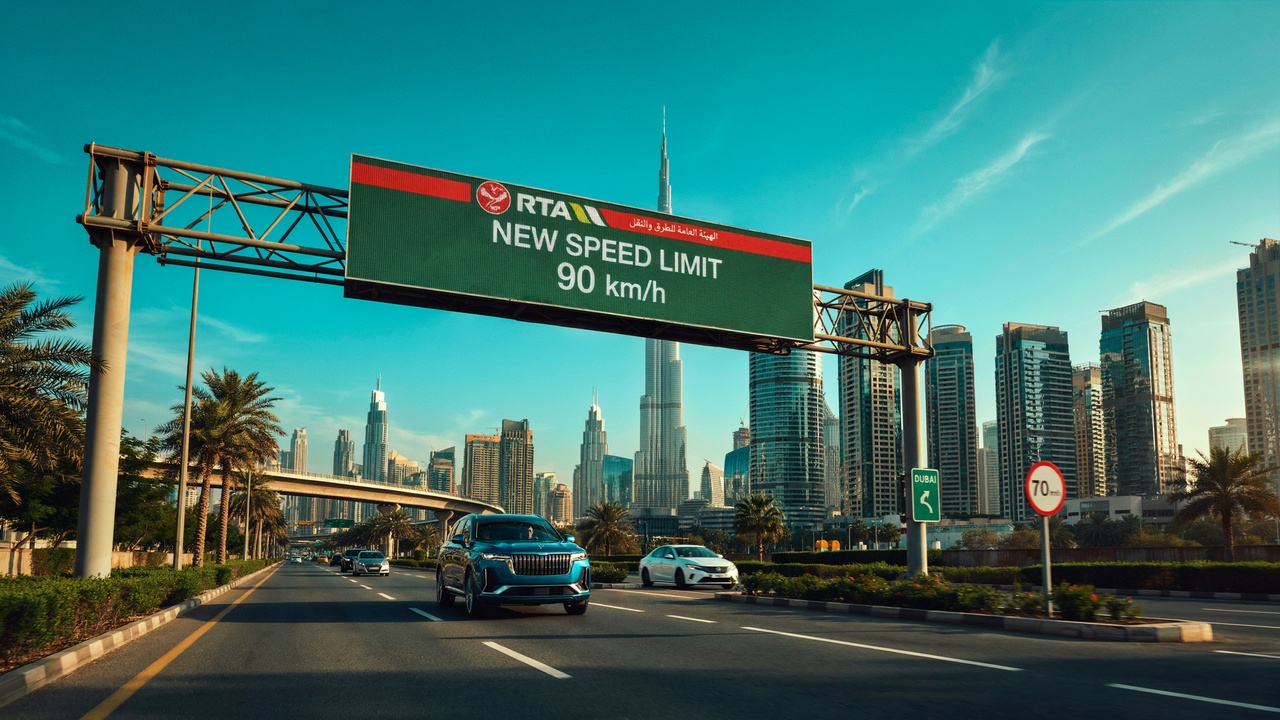
Dubai, United Arab Emirates, will introduce revised speed limits on five major roads from 1 November 2026, affecting residents, international visitors, tourists using rental cars and daily commuters across the emirate. The Roads and Transport Authority (RTA), working with Dubai Police, announced the changes on 21 October following engineering and traffic safety assessments. Speed limits will increase on three roads and decrease on two, with the revised restrictions applying in both directions along specified sections. Authorities will also replace speed-limit signs and reprogramme traffic cameras ahead of implementation, making the announcement particularly important for motorists preparing to drive in Dubai next month.
Dubai New Speed Limits 2026: What Changes Will Take Effect from November?
Dubai’s Roads and Transport Authority has confirmed significant changes to speed regulations on five important roads as part of its wider traffic management and safety programme.
Advertisement
Advertisement
The amendments will take effect on Sunday, 1 November 2026.
Three roads will receive higher speed limits, while two will see reductions.
Advertisement
Advertisement
The revised regulations will apply to specific road sections rather than necessarily covering the entire length of each street.
Authorities have confirmed that the changes will affect traffic travelling in both directions.
Advertisement
Advertisement
The adjustments follow a comprehensive engineering and technical assessment undertaken by the RTA in collaboration with Dubai Police and an international consultant.
Officials examined road conditions, vehicle speeds, traffic volumes, surrounding development and infrastructure design before approving the revisions.
The changes support the Dubai Traffic Safety Strategy and reflect updates to the Dubai Speed Management Manual.
For motorists, the immediate requirement is straightforward: check the new limits and follow the updated road signs from the implementation date.
Complete List of Five Dubai Roads with New Speed Limits from 1 November 2026
The revised regulations include increases on Al Asayel Street, Al Mustaqbal Street and Latifa bint Hamdan Street.
Meanwhile, lower speed limits will apply to designated sections of Al Rebat Street and Sheikh Sabah Al Ahmad Al Jaber Al Sabah Street.
Advertisement
Advertisement
Official Speed Limit Changes
| Road | Affected section | Old limit | New limit |
|---|---|---|---|
| Al Asayel Street | Oud Maitha Street to Al Meydan Street | 60 km/h | 80 km/h |
| Al Mustaqbal Street | Sheikh Rashid Street to Al Meydan Street | 60 km/h | 70 km/h |
| Latifa bint Hamdan Street | Sheikh Zayed Road to Al Khail Road | 60 km/h | 70 km/h |
| Al Rebat Street | Marrakech Street to Sheikh Mohammed bin Zayed Road | 100 km/h | 90 km/h |
| Sheikh Sabah Al Ahmad Al Jaber Al Sabah Street | 2nd December Street to Khalid bin Al Waleed Street | 80 km/h | 70 km/h |
The figures were confirmed in the RTA’s official announcement dated 21 October 2026.
The changes will apply in both directions along the identified road sections.
Importantly, the revised limits should not be interpreted as applying automatically to adjoining streets or the entire length of each named road.
Motorists should continue to observe the posted signs when entering or leaving the affected areas.
Al Asayel Street Speed Limit Increases from 60 to 80 km/h
Al Asayel Street will receive the largest increase among the five affected roads.
The speed limit will rise from 60 km/h to 80 km/h between Oud Maitha Street and Al Meydan Street.
Advertisement
Advertisement
This represents an increase of 20 km/h.
The revised regulation will apply in both directions.
According to the RTA, speed adjustments are based on engineering considerations, traffic conditions and the characteristics of each road.
Increasing the speed limit on this section could help align permitted vehicle speeds more closely with its assessed operating conditions.
However, the RTA has not published a specific journey-time saving for Al Asayel Street.
Drivers should therefore avoid assuming that the higher limit will necessarily produce faster trips during periods of congestion.
Advertisement
Advertisement
The posted speed limit is a maximum, not a recommended speed under every road or weather condition.
Motorists must continue to adjust their driving to traffic density, visibility and surrounding vehicles.
Al Mustaqbal Street to Receive Higher Speed Limit Between Sheikh Rashid and Al Meydan Streets
The speed limit on Al Mustaqbal Street will increase from 60 km/h to 70 km/h.
The change applies to the section between Sheikh Rashid Street and Al Meydan Street.
This adjustment will permit a higher maximum speed on the designated stretch from 1 November.
Al Mustaqbal Street forms part of Dubai’s wider urban road network, making the revision relevant to drivers travelling through connected commercial and residential areas.
Advertisement
Advertisement
The RTA’s decision reflects its assessment of road design and traffic conditions.
Although the revised speed limit allows motorists to travel faster where conditions permit, it does not guarantee improvements in journey times.
Traffic signals, intersections and congestion can still affect travel speeds.
Drivers entering the revised section should look for new signs rather than relying solely on familiar routes or previous navigation settings.
Latifa bint Hamdan Street Speed Limit Rises to 70 km/h
Latifa bint Hamdan Street is the third road where Dubai authorities will introduce a higher speed limit.
The maximum permitted speed will rise from 60 km/h to 70 km/h between Sheikh Zayed Road and Al Khail Road.
Advertisement
Advertisement
The revision will apply to both directions of travel.
This section links important parts of Dubai’s road network and is relevant to motorists travelling between major transport corridors.
The new regulation forms part of the RTA’s broader effort to align speed limits with road characteristics and actual operating conditions.
For commuters and visitors, the change means that a previously applicable maximum of 60 km/h will become 70 km/h on the designated section.
However, the higher limit does not extend automatically to every road connected with Latifa bint Hamdan Street.
Motorists should monitor signs when joining Sheikh Zayed Road, Al Khail Road or other adjoining routes.
Advertisement
Advertisement
Al Rebat Street Speed Limit Reduced from 100 to 90 km/h
Al Rebat Street is one of two roads where authorities will reduce the permitted speed.
From 1 November, the maximum speed will decrease from 100 km/h to 90 km/h between Marrakech Street and Sheikh Mohammed bin Zayed Road.
The reduction of 10 km/h will apply in both directions.
This change is particularly important for motorists familiar with the previous higher limit.
Drivers who regularly use Al Rebat Street should review their usual driving habits and avoid relying on previous speed settings.
The RTA has confirmed that speed cameras will be reprogrammed to reflect the new limits.
Advertisement
Advertisement
The reduction is part of a wider technical assessment intended to improve safety and align speed regulations with existing road conditions.
Authorities have not attributed this specific change to a newly announced accident figure or identified a particular collision incident as its cause.
The official explanation centres on engineering analysis, traffic management and road safety.
Sheikh Sabah Al Ahmad Al Jaber Al Sabah Street to Have Lower 70 km/h Limit
Dubai’s second speed reduction will affect Sheikh Sabah Al Ahmad Al Jaber Al Sabah Street.
The maximum permitted speed will decrease from 80 km/h to 70 km/h between 2nd December Street and Khalid bin Al Waleed Street.
The new limit will apply from 1 November in both directions.
Advertisement
Advertisement
The affected section forms part of Dubai’s established urban road network, where traffic conditions can change throughout the day.
Motorists travelling through the area should pay particular attention to updated road signs.
Drivers who regularly travel at the previous 80 km/h limit must adjust to the reduced maximum.
The RTA has included this change within the same coordinated programme covering all five roads.
No separate implementation date has been announced for the street.
Visitors using rental vehicles or travelling through unfamiliar parts of Dubai should also observe the revised speed regulations carefully.
Advertisement
Advertisement
Why Dubai Is Changing Speed Limits on Major Roads
The RTA has explained that the five-road adjustment follows extensive engineering and technical studies conducted over recent months.
The review was undertaken in collaboration with Dubai Police and an international consultant.
Authorities assessed how road infrastructure, surrounding development and traffic conditions influence safe and efficient vehicle movement.
The revised limits reflect 2026 updates to the technical specifications of the Dubai Speed Management Manual.
The manual provides a framework for evaluating speed regulations against engineering standards and road safety objectives.
Key Factors Considered by Dubai’s Transport Authorities
- Traffic volumes: The number of vehicles using particular road sections.
- Road design: The engineering characteristics and design speed of each road.
- Urban development: The extent and nature of development alongside road corridors.
- Actual vehicle speeds: Observed driving speeds, including the 85th-percentile speed used in engineering assessments.
- Pedestrian movement: Activity involving people walking near or across affected areas.
- Nearby facilities: The presence of infrastructure and destinations that influence traffic conditions.
The 85th-percentile speed is a technical measurement representing the speed at or below which 85 per cent of observed vehicles travel.
Advertisement
Advertisement
Authorities use this information alongside other criteria when examining speed management.
The RTA emphasises that the objective is to balance efficient traffic movement with appropriate safety standards.
The resulting changes demonstrate that traffic management does not always require lower speed limits.
Depending on road conditions, authorities may raise or reduce permitted speeds to improve consistency with the surrounding environment.
Dubai Police and RTA to Update Speed Cameras and Road Signs Before Implementation
Dubai authorities have confirmed that physical signs and electronic enforcement systems will be updated before the revised speed limits take effect.
The RTA will replace speed-limit signs along the designated road sections.
Advertisement
Advertisement
The new signs will display the revised maximum permitted speeds.
Speed cameras will also be reprogrammed to reflect the adjusted limits.
These preparations are intended to support the transition when the new regulations become effective on 1 November.
For motorists, the most important consideration is the posted legal speed limit.
Drivers should not assume that familiar radar thresholds will remain unchanged.
Although Dubai has historically used an enforcement tolerance on many roads, the official announcement does not specify revised radar activation thresholds for each of the five affected sections.
Advertisement
Advertisement
It would therefore be inappropriate to treat an assumed tolerance as permission to exceed the posted limit.
Following the displayed speed limit remains the safest approach.
Why This Matters
Dubai is an important international tourism and business destination where millions of visitors depend on efficient road transport.
Changes to major road speed limits are therefore relevant beyond the emirate’s resident commuting population.
Tourists frequently use taxis, chauffeur-driven vehicles, rental cars and organised road transfers to reach attractions, hotels and business venues.
Motorists navigating Dubai for the first time may be unfamiliar with the road network.
Advertisement
Advertisement
For these visitors, clear and accurate information about revised traffic regulations can support safer travel planning.
The speed changes also illustrate Dubai’s approach to managing a developing urban transport system.
By increasing limits where engineering assessments support higher speeds and reducing them where lower limits are considered appropriate, authorities aim to improve the relationship between road design and driving conditions.
The initiative may contribute to traffic efficiency and road safety, although the actual effects will need to be assessed after implementation.
The RTA has not announced quantified reductions in congestion, accident rates or journey times resulting specifically from these five changes.
What Travellers Should Know
International visitors planning to drive in Dubai after 1 November 2026 should become familiar with the revised regulations before collecting a rental car or starting a road journey.
Advertisement
Advertisement
The five affected roads form part of the emirate’s broader transport network, and tourists may encounter them while travelling between accommodation, attractions, commercial districts and other destinations.
Before Driving
- Check the implementation date: The revised limits take effect on 1 November 2026.
- Understand the affected sections: Changes apply only to designated portions of the five roads.
- Follow posted signs: Roadside signs take priority over previously remembered speed limits.
- Expect updated camera enforcement: The RTA has confirmed that speed cameras will be reprogrammed.
- Check rental-car conditions: Visitors should review their rental provider’s rules concerning traffic violations and administrative charges.
- Verify driving eligibility: International visitors should confirm whether their driving licence is accepted in the UAE or whether an international driving permit is required.
- Monitor road conditions: Congestion, construction and temporary traffic restrictions may require drivers to travel below the posted maximum.
Visitors should also remember that a higher speed limit does not mean road conditions will always permit travel at that speed.
Careful lane discipline, appropriate following distances and attention to signs remain important when navigating Dubai.
What Are the Potential Consequences of Ignoring the New Limits?
Speeding violations in Dubai can result in financial penalties and, for more serious offences, additional sanctions.
The UAE operates a traffic enforcement system involving fines, black points and possible vehicle impoundment, depending on the nature and seriousness of an offence.
Drivers should not assume that the revised limits create an informal exemption period.
Advertisement
Advertisement
The RTA has announced the implementation date and stated that speed cameras will be adjusted accordingly.
For visitors renting vehicles, traffic fines may also result in administrative charges under the rental agreement.
Travellers should therefore review the terms of their rental contract and avoid depending on unfamiliar assumptions about camera enforcement.
The precise penalty for any incident depends on the applicable traffic regulations and recorded violation.
The RTA’s five-road announcement does not introduce a separate new penalty schedule.
Its principal regulatory change concerns the maximum permitted speeds on the identified sections.
Advertisement
Advertisement
Frequently Asked Questions About Dubai’s New Speed Limits
When will Dubai’s new speed limits take effect?
The revised speed limits will become effective on Sunday, 1 November 2026, according to the Roads and Transport Authority and Dubai Police.
Which Dubai roads will have higher speed limits?
Al Asayel Street, Al Mustaqbal Street and Latifa bint Hamdan Street will receive higher limits on specified sections.
Which Dubai roads will have lower speed limits?
Al Rebat Street will decrease from 100 km/h to 90 km/h, while Sheikh Sabah Al Ahmad Al Jaber Al Sabah Street will decrease from 80 km/h to 70 km/h on the designated sections.
Will the changes apply in both directions?
Yes. The RTA has confirmed that all five speed-limit adjustments will apply in both directions along the specified road sections.
Will Dubai’s speed cameras be updated?
Yes. The RTA will reprogramme speed cameras and replace relevant road signs ahead of implementation.
Dubai’s Revised Road Speeds Highlight a Wider Commitment to Safer, More Efficient Travel
Dubai’s decision to revise speed limits on five major roads introduces an important change for motorists travelling across the emirate from November.
Advertisement
Advertisement
The adjustments will raise maximum speeds on Al Asayel Street, Al Mustaqbal Street and Latifa bint Hamdan Street while reducing limits on Al Rebat Street and Sheikh Sabah Al Ahmad Al Jaber Al Sabah Street.
The changes follow engineering assessments conducted by the RTA in coordination with Dubai Police.
They reflect the authorities’ ongoing efforts to align road regulations with traffic volumes, infrastructure design, surrounding development and safety considerations.
For residents, the announcement means adapting familiar driving habits to the revised limits.
For international tourists and business travellers, it highlights the importance of checking local road regulations before driving in the UAE.
With replacement signs and updated camera systems planned before 1 November, motorists will need to follow the new regulations on the designated road sections.
Advertisement
Advertisement
The longer-term effects on traffic flow and safety will depend on actual driving conditions after implementation.
For now, the clearest message for anyone travelling through Dubai is to remain attentive to road signs, observe the applicable speed limits and prepare for the changes before they take effect.
Advertisement
