
Spain Off-Season Travel Hits 47 Percent as Tourism Activity Spreads Beyond Summer, Ahead of Italy and Greece

Published
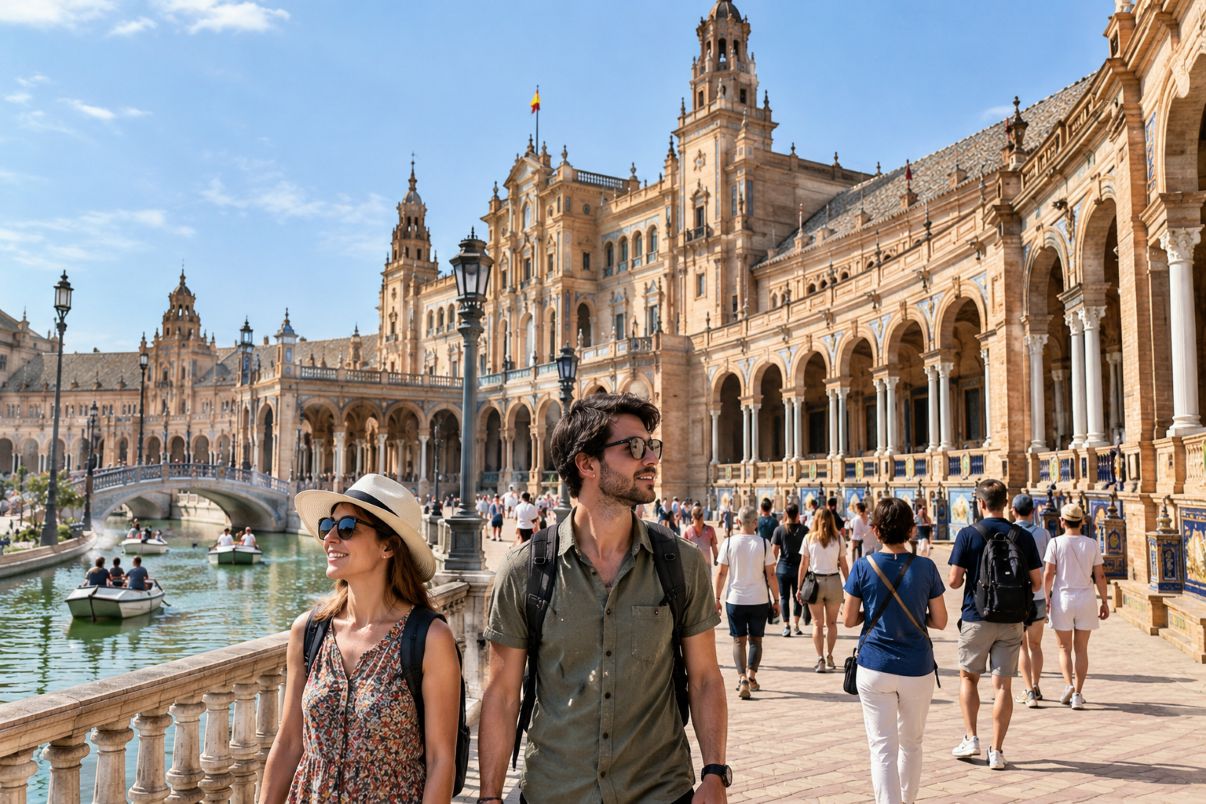
Spain is emerging as a standout European destination for holidays beyond summer, with new research indicating that 47 per cent of its tourism activity takes place outside the traditional peak season. The findings from The Data Appeal Company suggest Spain has a more balanced tourism calendar than Italy and Greece, supported by cultural attractions, premium accommodation and growing international interest. Argentina, Poland and Brazil have become important growth markets for off-season travel, while the Canary Islands continue to attract visitors seeking longer holidays. Official Spanish statistics also show strong international arrivals and spending in 2026, reinforcing the country’s position as a major global tourism destination.
Spain Off-Season Travel Reaches 47 Per Cent as Tourism Extends Beyond Summer
Spain’s tourism industry is demonstrating a significant shift towards year-round travel.
Advertisement
Advertisement
Research by The Data Appeal Company indicates that 47 per cent of tourism activity occurs outside the traditional May-to-September peak period.
The findings come from a study presented during the VI Turespaña Convention in Zaragoza.
Advertisement
Advertisement
The research examines urban destinations, inland and nature-based locations, Mediterranean coastal areas and the Canary Islands.
Its results suggest that Spain attracts a substantial share of tourism activity beyond summer.
Advertisement
Advertisement
However, the percentage represents the study’s measurement of tourism activity rather than an official count of international arrivals.
The findings highlight seasonal diversification, not the disappearance of peak-season demand.
Advertisement
Advertisement
Spain Leads Italy and Greece in More Balanced Seasonal Tourism Activity
The research identifies important differences in tourism seasonality across three major Mediterranean destinations.
Spain records approximately 53 per cent of tourism activity during its peak period.
Italy’s corresponding share reaches 58.7 per cent, while Greece records 72.7 per cent.
This means Spain has a larger proportion of activity outside the busiest months in the study’s comparison.
Advertisement
Advertisement
However, the seasonal periods used for the destinations are not completely identical.
The figures also do not establish which country receives the highest number of international visitors.
Spain’s relatively balanced distribution reflects the appeal of urban attractions, cultural experiences and destinations suitable for travel throughout the year.
Argentina, Poland and Brazil Drive Strong Off-Season Tourism Growth
The Data Appeal Company’s research identifies Argentina, Poland and Brazil as important emerging markets for off-season visits to Spain.
Argentina recorded growth of 27.8 per cent over the study’s three-year comparison period.
Poland followed with 18.6 per cent, while Brazil registered 13.1 per cent.
Advertisement
Advertisement
These figures highlight increasing interest from international visitors travelling outside the traditional summer holiday season.
However, the percentages do not indicate total tourist arrivals from each country.
A faster growth rate does not necessarily mean a larger source market.
For Spanish tourism businesses, the findings suggest opportunities to develop culturally focused holidays and longer itineraries.
Marketing strategies may increasingly target visitors seeking experiences beyond conventional beach tourism.
Canary Islands Attract Longer Holidays and Premium Accommodation Demand
The Canary Islands are particularly important to Spain’s year-round tourism strategy.
Advertisement
Advertisement
The research identifies average stays of 6.6 nights among the islands’ principal international source markets.
This represents the longest average stay among the destination categories analysed.
The islands also attract visitors interested in family holidays, cultural experiences and wellbeing tourism.
According to the study, 58.2 per cent of off-season hotel stays in the Canary Islands fall within mid-to-high or premium accommodation categories.
The corresponding share in selected Mediterranean coastal and island destinations is 44.2 per cent.
These findings suggest that premium hospitality remains attractive outside summer.
Advertisement
Advertisement
However, they do not establish average room prices or guaranteed savings.
Madrid, Barcelona and Seville Strengthen Spain’s Cultural Tourism Appeal
Cultural tourism is identified as an important motivation for visitors travelling outside peak season.
Madrid attracts international travellers through museums, historic districts, royal heritage and cultural events.
Barcelona combines modernist architecture, Mediterranean scenery and urban attractions.
Seville offers historic monuments, flamenco traditions and Andalusian cuisine.
Granada is internationally recognised for the Alhambra, while Córdoba attracts visitors interested in its monumental heritage.
Advertisement
Advertisement
These destinations provide opportunities for sightseeing beyond the hottest summer months.
However, visitor demand varies according to festivals, public holidays and local events.
Travellers should confirm attraction reservations and seasonal opening hours before departure.
Cultural tourism supports Spain’s ambition to develop more diverse year-round travel experiences.
Spain’s Official Tourism Figures Reveal Strong International Visitor Spending
Official government statistics provide additional context for the private-sector research.
Spain’s National Statistics Institute recorded approximately 11.5 million international tourists in July 2026.
Advertisement
Advertisement
This represented growth of 4.6 per cent compared with July 2025.
International visitor spending reached approximately €18.22 billion during the month, increasing by 10.9 per cent.
During the first seven months of 2026, Spain welcomed approximately 58.1 million international tourists.
Visitor expenditure over the same period reached around €82.05 billion.
These figures demonstrate strong international tourism demand.
However, they do not independently verify the study’s 47 per cent off-season activity estimate.
Advertisement
Advertisement
The two datasets measure different aspects of tourism performance.
Spain Tourism Strategy 2030 Targets Sustainable Growth and Reduced Seasonality
Spain’s government has identified tourism diversification and reduced seasonality as important national priorities.
Its Tourism Strategy 2030 aims to distribute visitor activity more evenly across destinations and throughout the year.
Traditional summer tourism can place pressure on accommodation, transport networks, water resources and popular attractions.
Encouraging travel during quieter periods may help reduce some seasonal pressures.
It could also support more consistent employment in destinations historically dependent on summer holidays.
Advertisement
Advertisement
However, spreading tourism across the calendar does not automatically resolve overcrowding or housing concerns.
The government’s approach also emphasises sustainability and the interests of local communities.
Long-term success will depend on measurable outcomes and responsible destination management.
Spain Tourism Employment Reflects Continued Activity Beyond Summer
Spain’s tourism labour market provides additional evidence of strong activity extending into September.
Official tourism-related employment figures reported for September 2026 identified approximately 3.05 million Social Security registrations.
This represented annual growth of 4.5 per cent.
Advertisement
Advertisement
Tourism-related employment exceeded three million registered workers for five consecutive months from May to September.
Accommodation and food services accounted for approximately 2.02 million workers during September.
These figures demonstrate tourism’s importance to Spain’s employment market.
However, they do not establish that seasonal employment fluctuations have disappeared.
Longer tourism seasons may support businesses, but employment stability requires separate analysis.
Canary Islands, Granada and Andalusia Offer Compelling Off-Season Holiday Experiences
Spain provides a wide range of destinations suitable for travel outside summer.
Advertisement
Advertisement
The Canary Islands attract visitors interested in winter sunshine, coastal scenery, hiking and outdoor activities.
Granada offers the Alhambra, historic neighbourhoods and nearby mountain landscapes.
Seville provides opportunities to explore cultural landmarks during generally milder autumn and spring conditions.
Madrid offers museums, galleries and year-round urban attractions.
Barcelona also attracts visitors through architecture, shopping and cultural experiences.
However, quieter travel periods do not guarantee lower prices or smaller crowds.
Advertisement
Advertisement
Travellers should compare accommodation availability, transport schedules and attraction opening arrangements before booking.
Regional weather conditions can also vary substantially.
International Travellers Should Check Visa Rules and Seasonal Travel Conditions
Visitors planning off-season holidays in Spain should review entry requirements according to nationality.
Travellers from outside the European Union may need a Schengen visa or other applicable travel authorisation.
Passengers should confirm the rules before purchasing non-refundable flights or accommodation.
Weather conditions also require consideration.
Advertisement
Advertisement
Northern Spain can experience cooler and wetter periods, while southern destinations often offer milder conditions.
The Canary Islands have a different climate from mainland Spain.
Visitors should check local forecasts, transport schedules and attraction reservations.
Major festivals and public holidays can increase accommodation demand even outside summer.
Official Spanish tourism resources provide practical destination information.
Conclusion: Spain’s Off-Season Tourism Growth Signals a More Balanced Travel Future
Spain’s off-season tourism performance highlights the growing appeal of European holidays beyond traditional summer travel. With 47 per cent of activity reportedly taking place outside peak months, the country demonstrates a more balanced seasonal pattern than Italy and Greece in the study’s comparison. Argentina, Poland and Brazil are contributing to international demand, while cultural attractions and premium accommodation strengthen visitor interest. Official government statistics separately confirm strong arrivals and spending in 2026. For travellers, Spain offers opportunities to explore historic cities, coastal destinations and island landscapes throughout the year. Sustainable development and responsible tourism management will remain essential.
Advertisement
