
Taiwan and Japan Travel Hit by Typhoon Champi as Over 225 Flights Are Cancelled Across East Asia

Published
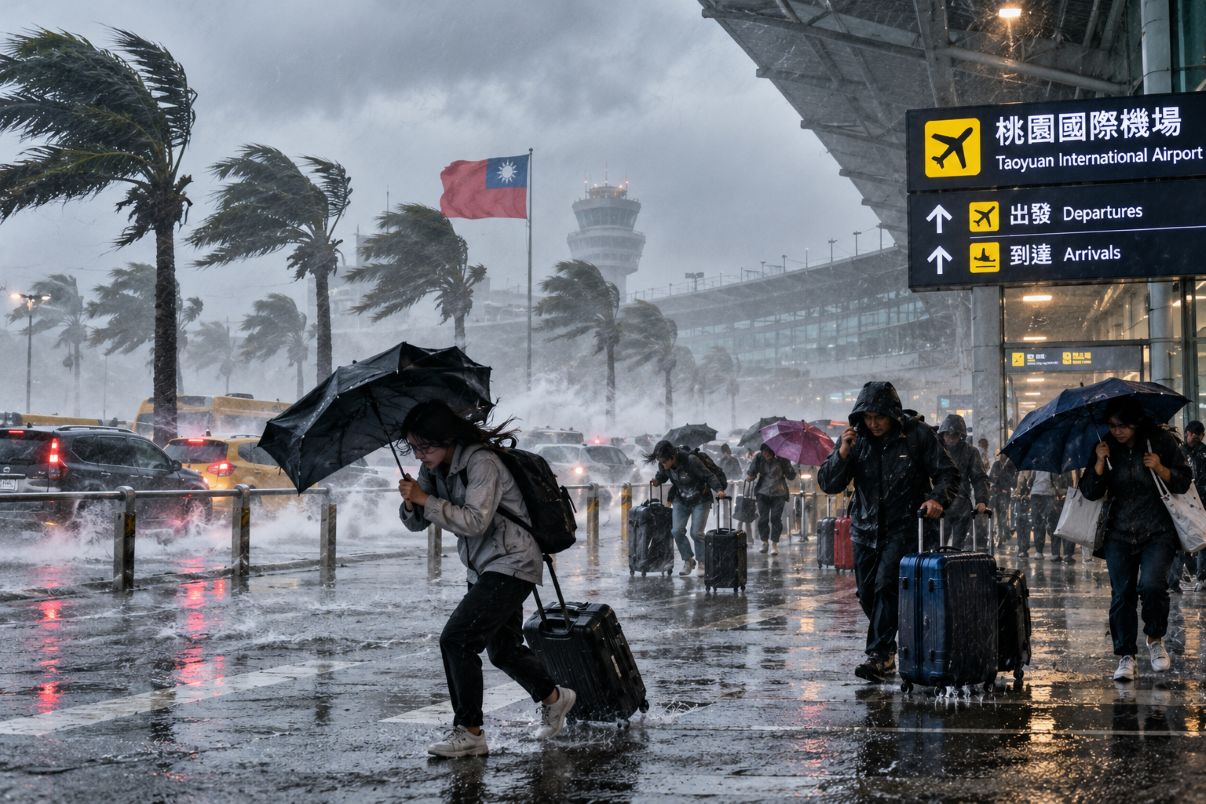
Taiwan and Japan are facing serious travel disruption as Typhoon Champi brings dangerous winds, heavy rainfall and hazardous seas to parts of East Asia. Initial reports identify 125 flight cancellations in Taiwan on 22 October 2026 and more than 100 Japanese flight cancellations scheduled between 22 and 25 October, affecting over 11,000 passengers in Japan. Airlines have adjusted services around Okinawa and introduced special rebooking arrangements for selected international routes. Authorities have also warned about flooding, landslides and dangerous coastal conditions. However, the figures cover different operating periods, and travellers should check updated airline schedules and official weather warnings before departure.
Typhoon Champi Travel Disruption Forces Major Flight Cancellations Across East Asia
Typhoon Champi has created substantial uncertainty for international and domestic aviation.
According to Reuters reporting dated 22 October, Taiwan recorded 125 flight cancellations as the storm approached.
Japanese airlines separately cancelled more than 100 flights scheduled between Thursday and Sunday.
Advertisement
Advertisement
More than 11,000 passengers were affected by the Japanese cancellations.
Together, these reports establish a minimum of 225 cancellations across the different reporting periods, although the Japanese figure exceeds 100 and the combined total is therefore higher.
Advertisement
Advertisement
The figures should not be treated as a final regional cancellation count.
Airlines may introduce further schedule changes depending on weather conditions and airport operations.
Taiwan Airports Face Serious Disruption as Airlines Suspend Domestic and Regional Services
Taiwan’s aviation network has experienced widespread adjustments as authorities respond to deteriorating weather.
The country’s transport ministry reported 125 cancellations on 22 October, with domestic services accounting for most of the disruption.
China Airlines and Tigerair Taiwan announced changes affecting selected connections between Taiwan and Okinawa.
Flights involving Taoyuan, Taichung and Kaohsiung were among those affected.
Advertisement
Advertisement
Domestic operators Uni Air and Mandarin Airlines also adjusted services to Penghu, Kinmen and Matsu.
EVA Air and Starlux advised passengers that additional schedule changes could become necessary.
However, the cancellation figures do not establish that every Taiwanese airport has closed.
Travellers should confirm individual flights before leaving for departure terminals.
Japan’s Okinawa Tourism Faces Major Challenges as Over 11,000 Passengers Are Affected
Japan’s southwestern islands are among the areas facing significant disruption from Typhoon Champi.
Japan Airlines, All Nippon Airways and Skymark were among the carriers cancelling more than 100 flights scheduled between 22 and 25 October.
Advertisement
Advertisement
The disruption affected over 11,000 passengers, according to contemporary reporting.
Okinawa’s tourism economy depends heavily on aviation and ferry connections.
Visitors travelling to Naha, Yonaguni and surrounding islands may encounter changes to flights and maritime services.
The Government of Canada also warned about violent winds, flooding, landslides and possible interruptions to essential services in Japan’s Ryukyu Islands.
Tourists should avoid exposed coastal locations and check official transport notices before travelling.
Typhoon Champi Brings Dangerous Winds, Torrential Rain and High Waves
Typhoon Champi developed into an exceptionally powerful western Pacific storm during October 2026.
Advertisement
Advertisement
The Korea Meteorological Administration recorded maximum sustained winds of approximately 198 kilometres per hour at 18:00 UTC on 21 October.
Separate reporting identified peak gusts exceeding 227 kilometres per hour near the storm’s centre.
Forecasts issued on 22 October indicated that Champi would gradually weaken while moving towards waters near Taiwan before turning north-east.
However, a weakening typhoon can still produce dangerous weather.
Taiwanese authorities warned about exceptionally heavy rainfall in northern mountainous areas and coastal waves exceeding six metres.
Such conditions create serious risks for road travel, marine excursions, hiking and outdoor tourism.
Advertisement
Advertisement
Shanghai and Hong Kong Travellers Could Encounter Connecting Flight Disruption
The storm’s influence extends beyond destinations directly exposed to its strongest winds.
International airlines may adjust flight paths and schedules to avoid hazardous weather.
Delta Air Lines included Shanghai Pudong International Airport in its weather-related travel waiver covering 22–24 October.
This indicates the airline anticipated possible disruption to eligible Shanghai itineraries.
However, the waiver does not establish that Shanghai Pudong Airport has suspended all operations.
Travellers departing Hong Kong or mainland China through Taiwan and Japan could also encounter connection difficulties.
Advertisement
Advertisement
Passengers should check every flight segment, including onward journeys.
There is no confirmed evidence that all international aviation across East Asia has stopped.
International Airlines Introduce Special Rebooking Options for Affected Passengers
Some airlines have introduced temporary flexibility for travellers affected by Champi.
Delta Air Lines published a waiver covering eligible flights to, from or through Taipei and Shanghai between 22 and 24 October.
Qualifying passengers may change their travel arrangements without additional change charges under the published conditions.
The airline identified 27 October as the relevant deadline for eligible replacement departures.
Advertisement
Advertisement
However, the waiver applies only to specified tickets and itineraries.
Other airlines may offer different deadlines and conditions.
Passengers should check official airline notifications before cancelling flights.
Travellers should also retain booking confirmations and disruption notices when requesting assistance or making insurance claims.
Taiwan, Okinawa and Shanghai Tourism Attractions Face Weather-Related Uncertainty
Taiwan attracts visitors through Taipei’s cultural landmarks, night markets, historic districts and mountain landscapes.
Okinawa is internationally recognised for beaches, marine activities, island scenery and cultural heritage.
Advertisement
Advertisement
Shanghai offers urban tourism, shopping, museums and waterfront attractions.
However, severe weather can make outdoor experiences unsafe even when tourist facilities remain operational.
Visitors should avoid coastal excursions, mountain trails and exposed areas when local authorities issue warnings.
Boat operators may cancel services because of dangerous sea conditions.
Tourists should also verify attraction opening hours and hotel arrangements.
The storm does not establish a nationwide closure of attractions across Taiwan, Japan or China.
Advertisement
Advertisement
East Asia Tourism Businesses Could Face Wider Economic Pressure
Flight cancellations and severe weather can affect businesses beyond the aviation sector.
Hotels may receive delayed arrivals, while tour operators may need to postpone excursions.
Restaurants, airport transfer providers and ferry companies can also experience operational disruption.
Island destinations are particularly vulnerable because alternative transport options may be limited.
However, the available reporting does not establish a verified monetary value for tourism losses caused by Champi.
Nor does it demonstrate that all international visitor activity has stopped.
Advertisement
Advertisement
The eventual economic impact will depend on the duration of disruption, infrastructure conditions and the restoration of transport services.
Tourism businesses should communicate confirmed changes and assist affected customers.
What Travellers Should Do Before Flying to Taiwan, Japan or China
Passengers should check flight status directly through airline websites or official airport information before departure.
Those holding connecting tickets should verify whether onward flights remain available.
Travellers should also examine weather waivers, accommodation cancellation conditions and insurance coverage.
During severe weather, visitors should avoid beaches, coastal roads, mountain trails and flood-prone locations.
Advertisement
Advertisement
Tourists already in affected destinations should follow local emergency instructions.
The Japan Meteorological Agency and Taiwan’s Central Weather Administration provide official weather warnings.
Forecasts and flight schedules can change quickly, making updated information essential.
Travellers should not assume that earlier airline cancellations or warnings remain unchanged.
Conclusion: Typhoon Champi Creates Major Uncertainty for East Asian Travellers
Typhoon Champi has disrupted travel across Taiwan and Japan, with initial reports identifying more than 225 flight cancellations across different operating periods. Dangerous winds, heavy rainfall and high waves have created additional concerns for tourists visiting Okinawa, Taipei and surrounding destinations. Airlines are adjusting schedules, while some offer special rebooking arrangements for affected passengers. However, the storm has not caused a confirmed shutdown of every airport or tourist attraction across East Asia. Travellers should monitor official weather forecasts, confirm flight arrangements and avoid hazardous outdoor activities. Further disruption remains possible as weather conditions and transport operations change.
Advertisement
