
Morocco Nears Heritage Travel Milestone as Aït-Ben-Haddou Restoration Advances on Ouarzazate–Marrakech Route

Published
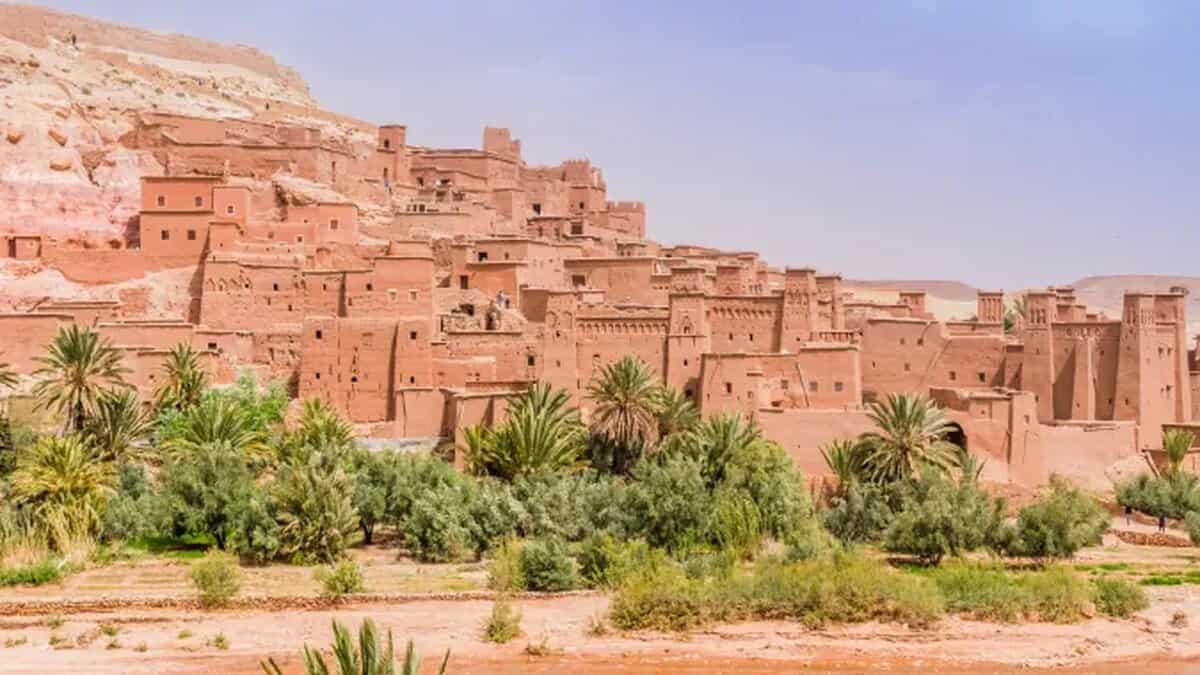
Morocco is approaching an important October test for heritage tourism around Aït Ben Haddou. Restoration was 80–85% complete in late June and was expected to require roughly four more months, placing the projected finish near late October. Yet the bigger travel-industry issue is emerging beyond construction: UNESCO wants stronger visitor-flow, carrying-capacity and commercial-pressure management just as Ouarzazate accommodation nights are growing 23% and Morocco continues to channel travellers south from Marrakech. Completion has not yet been officially confirmed as of 5 October.
Aït Ben Haddou Is Entering Its Most Important Travel Window Since Post-Earthquake Restoration Began
The immediate development for travellers is straightforward but requires precise wording.
Advertisement
Advertisement
According to Morocco’s official government portal Maroc.ma, restoration of the Ksar of Aït Ben Haddou had reached approximately 80–85% completion by 27 June 2026. The same official update said the remaining work was expected to take around four months. That calculation places the anticipated completion period around late October 2026.
That is a projected window. It is not a formally declared reopening date, nor is it confirmation that every restoration component will finish on a particular October day.
Advertisement
Advertisement
As of 5 October 2026, the primary Moroccan government and UNESCO material reviewed for this report does not provide a newer official percentage confirming that the project is complete. Travel sellers should therefore avoid describing Aït Ben Haddou as fully restored until Moroccan authorities publish a subsequent status update.
That distinction is commercially important. Tour operators are already selling southern Morocco as a heritage, desert and cultural circuit. A premature claim that restoration has finished could create inaccurate expectations concerning access, the condition of individual structures or the visitor experience.
Advertisement
Advertisement
The June government update also made clear that restoration is only one phase. The next phase is intended to enhance the heritage asset and generate stronger tourism activity throughout the year.
This makes October more than a construction deadline. It potentially marks the transition from physical repair to destination management.
The Real New Story Is Visitor Management Rather Than a Simple Restoration Finish
The most important development for the travel trade sits inside UNESCO’s 2026 assessment.
According to the UNESCO World Heritage Centre, Morocco has already undertaken post-earthquake technical assessments, established an intervention framework and launched restoration works at Aït Ben Haddou. Restoration interventions began in February 2025 under a CERKAS roadmap covering 2024–2026.
But UNESCO’s attention has now widened.
Its 2026 documentation says a dedicated visitor management plan is being prepared. The organisation identifies several matters requiring operational attention, including visitor uses, movement through the site, reception capacity, visitor experience and pressures connected with commercial activity.
Advertisement
Advertisement
For travel businesses, that could prove more consequential over the long term than the restoration itself.
A restored attraction can accommodate renewed demand. A World Heritage property experiencing stronger demand without organised visitor circulation can create congestion, commercial pressure and conservation problems.
UNESCO’s 2026 decision therefore encourages Morocco to integrate a formal visitor-management component into the site’s revised management framework. It should regulate uses, organise flows and establish an approach to commercial pressures. Risk-management mechanisms should also form part of the framework.
Nothing in that decision establishes a new tourist quota, reservation requirement or admission rule today. Operators should not invent one.
The significance lies in the direction of policy. Visitor management is moving closer to the centre of Aït Ben Haddou’s conservation strategy.
Ouarzazate Tourism Growth Makes the UNESCO Question More Urgent
The timing is particularly important because Ouarzazate is already experiencing strong accommodation demand.
Advertisement
Advertisement
According to the Moroccan government, classified tourist accommodation establishments across Morocco recorded a 9% year-on-year increase in overnight stays through June 2026.
Ouarzazate considerably outperformed that national rate. Overnight stays there increased 23% over the corresponding period.
That means Ouarzazate’s reported growth rate was 14 percentage points above the national classified-accommodation increase.
At the same time, Morocco received approximately 9.4 million visitors during the first half of 2026, representing 6% year-on-year growth. Travel receipts reached 64.9 billion Moroccan dirhams, increasing 15.9%.
The combination matters.
| Travel indicator | Latest verified official position used here | Why it matters for Aït Ben Haddou |
|---|---|---|
| Aït Ben Haddou restoration progress | 80–85% on 27 June 2026 | Project was entering its final reported phase |
| Expected remaining construction period | About four months from late June | Places projected finish around late October |
| Restoration start | February 2025 | Confirms a substantial post-earthquake intervention programme |
| Ouarzazate accommodation nights | +23% through June 2026 | Indicates rapidly strengthening destination demand |
| Morocco classified accommodation nights | +9% through June | Ouarzazate was growing materially faster |
| Morocco visitor arrivals | About 9.4 million in H1 | Shows broader national demand remains strong |
| Morocco travel receipts | MAD 64.9 billion, +15.9% | Tourism spending is expanding faster than arrivals |
| UNESCO property size | 3.03 hectares | Highlights the limited physical scale of the protected property |
| UNESCO buffer zone | 16.32 hectares | Reinforces need to manage impacts beyond the core structures |
| Visitor-management status | Plan under preparation | Future management may increasingly shape the tourism experience |
Sources: Morocco government, UNESCO World Heritage Centre.
Advertisement
Advertisement
The data does not prove that Aït Ben Haddou alone caused Ouarzazate’s 23% growth. Such a causal claim would go beyond the evidence.
It does show something more useful for the travel industry: the heritage site is approaching its post-restoration phase while its wider destination is already absorbing substantially higher accommodation demand.
That convergence deserves attention.
UNESCO Is Effectively Moving the Conversation From Repair to Carrying Capacity
Aït Ben Haddou occupies a relatively compact World Heritage footprint.
UNESCO records a 3.03-hectare protected property surrounded by a 16.32-hectare buffer zone. The site has been inscribed on the World Heritage List since 1987 under cultural criteria IV and V.
Its vulnerability is inherent in the architecture. Aït Ben Haddou consists of traditional earthen construction, clustered within defensive walls and towers.
Advertisement
Advertisement
That makes conservation fundamentally different from managing a modern purpose-built attraction.
UNESCO’s 2026 state-of-conservation analysis specifically identifies the need for visitor management covering flows and reception capacity. It also notes continuing concern about commercial proliferation, particularly activities capable of affecting the site’s authenticity and legibility.
This creates a notable strategic tension.
Tourism authorities have an economic incentive to increase stays, distribute visitors and develop heritage experiences. Conservation authorities need to prevent visitor growth from changing the very cultural asset attracting that demand.
The opportunity is therefore not simply higher footfall.
It is higher-value, better-managed heritage tourism.
Advertisement
Advertisement
For B2B travel planners, this may eventually favour smaller guided groups, staggered visits, longer regional stays and itineraries distributing expenditure across Ouarzazate rather than concentrating every visitor into the same short peak-period stop at the ksar.
Those are industry implications rather than policies already announced.
Marrakech Matters Because Morocco Already Markets Aït Ben Haddou Within a Southern Touring Corridor
Marrakech belongs in this story because Morocco’s own tourism promotion infrastructure directly connects it with the Ouarzazate touring market.
The Moroccan National Tourist Office promotes a Road to the Kasbahs itinerary beginning in Marrakech and continuing towards the Ouarzazate, Zagora and Tinghir region. Aït Ben Haddou is explicitly featured within that touring product.
The national tourism office separately lists Ouarzazate at roughly 194 kilometres from Marrakech in its destination information.
This makes Marrakech relevant not because restoration is taking place there, but because it functions as an established gateway feeding organised and independent travellers into southern Moroccan circuits.
Advertisement
Advertisement
For international operators, Aït Ben Haddou can therefore influence more than a local Ouarzazate excursion.
It sits inside a broader product architecture connecting a major Moroccan tourism hub with the country’s kasbah, desert, cinema and cultural-tourism offer.
The strategic question for travel sellers is therefore whether Aït Ben Haddou remains mainly a rapid en-route attraction or increasingly becomes part of a longer Ouarzazate stay.
Current accommodation growth suggests the latter deserves closer examination.
Ouarzazate Is Also Building a Second Tourism Engine Around Cinema
Heritage restoration is not occurring in isolation.
According to the Moroccan government, work began in June on Ouarzazate’s International Cinema City, a project occupying 10.49 hectares and representing an investment of 240 million dirhams.
Advertisement
Advertisement
The planned complex contains five complementary components spanning film production, post-production, training, innovation and visitor-facing services. Importantly for the tourism industry, the programme includes a dedicated film-tourism component.
That creates a potentially important destination-development combination.
Aït Ben Haddou provides globally recognised built heritage. Ouarzazate supplies accommodation, studios and a long-established cinema identity. The International Cinema City could add a more structured visitor economy around that film association.
If those strands are integrated effectively, Ouarzazate may become easier to package as a multi-experience destination rather than simply a staging point between Marrakech and desert itineraries.
That could support longer stays, additional hotel demand, guides, transport providers, restaurants, crafts and experiential tourism businesses.
It may also increase the importance of managing Aït Ben Haddou carefully. Successful film-tourism development could send additional visitors towards an already sensitive earthen World Heritage property.
Advertisement
Advertisement
The Restoration Follows Damage From the 2023 Al Haouz Earthquake
The current programme should also be understood in its post-earthquake context.
The earthquake of 8 September 2023 affected cultural properties across the region. UNESCO records that Moroccan authorities rapidly assessed Aït Ben Haddou and found the overall earthquake impact comparatively moderate, although structural disorders and localised damage required intervention.
The assessment identified several affected buildings and further deterioration of structures that had already been in poor condition. Morocco subsequently developed the 2024–2026 restoration roadmap, with post-earthquake works beginning in February 2025.
This history matters for visitors because the current restoration is not simply cosmetic improvement.
It sits within a broader resilience effort involving structural conservation, traditional architecture, risk planning and management of a living cultural landscape.
That makes the quality of restoration as important as its completion date.
Advertisement
Advertisement
Morocco’s National Tourism Strategy Strengthens the Case for Managed Heritage Growth
The policy environment points in the same direction.
Morocco’s Tourism Roadmap 2023–2026 was designed around visitor experience rather than destination promotion alone. Its architecture includes cultural circuits alongside nature, desert, city and other tourism products. It also identifies stronger aviation, distribution, tour-operator partnerships, accommodation capacity, human capital and tourism data as competitiveness priorities.
The roadmap originally established 2026 objectives of 17.5 million tourists, 200,000 new jobs and MAD 120 billion in foreign-exchange earnings.
Tourism demand has subsequently accelerated strongly. Official Moroccan reporting said the country received nearly 20 million tourists during 2025, with foreign-currency receipts reaching MAD 138 billion.
That wider growth changes the significance of heritage management.
When national visitor volumes rise rapidly, conservation management at internationally recognisable attractions stops being a niche cultural-policy issue. It becomes destination infrastructure.
Advertisement
Advertisement
Aït Ben Haddou could become one of the clearest tests of whether Morocco can convert record tourism growth into a managed heritage experience without diluting authenticity.
What Travel Agents and Tour Operators Should Do Before Late October
For the travel trade, the most important operational point is that projected completion and confirmed completion are not the same thing.
The June timetable creates a legitimate late-October monitoring window. It does not justify advertising a fixed restoration completion date.
| Planning issue | Verified position on 5 October | B2B implication |
|---|---|---|
| Full restoration completion | Not yet confirmed in the latest primary-source material reviewed | Avoid guaranteed completion wording |
| June construction status | 80–85% complete | Site was well advanced but unfinished at last formal percentage update |
| Expected timing | Roughly four months from 27 June | Late October is the logical verification window |
| Visitor-management plan | Under preparation | Future visitor-flow arrangements should be monitored |
| New tourist quota | No such measure identified in reviewed official sources | Do not report caps unless formally announced |
| Ouarzazate demand | Accommodation nights +23% through June | Secure peak-period inventory carefully |
| Marrakech connection | Official tourism circuit feeds southern itineraries | Consider arrival patterns when scheduling visits |
| Film-tourism investment | MAD 240 million Cinema City under development | Potential for future multi-night product expansion |
| Heritage risk | UNESCO requires stronger integrated management | Build itinerary flexibility into contracts |
Agents and operators should therefore:
- verify restoration status with local suppliers before describing the site as fully restored; avoid promising unrestricted access to individual heritage structures unless confirmed; monitor Moroccan government and UNESCO notices for visitor-management changes; build reasonable timing flexibility into Marrakech–Aït Ben Haddou–Ouarzazate programmes; spread activities across the wider Ouarzazate product where commercially suitable; distinguish confirmed regulations from UNESCO recommendations; avoid presenting late October as a legally fixed reopening date; and review group sizes, guide scheduling and accommodation inventory as destination demand continues to increase.
Why This Could Become One of Morocco’s Most Important Heritage Tourism Stories of Q4
The conventional headline would be that restoration at Aït Ben Haddou is nearing completion.
That misses the larger story.
Advertisement
Advertisement
Morocco is reaching a moment when heritage conservation, tourism demand, visitor capacity and destination investment are intersecting in one relatively small geographic area.
Ouarzazate accommodation nights are rising 23%. Marrakech already feeds an established southern touring corridor. Aït Ben Haddou is approaching the finish window identified in June. UNESCO is simultaneously asking for more developed visitor-flow, carrying-capacity, commercial-pressure and risk management. Ouarzazate is also investing MAD 240 million in a new cinema-industry complex that contains a tourism component.
For travel businesses, the next significant announcement may therefore not simply be that restoration has ended.
It could be what happens after restoration: how visitors are routed, how commercial activity is managed, whether regional stays lengthen, how heritage and film tourism are combined, and whether Ouarzazate converts faster accommodation growth into a sustainable year-round visitor economy.
That is the element worth watching through late October and Q4 2026.
Aït Ben Haddou is moving towards a potentially important physical milestone. The more consequential tourism story will be whether Morocco can use that milestone to create a better-managed heritage destination rather than merely a busier one.
Advertisement
