
Paris Protests Disrupt France’s Cultural Getaways as the Louvre, Musée d’Orsay and Major Attractions Shut Their Doors

Published
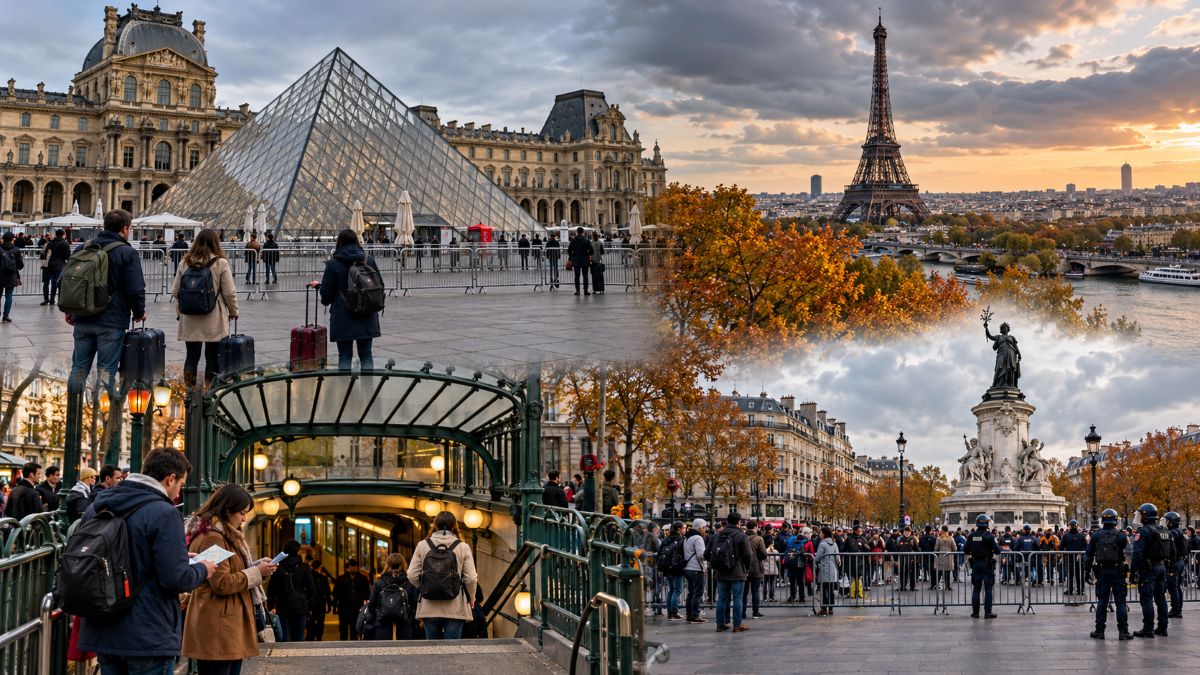
Paris protests are disrupting autumn sightseeing, with major museums closed, 24 Metro stations affected and temporary overnight restrictions in selected central districts. French authorities have deployed up to 70,000 police officers nationwide following violent unrest that damaged businesses and public buildings. Paris airports are reported to be operating normally, but visitors must check individual flights and airport transfers separately. The immediate challenge for travellers is deciding whether to retain bookings, rearrange museum visits or change their itineraries. Meanwhile, official tourism figures show that the Paris region entered autumn after a strong 2025, raising questions about how prolonged disruption could affect visitor confidence, accommodation demand and tourism businesses.
Paris Faces a Disrupted Autumn Travel Weekend
Paris is confronting an unusually complicated weekend for visitors as demonstrations, precautionary closures and transport restrictions intersect across the capital. The Louvre, Musée d’Orsay and several other prominent cultural institutions have closed on Saturday, 24 October, while restrictions affect movement around selected central districts. The disruption coincides with heightened security measures following last weekend’s violence and damage to businesses.
Authorities have deployed up to 70,000 police officers nationwide for the latest demonstrations, according to the Associated Press. More than 500,000 people demonstrated the previous week, while approximately 3,000 shops across France suffered damage or looting. These figures describe the national situation, not Paris alone, and should not be interpreted as a measure of tourist risk throughout the country.
For visitors, the immediate consequences are more tangible than the political headlines. A closed museum can invalidate a pre-booked sightseeing day, while an inaccessible Metro station may complicate transfers between hotels, railway terminals and attractions. However, the restrictions do not amount to a complete shutdown of Paris, and travellers should assess their individual itineraries rather than cancel automatically.
Advertisement
Advertisement
Museum Closures Reshape Cultural Itineraries
The closure of major cultural institutions represents one of the most significant immediate losses for visitors. The Paris tourism office lists the Louvre, Musée d’Orsay, Musée de l’Orangerie, Musée national Picasso-Paris and Grand Palais among the venues closed on 24 October. The closure also affects several smaller museums, exhibitions and cultural events.
Art Basel’s Paris programme at the Grand Palais has been cancelled for the weekend after opening on Friday. This adds a commercial dimension to the disruption, as the event’s closure affects more than ordinary sightseeing. Exhibitors, visitors, hospitality businesses and cultural partners may all face logistical complications.
Advertisement
Advertisement
| Attraction or venue | Reported position on 24 October | Visitor implication |
|---|---|---|
| Louvre Museum | Closed | Check official ticket and reimbursement instructions |
| Musée d’Orsay | Closed | Replan exhibition visits |
| Musée de l’Orangerie | Closed | Verify any timed reservations |
| Musée national Picasso-Paris | Closed | Check cancellation arrangements |
| Grand Palais | Closed | Art Basel weekend programme cancelled |
| Fondation Cartier | Closed for the weekend | Recheck future exhibition dates |
| Palais Garnier | No performance scheduled | Confirm replacement or refund arrangements |
| Opéra Bastille | No performance scheduled | Contact the relevant booking provider |
The Louvre has confirmed an exceptional closure for the date and automatic reimbursement for reservations affected by that closure. Other institutions may operate different cancellation procedures, particularly for bookings made through third-party providers.
Consequently, visitors should retain booking confirmations and follow the instructions issued by the venue or ticket seller. A museum closure does not automatically establish that a hotel, flight or unrelated excursion qualifies for a refund.
Advertisement
Advertisement
Twenty-Four Metro Stations Face Restrictions
Public transport disruption adds a second layer of uncertainty for tourists. RATP has listed 24 Metro stations for closure from 9am on 24 October, with trains passing through affected stations without stopping. The operator has also announced interruptions on several sections of the network.
Affected stations include Concorde, Tuileries, Odéon, Saint-Germain-des-Prés, Charles de Gaulle–Étoile and Franklin D. Roosevelt. These locations serve major sightseeing areas, commercial districts and interchange routes, making the restrictions relevant to visitors beyond the immediate demonstration route.
| Transport issue | Published arrangement | Practical consequence |
|---|---|---|
| Station closures | 24 stations listed from 9am | Boarding and alighting may be unavailable |
| Line interruptions | Several sections affected | Journey planners may need alternative routes |
| Evening restrictions | Selected stations close from 10pm | Late journeys require advance checks |
| Bus services | Diversions or limited stops possible | Road-based alternatives may also change |
| Bicycle sharing | 110 Vélib’ stations temporarily closed in affected sectors | Some short-distance journeys need another option |
The bicycle-sharing closures add an easily overlooked complication. Paris’s municipal authorities have announced that 110 Vélib’ stations will close in affected sectors, with reopening expected to proceed gradually during the night from Sunday into Monday. Visitors who rely on bicycle hire should therefore check station availability rather than assume that a nearby docking point will remain accessible.
Importantly, a station closure does not necessarily mean that an entire Metro line has stopped operating. Travellers should use the current RATP traffic bulletin and journey planner to identify functioning stations, interrupted sections and available connections. They should also recheck routes before returning to their accommodation in the evening.
Advertisement
Advertisement
Localised Curfews Change Evening Planning
The restrictions extend beyond public transport. Paris’s tourism office reports a temporary movement ban from 11pm to 6am in specified parts of Place de la République and Les Halles through 26 October. The measures apply to defined areas rather than the whole city.
Additional restrictions prohibit unauthorised demonstrations and gatherings in certain areas during specified daytime hours. Visitors should consult the official restriction map because boundaries and timings determine whether a particular route or accommodation entrance is affected.
For tourists staying near the restricted zones, the practical priority is to establish permitted access to their accommodation and arrange evening movements accordingly. Hotel staff may be able to explain the immediate access arrangements, but travellers should follow instructions issued by police and other competent authorities.
The distinction between local restrictions and a citywide curfew matters. Visitors should neither assume that all evening activity has stopped nor disregard the restrictions because restaurants and shops elsewhere remain open. Current local rules take precedence over general descriptions of normal city operations.
Airport Flights Continue, but Transfers Need Checking
The Paris tourism office reports that flights arriving at and departing from the capital’s airports are operating normally. Nevertheless, normal flight operations do not guarantee uninterrupted journeys between hotels, railway stations and airport terminals.
Passengers travelling through Charles de Gaulle or Orly should verify their flight status directly with the airline. They should then check the precise airport transfer they intend to use, including any Metro, RER, bus or rail connection required to reach the terminal.
Advertisement
Advertisement
Allowing additional time may be prudent when a journey depends on an interchange or a service affected by published restrictions. However, travellers should not assume that a taxi or road transfer will necessarily be faster, because road access and traffic conditions may also change around demonstrations.
The most reliable approach is to verify both parts of the journey independently: the flight and the transfer. This is especially important for passengers with onward connections, non-flexible tickets or limited time between arriving in Paris and departing from the city.
Tourism Data Shows a Strong Pre-Disruption Baseline
The latest available official statistics provide useful context for assessing the potential economic consequences. They do not yet establish how much damage the October demonstrations have caused to tourism demand.
According to Paris je t’aime, Greater Paris welcomed 6.4 million tourists between 1 July and 28 August 2026. Paris proper accounted for 4.6 million visitors, or 71.5% of the reported total. The capital’s hotel occupancy rate reached 80.9% over the summer, rising 1.2 percentage points from the previous year.
France’s national statistics institute, INSEE, reported 89.74 million overnight stays in collective tourist accommodation across Île-de-France during 2025. That represented an 8.2% increase from 2024 and exceeded the 2023 level by 6.3%. Paris alone recorded approximately 47.18 million overnight stays across these accommodation categories.
| Tourism indicator | Latest published figure | What it establishes |
|---|---|---|
| Greater Paris tourists, summer 2026 | 6.4 million | Scale of recent visitor activity |
| Visitors to Paris proper, summer 2026 | 4.6 million | Concentration within the capital |
| Paris summer hotel occupancy, 2026 | 80.9% | Strong pre-autumn accommodation demand |
| Île-de-France overnight stays, 2025 | 89.74 million | Regional tourism volume |
| Annual change in regional overnight stays, 2025 | +8.2% | Growth before the current unrest |
The figures underline the economic significance of Paris tourism, but their timeframes matter. Summer occupancy cannot establish the number of hotel rooms currently available, and annual overnight stays cannot reveal cancellations during a particular protest weekend.
Advertisement
Advertisement
A credible assessment would require comparable October booking data, cancellation rates, hotel occupancy, attraction revenue and information from affected businesses. Until those figures emerge, claims of a quantified tourism downturn or protest-driven hotel price collapse would be premature.
Business Disruption Extends Beyond Sightseeing
The effects of closures reach into the wider visitor economy. Hotels, restaurants, tour operators, transport providers, retailers and cultural businesses all depend on visitors moving through the city. When an attraction closes or a route becomes inaccessible, customers may cancel, delay spending or redirect their activities.
The reported damage to approximately 3,000 shops across France illustrates the wider commercial context. However, that national figure should not be presented as the number of damaged businesses in Paris or as a direct measure of lost tourism revenue.
For travel companies, the immediate operational challenge is communicating changes accurately. Tour operators may need to rearrange itineraries, accommodation providers may receive more access enquiries, and destination management companies may need alternatives for groups whose scheduled visits become unavailable.
The longer-term commercial effect remains uncertain. A short disruption can create concentrated losses around a specific date, while a prolonged period of uncertainty could influence future booking decisions. Determining which outcome is unfolding requires fresh industry evidence rather than inference from the scale of the security operation alone.
Should Travellers Keep or Change Their Plans?
The decision depends on the purpose of the visit, the flexibility of bookings and the current status of the activities that matter most. Travellers with confirmed flights, accessible accommodation and flexible sightseeing plans may still be able to proceed after checking the latest restrictions.
Advertisement
Advertisement
Visitors whose trips depend heavily on museums, performances or tightly timed connections should examine their options more carefully. Moving a museum visit to another confirmed opening date may solve the problem, while a short weekend built around several cancelled attractions may require a broader itinerary change.
Cancellation should not be automatic. Travellers should first contact airlines, hotels, tour operators and attraction providers to establish available alternatives and applicable refund terms. Travel insurance cover depends on the wording of the policy, the reason for cancellation and relevant exclusions.
Visitors should also consult the travel advice issued by their own government. The Embassy of India in Paris has advised Indian nationals to remain vigilant, avoid gatherings where demonstrations are taking place and monitor updates from local authorities and transport operators.
A Practical Checklist Before Leaving the Hotel
A brief review before departure can prevent avoidable delays. First, confirm that each attraction or event remains open and that any existing reservation is valid. Next, check RATP’s live service information and identify an alternative route if a station or interchange is unavailable.
Travellers should also review the latest police guidance, especially when crossing central districts or returning late in the evening. Passengers heading to an airport should verify their flight separately from the transfer, while those holding non-refundable bookings should keep cancellation instructions and provider correspondence accessible.
Above all, visitors should avoid demonstration gatherings and follow police instructions. If conditions change, leave the affected area and use a permitted alternative route rather than attempting to cross a restricted zone.
Advertisement
Advertisement
Paris Remains Possible, but Flexibility Matters
Paris remains a destination that visitors can consider, but the experience depends on timing, location and the activities planned. The current restrictions make museum-led itineraries and journeys through affected transport corridors more difficult, while flexible visitors may still find workable alternatives.
The evidence does not support treating the entire capital as closed, nor does it justify dismissing the disruption as inconsequential. Major cultural venues have cancelled visits, public transport restrictions are extensive, and local movement rules require attention.
For travellers, the most sensible decision is to evaluate the trip component by component. Confirm the status of attractions, transport, accommodation access and bookings before deciding whether to proceed, rearrange or postpone. For the tourism industry, the next important indicator will be comparable booking and occupancy data showing whether this weekend’s disruption has extended into a wider change in visitor demand.
Advertisement
