
Portugal Strengthens Sustainable Tourism Across Alentejo and Douro

Published
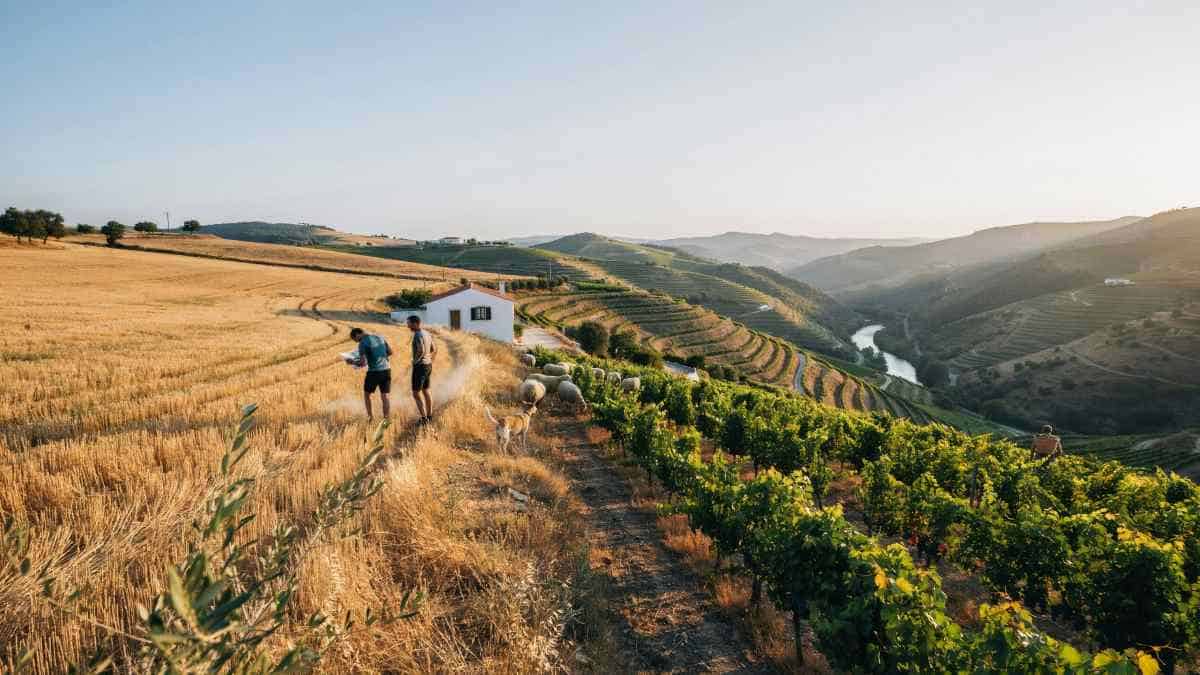
With the growth of rural accommodation facilities, Portugal is increasingly focused on the issue of sustainable tourism, where the regions of Alentejo and Douro have become major players in countryside accommodation, wine tourism, and destination-based tourism. According to the currently available official statistics, the number of establishments in the rural tourism and tourism accommodation sector of Portugal amounted to 2,054 by 2025, with 1.5 million tourists who spent 3.3 million nights. Nevertheless, the recently released numbers come at a time when Turismo de Portugal continues its efforts towards encouraging environmental friendliness, circularity and sustainability of accommodation facilities and destinations. However, there is no information about the recently introduced mandatory ESG certification “Territórios Sustentáveis” from the official sources analysed in this article.
Portugal’s Rural Tourism Market Continues to Expand
Rural tourism recorded measurable growth in 2025. The number of establishments increased 3.4% compared with 2024, while rooms rose 3.8% and beds increased 4.4%. Guest numbers climbed 6.7%, while overnight stays grew 6.9%.
Advertisement
Advertisement
International demand also contributed to the expansion. Non-resident overnight stays increased by 10.3% during the year, while residents accounted for 51.8% of total overnight stays.
The figures are significant for regions such as Alentejo, where rural properties, wine estates and historic towns form an important part of the visitor experience.
Advertisement
Advertisement
Alentejo Draws Visitors Through Wine and Rural Experiences
The Alentejo combines vineyards, traditional estates, historic settlements and wide rural landscapes. Official tourism information highlights the region as one of Portugal’s principal wine-tourism areas, with wine-producing centres spread across destinations including Évora, Borba, Redondo, Reguengos, Vidigueira and Moura.
Évora provides an important base for travellers exploring the region, while Monsaraz offers a different combination of heritage, landscapes and lake-based activities.
Advertisement
Advertisement
Visitors to Monsaraz can explore its medieval castle and historic streets before heading towards Lake Alqueva. The area also supports stargazing through DarkSky Alqueva and other observatories, while the lake provides opportunities for boating and other leisure activities.
For travellers seeking rural accommodation, traditional farm estates and manor-house properties provide access to vineyards, olive groves, walking routes and local food experiences.
Douro Connects Wine Tourism With River Travel
The Douro offers another major setting for rural and sustainable tourism in Portugal. Its terraced vineyards, wine estates and river landscapes have made the region one of the country’s best-known wine destinations.
The Alto Douro Wine Region was established as a demarcated wine-producing area in 1756 and is recognised as a UNESCO World Heritage landscape. Visitors can explore vineyards and wineries while travelling through the valley by road, rail or river.
Peso da Régua remains a central point for exploring the Douro. The town sits beside the river and has historic connections with Port wine production, while viewpoints such as São Leonardo da Galafura provide panoramic views over the terraced landscape.
Pinhão is another key stop, particularly for travellers following the Douro wine route. The journey can combine rail travel, river cruises and visits to wine estates, allowing visitors to experience the region without relying solely on road transport.
Advertisement
Advertisement
Sustainability Becomes More Visible in Accommodation
Portugal’s tourism authorities are already tracking environmental practices across accommodation. A 2026 Turismo de Portugal report based on 2025 activity found that surveyed establishments had adopted 65% of the recommended energy measures.
The survey covered 1,229 tourist establishments from a national universe of 2,405. Among the reported measures, 91.2% of establishments said they switched off unnecessary equipment, while 31.7% had photovoltaic solar panels and 45.4% had electric-vehicle charging points.
Portugal is also supporting circular-economy practices in tourism, covering areas such as resource efficiency, waste reduction and more responsible consumption.
What Travellers Can Expect Across Rural Portugal
For the tourist, the concept of sustainability has come closer to the reality of rural tourism. In the Alentejo region, there can be proximity to vineyards, historic towns, production of food, and Lake Alqueva. In the Douro region, tourists will be able to experience visiting the wine estates, take boat trips, take train trips, and enjoy views from above the vineyards. The two regions both provide the opportunity for accommodation and activities such as wine tasting, gastronomy, and outdoor activities. As per the latest statistics on rural tourism, there is an increased interest in these kinds of activities, and the tourist authorities of Portugal have also developed methods to improve sustainability in the sector.
Advertisement
