

La Paz Connects With Buenos Aires and More in Simplifying Visa Access for Unforgettable Cross-Border Tourism Journeys

Published
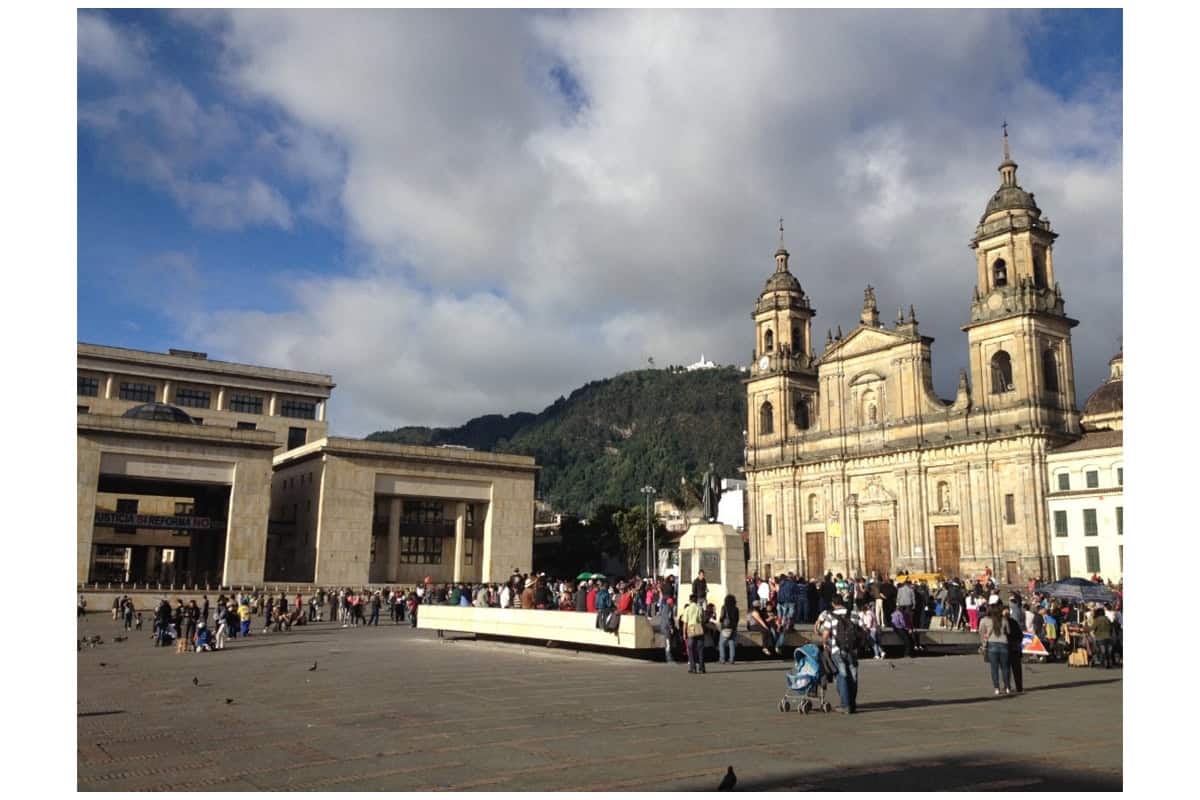
Navigating South America cross-border travel regulations in 2026 requires understanding national sovereign entry frameworks across major gateway hubs. While South American nations do not issue city-level visas, national border policies dictate direct movement through primary urban arrival hubs like Buenos Aires, Lima, and Bogotá. Recent updates from national immigration authorities, central banks, and trade blocs reveal significant policy adjustments, including streamlined digital pre-registrations and regional electronic identification frameworks. Understanding these verified national regulations ensures seamless passage for international tourists, business travellers, and cross-border commerce across Latin America’s fastest-growing transit networks.
Background and Context of South American Mobility
Border policy in South America operates strictly under national jurisdiction. Municipalities and individual metropolitan authorities lack the constitutional power to enforce independent visa regimes or localized border fees. Instead, border entry and exit conditions are established by sovereign ministries of foreign affairs and national migration directorates. However, the physical reality of international movement concentrates heavily within strategic urban corridors. Major metropolitan gateway cities serve as central inspection nodes, processing the vast majority of international air, land, maritime, and river traffic entering South America.
Advertisement
Advertisement
Historically, navigating sovereign transit across South America required individual embassy consultations, paper-based consular visa applications, and physical stamping at every international boundary. The lack of a continent-wide unified visa mechanism—analogous to Europe’s Schengen Zone—meant that multi-destination itineraries demanded meticulous administrative planning. Over the past decade, national governments across the continent recognized the economic imperative of modernizing border management to foster international commerce and tourism.
By October 2026, national immigration departments have shifted toward digital pre-registration systems, reciprocal electronic visa (eVisa) platforms, and bilateral travel frameworks. While each nation retains total autonomy over its immigration thresholds, coordinated efforts through regional economic blocs have introduced unprecedented alignment in border verification technologies and biometric cross-border identification protocols.
Advertisement
Advertisement
Sovereign Frameworks and the Absence of City-Level Visas
A fundamental legal principle governing Latin American transit is that entry permission granted at any official port of entry applies universally across that nation’s entire territory. Foreign visitors clearing border controls at Jorge Chávez International Airport in Lima automatically secure transit rights across all Peruvian departments, from the coastal capital to the high-altitude transit hubs of Cusco and Puno. Similarly, entry authorization granted at El Dorado International Airport in Bogotá covers movement across Colombia’s thirty-two departments.
Urban transit hubs, while lacking legislative authority over immigration status, act as vital operational centers where national policies are physically enforced. Metropolitan infrastructure—including international airport terminals, cross-border bus depots, and deep-water cruise ports—must adapt dynamically to national legislative changes. Consequently, understanding how national directives impact primary gateway cities is essential for managing international itineraries and corporate travel logistics across the region.
Advertisement
Advertisement
+-----------------------------------------------------------------------------------+
|                        SOUTH AMERICAN ENTRY ARCHITECTURE                          |
+-----------------------------------------------------------------------------------+
|  NATIONAL JURISDICTION: Sovereign Ministries of Foreign Affairs & Migration       |
|  (Determines entry thresholds, visa waivers, eVisas, & stay durations)            |
+-----------------------------------------------------------------------------------+
                                         |
                                         v
+-----------------------------------------------------------------------------------+
|  PRIMARY GATEWAY HUBS: International Airports & Cross-Border Terminals            |
|  (Enforces national policies at physical border control inspection points)         |
+-----------------------------------------------------------------------------------+
     |                     |                     |                     |
     v                     v                     v                     v
[Buenos Aires]          [Lima]               [Bogotá]              [Quito]
 91 Visa-Free            Up to 183 Days       90-Day Waiver +       90-Day Entry +
 Nationalities          Conditional Ex.      Check-Mig Form        National Ex.
Gateway City Analysis: National Border Entry Access
Buenos Aires, Argentina: Streamlined National Access
Argentina’s Ministry of Interior and the National Directorate of Migration maintain an open entry policy designed to stimulate international tourism and commercial exchange. Under current national regulations, Argentina grants visa-free entry to citizens of 91 nationalities for stay durations up to 90 days. Foreign travellers arriving via Ministro Pistarini International Airport (Ezeiza) or Aeroparque Jorge Newbery in Buenos Aires benefit from fully automated biometric border gates for eligible passport holders.
To boost tourism from non-waived markets, Argentina has expanded simplified electronic authorizations (AVE – Autorización de Viaje Electrónica) for passport holders from emerging markets, including India, who hold valid US B1/B2 or Schengen visas. Data from the Ministry of Tourism highlights Argentina’s position as a regional hub, recording over 3.3 million tourist entries from neighbouring Mercosur partner nations in recent annual tracking cycles.
Lima and Cusco, Peru: Maximum Stay Allowances and Conditional Waivers
Peru’s Superintendencia Nacional de Migraciones enforces one of the most flexible entry regimes in South America. Citizens of the United States, Canada, the European Union, the United Kingdom, and several Asia-Pacific nations are permitted visa-free entry for tourist stays up to 183 days per calendar year, determined at the discretion of the border officer at the point of entry.
For nationalities requiring visas, Peru applies strategic conditional exemptions. Indian and Chinese nationals holding valid visas (minimum six months validity) or permanent residency in the United States, Canada, the United Kingdom, Australia, or any Schengen member state are exempt from applying for a Peruvian tourist visa. This national exemption simplifies travel through Lima’s Jorge Chávez International Airport, allowing seamless connections onward to regional tourism centers such as Cusco and Arequipa without prior consular processing.
Bogotá and Medellín, Colombia: Mandatory Digital Pre-Registration
Colombia’s Ministry of Foreign Affairs offers 90-day visa-free entry to passport holders from over 100 countries, extendable up to a maximum of 180 days per calendar year through the official online portal of Migración Colombia. Colombia also enforces conditional visa exemptions for citizens of specific nations (such as India and mainland China) who hold valid US or Schengen visas.
All international air passengers entering or departing Colombia—regardless of nationality or visa status—must complete the official Check-Mig digital pre-registration form. Migración Colombia mandates that the Check-Mig form be submitted online between 72 hours and 1 hour prior to flight departure. The system is completely free of charge and generates a scannable QR code required by airlines during check-in and by border officers upon arrival at major hubs like El Dorado in Bogotá and José María Córdova in Medellín.
Advertisement
Advertisement
+-----------------------------------------------------------------------------------+
|                  COLOMBIA CHECK-MIG REGISTRATION TIMELINE                         |
+-----------------------------------------------------------------------------------+
|  [72 Hours Before Flight]  <--->  [Optimal: 12-24 Hours]  <--->  [1 Hour Prior]    |
|  Portal Window Opens             Recommended Submission         Hard Cut-Off      |
+-----------------------------------------------------------------------------------+
|  Official URL: apps.migracioncolombia.gov.co | Fee: 100% Free (No Charge)         |
+-----------------------------------------------------------------------------------+
Quito and Guayaquil, Ecuador: Direct Entry Frameworks
Ecuador operates a direct 90-day visa-free policy for most global travel markets. Foreign nationals entering through Mariscal Sucre International Airport in Quito or José Joaquín de Olmedo International Airport in Guayaquil receive a T-3 tourist entry stamp allowing an initial stay of up to 90 days within a 360-day period.
Ecuador’s Ministry of Foreign Affairs requires non-exempt nationalities to secure an online e-Visa prior to arrival. All foreign visitors entering Ecuador must show proof of valid international health insurance coverage for the duration of their intended stay, a measure strictly verified at immigration checkpoints across both major gateway airports.
La Paz and Santa Cruz, Bolivia: Expanded Visa on Arrival Protocols
Bolivia categorizes foreign nationalities into three distinct groups to control entry conditions. Group 1 countries enjoy visa-free entry; Group 2 countries are eligible for a Visa on Arrival (VoA) at official ports of entry; and Group 3 countries require prior authorization from a Bolivian consulate or the National Migration Directorate.
Major gateway hubs, including El Alto International Airport in La Paz and Viru Viru International Airport in Santa Cruz, possess full processing facilities for Group 2 nationals seeking a Visa on Arrival. Eligible travellers can secure entry permits for up to 90 days upon presenting required documentation—including proof of accommodation, return transit, yellow fever vaccination certificates (where applicable), and payment of the official national entry fee.
Georgetown, Guyana: Ecotourism Pathway Optimization
Guyana’s Department of Citizenship and Immigration, under the Ministry of Foreign Affairs, maintains structured short-term entry parameters to support foreign direct investment and ecotourism. Visitors arriving via Cheddi Jagan International Airport near Georgetown are granted entry stays ranging from 30 to 90 days depending on reciprocal national agreements.
For non-exempt travel markets, Guyana provides an streamlined Visa on Arrival framework for applicants who hold pre-approved landing permissions issued by the Ministry of Foreign Affairs, reducing lengthy administrative wait times at overseas diplomatic missions.
Advertisement
Advertisement
National Policy Exceptions: Brazil’s Visa Requirements and Temporary Exemptions
Brazil presents a notable case of evolving national visa policy adjustments. Under Decree Law parameters enforced by the Ministry of Foreign Affairs (Itamaraty) and the Federal Police (Polícia Federal), Brazil has instituted targeted electronic visa (eVisa) requirements alongside temporary country-specific entry waivers.
+-----------------------------------------------------------------------------------+
|                        BRAZIL NATIONAL ENTRY REQUIREMENTS                        |
+-----------------------------------------------------------------------------------+
|  CATEGORY 1: Reciprocal eVisa Requirement ($80.90 USD Fee)                        |
|  - Passports: United States, Canada, Australia                                   |
|  - Process: 100% Online via Official VFS Portal (10-Day Standard Processing)      |
+-----------------------------------------------------------------------------------+
|  CATEGORY 2: Temporary Visa Waiver Framework                                      |
|  - Passports: Chinese Nationals (30-Day Temporary Entry Waiver through Dec 2026)  |
|  - Objective: Bilateral Trade & Tourism Acceleration                              |
+-----------------------------------------------------------------------------------+
|  CATEGORY 3: Mercosur ID-Only Border Movement                                     |
|  - Passports: Argentina, Chile, Uruguay, Paraguay, Bolivia, Peru, Colombia, etc. |
|  - Document: Valid National ID Card (No Passport Required for Direct Transit)     |
+-----------------------------------------------------------------------------------+
Reciprocal eVisa Rules for US, Canadian, and Australian Citizens
Brazil mandates that citizens of the United States, Canada, and Australia obtain an electronic visa (eVisa) prior to boarding flights bound for Brazilian territory. Managed through the official government portal in partnership with VFS Global, the eVisa process requires applicants to upload biometric photographs, passport bio-data pages, and proof of financial solvency.
- Application Fee: $80.90 USD per applicant.
- Processing Time: Consular processing takes up to 10 business days.
- Validity: Grants multiple entries over a multi-year period (up to 10 years for US citizens, matching reciprocal visa durations) for stays of up to 90 days per year.
- Port of Entry: Fully integrated across major gateways, including São Paulo/Guarulhos (GRU) and Rio de Janeiro/Galeão (GIG).
Temporary Entry Exemption Protocols
In contrast to reciprocal requirements, Brazil’s federal government established a temporary 30-day visa waiver for Chinese nationals holding valid ordinary passports through December 31, 2026. This measure aims to accelerate trade relations, corporate mobility, and group tourism between the two nations.
Regional Integration: Mercosur ID Agreements and Cross-Border Systems
While South America lacks a single regional visa, trade blocs have established advanced border-crossing frameworks for regional residents.
Mercosur Intra-Regional Free Movement
Under the Mercosur Agreement on Travel Documents, citizens and permanent residents of Mercosur member states (Argentina, Brazil, Paraguay, Uruguay, and Bolivia) along with associated states (Chile, Colombia, Ecuador, and Peru) are permitted to travel across international borders using only their valid national identity cards (DNI or RG). Passports and entry visas are waived for intra-regional transit, drastically reducing border congestion at land crossings such as the Tancredo Neves International Bridge connecting Foz do Iguaçu (Brazil) and Puerto Iguazú (Argentina).
Digital ID and Interoperable Border Technologies
Building upon physical ID agreements, Mercosur trade bloc ministers approved a landmark framework for the cross-border recognition of digital identities and interoperable electronic signatures. This agreement facilitates the direct validation of digital credentials across national migration checkpoints, laying the technical foundation for automated border control systems, unified customs declarations, and digital travel authorizations across member territories.
Advertisement
Advertisement
Official Statistics and Economic Impact Analysis
Data published by official government bodies illustrates the significant macroeconomic impact of modernizing border management and streamlining visa protocols across South America.
| Country | Primary Reporting Agency | Verified Key Statistic / Metric | Economic & Strategic Significance |
| Brazil | Federal Police & Ministry of Tourism | 9,287,196 international tourist arrivals recorded in 2025 (+37% YoY). | Surpassed federal government targets a year early, driven by 3,386,823 arrivals from Argentina. |
| Brazil | Banco Central do Brasil | $10.92 Billion USD in total international travel revenue over 12 reported months. | Monthly tourism expenditure reached $786 Million USD (May 2026). |
| Brazil | Diário Oficial da União (DOU) | 2,161 initial digital nomad residence authorizations approved since 2022. | Highlights long-term remote worker visa adoption across South American urban hubs. |
| Regional | Financial Payment Providers (Visa) | ~20% YoY growth in frictionless cross-border travel transactions. | Demonstrates accelerating consumer expenditure in transit hubs across Latin America. |
| Brazil | Federal Police (June 2026) | 1,253,128 international border entries logged across air, land, sea, and river ports. | Top foreign entry nationalities: Argentina (74,717), Chile (54,292), USA (43,334). |
Policy Implications and Cross-Border Industry Trends
The modernization of South America cross-border travel regulations has reshaped several key industry sectors across the continent:
- Aviation and Airline Operations: Airlines operating regional routes within Latin America have streamlined check-in workflows by integrating automated government API verification systems. For example, air carriers flying into Colombian destinations automatically verify Check-Mig completion prior to issuing boarding passes.
- Cross-Border Payments and FinTech: The rise of frictionless travel transactions—up nearly 20% across Latin American hubs—reflects rapid adoption of contactless payment standards, multi-currency digital wallets, and unified point-of-sale processing at airport terminals, international bus stations, and hospitality venues.
- Long-Stay and Digital Nomad Mobility: The rollout of specific long-stay residence pathways, such as Brazil’s digital nomad authorization framework, has encouraged remote workers to extend their stays beyond standard 90-day tourist limits. This dynamic supports local housing markets, co-working infrastructure, and domestic service sectors in hub cities like Buenos Aires, Medellín, and Florianópolis.
Expert Statements from Official Institutions
Official statements from international institutions and national migration directorates highlight the strategic direction of South American transit policies:
“The approval of cross-border digital identity recognition within Mercosur represents a decisive step toward digital connectivity, modernizing border management, and eliminating administrative friction for millions of citizens moving across our shared borders.”
— Mercosur Secretariat Digital Transformation Taskforce
“Migración Colombia emphasizes that the official Check-Mig process is a completely free, mandatory pre-registration system designed to secure national borders while expediting physical passenger processing through international airport terminals.”
Advertisement
Advertisement
— Migración Colombia Directorate
Strategic Outlook for Travel and Transit Across South America
Looking ahead, South American cross-border entry architecture will continue to emphasize digital transformation, biometric border controls, and targeted reciprocal visa policies. Key trends shaping the future of mobility in the region include:
- Expansion of Automated Border Gates (eGates): Major international airports in São Paulo, Buenos Aires, Santiago, and Lima are expanding biometric self-service gates to process eligible international passengers in under 30 seconds.
- Interoperable Regional Systems: Full implementation of Mercosur’s digital identity recognition agreement will gradually allow travellers to present authenticated digital ID credentials via official smartphone applications at land and air borders.
- Balanced Visa Reciprocity: National governments are actively balancing tourism promotion with diplomatic reciprocity. While nations like Brazil enforce strict eVisa requirements for non-reciprocal partners, they continue to offer strategic waivers to high-yield commercial and tourism markets.
- Enhanced Digital Pre-Departure Clearance: Following the operational success of Colombia’s Check-Mig system, additional South American migration agencies are developing web-based pre-registration tools to optimize border security and reduce airport wait times.
Advertisement
