
Barcelona Teams Up With Marseille and More as Mediterranean Cruise Journeys Face a Major New Tax Twist for Global Travellers!

Published
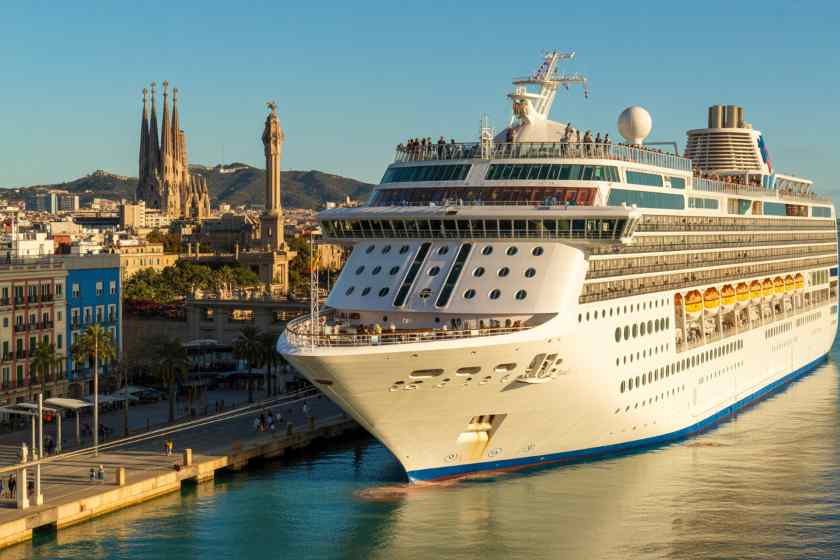
Image generated with Ai
Barcelona Teams Up With Marseille and More as Mediterranean cruise journeys face a major new tax twist for global travellers. Barcelona Teams Up With Marseille and More as Mediterranean cruise journeys attract global travellers seeking memorable Mediterranean experiences. Meanwhile, a major new tax twist could reshape how cruise passengers plan Barcelona visits and Mediterranean journeys. The change matters for travellers comparing cruise costs, short port calls and longer stays. As Barcelona and Marseille remain important Mediterranean destinations, the latest development deserves close attention. Travel And Tour World urges readers to explore the entire story, understand the Barcelona cruise tax, compare travel costs, and discover what this new tax twist could mean for future global travellers enjoying Mediterranean cruise journeys.
Barcelona Cruise Tax: In-Depth Traveller Guide to Cruise Costs, Passenger Trends, Cruise Lines and the Best Ways to Explore the City
Barcelona Cruise Tax: What the Numbers Really Mean for Travellers
Barcelona’s proposed cruise-tax change comes as the city’s cruise market reaches historically high passenger volumes. Official Catalan tax information shows that, from April 1, 2026, the tourism-tax component for a cruise vessel staying 12 hours or less is €6 per passenger. Barcelona’s municipal surcharge is currently another €5.
That produces a present combined charge of €11 per passenger for the relevant short cruise call. The municipal surcharge is scheduled to increase to €6 from April 2027 and €7 from April 2028 under the currently published tariff table.
Separately, Barcelona’s municipal government has put forward a proposal to modify the surcharge specifically for cruise calls of 12 hours or less. The public-exposure documentation identifies the proposal as a fiscal change concerning cruises staying up to 12 hours.
Advertisement
Advertisement
The proposal would take the municipal component much higher over several stages. The planned trajectory is €12 in 2027, €16 in 2028, €20 in 2029 and €24 in 2030.
If the €24 municipal figure is ultimately approved and the separate €6 regional cruise-tax component remains unchanged, the combined charge could reach €30 per passenger.
Advertisement
Advertisement
That distinction is essential for travellers. The widely reported €24 figure should not be described as the total tourism tax. It refers to the proposed municipal surcharge.
For a family of four making a qualifying short cruise call, a €30 combined charge would represent €120 if the full amount applied to every member. A couple would face €60 under the same assumption.
These figures are useful for planning, but the final amount depends on the legislation ultimately approved and the applicable tax rules at the time of travel.
| Barcelona cruise tax element | Current / published 2026 position | Proposed future municipal component | Traveller significance |
|---|---|---|---|
| Catalan cruise tourism tax, 12 hours or less | €6 | €6 shown in current ATC table | Regional component |
| Barcelona municipal surcharge | €5 | Proposed increase | Local component |
| Current combined amount | €11 | — | Current planning reference |
| Proposed municipal surcharge, 2027 | — | €12 | Subject to approval |
| Proposed municipal surcharge, 2028 | — | €16 | Subject to approval |
| Proposed municipal surcharge, 2029 | — | €20 | Subject to approval |
| Proposed municipal surcharge, 2030 | — | €24 | Subject to approval |
| Potential combined amount at €24 municipal level | — | Up to €30 including €6 regional component | Illustrative future total |
Barcelona’s Cruise Passenger Boom in Five Years of Data
Barcelona’s cruise story becomes clearer when five consecutive years are compared.
The Port of Barcelona recorded 520,854 cruise passenger movements in 2021. That year represented the cautious reopening of international cruising after the pandemic disruption.
The figure climbed dramatically to 2,334,305 in 2022. This represented an increase of approximately 348% from the previous year.
Advertisement
Advertisement
Cruise activity strengthened again in 2023. The port recorded 3,568,901 cruise passenger movements, approximately 53% more than in 2022.
Growth became more moderate in 2024. The port recorded 3,655,981 cruise passengers, up 2.4% year on year.
The strongest recent increase came in 2025. Provisional official tourism data show 3,999,258 cruise passenger movements, approximately 9.4% higher than 2024.
The five-year comparison shows a remarkable recovery. Passenger movements in 2025 were approximately 668% above the 2021 figure.
They were also around 27% above the port’s 2019 cruise figure of 3,137,918.
However, travellers should understand that these are passenger movements, not necessarily unique individuals. A passenger who embarks, disembarks and travels in transit can contribute to different operational counts.
Advertisement
Advertisement
The Port of Barcelona therefore increasingly distinguishes between total cruise movements and cruise passengers actually visiting Barcelona.
In 2025, the port reported 2,351,002 cruise passengers visiting the city, while total cruise passenger movements were close to four million.
That distinction is particularly important when assessing the tourism pressure generated by cruise travel.
| Year | Cruise passenger movements | Year-on-year change | Key interpretation |
|---|---|---|---|
| 2021 | 520,854 | — | Cruise reopening year |
| 2022 | 2,334,305 | +348.2% | Strong post-pandemic recovery |
| 2023 | 3,568,901 | +52.9% | Traffic exceeded 2019 levels |
| 2024 | 3,655,981 | +2.4% | New record with slower expansion |
| 2025 | 3,999,258 | +9.4% | Approached four million movements |
| 2025 vs 2021 | +3,478,404 | +667.8% | Huge five-year recovery |
| 2025 vs 2019 | +861,340 | +27.4% | Above pre-pandemic cruise movement |
The Port’s 2024 report also recorded 793 cruise stopovers, while 56% of cruise movements involved turnaround operations, meaning passengers began or ended their cruise in Barcelona.
That is significant because turnaround passengers have a greater opportunity to spend time in the city before or after sailing.
2025 Cruise Passenger Nationalities Show Barcelona’s Global Reach
Barcelona’s cruise market is highly international.
Advertisement
Advertisement
Official Barcelona Tourism Observatory data show that international passengers represented 87% of cruise passengers in 2025.
The United States was the largest individual nationality group, accounting for 20%.
Spain followed at 13%, alongside Italy at 13%. Germany represented 11%, while the United Kingdom accounted for 9%.
France contributed 6%.
Other European nationalities collectively represented another 12%, showing that Barcelona’s cruise market extends well beyond its largest individual source markets.
The international character of the passenger base makes the proposed tax particularly relevant to global travellers.
Advertisement
Advertisement
A visitor arriving from the United States, United Kingdom, Canada, Australia, India or another long-haul market may already have significant air, hotel and cruise expenses before reaching Barcelona.
For those travellers, a local charge is only one part of the total holiday budget.
| Cruise passenger nationality or region | 2025 share |
|---|---|
| United States | 20% |
| Spain | 13% |
| Italy | 13% |
| Rest of Europe | 12% |
| Germany | 11% |
| United Kingdom | 9% |
| France | 6% |
| Latin America | 4% |
| Canada | 3% |
| Far East | 3% |
| Middle East | 2% |
| Australia & New Zealand | 2% |
| Africa | 1% |
| Other | 1% |
| International total | 87% |
The pattern has remained relatively stable.
The United States increased from 17% in 2022 to 20% in 2024 and remained at 20% in 2025.
Italy’s share moved from 14% in 2022 to 13% in 2025. Germany declined from 12% to 11%, while the United Kingdom moved from 14% to 9%.
These shifts demonstrate how Barcelona’s cruise market continues to attract a broad international audience rather than depending on a single country.
Advertisement
Advertisement
Major Cruise Lines Offering Barcelona Sailings
MSC Cruises: One of Barcelona’s Most Important Cruise Connections
MSC Cruises maintains a major Barcelona presence, with the city used both as a port of call and as a departure or arrival point for Mediterranean itineraries.
Its Barcelona programme connects travellers with destinations including Marseille, Genoa, Naples, Palermo, Valletta and other Mediterranean ports. MSC also promotes longer voyages from Barcelona toward North Africa, the Canary Islands and further international destinations.
The cruise line’s current published itineraries demonstrate why Barcelona is valuable as a turnaround port. Several seven-night routes begin and end in Barcelona, creating an opportunity for passengers to add hotel nights before or after sailing.
MSC also has dedicated infrastructure at Barcelona’s Moll Adossat cruise area. The company has invested €35 million in its Barcelona terminal and says the facility was designed to connect with shore-power infrastructure and support lower-impact operations.
For travellers concerned about the proposed tax, MSC’s Barcelona itineraries offer an important planning lesson. A cruise departing from Barcelona can be different from a short transit call because the traveller’s experience involves embarkation, disembarkation and potentially additional accommodation.
Passengers should therefore calculate the entire trip rather than looking only at the cruise fare.
Advertisement
Advertisement
A seven-night itinerary can combine Barcelona with Marseille, Genoa, Naples and other major Mediterranean destinations. Travellers can also choose itineraries that include Tunisia, France, Italy or Spain.
For first-time visitors, the best strategy is to arrive at least one day before embarkation. This reduces the risk of missing the ship because of flight delays and creates time to explore Barcelona.
MSC’s own destination information highlights Sagrada Família, Park Güell, the Gothic Quarter and La Rambla as major attractions for cruise passengers.
Royal Caribbean: Barcelona as a Gateway to Large-Ship Mediterranean Holidays
Royal Caribbean continues to position Barcelona as a major Western Mediterranean departure point.
Its published Barcelona programme includes seven-night Mediterranean voyages, Spain and Morocco itineraries, Italy and France combinations, Greek Isles sailings and longer transatlantic routes.
The cruise line’s 2026 programme has also featured Harmony of the Seas from Barcelona, while Legend of the Seas is scheduled to operate Mediterranean voyages from Barcelona and Rome.
Advertisement
Advertisement
This creates a particularly interesting option for travellers who want a large-ship holiday combined with a European city break.
Royal Caribbean’s current Barcelona listings show itineraries covering Spain, France, Italy, Morocco and the Greek islands.
Some seven-night routes include Barcelona, Palma de Mallorca, French Riviera destinations, Florence or Pisa, Rome and Naples.
Other voyages travel toward Morocco, with calls such as Tangier and Casablanca.
For travellers concerned about Barcelona’s future tax structure, Royal Caribbean’s itineraries demonstrate why the length of the Barcelona call matters.
A passenger embarking in Barcelona should plan differently from someone arriving for a short daytime call.
Advertisement
Advertisement
Royal Caribbean also recommends extending a Barcelona cruise with additional time in the city or nearby destinations such as Girona, Sitges and Montserrat.
This is a useful approach for international visitors because the proposed policy is partly connected to the city’s effort to encourage a more integrated relationship between cruise tourism and the wider destination.
Instead of treating Barcelona as a quick stop, travellers can turn it into a two- or three-night cultural stay.
Celebrity Cruises: Longer Mediterranean Experiences From Barcelona
Celebrity Cruises offers another significant Barcelona option for travellers seeking a more premium Mediterranean experience.
Current published itineraries include seven-night Italian and French Riviera cruises from Barcelona, Greek Isles and Malta combinations, and longer voyages connecting Greece, Italy and Malta.
Celebrity’s Barcelona sailings can include Nice, Portofino, La Spezia, Civitavecchia, Naples, Malta and Greek destinations.
Advertisement
Advertisement
The cruise line also promotes Barcelona as a destination worth exploring before departure.
For travellers, this approach is particularly useful because Barcelona has enough attractions to justify a dedicated pre-cruise stay.
A passenger arriving one day before sailing can explore the historic centre. Two additional nights provide more opportunity for Gaudí architecture, food experiences and neighbourhood exploration.
Celebrity’s published Barcelona guide highlights the Old Town, Gothic Quarter, La Rambla and the Boqueria market.
Its city-stay programme also encourages visitors to explore attractions including Sagrada Família, Park Güell and the Picasso Museum.
The proposed Barcelona cruise tax therefore becomes only one component of the holiday budget.
Advertisement
Advertisement
Premium cruise travellers may spend considerably more on accommodation, restaurants, attractions and private transfers than the local surcharge itself.
For international tourists, the smarter strategy is to compare the complete holiday cost.
That includes flights, hotel nights, cruise fare, port charges, local transport, attraction tickets, meals and taxes.
Norwegian Cruise Line: Port-Intensive Barcelona Itineraries
Norwegian Cruise Line is another major operator using Barcelona for Mediterranean voyages.
Its published 2026 European programme includes Norwegian Epic sailings between Barcelona and Rome.
The cruise line has promoted seven-day Western Mediterranean itineraries featuring Marseille, Nice or Monaco, Florence or Pisa, Sicily, Salerno and Rome.
Advertisement
Advertisement
Some itineraries provide long port stays, giving passengers more time for shore excursions.
Norwegian Dawn has also been scheduled for port-intensive open-jaw voyages between Barcelona and Lisbon.
These routes can include Palma de Mallorca, Ibiza, Portimão and Gibraltar.
The significance for travellers is the emphasis on longer destination time.
NCL has promoted itineraries with 10 to 17 hours in port at selected destinations, allowing passengers to make more substantial day trips.
That approach contrasts with the type of very short cruise call targeted by Barcelona’s proposed municipal surcharge.
Advertisement
Advertisement
For travellers planning around the Barcelona tax, longer port stays may provide a different experience from a quick turnaround visit.
However, passengers should not assume that a longer Barcelona call automatically eliminates the tax.
The official Catalan rules distinguish between cruise vessels staying more than 12 hours and those staying 12 hours or less, so travellers should check the exact itinerary and applicable rules.
NCL’s Barcelona programmes also demonstrate the city’s role as a gateway rather than simply a sightseeing stop.
Passengers can combine Catalonia with southern France, Italy, Spain, Portugal and North Africa.
Princess Cruises: Barcelona for Western Mediterranean and Longer European Voyages
Princess Cruises also uses Barcelona as an important European cruise gateway.
Advertisement
Advertisement
Its published itineraries include seven-day Western Mediterranean voyages, longer Greek Isles combinations and transatlantic routes.
Current programmes feature destinations such as Marseille, Genoa, Civitavecchia, Naples, Palma de Mallorca, Athens, Mykonos and Santorini.
Princess describes Barcelona as a major European cruise departure port and highlights its nine UNESCO World Heritage Sites.
For travellers, this creates an opportunity to combine a cruise with a cultural holiday.
The city is especially suitable for visitors who want architecture, museums, food and beaches before sailing.
Princess also identifies local culinary experiences as part of the Barcelona experience, including seafood dishes and Catalan products.
Advertisement
Advertisement
Passengers booking a Barcelona cruise should therefore consider arriving early rather than flying into the city on embarkation day.
A pre-cruise hotel stay provides additional protection against flight disruptions.
It also spreads spending across the city instead of concentrating the Barcelona experience into a few hours.
For families, couples and first-time European cruise travellers, two nights before sailing can provide a practical balance between sightseeing and cruise preparation.
Barcelona Cruise Market Comparison
| Cruise line | Barcelona role | Typical published itinerary examples | Traveller profile |
|---|---|---|---|
| MSC Cruises | Departure, arrival and port call | Western Mediterranean, North Africa, Canary Islands | Broad international market |
| Royal Caribbean | Major departure port | Western Mediterranean, Spain, Morocco, Greek Isles | Families and large-ship travellers |
| Celebrity Cruises | Departure and port call | France, Italy, Greece, Malta | Premium-oriented travellers |
| Norwegian Cruise Line | Departure and turnaround | Spain, France, Italy, Portugal | Port-intensive explorers |
| Princess Cruises | Departure and arrival | Western Mediterranean, Greek Isles, transatlantic | Cultural and longer-voyage travellers |
| Costa Cruises | Mediterranean network | Spain, France, Italy and wider Mediterranean | Mass-market Mediterranean cruising |
What to Do in Barcelona Before a Cruise
Travellers with limited time should avoid attempting every attraction.
The best strategy is to group attractions geographically.
Advertisement
Advertisement
Start with Sagrada Família if architecture is the priority. The basilica is Antoni Gaudí’s best-known Barcelona work and remains one of the city’s defining landmarks.
Advance planning is essential because Barcelona Tourism advises visitors to reserve tickets for major attractions such as Sagrada Família and Park Güell.
Move toward Park Güell next if time permits. The park combines Gaudí’s architecture with landscaped spaces and elevated views across the city.
The Gothic Quarter is better suited to travellers interested in history.
Its narrow streets preserve layers of Roman and medieval Barcelona. The area includes Barcelona Cathedral, Plaça del Rei, Plaça Sant Jaume and remnants of the former Jewish Quarter.
La Rambla provides a central walking route toward the waterfront.
Advertisement
Advertisement
Travellers can combine it with the La Boqueria market area for a food-focused stop.
Barceloneta is ideal for visitors wanting a seaside experience.
The beach district can provide a change of pace after several hours of architecture and historic sightseeing.
| Available time | Recommended experience |
|---|---|
| 4–6 hours | Gothic Quarter + La Rambla + waterfront |
| 8 hours | Sagrada Família + Gothic Quarter + La Rambla |
| 1 day | Sagrada Família + Park Güell + Gothic Quarter |
| 2 days | Major Gaudí sites + Old Town + food + waterfront |
| 3 days | Attractions + museums + Montjuïc + neighbourhood exploration |
| 4+ days | Barcelona plus Girona, Sitges or Montserrat |
Where to Visit Beyond the Famous Barcelona Landmarks
Travellers with more than one day should move beyond the best-known postcard locations.
Montjuïc offers museums, gardens, viewpoints and a different perspective on the city.
Gràcia provides a more neighbourhood-focused experience and works well for travellers interested in local streets, cafés and independent shops.
Advertisement
Advertisement
El Born combines historic streets with cultural attractions and dining.
Barceloneta is appropriate for travellers who want the Mediterranean atmosphere without leaving the city.
For a longer pre-cruise stay, travellers can consider Montserrat, Sitges or Girona.
The choice depends on the available time.
Montserrat is particularly suitable for visitors interested in mountain scenery and religious heritage.
Sitges works well for travellers seeking a coastal day trip.
Advertisement
Advertisement
Girona offers historic architecture and a different urban environment within Catalonia.
The most important rule is to avoid overloading a short cruise stop.
Barcelona’s size, traffic and attraction queues mean that three major experiences can often be better than six rushed ones.
What to Eat in Barcelona
Barcelona is one of Europe’s strongest destinations for food-focused travel.
Official Barcelona tourism information identifies Catalan cuisine as a combination of Mediterranean products, local traditions and modern culinary creativity.
Travellers should consider escalivada, escudella, butifarra amb mongetes, fideuà, seafood dishes, mel i mató and crema catalana.
Advertisement
Advertisement
Crema catalana is particularly appropriate for first-time visitors because it is closely associated with Catalan culinary tradition.
Travellers should also explore local markets rather than relying entirely on restaurants near major attractions.
Food costs can vary sharply between tourist-heavy streets and neighbourhood restaurants.
A cruise passenger with only a few hours should choose a restaurant close to the next planned attraction.
A traveller staying two or three nights has more freedom to explore neighbourhood dining.
| Food | What travellers should know |
|---|---|
| Escalivada | Vegetable-based Catalan speciality |
| Butifarra amb mongetes | Sausage served with beans |
| Fideuà | Noodle-based Mediterranean dish |
| Seafood | Strong coastal influence |
| Mel i mató | Catalan dessert combining honey and fresh cheese |
| Crema catalana | Traditional Catalan dessert |
| Cava | Regional sparkling wine |
Where to Eat During a Short Cruise Visit
For a short call, location matters more than restaurant prestige.
Advertisement
Advertisement
Travellers staying around the Gothic Quarter can combine sightseeing with Catalan dining.
Visitors near La Rambla can explore the Boqueria market area, although crowded conditions make careful time management important.
Those staying near Eixample can combine Modernisme architecture with restaurants away from the busiest tourist corridors.
For a longer stay, travellers can deliberately explore neighbourhood restaurants rather than eating every meal around the cruise-port sightseeing route.
A useful strategy is to schedule a substantial lunch away from the busiest attraction window.
This gives travellers time to experience local cuisine while reducing the pressure of finding food immediately before returning to the ship.
Advertisement
Advertisement
Cruise passengers should always allow substantial buffer time before the ship’s departure.
A restaurant meal is not worth risking a missed sailing.
Where to Stay Before or After the Cruise
The best hotel location depends on the traveler’s priority.
Eixample works well for visitors who want central access to Modernisme architecture, restaurants and transport.
Gothic Quarter suits travellers focused on historic Barcelona and walking.
El Born works for visitors seeking culture, food and nightlife.
Advertisement
Advertisement
Near Plaça d’Espanya can be useful for travellers prioritising access to Montjuïc and major transport connections.
Travellers should not choose a hotel solely because it is close to the cruise terminal.
The terminal area is designed primarily for cruise operations rather than sightseeing.
For international visitors arriving by air, a central location can provide greater value because most sightseeing happens away from the port.
| Traveller type | Suggested area | Main advantage |
|---|---|---|
| First-time visitor | Eixample | Central sightseeing access |
| History traveller | Gothic Quarter | Historic core |
| Food traveller | El Born / central areas | Restaurants and markets |
| Architecture fan | Eixample | Modernisme landmarks |
| Beach-focused traveller | Barceloneta | Waterfront access |
| Short overnight stay | Central Barcelona | Maximum sightseeing efficiency |
| Longer pre-cruise trip | Central Barcelona | Easier day-trip planning |
A Detailed Three-Day Barcelona Cruise Plan
Day 1: Arrival and Historic Barcelona
Arrive in Barcelona and check into a centrally located hotel.
Avoid scheduling major sightseeing immediately after a long-haul flight.
Advertisement
Advertisement
Spend the afternoon around the Gothic Quarter.
Walk through Plaça Sant Jaume and continue toward Barcelona Cathedral.
Move toward El Born for dinner.
Choose Catalan dishes and leave enough time for a relaxed evening.
Day 2: Gaudí and the Waterfront
Begin with Sagrada Família.
Reserve the visit in advance.
Advertisement
Advertisement
Continue toward Park Güell if the schedule allows.
Return toward central Barcelona during the afternoon.
Explore Passeig de Gràcia and its Modernisme architecture.
Finish the day near Barceloneta.
This creates a balanced day combining architecture, city views and the Mediterranean coast.
Day 3: Cruise Embarkation
Keep the morning flexible.
Advertisement
Advertisement
If the ship departs later in the day, use the time for a nearby café, market or final neighbourhood walk.
Return to the hotel, collect luggage and travel to the cruise terminal.
Do not schedule a distant attraction on embarkation day.
Allow additional time for traffic, luggage handling and port procedures.
This strategy is particularly valuable for international passengers unfamiliar with Barcelona’s transport network.
A One-Day Plan for Short Cruise Calls
Passengers with only several hours should simplify the experience.
Advertisement
Advertisement
Choose either the Gaudí route or the historic-centre route.
The Gaudí route should prioritise Sagrada Família and, if time permits, another Modernisme landmark.
The historic route should focus on the Gothic Quarter, La Rambla and the waterfront.
Travellers should not attempt Sagrada Família, Park Güell, Montjuïc, the Gothic Quarter and Barceloneta during a very short port call.
Distances and queues can consume valuable time.
The official Barcelona Tourism guidance specifically recommends advance reservations for major attractions because of their high visitor numbers.
Advertisement
Advertisement
That makes pre-booking particularly important for cruise passengers.
Barcelona’s Tourism Scale Puts the Cruise Debate Into Context
Cruising represents only one part of Barcelona’s enormous tourism economy.
The Barcelona Tourism Observatory reported 26.1 million tourists across Destination Barcelona in 2025.
That total included 16 million tourists in the city and 10.1 million in the surrounding region.
Tourism expenditure generated an estimated €14.041 billion in direct economic impact.
The city therefore faces a complicated challenge.
Advertisement
Advertisement
Barcelona must maintain the economic value generated by international tourism while managing pressure on public spaces, infrastructure and residents.
Cruise taxation forms part of that wider debate.
The port itself is also investing in environmental infrastructure.
Barcelona’s Nexigen project is intended to reduce ship emissions during port stays, while the port says all cruise berths are planned to have shore-power connections by 2030.
The port’s long-term target is climate neutrality by 2050.
For travellers, this creates an interesting contrast.
Advertisement
Advertisement
Barcelona is simultaneously trying to manage the quantity and type of cruise tourism while investing in cleaner port infrastructure.
Barcelona Cruise Statistics at a Glance
| Indicator | Latest official figure |
|---|---|
| Cruise passenger movements, 2021 | 520,854 |
| Cruise passenger movements, 2022 | 2,334,305 |
| Cruise passenger movements, 2023 | 3,568,901 |
| Cruise passenger movements, 2024 | 3,655,981 |
| Cruise passenger movements, 2025 | 3,999,258 |
| 2025 cruise passengers visiting the city | 2,351,002 |
| 2025 international cruise passenger share | 87% |
| Largest cruise nationality, 2025 | United States, 20% |
| Spain share | 13% |
| Italy share | 13% |
| Germany share | 11% |
| UK share | 9% |
| France share | 6% |
| 2024 cruise stopovers | 793 |
| 2024 turnaround share | 56% |
| 2025 port-base share | 58% |
| Current regional tax for ≤12-hour cruise | €6 |
| Current municipal surcharge | €5 |
| Current combined reference | €11 |
| Proposed municipal surcharge by 2030 | €24 |
| Potential combined amount if €6 regional component remains | €30 |
What the Barcelona Cruise Tax Means for Global Travellers
The biggest change is not simply the possible increase in the amount paid.
The more important development is the city’s attempt to influence how cruise tourism contributes to Barcelona.
The policy places particular attention on very short cruise calls.
For travellers, that means the details of an itinerary deserve more attention than ever.
Check whether Barcelona is a turnaround port.
Advertisement
Advertisement
Check how long the ship remains in the city.
Check which taxes are included in the cruise fare.
Check whether the cruise line passes local charges directly to passengers.
Then calculate the cost of hotels, transport, food and attractions.
Barcelona remains one of Europe’s most attractive cruise gateways.
Its combination of Gaudí architecture, Roman and medieval heritage, Mediterranean beaches, Catalan cuisine and extensive cruise connectivity gives travellers an unusually broad experience.
Advertisement
Advertisement
The emerging tax changes simply mean that the smartest visitors will plan the Barcelona portion of their cruise holiday more carefully.
For a quick cruise call, prioritise two or three attractions.
For a turnaround voyage, consider arriving early and staying overnight.
For a longer holiday, use Barcelona as a base for exploring Catalonia.
And for travellers booking beyond 2026, monitor the final municipal decision before assuming that the proposed €24 surcharge will definitely apply.
Conclusion
Barcelona’s proposed cruise tax changes could add a new consideration for global travellers planning Mediterranean journeys. As Barcelona Teams Up With Marseille and other major cruise destinations in attracting international visitors, travellers will need to watch the evolving rules closely. The potential changes could influence short cruise calls, holiday budgets and itinerary choices. However, Barcelona remains a powerful Mediterranean gateway, offering remarkable architecture, Catalan cuisine, historic neighbourhoods and easy access to other European destinations. Travel And Tour World urges travellers to check the latest tax requirements, cruise inclusions and port-call details before booking. With careful planning, visitors can still enjoy an unforgettable Barcelona cruise experience while avoiding unexpected travel costs.
Advertisement
