
Cyprus Makes October Feel Like Summer With 27°C Days Across Paphos, Ayia Napa, Larnaca and More: All You Need to Know

Published
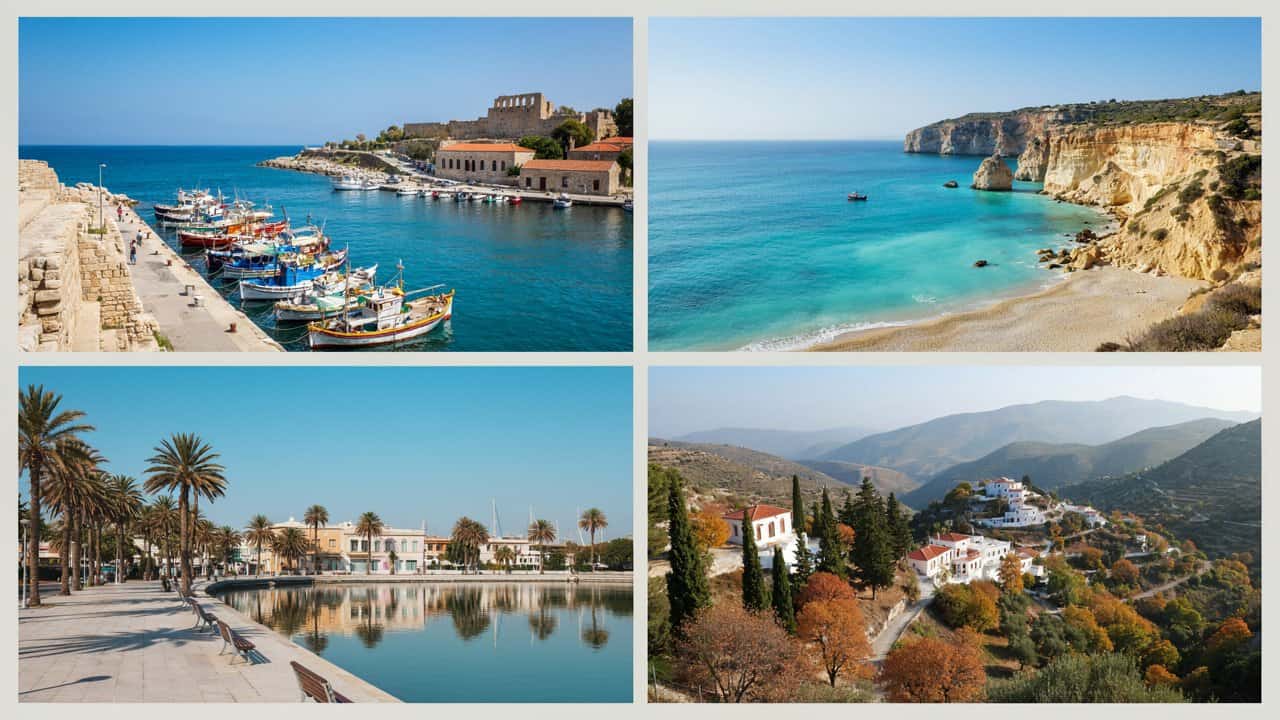
Image generated with Ai
October may signal coats, darker evenings and falling temperatures across much of Europe, but Cyprus continues to offer conditions associated with late summer, giving travellers an opportunity to combine beaches with archaeology, mountain villages and historic cities.
Official Cyprus tourism data puts the island’s average daytime temperature in October at 27°C, alongside an average night temperature of 17°C. Travellers can expect around nine hours of sunshine per day, while the average sea temperature remains approximately 25°C.
Those figures transform the possibilities for an October holiday. Rather than restricting a trip to museums and city sightseeing, visitors can potentially combine swimming in the Mediterranean with Paphos’s archaeological heritage, the beaches around Ayia Napa and Protaras, Larnaca’s waterfront, Limassol’s coast, Nicosia’s historic centre and the forests and villages of the Troodos Mountains.
Cyprus’s Deputy Ministry of Tourism specifically identifies September and October as a period of warm days and cooler evenings, adding that swimming, sunbathing and watersports remain well suited to the season.
Advertisement
Advertisement
Cyprus October Weather Keeps Beach Holidays on the Travel Map
Cyprus occupies an advantageous position in the eastern Mediterranean, and its climate creates a notably long warm-weather season.
The official tourism authority describes the island as having an intense Mediterranean climate, with long, dry summers stretching approximately from mid-May until mid-October. Autumn and spring are comparatively short.
Advertisement
Advertisement
That climatic pattern helps explain why October can still work for travellers interested in outdoor activities.
| October travel indicator | Official Cyprus tourism information |
|---|---|
| Average daytime temperature | 27°C |
| Average night temperature | 17°C |
| Average daily sunshine | 9 hours |
| Average sea temperature | 25°C |
| Average rainy days | 3 |
| Seasonal experience | Swimming, sunbathing and watersports remain suitable |
The figures are averages rather than a guarantee of daily conditions. Weather can vary considerably by location, elevation and date, particularly between the coast and Troodos Mountains.
Still, the seasonal profile provides an important distinction from many northern European destinations.
Paphos Combines Mediterranean Beaches With Thousands of Years of History
Paphos makes a particularly strong case for travellers who do not want to choose between cultural sightseeing and the coast.
The city’s historic importance extends deep into antiquity. Cyprus’s official tourism authority notes that Paphos served as the island’s capital centuries ago, while Kato Paphos forms part of a UNESCO World Heritage property.
The Archaeological Park of Kato Paphos contains monuments spanning from the fourth century BC through the Middle Ages. Roman-period remains dominate much of the site, including elaborate mosaic floors associated with the Houses of Dionysos, Theseus, Aion and Orpheus.
Advertisement
Advertisement
Visitors can then move from archaeology towards the harbour and medieval castle before exploring the wider Paphos region.
The contrast is considerable. The region includes Polis Chrysochous, Latchi, the Akamas area, Avakas Gorge and Lara Beach, alongside sites connected with the mythology of Aphrodite.
That makes Paphos especially relevant for an October trip built around both outdoor exploration and heritage.
Ayia Napa and Protaras Keep Cyprus Focused on the Sea
On the south-eastern side of Cyprus, Ayia Napa and Protaras offer a different experience.
The government-controlled part of the Ammochostos region is particularly associated with sandy beaches and clear Mediterranean waters. Official tourism information identifies Ayia Napa and Paralimni-Protaras as its principal holiday resorts.
Yet reducing this area to nightlife would overlook much of its appeal.
Advertisement
Advertisement
Cape Gkreko National Forest Park brings cliffs, caves and coves into the landscape between the resort areas. Swimming, diving, walking, cycling and boat excursions are among the activities highlighted by Cyprus tourism authorities.
Ayia Napa itself includes a medieval monastery, fishing harbour, archaeological remains, sea caves and a sculpture park. The area’s October calendar traditionally includes its Medieval Festival.
For travellers chasing the feeling of an extended European summer, this south-eastern coastline is therefore one of Cyprus’s principal areas to consider.
Larnaca Adds History and an Easy-Going Waterfront
Larnaca offers another route into Cyprus’s autumn appeal.
Its Foinikoudes waterfront is one of the city’s defining spaces, while the wider region contains religious, archaeological and rural attractions.
The official tourism authority highlights the Church of Agios Lazaros, Hala Sultan Mosque, Larnaca Medieval Castle and Salt Lake among the area’s important attractions.
Advertisement
Advertisement
The surrounding countryside widens the possibilities considerably.
Travellers can head towards Lefkara, a village strongly associated with traditional lace-making and silverwork, or explore prehistoric sites such as Choirokoitia. Mountain roads also lead towards villages on the approaches to Troodos.
Larnaca therefore works particularly well for visitors seeking a base combining the Mediterranean coast with cultural day trips.
Limassol Brings Beaches, Ancient Kingdoms and Cyprus Wine Country Together
Limassol, officially Lemesos, provides yet another interpretation of the island.
The city sits between the ancient city-kingdoms of Amathus and Kourion, while the wider region stretches from the Mediterranean coast into vineyard-covered mountain areas.
Modern Limassol combines its marina and old port areas with a long coastal zone containing restaurants, cafés and entertainment.
Advertisement
Advertisement
The city’s medieval castle provides another layer of history. According to Cyprus tourism information, tradition associates the location with the marriage of Richard the Lionheart and Berengaria of Navarre in 1191. The building now contains the Medieval Museum of Cyprus.
Beyond the urban centre, the landscape changes again.
Wine villages occupy the southern slopes towards Troodos, preserving Cyprus’s long-established viticultural traditions.
This coast-to-vineyard combination can make Limassol particularly attractive during autumn, when travellers may want more than an exclusively beach-based itinerary.
Nicosia Reveals an Entirely Different Side of Cyprus
A Cyprus holiday does not need to revolve around the Mediterranean.
Travel inland and Nicosia, officially Lefkosia, presents a markedly different experience.
Advertisement
Advertisement
The capital combines an old walled city with the commercial and cultural functions of a modern European capital. Venetian walls and bastions remain prominent elements of the historic landscape, while museums, galleries, restaurants and shopping districts broaden the visitor experience.
For travellers spending a week or longer in Cyprus, including Nicosia can help prevent the island from becoming simply a succession of beaches.
It also provides a useful geographical counterpoint to the coastal resorts, demonstrating the depth of Cyprus’s urban history and contemporary culture.
Visitors planning travel around the island should consult current official guidance, particularly concerning designated crossing points and areas outside the effective control of the Republic of Cyprus.
Troodos Mountains Turn a Beach Holiday Into a Nature Escape
Perhaps the biggest surprise for first-time visitors lies inland.
The Troodos Mountains form the green heart of Cyprus, replacing coastal scenery with forests, valleys, traditional villages, orchards and mountain trails.
Advertisement
Advertisement
Mount Olympus reaches 1,952 metres, creating an enormous geographical contrast with the beaches below.
Traditional communities across Troodos retain associations with winemaking, handicrafts, fruit cultivation and local food production. The mountains also contain ten UNESCO-listed Byzantine churches, adding substantial cultural value to a journey through the interior.
October can consequently produce an unusually varied itinerary: swimming near the coast one day and walking through mountain landscapes on another.
| Area | Strongest travel experience | Notable attractions |
|---|---|---|
| Paphos | Archaeology and coast | Kato Paphos, harbour, Akamas |
| Ayia Napa | Beaches and entertainment | Coast, monastery, Cape Gkreko |
| Protaras | Beach holiday | Sandy coastline, Cape Gkreko |
| Larnaca | Waterfront and heritage | Foinikoudes, Salt Lake, Agios Lazaros |
| Limassol | Coast and wine culture | Old town, Kourion region, wine villages |
| Nicosia | Urban culture and history | Walled city, museums, Venetian fortifications |
| Troodos | Mountains and villages | Mount Olympus, trails, Byzantine churches |
Cyprus Tourism Entered 2026 After a Record-Breaking Year
The significance of Cyprus as a European holiday destination is visible in official arrival figures.
Cyprus recorded 4,534,073 tourist arrivals in 2025, compared with 4,040,200 in 2024. That represented growth of 12.2%.
The United Kingdom remained by far the largest tourism source market, accounting for 31.8% of tourist traffic in 2025. Israel followed with 13%, Poland with 8.2%, Germany with 6.1%, Greece with 3.9% and Sweden with 3.4%.
Advertisement
Advertisement
The picture became more challenging during 2026. Official figures show 1,656,015 tourist arrivals between January and June, 10.1% below the equivalent 2025 period. Nevertheless, June alone still recorded 489,965 arrivals, with UK residents representing 33% of the month’s visitors.
These figures underline both Cyprus’s substantial tourism scale and Britain’s continuing importance to the island.
Travellers Can Currently Reach Cyprus Through Two International Airports
International travellers primarily enter the government-controlled areas of Cyprus through Larnaca International Airport and Paphos International Airport.
The Cyprus Deputy Ministry of Tourism currently states that both airports are open and tourism services are operating normally, including hotels, restaurants, beaches and visitor attractions.
This is particularly important following travel disruption earlier in 2026.
However, travellers should distinguish current operational information from promotional airfare claims.
Advertisement
Advertisement
The widely circulated £37 flight figure is a fare example rather than a fixed cost of travelling to Cyprus. Airfares fluctuate according to departure airport, airline, travel date, availability and booking time. Travellers should therefore check current airline and airport information before purchasing tickets.
Why Cyprus Becomes More Than a Beach Destination in October?
October arguably exposes one of Cyprus’s greatest tourism advantages: variety.
The island can still deliver conditions compatible with coastal activities, but travellers do not need to spend an entire holiday beside a swimming pool.
Paphos offers archaeological exploration. Ayia Napa and Protaras provide beaches and Cape Gkreko. Larnaca mixes its waterfront with historic landmarks. Limassol links coastal tourism with ancient sites and wine villages. Nicosia introduces urban history, while Troodos opens a completely different mountain landscape.
The combination becomes particularly attractive when average October daytime temperatures remain around 27°C and the sea averages approximately 25°C.
Rather than simply extending summer, Cyprus allows travellers to change the definition of an autumn European holiday.
Advertisement
Advertisement
Frequently Asked Questions
1. Is Cyprus really around 27°C in October?
The official Cyprus tourism travel planner lists 27°C as the average daytime temperature for October. It should not be interpreted as a guaranteed daily temperature.
2. Can visitors swim in Cyprus during October?
Conditions can remain favourable. Official tourism information lists an average October sea temperature of approximately 25°C and describes September and October as suitable for swimming and watersports.
3. Does Cyprus still get rain in October?
Yes. The official travel planner indicates an average of around three rainy days during October. Conditions vary by year and location.
Advertisement
Advertisement
4. Which part of Cyprus is best for ancient history?
Paphos is particularly significant. The Archaeological Park of Kato Paphos contains extensive Roman and earlier remains and forms part of the area’s UNESCO World Heritage designation.
5. Where should beach-focused travellers look?
Ayia Napa and Protaras are major options in the south-east, while Paphos, Larnaca and Limassol also combine coastal access with broader sightseeing opportunities.
6. Is Cyprus only suitable for beach holidays?
No. Troodos offers mountains, villages, trails and UNESCO-listed Byzantine churches, while Nicosia provides a substantially different city and cultural experience.
Advertisement
Advertisement
7. Are £37 flights to Cyprus guaranteed?
No. The £37 figure associated with the original story is a time-sensitive airfare example, not an official standard fare. Prices can change rapidly. Travellers should compare live fares for their exact dates rather than planning a budget around that figure.
8. Are Cyprus airports currently operating?
Yes. Cyprus’s official tourism travel-update service currently reports that Larnaca and Paphos international airports are open, with tourism services operating normally. Travellers should still verify their individual flight before departure.
Cyprus Keeps the Mediterranean Holiday Season Alive Well Into Autumn
Cyprus enters October with an advantage that relatively few European destinations can combine in one compact journey: warm Mediterranean water, average daytime temperatures of 27°C, archaeological landscapes, major beach resorts, historic cities and a mountainous interior.
The island’s tourism story also stretches far beyond Paphos or Ayia Napa. Larnaca, Limassol, Nicosia, Protaras, Cape Gkreko and Troodos allow travellers to construct a holiday moving from coast to capital and from ancient ruins to mountain villages.
Advertisement
Advertisement
For travellers reluctant to surrender summer when September ends, Cyprus offers something more interesting than simply another sunny beach.
It offers the possibility of carrying summer into autumn while simultaneously discovering several dramatically different sides of one Mediterranean island.
Advertisement
