
How Oman’s Planned Tourist Port in Khasab Will Transform Musandam Travel

Updated
Published
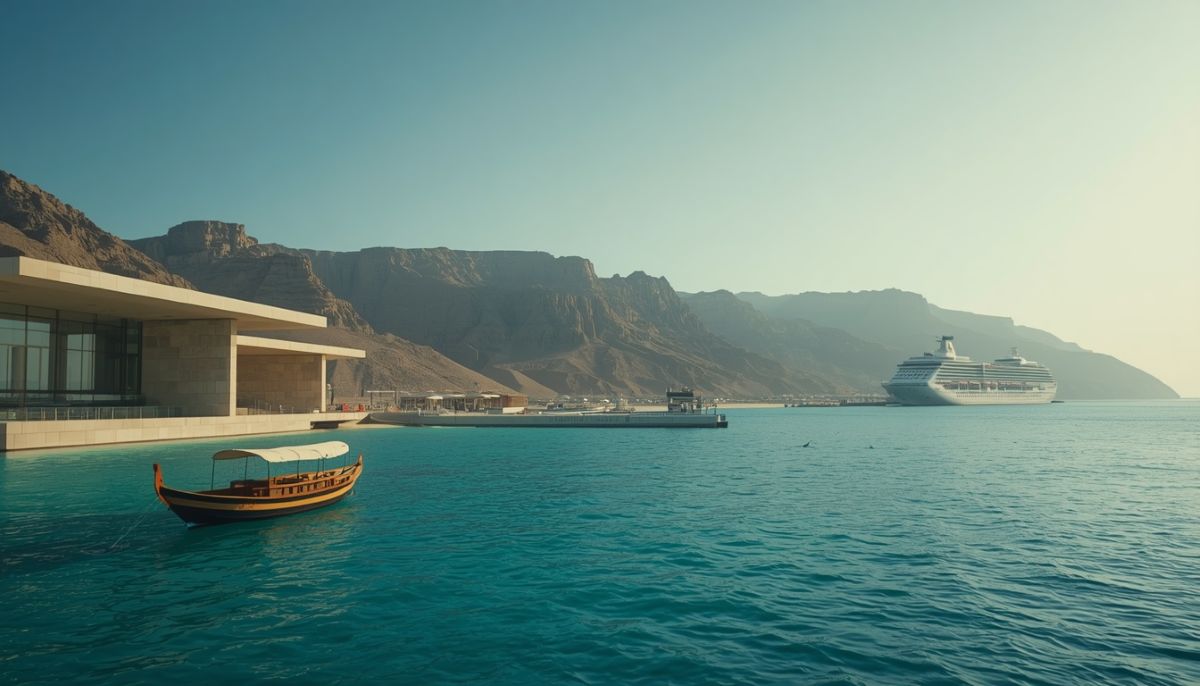
Image generated with Ai
The Sultanate of Oman commits to strategic infrastructure projects to promote marine tourism and diversify the economy under Oman Vision 2040. A key project that is currently being proposed and planned is the creation of an integrated tourist port in Wilayat Khasab, the administrative seat of the Musandam Governorate.
The plan was reviewed by the Musandam Municipal Council in its seventh session of 2026, chaired by Sayyid Faisal bin Hamoud Al Busaidi, Governor of Musandam. The initiative aims at upgrading maritime passenger facilities, improving regional connectivity and removing logistic bottlenecks for international and domestic travellers.
Strategic Context: Khasab as Musandam’s Maritime Gateway
Located at the northern tip of the Arabian Peninsula overlooking the Strait of Hormuz, the Musandam enclave is often described as the “Norway of Arabia” due to its dramatic coastal geography. The region features sheer limestone cliffs rising up to 2,000 metres above sea level and plunging into sheltered tidal inlets (khors), such as Khor Sham.
While this geographic isolation has preserved Musandam’s marine ecology—including rich coral reefs and resident populations of humpback and bottlenose dolphins—it has historically restricted land-based access. Khasab functions as the primary marine entry point for:
Advertisement
Advertisement
- International Cruise Liners: Seasonal winter calls from regional and luxury expedition operators—such as MSC Cruises, Silversea, and Hapag-Lloyd—that bring thousands of transit passengers into the governorate during peak morning disembarkation windows.
- Domestic Ferry Services: High-speed passenger and vehicle ferries operated by the National Ferry Company (NFC) connecting Khasab to Shinas and Lima.
- Traditional Dhow Operators: Small-scale commercial fleets conducting day excursions into the fjords.
As Oman’s Ministry of Heritage and Tourism prioritizes sustainable ecotourism, modernizing port services has emerged as a fundamental requirement to balance environmental stewardship with growing visitor arrivals.
Core Pillars of the Planned Integrated Tourist Port
The project proposes transitioning Khasab from a conventional dual commercial- and berthing port into a specialized, multifunctional marine hub:
Advertisement
Advertisement
- Dedicated Tourism & Cruise Handling: Currently, Port Khasab operates with a 10-metre-deep basin and mixed-use berths managed by Marafi. The integrated tourism port master plan focuses on dedicated passenger terminals equipped to process up to 1,500–2,000 passengers per hour, modern customs and immigration lines, and designated tender disembarkation platforms. This structure resolves shore-side congestion and operational conflicts between peak seasonal cruise traffic and local commercial freight.
- Intermodal Excursion Connectivity: The facility is designed to serve as a streamlined transit node linking maritime arrivals directly to regional excursions. This includes optimized boarding pontoons for traditional dhow charters, tender boat berths, and organized transport bays for inland 4×4 safaris heading to Jebel Harim.
- Local Economic & Small-Business Integration: In line with regional development goals, the terminal blueprint incorporates commercial zones for local small and medium-sized enterprises (SMEs). These retail spaces are slated to host artisanal markets, cultural crafts—such as the regional Zaree Khasab initiatives—and licensed marine sport operators.
- Environmental Resilience: Council deliberations emphasize sustainable design principles, integrating erosion-control measures aligned with nearby coastal preservation projects (such as at Khasab’s Bassa Beach). In line with marine conservation goals in the khors, preliminary proposals explore shoreside power (cold ironing) connectivity to reduce berthed ship emissions, along with dedicated closed-loop wastewater and bilge discharge containment facilities to protect fragile shoreline ecosystems.
Governance and Project Roadmap
The initiative is led by the Governorate of Musandam and the Musandam Municipal Council, operating in coordination with central government bodies, including the Ministry of Transport, Communications and Information Technology (MTCIT) and the Ministry of Heritage and Tourism.
The project remains in the official planning and inter-agency coordination phase. Further technical studies, detailed engineering proposals, and private-public investment frameworks are being finalized to determine the construction phases and timeline.
Advertisement
Advertisement
Frequently Asked Questions
What is the purpose of the integrated tourist port in Khasab?
The planned port is designed to modernize Musandam’s marine tourism infrastructure by providing dedicated passenger handling facilities, streamlining cruise and ferry transit, and supporting local tourism enterprises.
Who is overseeing the Khasab tourist port development?
The project proposal is steered by the Musandam Municipal Council under the leadership of the Governor of Musandam, Sayyid Faisal bin Hamoud Al Busaidi, in coordination with relevant Omani ministries.
Advertisement
Advertisement
What attractions make Khasab a tourism priority for Oman?
Khasab serves as the primary base for exploring the Musandam fjords (khors), historical sites such as the 17th-century Khasab Castle, and marine biodiversity hotspots popular for dolphin watching, diving, and traditional dhow cruises.
How will the new port improve visitor experience compared to existing facilities?
By separating dedicated tourism transit from general cargo operations and expanding hourly terminal clearance, the facility will eliminate disembarkation bottlenecks, upgrade border and customs processing, provide shoreside green power, and create seamless intermodal links to land safaris and fjord dhow charters.
Advertisement
