
China Aligns With Many Other Asian Markets as Airport Growth Outpaces Hotel Supply

Published
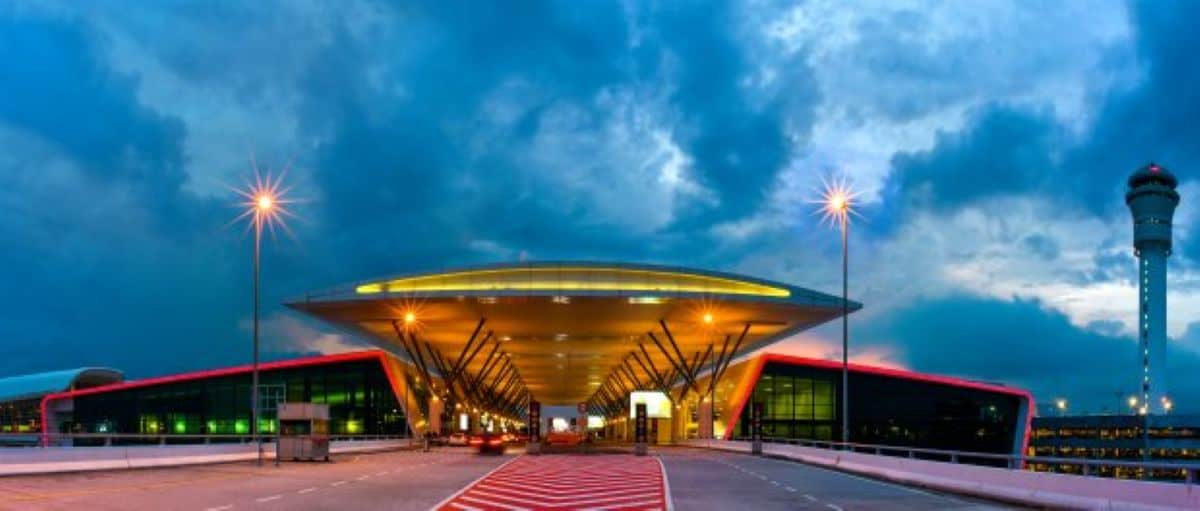
Asia’s aviation rebound is entering a new phase, but hotel supply is not advancing evenly behind it. Airport passenger growth, hotel-room additions, occupancy and room rates now reveal a widening infrastructure question across several major travel markets.
The region’s airports are forecast to record 4.8% annual passenger growth from 2025 to 2028, with India and Vietnam among the fastest-growing markets. Yet hotel development remains fragmented, with some destinations adding rooms rapidly while others face tighter supply and stronger pricing power.
Advertisement
Advertisement
This creates an important travel-market divide. The destinations most exposed are not necessarily those with the fastest airport growth, but those where aviation demand, occupancy and room rates rise faster than accommodation capacity.
Asia’s Aviation Engine Is Accelerating
Asia-Pacific is preparing for another sustained period of passenger expansion. ACI Asia-Pacific and Middle East expects the region to grow passenger traffic by 4.8% annually between 2025 and 2028, supported by new airline capacity, aircraft deliveries and airport investment. Southern Asia leads the forecast at 6.3% annually, while South-eastern Asia is projected to expand 5.1%.
Advertisement
Advertisement
Vietnam stands out particularly strongly, with passenger growth forecast at 8.1% annually during the period. India is also a major growth engine, while international traffic in Eastern Asia is expected to grow 6.6% annually as outbound Chinese travel strengthens.
The airport expansion story is therefore no longer only about post-pandemic recovery. It increasingly reflects structural travel demand, stronger domestic mobility, new international routes and expanding airline networks.
Advertisement
Advertisement
China illustrates the scale of this shift. Its civil airports handled 1.529 billion passenger trips in 2025, up 4.8% year on year, while international-route passenger throughput surged 18.7%. The country ended 2025 with 270 certified civil transport airports, including 41 handling more than 10 million passengers annually.
| Aviation Indicator | Latest Regional Signal |
|---|---|
| Asia-Pacific passenger CAGR, 2025–28 | 4.8% |
| Southern Asia forecast growth | 6.3% |
| South-eastern Asia forecast growth | 5.1% |
| Vietnam forecast growth | 8.1% |
| China airport passenger throughput, 2025 | 1.529 billion |
| China international-route passenger growth | 18.7% |
The Hotel Market Is Moving Differently
Hotel development is also expanding, but its geography and timing differ from airport investment. Across Asia-Pacific excluding China, the hotel construction pipeline reached 2,323 projects and 433,241 rooms at the end of 2025. Projects increased 11% year on year, while rooms rose 5%.
Advertisement
Advertisement
However, only 890 projects containing 189,271 rooms were under construction. Another 398 projects, representing 77,767 rooms, were scheduled to begin within 12 months. A further 1,035 projects and 166,203 rooms remained in early planning.
That distinction matters enormously for travellers. A room appearing in a development pipeline does not mean a room will be available during the next peak season. Construction delays, financing, approvals and operator changes can push planned supply several years into the future.
The regional hotel pipeline also has a quality imbalance. Higher-end chain categories account for a substantial share of development, meaning a destination can add many rooms without necessarily solving shortages in midscale, affordable or centrally located accommodation.
Where Airport Demand Meets Hotel Pressure
The clearest test is not simply passenger growth against room construction. A stronger measure combines passenger expansion, existing hotel supply, occupancy, average daily rate and the construction pipeline.
Advertisement
Advertisement
That produces a more revealing picture of the market. A city becomes particularly interesting when passenger numbers rise sharply, occupancy strengthens, room rates climb and new rooms remain comparatively limited.
India provides one of the strongest examples of this pricing-led hospitality cycle. National hotel occupancy stood at 63–65% in 2025, while average room rates reached roughly ₹8,500–₹8,700. RevPAR reached approximately ₹5,400–₹5,600.
Hotel development is nevertheless gathering pace. India recorded approximately 64,118 branded-room signings across 586 properties in 2025, while about 14,199 rooms opened across 176 properties. The market is therefore expanding, but demand has remained strong enough to preserve pricing power.
India Shows Why Airport Growth Matters
Delhi demonstrates the aviation side of this equation. Indira Gandhi International Airport handled 79.3 million passengers in financial year 2024–25, compared with 73.7 million the previous year. That represents an increase of about 7.6%, taking the airport to its highest annual passenger total at that point.
The airport also expanded its infrastructure. Its new Terminal 1 began regular operations in August 2024, increasing passenger-handling capacity at that terminal to 40 million passengers annually. That creates additional room for future traffic growth rather than simply absorbing existing demand.
Delhi’s hotel market has also demonstrated pricing resilience. HVS data for 2025 put city occupancy at 76%, up from 73% in 2024, while ADR rose from US$123 to US$130. RevPAR increased from US$89 to US$99.
Advertisement
Advertisement
The combination is significant. Delhi is not simply adding airport capacity; it is doing so while its hotel market maintains high utilisation and stronger room economics.
Bengaluru Offers a Different Signal
Bengaluru provides another important case because its hospitality performance is closely linked to business travel, technology and commercial activity. HVS recorded hotel occupancy of 67% in 2025, compared with 65% in 2024, while ADR climbed from US$95 to US$108. RevPAR increased from US$62 to US$73.
That means room rates increased far faster than occupancy. The pattern suggests that hotels are gaining pricing power from a deep demand base rather than merely filling additional rooms.
The broader 2025 trend remained strong. HVS reported that Bengaluru recorded some of India’s strongest ARR growth during 2025, with business and commercial demand supporting the market. In early 2026, the city again ranked among the strongest performers for year-on-year rate growth.
For travellers, this is a useful warning. A city can have a large hotel market and still experience accommodation pressure when business demand rises faster than new inventory.
Mumbai’s Airport Is Already At Scale
Mumbai illustrates another form of aviation pressure. Chhatrapati Shivaji Maharaj International Airport handled 55.12 million passengers in financial year 2024–25, up from 52.8 million in 2023–24. That represents growth of roughly 4.4%.
Advertisement
Advertisement
International passenger traffic rose from about 14.3 million to 15.6 million during the same period. Mumbai also recorded nearly 1,000 daily air traffic movements and served more than 120 direct destinations as of March 2025.
Its hotel market remains comparatively tight. HVS recorded 80% occupancy in 2025, up from 77% in 2024, while ADR climbed from US$138 to US$145. RevPAR rose from US$106 to US$116.
This is one of the strongest examples of an airport-and-hotel relationship worth watching. Passenger growth is moderate, but high occupancy and rising rates reveal limited slack in the accommodation market.
Kuala Lumpur Shows the Catch-Up Effect
Kuala Lumpur offers a useful counterpoint. KLIA handled 63.3 million passengers in 2025, up 10.8% year on year. Malaysia Airports also reported strong growth across several secondary gateways, including Kota Kinabalu, Langkawi, Penang and Kuching.
Yet Malaysia’s accommodation market has been adding capacity. Tourism Malaysia recorded 347,534 rooms during January–June 2025, up 1.9% from the corresponding period. National average occupancy rose to 54.1%, compared with 52.6% a year earlier.
Kuala Lumpur itself recorded 63.6% occupancy, up from 60.3%. That suggests demand is strengthening, but hotel supply has not stalled. Instead, the market is adding rooms while utilisation also improves.
Advertisement
Advertisement
| Market | Key Aviation Signal | Hotel Performance Signal | Reading |
|---|---|---|---|
| Delhi | 79.3m passengers, FY2025 | 76% occupancy; ADR US$130 | Strong demand pressure |
| Mumbai | 55.1m passengers, FY2025 | 80% occupancy; ADR US$145 | Very tight hotel utilisation |
| Bengaluru | Large business gateway | 67% occupancy; ADR US$108 | Pricing-led pressure |
| Kuala Lumpur | 63.3m passengers, 2025 | 63.6% city occupancy | Supply catching up |
| Bangkok | 62.2m passengers, 2024 | 74.3% occupancy | Large but competitive market |
Bangkok Warns Against Easy Conclusions
Bangkok demonstrates why the airport-versus-hotel comparison requires caution. Suvarnabhumi handled 62.2 million passengers in 2024, compared with 51.7 million in 2023. However, that strong passenger rebound did not automatically translate into higher hotel occupancy.
Colliers reported Bangkok hotel occupancy of 74.3% in 2025, down 4.3 percentage points year on year. At the same time, ADR rose 6% to THB4,560, while RevPAR edged up to THB3,080.
The lesson is crucial. Airport traffic can rise while hotel occupancy falls because passenger volumes include residents, transit passengers and travellers staying outside the immediate market.
Therefore, airport growth is a pressure indicator, not a direct hotel-demand equivalent.
China’s Scale Changes the Equation
China deserves separate treatment because its hotel and aviation markets operate at a scale that can distort regional comparisons. The country’s airports handled 1.529 billion passengers in 2025, while international passenger throughput grew almost 19%.
At the same time, China’s hotel development pipeline is among the world’s largest. Lodging Econometrics ranked Chengdu third globally for hotel construction projects, with 136 projects and 24,216 rooms, while Guangzhou ranked fourth with 126 projects and 25,329 rooms.
Advertisement
Advertisement
That makes these markets different from a city where airport growth runs into a thin hotel pipeline. In Chengdu and Guangzhou, the hospitality industry is already responding aggressively, potentially preventing sustained accommodation scarcity.
The Room Shortage May Be About Price
One of the most important findings for travellers is that a destination can have enough rooms overall while lacking the right rooms at the right price.
Luxury and upper-upscale hotels dominate a meaningful share of the current Asia-Pacific development pipeline. This can create a curious imbalance, with premium travellers enjoying expanding choice while budget and mid-market travellers face tighter availability.
The problem becomes sharper during major events. Conferences, sporting competitions, festivals and concerts can absorb thousands of rooms within days, pushing ADR higher even when a city appears well supplied during ordinary periods.
For travellers, therefore, the most useful metric is not simply the number of hotels. It is the relationship between available room type, seasonal occupancy and achievable rates.
A New Airport-Hotel Pressure Gauge
A useful way to interpret these markets is through an Aviation-Hospitality Gap. It compares passenger growth with hotel-room growth, then tests that difference against occupancy and ADR.
Advertisement
Advertisement
| Indicator | What It Reveals |
|---|---|
| Passenger growth | Incoming aviation demand |
| Room growth | New accommodation capacity |
| Occupancy | Actual hotel utilisation |
| ADR | Pricing pressure |
| RevPAR | Combined occupancy and pricing health |
| Rooms under construction | Near-term supply response |
| Planned rooms | Longer-term catch-up potential |
A destination becomes more exposed when passenger growth exceeds room growth, occupancy rises and ADR accelerates. Conversely, a large construction pipeline can neutralise the pressure before it becomes a sustained shortage.
This approach also avoids a common analytical mistake. Rooms planned five years from now cannot solve a shortage during next year’s peak season.
What This Means for Travellers
For leisure travellers, the most immediate effect is likely to appear in room pricing. Destinations with strong aviation growth and high occupancy can experience sharper peak-period rate increases, especially around festivals, conferences and school holidays.
Business travellers may face a different problem. Markets such as Bengaluru can see corporate demand sustain hotel pricing even outside traditional leisure peaks. Meanwhile, international gateways such as Delhi and Mumbai can experience simultaneous pressure from corporate travel, events and inbound tourism.
Travellers should therefore watch three signals together: airport traffic, hotel occupancy and ADR. If all three move upwards while the hotel pipeline remains limited, booking earlier can become more valuable than simply searching for a lower-priced property at the last minute.
The Hotel Pipeline Holds The Answer
The most encouraging sign across Asia is that developers are responding. The Asia-Pacific hotel pipeline excluding China reached a record 2,323 projects and 433,241 rooms at the end of 2025. Of those, 189,271 rooms were already under construction.
Advertisement
Advertisement
However, the pipeline also reveals a timing challenge. Only 44% of pipeline rooms were under construction, while 166,203 rooms remained in early planning. Those rooms could take years to reach travellers.
That creates a potential hotel catch-up clock. Cities with strong airport growth and limited near-term construction face greater short-term pressure, while destinations with large projects already under construction have a better chance of balancing supply.
Asia’s Next Travel Bottleneck
The defining travel infrastructure question is shifting from whether airports can handle demand to whether destinations can absorb passengers after they land. Airport terminals can expand through major capital programmes, but hotel rooms require land, financing, planning approvals, construction and operating teams.
The evidence also shows why there is no single Asian pattern. Delhi, Mumbai and Bengaluru demonstrate strong hotel pricing power, while Kuala Lumpur shows how additional accommodation can develop alongside rapid airport growth. Bangkok proves that passenger numbers alone cannot establish a hotel shortage, while Chinese cities such as Chengdu and Guangzhou demonstrate the ability of a large hotel pipeline to anticipate aviation demand.
For travellers, the most valuable signal will therefore be the gap between people arriving and rooms becoming available. As Asia’s airports continue to expand, the destinations that manage that balance best may offer the strongest combination of connectivity, accommodation choice and price stability.
Advertisement
