
Switzerland Extends Autumn Travel Appeal as Val Müstair Destination Offers Savurando Culinary Treasure Hunt

Published
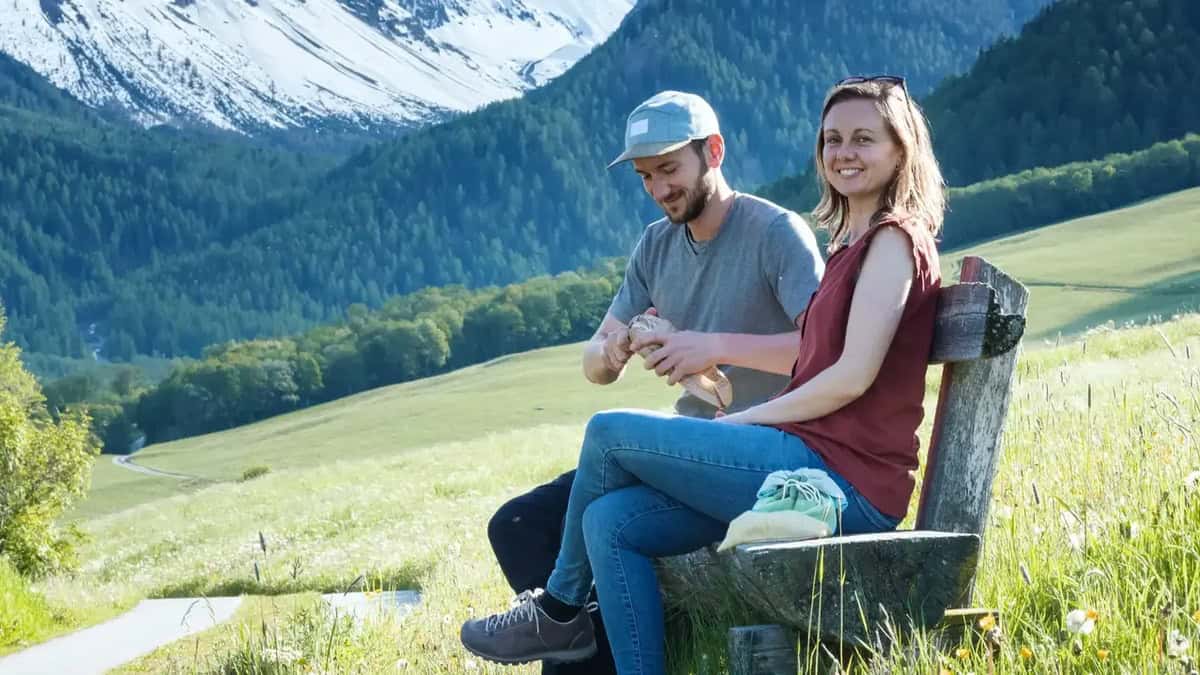
Switzerland’s Val Müstair has turned the continuing 2026 season of Savurando into something more significant than a culinary treasure hunt. The experience remains bookable on listed dates through 17 October 2026, combining roughly three hours of walking with puzzles, food and encounters with local producers. For the destination economy, its timing is particularly important. Val Müstair’s official tourism strategy explicitly targets stronger shoulder-season demand and greater local value creation, making Savurando a practical example of how an Alpine destination can convert regional food, landscape and producer networks into a saleable autumn experience.
Savurando Gives Val Müstair a Bookable Reason to Visit Deep Into October
The significant development for travellers in September 2026 is not the creation of Savurando. The product already existed before this year. What matters now is its position inside Val Müstair’s autumn visitor economy.
Advertisement
Advertisement
According to the current Switzerland Tourism listing, Savurando remains available through 17 October 2026. Listed operating dates run from Monday to Saturday. The experience begins at Hotel Helvetia in Müstair, with departures between 09:00 and 11:00. Participants should allow approximately four to six hours, including around three hours of walking.
That scheduling makes Savurando more than a short tasting stop. Travellers effectively need to reserve a substantial part of the day for it. The product links movement through the destination with puzzle solving, regional food and direct exposure to producers.
Advertisement
Advertisement
Current prices are CHF49 for adults, CHF30 for children aged six to twelve, and CHF140 for a family of two adults and two children. Children under six are listed free, while an additional child in a family costs CHF20. Groups of up to nine can use the standard arrangement, while groups of ten or more require advance registration.
| 2026 Savurando planning factor | Official current position | Implication for travellers and trade |
|---|---|---|
| Destination | Müstair, Val Müstair, Graubünden | Supports a rural destination itinerary rather than a city break |
| Final listed date | 17 October 2026 | Extends the bookable experience into the autumn shoulder period |
| Operating pattern | Monday to Saturday on published dates | Sunday itineraries require an alternative activity |
| Start point | Hotel Helvetia, Müstair | Gives agents a fixed itinerary anchor |
| Start window | 09:00 to 11:00 | Requires morning arrival or an overnight stay nearby |
| Total duration | About four to six hours | Functions as a substantial day experience |
| Walking component | About three hours | Fitness, footwear and weather preparation matter |
| Adult price | CHF49 | Provides a clearly packaged sellable experience |
| Group procedure | Advance registration from ten people | Important for escorted and small-group programmes |
The Real Destination Story Is Shoulder Season Economics
The deeper tourism angle becomes clearer when Savurando is viewed against Val Müstair’s wider destination policy.
Advertisement
Advertisement
According to the Swiss Tourism Federation, the destination management organisation for Engadin Scuol Zernez and Val Müstair specifically works to strengthen the shoulder season, improve public transport connections, support employment and increase local value creation. The destination is classified at Swisstainable Destination Level III – leading, the programme’s highest level.
Savurando fits that framework unusually well because the visitor product depends on things that already define the valley: walking, food provenance, local businesses, agricultural production and the landscape.
Advertisement
Advertisement
Its October availability gives Val Müstair a structured reason for travellers to spend time in the valley after the core summer holiday period. That matters for rural destinations where extending activity across more months can help accommodation providers, restaurants, retailers and producers gain value from visitors beyond peak dates.
This is also why the story is materially different from simply describing Savurando as an entertaining treasure hunt. Its strategic value lies in turning dispersed local assets into one purchasable tourism product.
Earlier Participation Data Shows Savurando Is Already an Established Product
Biosfera Val Müstair’s latest publicly available detailed participation figure provides important historical context.
According to the Biosfera Val Müstair Annual Report 2024, Savurando attracted 208 treasure hunters during 2024, an increase of 29 per cent over the previous year. The same report describes the culinary treasure hunt as an established experience rather than a newly launched concept.
Advertisement
Advertisement
The 2024 tourism programme was deliberately focused on improving existing products rather than simply adding more. Experiences were distributed more effectively across the season and grouped thematically, with the objective of reducing internal competition and increasing participation per offer.
That makes the continued October 2026 availability commercially significant. Savurando should be understood as part of an evolving destination-management strategy, not a one-season novelty.
No official 2026 participation total for Savurando was found in the institutional sources reviewed as of 15 September 2026, so projecting this year’s visitor volume would be premature.
Regional Food Gives the Experience a Measurable Local Economic Dimension
Val Müstair has built a formal regional-product system around its natural park economy.
The 2025 Biosfera Val Müstair annual report records 161 products carrying the nature park product label and 14 Biosfera partner businesses. It also reports that 428 visitors used the destination’s public-transport-linked Grün und gratis programme during 2025.
The requirements behind the regional product label are particularly relevant to Savurando. Official Biosfera documentation states that certified products must contain at least 80 per cent regional ingredients, while two-thirds of their value creation must take place within the region. Many products are additionally subject to organic production requirements.
Advertisement
Advertisement
| Local tourism economy indicator | Verified figure or requirement | Why it matters |
|---|---|---|
| Savurando participants in 2024 | 208 | Demonstrates existing demand |
| Year-on-year Savurando growth in 2024 | 29% | Shows momentum before the 2026 season |
| Certified Biosfera products in 2025 | 161 | Provides a substantial regional product base |
| Biosfera partner businesses in 2025 | 14 | Connects tourism with local enterprises |
| Minimum regional content for certified products | 80% | Strengthens provenance |
| Required regional share of value creation | Two-thirds | Keeps more economic activity locally |
| Grün und gratis users in 2025 | 428 | Shows integration between visitation and lower-impact mobility |
The economic principle behind this system has also been recognised at federal level. According to the Swiss Federal Office for Agriculture, agriculture, gastronomy and tourism in Val Müstair benefit from programmes promoting regional products, while investments in local processing and marketing have strengthened the regional economy. The federal authority also reports that around 15 per cent of the valley’s population works in agriculture and that most agricultural businesses are organically certified.
For tourism businesses, that strengthens the commercial logic of experiences that make food origin part of the visitor journey.
Gamification Turns Food Provenance Into an Active Destination Experience
Traditional culinary tourism often concentrates consumption in restaurants, markets or tasting rooms. Savurando uses a different structure.
Participants move through the destination by foot, solve clues and discover food along the way. According to Biosfera Val Müstair, the route introduces visitors to local producers while explaining where products originate.
The distinction matters for destination managers. Instead of separating hiking from gastronomy, Savurando combines the two into a single paid experience.
The result is a form of gamified destination discovery in which landscape, mobility, food and producers become components of the product itself. For smaller mountain destinations, that can provide a useful alternative to relying entirely on conventional sightseeing or major purpose-specific visitor facilities.
Advertisement
Advertisement
It also increases dwell time. A four-to-six-hour experience can occupy most of a visitor’s day, creating logical demand for accommodation, an evening meal, onward activities or an additional overnight stay.
That additional spend cannot be quantified from the available Savurando data, and it would be inappropriate to estimate it without booking and expenditure figures. However, the structure clearly supports the destination’s officially stated objective of strengthening local value creation.
Val Müstair Brings Protected Landscape and Tourism Into the Same Product
The location adds another layer to Savurando’s destination significance.
According to the Swiss Parks Network, Biosfera Val Müstair covers around 199 square kilometres, has a population of approximately 1,400, has held regional nature park status since 2011, and has been part of a UNESCO biosphere context since 2010.
Switzerland’s Federal Office for the Environment identifies Biosfera Engiadina Val Müstair as one of the country’s UNESCO biosphere reserves and describes biosphere reserves as places where models for environmentally responsible management and sustainable development are put into practice.
That context makes a food-and-walking product particularly relevant. The experience does not present gastronomy as something detached from the landscape. Food provenance, farming, village life, walking and the protected environment become interconnected parts of the destination narrative.
Advertisement
Advertisement
Regional Supply Chains Are Becoming a Wider Tourism Priority
Savurando also sits within a broader effort to improve the connection between tourism businesses and producers.
The Swiss Tourism Federation reported that Tourismus Engadin Scuol Samnaun Val Müstair and regional development partners created a procurement list containing more than 100 regional products from around 30 producers across the wider destination. The initiative was designed to make direct sourcing easier for restaurants and strengthen regional distribution.
Those figures should not be confused with the 161 certified Biosfera products, because they refer to different programmes and geographic scopes.
The common strategic direction, however, is clear. Regional food is increasingly being treated as part of the tourism value chain rather than merely an amenity offered after arrival.
For tour operators, this creates opportunities to package accommodation, walking, producer experiences, gastronomy and cultural attractions around a coherent regional identity.
What Travel Agents and Tour Operators Need to Manage
For autumn itineraries, the product has several operational considerations that should be handled before clients arrive:
Advertisement
Advertisement
- Check the exact operating date before confirming an itinerary, because the published 2026 calendar runs on selected Monday-to-Saturday dates through 17 October.
- Reserve a substantial daytime window, as the complete experience lasts roughly four to six hours.
- Plan around the 09:00 to 11:00 starting window at Hotel Helvetia in Müstair, particularly for clients arriving from outside the valley.
- Pre-register groups of ten or more, rather than treating the activity as an unrestricted walk-in product.
- Brief clients about weather-ready clothing, sturdy footwear, a backpack and drinking water, all of which appear in official participation guidance.
- Avoid promising 2026 attendance levels or economic returns, because no completed current-season participation statistics have yet been published in the official material reviewed.
- Build an alternative for unsuitable weather or Sunday travel, especially in October when mountain conditions can affect walking comfort.
- Use regional gastronomy as part of the itinerary narrative, because local production and value creation form part of Val Müstair’s formal destination strategy rather than functioning solely as marketing decoration.
Savurando Could Matter More as a Destination Model Than as an Attraction
The most important lesson for the travel industry is therefore not that Switzerland has another food experience. Val Müstair shows how a small Alpine destination can combine walking, puzzles, producers, food provenance and regional identity into a defined product that remains commercially relevant into October. That approach aligns directly with the destination’s official ambition to strengthen the shoulder season while increasing local value creation.
Its scale should not be exaggerated. The latest published Savurando attendance figure was 208 participants in 2024, and no 2026 total is yet available. Yet that modest scale is precisely why the case is useful for destination planners. Rural tourism development does not always depend on very high visitor volumes.
Val Müstair’s broader framework includes 161 certified regional products, partner businesses, sustainable destination certification and formal efforts to improve producer access to tourism demand. Savurando gives travellers a practical way to encounter parts of that system.
As destinations across Europe search for ways to spread visitation beyond peak summer weeks, the 17 October 2026 endpoint makes Savurando especially relevant now. Its longer-term importance will depend on whether Val Müstair can continue converting regional products, active travel and local partnerships into experiences compelling enough to generate overnight stays and repeat demand.
For the international tourism trade, that is the more consequential story: gamification is not simply being used for entertainment. In Val Müstair, it is functioning as a tool for destination discovery, shoulder-season activation and the commercialisation of regional identity.
Advertisement
