
Austria Moves Innsbruck–Bolzano Travel Closer as New Coradia Trains Prepare Transfer-Free Brenner Service

Published
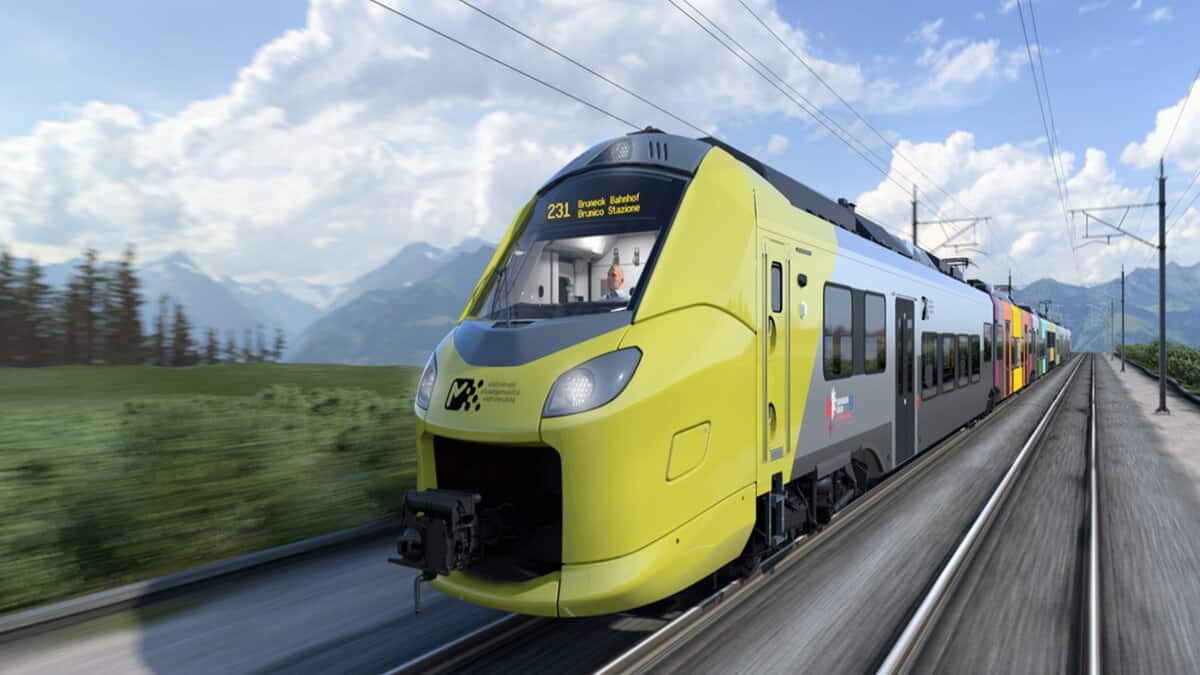
Austria’s planned transfer-free Innsbruck–Bolzano regional railway remains targeted for mid-2027, but the most important new issue is no longer train procurement. It is certification and technical readiness. South Tyrol confirmed on 1 October that new Coradia Stream trains still cannot reach Merano because RFI, ERA and ANSFISA approvals are pending, while integration problems are producing operational irregularities. The province currently gives no binding date for the next expansion phase.
The development changes how travel companies should understand one of the most important forthcoming regional rail improvements across the Austrian-Italian Alps.
Advertisement
Advertisement
According to the State of Tyrol, the planned service is intended to run hourly from Innsbruck through Bolzano and onwards via Merano to Mals, allowing passengers to remain aboard at Brenner rather than changing between Austrian and Italian regional trains. The latest Tyrol target published on 4 August remains mid-2027.
However, information released by the Autonomous Province of Bolzano–South Tyrol on 1 October introduces a material new operational consideration. The same train family being prepared for the Austrian cross-border service is still working through technical problems and network authorisations further south. These issues do not prove that the mid-2027 Brenner launch will be delayed, but they establish that the target is dependent on considerably more than receiving new trains.
Advertisement
Advertisement
Austria’s Innsbruck–Bolzano Railway Timeline Has Quietly Changed
The strongest information gain comes from comparing official railway plans published between 2023 and October 2026.
In June 2023, Tyrol expected the six additional Coradia Stream units supporting the cross-border fleet to begin international operation from December 2026. The same official announcement described a goal of creating a half-hourly continuous regional connection between Innsbruck and Bolzano by the 2027 timetable change.
Advertisement
Advertisement
By August 2026, that operating picture had changed. Tyrol’s latest dedicated cross-border update moved delivery of the six ÖBB units into 2027 and specified an hourly transfer-free Innsbruck–Bolzano–Merano–Mals service from around mid-2027.
The October South Tyrol update adds another layer. Authorities now say no binding date can be given for the next Vinschgau expansion stage because technical problems and approvals remain unresolved. Further development steps are planned during 2027.
| Planning issue | Earlier official position | Latest verified position by 6 October 2026 | What travel sellers should understand |
|---|---|---|---|
| Cross-border introduction | First international operation expected from December 2026 | Tyrol now targets mid-2027 | December 2026 should no longer be promoted as the Innsbruck launch date |
| Innsbruck–Bolzano frequency | Half-hourly continuous service was an official objective | Latest launch specification is hourly | Do not assume half-hourly service at opening |
| Route scope | Innsbruck–Bolzano formed the core earlier objective | Latest plan continues through Merano to Mals | Potential visitor itinerary becomes much wider than a two-city connection |
| Rolling-stock delivery | Delivery had earlier been expected from mid-2026 | Six ÖBB sets are to be delivered from 2027 | Fleet availability remains part of the implementation sequence |
| Southern network authorisation | Expansion expected progressively during 2026 | Key RFI, ERA and ANSFISA approvals remain outstanding | Through-running depends on regulatory clearance as well as hardware |
| Timetable certainty | Several staged targets had been published | South Tyrol currently gives no binding date for the next expansion phase | Mid-2027 remains a target rather than an unconditional operational guarantee |
These changes do not establish that the half-hourly concept has been abandoned. The latest August announcement simply defines an hourly service for the planned launch and does not restate the older half-hourly target. That distinction matters for accurate travel publishing.
South Tyrol’s Current Coradia Problems Are the New Railway Story
The newest official evidence comes from the western end of South Tyrol’s railway network, where the same multi-system train platform is already being introduced.
According to the Autonomous Province of Bolzano–South Tyrol, the modernisation of the Vinschgau railway combines several major technologies at the same time: new electric trains, new power infrastructure, new operating systems and ETCS Level 2, making the line the first regional railway in Italy to use that European train-control configuration.
That complexity is now visible to passengers.
Advertisement
Advertisement
The province reported on 1 October that the interaction between new systems is not yet functioning consistently. Automatic operating control and certain onboard technical components have contributed to irregular service and delays. Technical troubleshooting remains under way.
More importantly for the future Austria link, the new electric trains cannot yet operate through to Merano.
Required authorisations for entry onto the relevant RFI network remain outstanding from RFI, the European Union Agency for Railways, or ERA, and Italy’s ANSFISA rail and infrastructure safety authority. The latest provincial update expects those approvals in early 2027.
This is the critical development that travel readers have largely missed.
Current Mals Operations Reveal What Must Work Before Innsbruck Through-Running
As of the latest official update, electric Coradia Stream trains operate between Mals and Latsch, while diesel trains operate between Laas and Merano, both broadly at hourly intervals.
Passengers making journeys through the valley therefore face an interim operating arrangement.
Advertisement
Advertisement
South Tyrol has allowed roughly 30 minutes of connection margin at Latsch to protect transfers when delays occur. Replacement buses on route B250 also continue between Mals and Merano at half-hourly intervals. The diesel fleet is expected to remain available until 2030.
This matters to Austria because the eventual cross-border concept depends upon turning what is currently a fragmented regional operating environment into a continuous train path reaching north through Bolzano, Brenner and Innsbruck.
Earlier South Tyrol plans envisaged electric through-running to Merano from the December 2026 timetable change and the first direct Mals–Bolzano services from spring 2027.
The October update means those milestones should now be treated cautiously until revised operational dates are confirmed.
Transfer-Free at Brenner Will Not Mean Non-Stop
Another distinction deserves particular attention from tour operators.
The future regional train is intended to eliminate the passenger transfer at Brenner, but it will not eliminate the border stop itself.
Advertisement
Advertisement
According to the State of Tyrol, operational communication requirements mean train crews must still change at Brenner. Passengers will remain seated on the same train while that process takes place.
This is a major improvement compared with the current structure, but travel marketing should describe it accurately as transfer-free, not necessarily border-stop-free.
Tyrol reports that 35 regional connections currently begin or terminate at Brenner and only four continue directly across the border. Under the planned system, hourly regional through-services would cross the frontier without requiring passengers to move to another train.
That operational distinction is especially relevant to older travellers, families carrying luggage, travellers with reduced mobility and cycling tourists.
Coradia Stream Solves Three Electrical Systems With One Train
The rolling stock is central to making the through-service technically possible.
South Tyrol’s Coradia Stream ETR160 platform can operate under 25 kV, 15 kV and 3 kV electrical systems. The 25 kV capability is used for the modernised Merano–Mals infrastructure, 3 kV is required across conventional parts of the Italian network, and 15 kV allows operation on the Austrian system.
Advertisement
Advertisement
The trains also carry signalling technology required for integration across STA, RFI and ÖBB infrastructure.
| Railway specification | Verified figure or capability | Traveller relevance |
|---|---|---|
| Train length | 128 metres | Higher regional capacity |
| Seating | 381 seats | 182 more seats than the 199-seat regional trains cited for the Brenner route |
| Capacity increase | About 91% more seats | Greater ability to absorb commuting and leisure demand |
| Maximum speed | 160 km/h | Suitable for regional cross-border operation |
| Traction output | About 3,000 kW | Designed for demanding regional railway operation |
| Electrical capability | 25 kV, 15 kV and 3 kV | Enables operation across different Austrian and Italian systems |
| Signalling | ETCS-compatible equipment | Essential for cross-network interoperability |
| Passenger equipment | Wi-Fi and power sockets | More useful for leisure and business travellers |
| Bicycle provision | Enlarged cycle area | Particularly relevant to Alpine cycling tourism |
The State of Tyrol confirms the 128-metre length, 381-seat configuration, 160 km/h maximum speed, Wi-Fi, power supply and larger bicycle compartment. South Tyrol separately confirms the roughly 3,000 kW output and triple-voltage capability.
The Fleet Exists on Paper but Authorisation Is the Real Critical Path
Tyrol’s August update stated that six ÖBB trainsets were in production at Alstom’s Savigliano plant, with delivery due from 2027.
The same official update put the wider procurement at 22 Coradia Stream trains across STA and ÖBB and reported that four units were already operating in South Tyrol at that stage.
Yet receiving physical trains is only one stage.
Before the Austrian units can carry passengers internationally, the vehicles require authorisation in the participating networks. Drivers, onboard personnel and workshop staff also need appropriate training. Tyrol says training has already begun using equivalent South Tyrolean trains.
Advertisement
Advertisement
The approval timetable has already demonstrated its sensitivity.
A July South Tyrol update targeted authorisation of 12 new trainsets by the end of 2026, subject explicitly to successful technical tests and regulatory procedures.
By 1 October, the province expected important RFI-related approvals only in early 2027 and stated that no binding date could yet be provided for the next service expansion.
For a B2B travel audience, this is the central risk indicator.
Bolzano Is Building the Maintenance Backbone Behind the New Railway
The visible story is about new trains. The less visible story is about keeping them operational.
South Tyrol approved an updated €59.9 million train maintenance centre at Bolzano South in May 2026. It is intended to handle maintenance, stabling and cleaning for the regional fleet, particularly Coradia Stream ETR160 trains.
Advertisement
Advertisement
The project incorporates an enlarged workshop, specialised technical equipment, spare-parts storage, train-cleaning facilities, changes to the track layout and an integrated railway protection system compatible with the newer RFI systems on the Brenner line.
South Tyrol had already allocated €23.03 million and approved a further €36.87 million across 2026, 2027 and 2028.
For travel companies, such back-end infrastructure is significant because international services need fleet resilience, overnight servicing and rapid fault rectification. Cross-border trains cannot become a dependable tourism product merely because the timetable contains a direct service.
Why the Railway Upgrade Matters to Austria’s Visitor Economy
The railway will join two already substantial Alpine visitor economies.
Tyrol’s official tourism statistics show that Innsbruck recorded 745,670 arrivals and 1,382,032 overnight stays from January through August 2026.
South Tyrol recorded 1,346,245 arrivals and 6,235,012 overnight stays in August 2026 alone, with overnight volume 1% higher than a year earlier.
Advertisement
Advertisement
The importance of a one-seat regional connection therefore extends beyond commuters.
A reliable Innsbruck–Bolzano–Merano–Mals train can support multi-centre Alpine holidays, cycle-tourism itineraries, car-free mountain stays and combinations of Austrian and Italian destinations that are currently less convenient by regional rail.
The potential commercial benefit lies less in headline speed and more in friction removal. Eliminating one physical train change can materially simplify an itinerary involving children, skis, bicycles, mobility equipment or substantial luggage.
The 2027 Regional Upgrade Arrives Years Before the Brenner Base Tunnel
The regional project should also be separated from the much larger Brenner Base Tunnel.
The new Coradia through-service is intended to operate on the existing cross-border railway environment and is therefore relevant years before the Base Tunnel opens.
The BBT project remains targeted towards 2032 in official Tyrol planning. In August 2026, BBT SE completed excavation of the entire western main tunnel tube, producing a continuous roughly 55-kilometre tunnel between the Sill Gorge near Innsbruck and Fortezza in South Tyrol.
Advertisement
Advertisement
That makes the Coradia programme strategically important.
It is effectively an earlier test of practical cross-border passenger integration: different power systems, different network managers, different national authorisation processes, multilingual railway operations and regional timetable coordination must function together before the infrastructure revolution promised by the Base Tunnel arrives.
What Travel Agents and Tour Operators Should Do Now
- Remove December 2026 from forward-facing Innsbruck–Bolzano regional through-service information. The latest Tyrol target is mid-2027.
- Do not promise a half-hourly international service at launch. The newest official operating plan specifies hourly transfer-free trains.
- Treat mid-2027 as a target rather than a guaranteed booking assumption. Current South Tyrol operations still face technical integration and authorisation work.
- Describe Brenner journeys as transfer-free, not necessarily non-stop. A short border halt and crew change remain part of the planned operating model.
- Monitor the RFI, ERA and ANSFISA approval process. These authorisations are material prerequisites for broader train deployment.
- Check Vinschgau itineraries dynamically during the transition. Current travel can involve trains, transfers and B250 replacement buses rather than the future seamless railway product.
- Build cycling and accessible-tourism products cautiously but proactively. The future fleet’s larger bicycle area and removal of a border transfer materially improve the product once full through-running begins.
Austria’s Brenner Railway Story Is Now About Execution Rather Than Announcement
The most important update for travel readers on 6 October 2026 is therefore not that Austria and Italy are buying new trains.
That story is already established.
The new story is that the operating concept has evolved and the technical path has become clearer. December 2026 has given way to a mid-2027 Austrian cross-border target. The initial international service is now described as hourly. Its reach is more ambitious, extending beyond Bolzano through Merano towards Mals. Yet the same rolling-stock programme is encountering real-world integration challenges on the South Tyrolean network.
The latest official evidence does not establish a delay to the mid-2027 Innsbruck–Bolzano launch. It does establish that travel companies should avoid treating that date as unconditional.
Advertisement
Advertisement
Certification, network compatibility, operational reliability, staff preparation and timetable integration now matter as much as the trains themselves.
If those elements align, Austria’s Innsbruck gateway could gain something more strategically useful than another conventional international train: a genuinely regional, transfer-free Alpine railway linking North Tyrol with Bolzano, Merano and western South Tyrol years before the Brenner Base Tunnel transforms the corridor again.
Advertisement
