
Sweden Shows How Biometric Border Checks Could Change Your European Holiday

Published
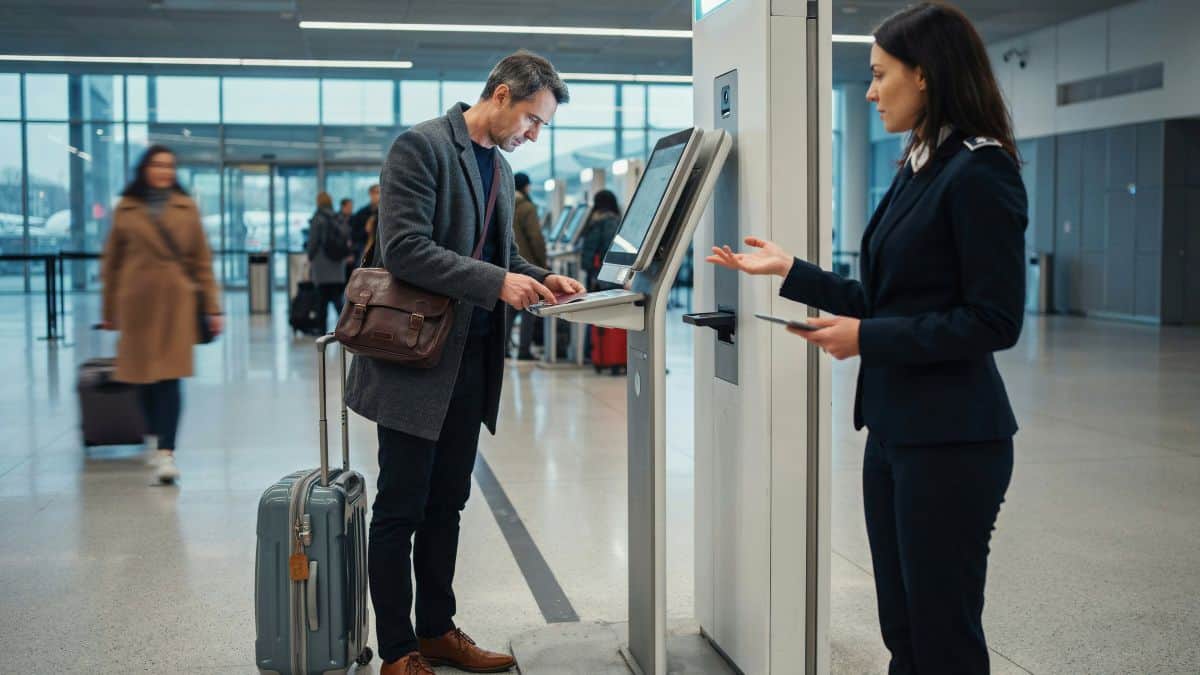
Sweden illustrates what impact biometric border checks may have on your European vacation, since passengers will be required to go through a new system at the Schengen border. Entry/Exit System registers the data of eligible travelers who are citizens of non-EU countries regarding their visits and when necessary fingerprints and facial photos. Nevertheless, this process may differ depending on the route and the airport used. In Sweden there is app-based pre-registration at certain airports, whereas other countries have various methods of registration. Therefore, it is recommended to find out about requirements for visiting a particular country beforehand.
What is Europe’s new Entry/Exit System?
The European Union’s Entry/Exit System, known as EES, records the entry and exit of eligible non-EU nationals travelling to the Schengen area for a short stay. It replaces manual passport stamps with a digital record. Border authorities can record passport details, the time and place of a crossing, and biometric data such as fingerprints and a facial image. The system also records refused entries.
Advertisement
Advertisement
EES launched on 12 October 2025. Countries introduced it in stages. The EU says it became fully operational at external border crossing points on 10 April 2026. That date marks the end of the planned roll-out, but it does not mean every passenger sees the same equipment or steps at every airport, port or land crossing. The European Commission says some locations still need operational adjustments.
EES applies across 29 countries using the system. These include most EU countries, plus Iceland, Liechtenstein, Norway and Switzerland. Ireland and Cyprus are outside the EES arrangement. Travellers should check the rules for their destination and route, as “Europe” does not mean that every country uses the same border system.
Advertisement
Advertisement
Why do Sweden, Portugal and France offer different experiences?
The digital system may be shared, but the steps before a border check vary by country. The EU’s “Travel to Europe” app is one example. Its official guidance says that Sweden uses it to collect passport details, a facial image and an entry questionnaire. In Portugal, the app supports the entry questionnaire. Each country decides whether to offer the app and which functions to make available.
France takes a different approach at selected crossing points. Travellers can go directly to a border officer or use an optional pre-registration device. Some devices are fixed kiosks. Others are tablets used by staff. A border guard still checks and validates the EES file.
Advertisement
Advertisement
This variation creates a useful way to understand the change. A traveller’s experience can depend on the country and the specific place where they enter Schengen. A mobile phone may help with preparation at one airport. At another crossing, a traveller may use a kiosk or speak with an officer. The system is common, but the passenger journey is not uniform.
What could an arrival in Sweden involve?
Swedish Police says eligible travellers arriving at Arlanda, Bromma, Landvetter, Sturup and Skavsta airports can use the Travel to Europe app to pre-register. It remains part of the border process, rather than a replacement for it. Travellers still need to present their travel documents and complete the checks required by border authorities.
For a first-time EES registration, travellers may be asked to provide a facial image and fingerprints at the border. On later trips, officers can check the traveller against the information already stored. The Swedish Police explains that children under 12 do not give fingerprints, though they are still subject to other registration steps if EES applies to them.
The practical question is whether pre-registration changes the full time spent at the airport. An app may let a traveller submit some details before reaching the border, but it does not remove the officer’s role or guarantee quicker passage. To measure any benefit, authorities would need to report how long travellers wait from joining the queue to completing the check.
How is Portugal’s app process different?
Portugal’s tourism authority announced the Travel to Europe app in March 2026. The initial launch was at Lisbon Airport, with expansion to other national airports planned. The authority described a process in which travellers enter details about their journey, provide personal information and answer a travel questionnaire. The app then produces a QR code for use at available self-service kiosks.
The app is optional. Portugal’s official announcement says it does not replace normal border-control procedures. It is intended to let travellers provide some information before arrival, with the aim of making the process more efficient. The announcement does not publish a measured reduction in queue times, nor does it confirm that the app is available at every airport today.
Advertisement
Advertisement
That leaves a clear reporting opportunity. Travellers need current information about which airport entrances accept the QR code, what happens if a phone cannot display it, and whether staff can help passengers who have not used the app. The difference between a planned expansion and confirmed availability matters when people are preparing for a trip.
What happens at France’s kiosks and border points?
French government guidance lists pre-registration devices at selected airports, stations and ports. They include Paris Charles de Gaulle and Orly airports, Gare du Nord in Paris, and several ports. The guidance also lists St Pancras in London, Dover, Folkestone and Coquelles for relevant cross-Channel journeys. Availability depends on the specific crossing point.
Using a kiosk or tablet is free and optional. The device can collect passport details, the date and place of crossing, a facial image and, for most eligible travellers aged 12 or over, fingerprints. A border guard then validates the file. Travellers can also go straight to a control point and have an officer collect the necessary information.
This process puts staff and clear directions at the centre of the story. A kiosk can help some passengers prepare, but others may need personal assistance. French guidance, for example, sets out different arrangements for children under 12, including those travelling alone. The border experience therefore depends on the availability of equipment and people who can help passengers use it.
Why can the same European holiday mean different border steps?
The place where a check happens can depend on the route. UK government guidance says that applicable EES checks for travellers using Dover, Le Shuttle at Folkestone or Eurostar from St Pancras take place before they leave the UK. Travellers flying to Schengen countries usually complete registration at the destination’s external border.
That difference matters for passengers planning their departure. A family travelling by train or car may meet the check before boarding. Someone flying to the same country may face it after landing. Travellers should follow instructions from their carrier and port or airport, and allow time for the process at their particular departure point.
Advertisement
Advertisement
Cruises need separate guidance. UK advice says that cruises starting and ending outside Schengen will usually be exempt from EES checks for day visits included in the itinerary. Some exceptions may apply. Passengers who leave a ship in Schengen and continue elsewhere by another means may need to complete EES checks. Those who board a cruise within Schengen may also need checks at their first entry point.
What do the system’s figures tell us?
On 1 September 2026, a European Commission spokesperson said EES had recorded more than 180 million entries and exits across 29 countries. The Commission also reported about 60,000 refused entries, including more than 1,700 cases involving people it described as threats to internal security. These are cumulative figures reported on that date.
The numbers show the scale of system use, but they need careful explanation. An entry and an exit are separate crossing records. The figure does not represent 180 million different people or prove that 180 million visitors completed the same biometric process. The Commission was asked for a breakdown of biometric and non-biometric records during its briefing, but the spokesperson did not have that information available at the time.
Earlier data also require context. eu-LISA’s first-quarter report recorded 19,985 refusals of entry and 978,940 exemptions from fingerprinting between January and March 2026. Because EES was still being introduced, the report covered only crossing points where the system was already in use. It should not be treated as a complete count for all Schengen travel in that quarter.
Does biometric registration mean shorter queues?
The Commission has described EES as a way to modernise border management and improve security. It has also said that biometric registration took a little over one minute on average in most member states during May 2026. That is a useful measure of one task, but it does not tell readers how long the full journey takes.
The total wait can include the queue before a kiosk or officer, the registration itself, manual checks and the time needed to move through the terminal. The Commission’s 2026 State of Schengen report notes challenges at some locations, including self-service equipment, the capacity to record biometric data and flights arriving at busy times. It calls for sufficient staff, flow managers, equipment and training.
Advertisement
Advertisement
A strong assessment would compare waiting times at the same crossing before and after EES. It would also separate first-time registrations from later visits and report equipment outages and the number of passengers who need help. The official material reviewed here does not provide a comparable, Europe-wide measure of total waiting time. So the system’s passenger benefit should be examined, not assumed.
What should families and travellers who need assistance know?
Children under 12 are exempt from giving fingerprints under EES, according to Swedish Police and French government guidance. That does not mean children are automatically outside the system. Their travel details and other required registration steps may still apply. Families should check official instructions for the border point they will use.
The European Union Agency for Fundamental Rights offers another way to assess the traveller experience. Its guidance draws on fieldwork at ten border crossing points in six member states. It addresses clear communication, dignified biometric collection, privacy, staff training and support for passengers with specific needs. The agency notes that biometric matching errors can occur and highlights the importance of accurate records and ways to seek correction or redress.
For tourism, these details are practical. Travellers need to understand where to go, what information to provide and how to get help if a device does not work for them. A modern border system must work for people travelling with children, older passengers, disabled travellers and anyone who needs clear instructions.
Is ETIAS the same as EES?
No. EES records the crossings of eligible non-EU nationals at the external Schengen border. ETIAS is a separate travel-authorisation system for visa-exempt visitors. The European Commission’s April explainer described how the two systems would work together, but its current ETIAS notice says the system is not operating and is not collecting applications. The EU says it will announce a start date several months before launch.
Travellers should not treat an old forecast as confirmation that ETIAS has started. Nor should they assume every non-EU traveller needs ETIAS. The Commission gives Indian citizens travelling to Schengen as an example of visitors who need a visa rather than ETIAS. Eligible travellers’ EES requirements are a separate matter.
Advertisement
Advertisement
This distinction is important because the two systems involve different steps. EES registration happens at the border. ETIAS will involve an advance application once it becomes operational. Travellers should rely on current EU or national government guidance before paying a third-party service or submitting personal information.
What should travellers expect next?
The biometric revolution in Europe from 2026 highlights the reasons why three countries like Sweden, Portugal and France have started a pilot scheme for a new experience for the travelers. According to the European Commission, the crossing points will still require some improvements after April launch. They have been offering assistance and there could be help from Frontex to address all issues within a year’s end. For travelers, the point of passage is important; the traveler could face inspection at the airport, train stations or ports, as the use of the apps and kiosks is based on the location.
Advertisement
