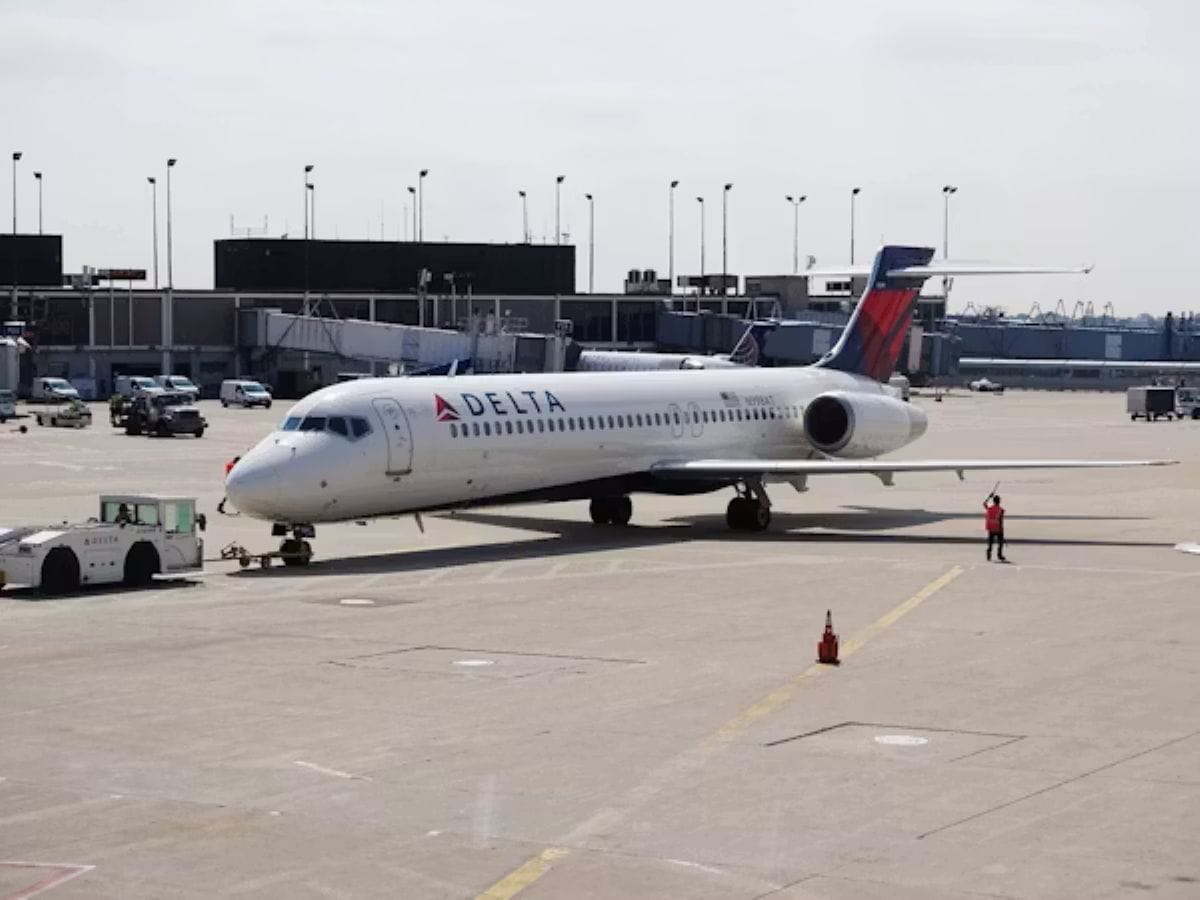
The Delta Air Lines sets a new paradigm in terms of US airline power split since three big firms own most of the market capitalization by 2026. Nonetheless, the impressive gap between the two indicates the true nature of money, confidence and competition. Investors today put more confidence in Delta Airlines, United Airlines and Southwest airlines than in other smaller firms. As such, the three companies have more strength to invest in planes, lounges, technology and first class travels. On the other hand, the smaller firms struggle with increasing fuel prices and thin profit margins. This is not a criterion of service and safety but one of finances and power.
Delta holds first place. Its shares closed at $80.07 on 28 August 2026. That price, multiplied by 657,623,030 shares, gives a value of about $52.66 billion.
Advertisement
The lead is striking. Delta is worth about $16.76 billion more than United. It is almost 5.8 times the value of American Airlines in this calculation.
Delta’s results help explain this trust. Adjusted quarterly revenue reached $17.7 billion. Premium ticket revenue of $6.92 billion edged above main cabin revenue of $6.85 billion. Better seats and loyalty ties now drive growth.
Advertisement
Advertisement
United ranks second at about $35.90 billion. Its shares closed at $110.60 on 28 August. The company had 324,583,772 shares outstanding in July.
United reported $17.7 billion in quarterly revenue, up 16%. Net income was $805 million. Operating cash flow was $1.6 billion. Yet its market value still sits far below Delta’s.
The message is simple. Big revenue alone does not win the market value race. Investors also look at profit, debt, cash, costs and future growth.
Southwest takes third place at about $19.39 billion. Its shares closed at $39.64 on 28 August. The company reported 489,208,201 shares outstanding in July.
The airline made record quarterly revenue of $8.43 billion, up 16.4%. Net income reached $233 million. Assigned seats and extra-legroom products can also lift the money earned from each passenger.
American Airlines offers a clear warning. It produced record quarterly revenue of $16.7 billion. Yet its estimated market value was only $9.03 billion.
Profit gives one clue. American made only $71 million in quarterly net income. Fuel expense rose by more than $2.2 billion. Higher fares offset almost half of that rise, but costs remained under hard pressure.
Size cannot tell the whole story. Investors also fear thin profit, high debt and rising costs.
The 2026 list looks smaller because the industry itself has changed.
Alaska Air Group completed its purchase of Hawaiian Airlines in September 2024. Hawaiian still flies as a loved travel brand, but it no longer has a separate listed market value.
Allegiant bought Sun Country on 13 May 2026. The group now serves nearly 175 cities with 195 aircraft. Sun Country has no separate listed value.
Spirit brought an even bigger shock. It started an orderly wind-down on 2 May 2026. The move took effect at once. Spirit therefore has no place in a ranking of active listed US airline groups.
These events remove three separate names from the public market picture.
The next seven groups have far less value together than the top three. American stands at about $9.03 billion. Alaska follows at $4.72 billion. SkyWest reaches $3.84 billion. Allegiant holds $2.16 billion. JetBlue stands at $1.81 billion. Frontier reaches $1.34 billion. Republic Airways comes in near $860 million.
SkyWest and Republic often fly regional routes for larger brands. Their value shows that the hidden engine of US air travel can still attract investor money.
Frontier reported record quarterly revenue of about $1.3 billion, up 38%. Yet it recorded an adjusted net loss of $22 million.
JetBlue reported $2.7 billion in quarterly revenue, up 14.5%. However, its costs per available seat mile rose 17%. This helps explain why strong demand may not quickly create strong market value.
Delta Air Lines is spearheading the emergence of a new divide among US airlines, in which three behemoths capture the majority of market value by 2026. But all this money might influence Americans’ mode of transport. The wealthier airlines will have more resources available for purchasing planes, refurbishing the interiors of their cabins, building lounges and creating more effective loyalty programs, which puts more pressure on their competitors. But the divide does not mean that the cost of tickets is going to increase or that quality will suffer. It means only where investors see the strongest companies. And travelers need to pay attention to what they do in the coming months.
Advertisement
Tags: Airline Competition, airline concentration, airline investors, Airline Market Value, delta air lines
Advertisement
Advertisement












Wednesday, September 2, 2026

Tuesday, September 1, 2026

Wednesday, September 2, 2026

Wednesday, September 2, 2026

Tuesday, September 1, 2026

Tuesday, September 1, 2026

Wednesday, September 2, 2026

Tuesday, September 1, 2026



