

San Antonio, Los Angeles and New Orleans Join a Wider US Cultural Tourism Surge with Día de los Muertos Celebrations

Published
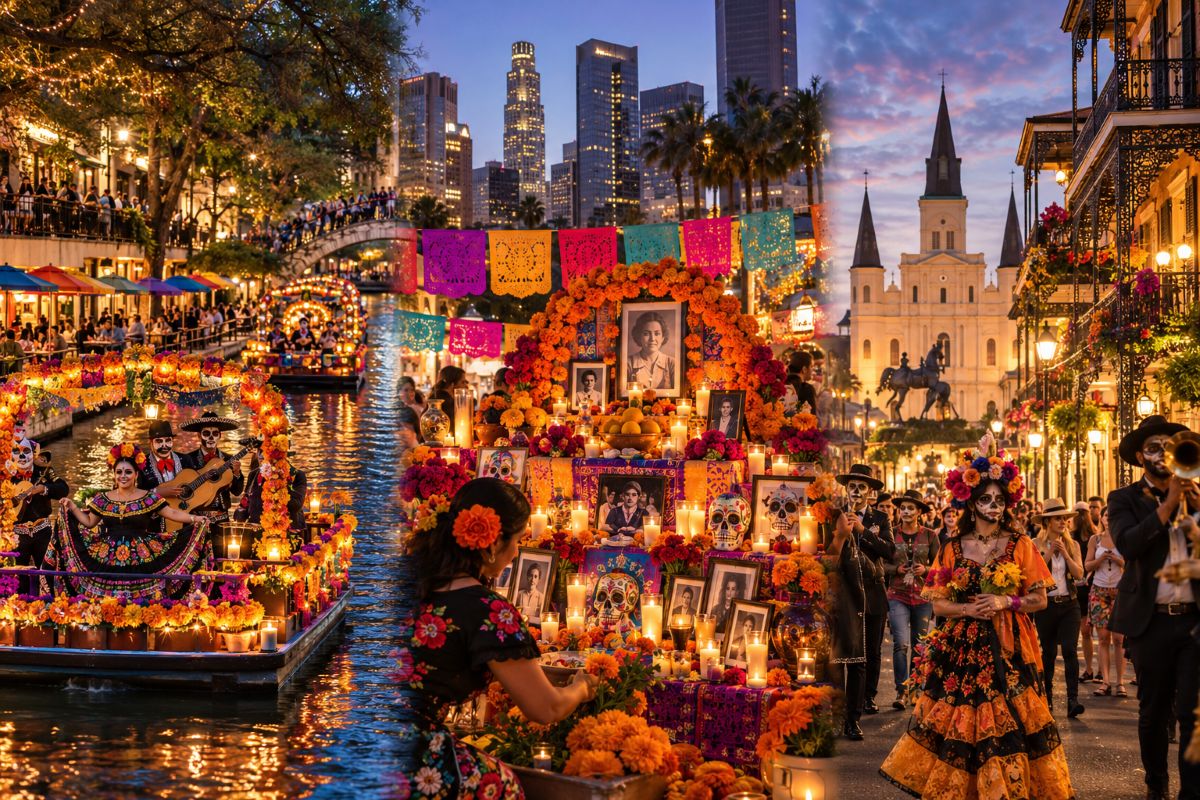
San Antonio, Los Angeles and New Orleans are preparing distinct cultural experiences for travellers exploring Día de los Muertos celebrations in the United States during October and November 2026. San Antonio’s River Parade returns on 23 October, while its Tradition Trail runs from 2 October to 2 November. Los Angeles stages its Downtown Día de los Muertos exhibition from 25 October to 2 November, while New Orleans lists its principal festival for 1 November.
The celebrations provide opportunities to experience community altars, Mexican heritage, public art, performances and traditional food. Yet their tourism propositions differ, particularly in programme duration, admission arrangements and transport requirements. San Antonio has published attendance figures for its river parade, Los Angeles offers a longer exhibition window, and New Orleans combines its festival with a wider autumn cultural calendar.
The commercial stakes are substantial, although the available figures require careful interpretation. New Orleans welcomed 19.46 million visitors in 2025, while Los Angeles recorded 49.5 million and $42.6 billion in visitor-generated business sales. San Antonio’s 2025 River Parade attracted an estimated 35,100 attendees. These indicators demonstrate tourism scale, but they do not measure spending generated by Día de los Muertos alone.
Three Cities Offer Different Cultural Experiences
The three destinations approach the season through different event formats. San Antonio concentrates its principal celebrations around the River Walk and Hemisfair, with additional neighbourhood programming. Los Angeles combines a central public exhibition with wider cultural attractions, while New Orleans offers a festival alongside other local observances.
Advertisement
Advertisement
| Destination | Principal 2026 event | Published dates | Main visitor attraction | Admission information |
|---|---|---|---|---|
| San Antonio, Texas | Day of the Dead River Parade | 23 October | Illuminated barges, music and decorated floats | Reserved seating is ticketed; check viewing arrangements |
| San Antonio, Texas | Tradition Trail | 2 October–2 November | Alebrijes, calaveras, altars and culinary experiences | Public installations; some associated experiences may cost extra |
| Los Angeles, California | Downtown Día de los Muertos | 25 October–2 November | Community ofrendas, art, music and remembrance | Free exhibition |
| New Orleans, Louisiana | Día de los Muertos Festival | 1 November | Festival at Lafayette Square | Confirm current organiser information |
| New Orleans, Louisiana | Fèt Gede | 1 November | Haitian remembrance traditions | Confirm the event’s individual arrangements |
| New Orleans, Louisiana | Krewe de Mayahuel procession and fiesta | 2 November | Procession and cultural celebration | Confirm current organiser information |
The calendar reveals an important distinction for trip planning. San Antonio offers a month-long trail anchored by a busy festival weekend, whereas Los Angeles provides a defined exhibition period. New Orleans has several relevant events concentrated around 1 and 2 November, making additional itinerary planning particularly important for longer stays.
San Antonio Converts Attendance into Visitor Demand
San Antonio’s River Parade is one of the clearest indicators of audience demand in this comparison. The 2025 edition attracted an estimated 35,100 attendees, while organisers sold 15,266 tickets. Ticket sales increased by 19% from 12,807 in 2024, marking a record for the parade.
Advertisement
Advertisement
These figures measure different things. Estimated attendance includes spectators who may not have purchased reserved seats, so the two totals should not be added together. Nevertheless, the increase in ticket sales indicates stronger demand for the organised viewing experience.
The 2026 edition takes place on Friday, 23 October, with illuminated barges carrying artwork, altars and performers along the River Walk. Muertos Fest runs at Hemisfair from 23 to 25 October, adding live music, community altars and artisan stalls. The Tradition Trail extends the experience beyond the headline weekend, giving visitors more flexibility to explore the city.
Advertisement
Advertisement
A further advantage is the concentration of several attractions within central San Antonio. Visitors can combine the riverfront installations with Hemisfair, Historic Market Square and La Villita, although travel times and event access still require checking. This structure can help travellers build an itinerary around free public activities before adding selected ticketed experiences.
Los Angeles Extends the Exhibition Window
Los Angeles offers a different model, built around an extended public exhibition and a wider cultural landscape. Gloria Molina Grand Park hosts Downtown Día de los Muertos from 25 October to 2 November 2026, featuring community ofrendas and programming rooted in remembrance. The free exhibition gives visitors several opportunities to attend without committing to a single festival evening.
The ofrendas are central to the experience. These altars can include photographs, candles, flowers, food and objects associated with departed loved ones. Their meaning goes beyond decorative display, offering visitors an opportunity to understand how families and communities preserve memory through cultural practice.
Los Angeles also gives travellers access to museums, galleries, neighbourhood restaurants and other cultural institutions. However, its geographic scale can increase transport costs when visitors combine events across different areas. A hotel that appears cheaper may deliver poor overall value if it requires long journeys to downtown and other attractions.
Advertisement
Advertisement
The wider visitor economy illustrates the scale of the opportunity. Los Angeles welcomed 49.5 million visitors in 2025, including 43.1 million domestic visitors and 6.4 million international visitors. Tourism generated $42.6 billion in business sales across the region and supported more than 530,000 tourism-related jobs.
These numbers describe the regional visitor economy, not the impact of the Grand Park exhibition. A more precise assessment would require event attendance, visitor origins, overnight stays and spending directly associated with the celebration.
New Orleans Adds a Broader Cultural Dimension
New Orleans brings Día de los Muertos into a city already known for its culinary traditions, music and seasonal festivals. Its official events calendar lists the principal celebration at Lafayette Square on 1 November 2026, alongside Fèt Gede and the Krewe de Mayahuel procession and fiesta. These events give travellers several cultural experiences to consider around the beginning of November.
The celebrations should not be treated as interchangeable. Mexican Día de los Muertos and Haitian Fèt Gede have distinct histories and cultural practices, even though both include remembrance of the dead. Understanding those differences gives visitors a more informed experience and helps avoid reducing culturally significant observances to generic autumn entertainment.
New Orleans’ visitor economy recorded 19.46 million visitors in 2025, a 2% increase over 2024. Visitor spending reached $10.8 billion, compared with $10 billion in 2024, according to New Orleans & Company. These figures demonstrate the scale of the city’s tourism industry, but they do not isolate the contribution of the November celebrations.
Food and neighbourhood exploration provide additional reasons to extend a stay. Travellers can combine the festival with Creole and Cajun restaurants, local markets and other autumn events. However, a useful comparison requires actual menu prices, event vendor information and accommodation quotes rather than assumptions about how much visitors will spend.
Advertisement
Advertisement
Visitor Economies Reveal Different Scales
The three destinations attract substantial visitor activity, but their headline economic figures use different measures. Los Angeles reports visitor-generated business sales, New Orleans reports visitor spending, and San Antonio’s cited figure measures broader tourism economic impact. These indicators are not directly interchangeable.
| Tourism indicator | San Antonio | Los Angeles | New Orleans |
|---|---|---|---|
| Annual visitor figure | Not included in the cited event data | 49.5 million in 2025 | 19.46 million in 2025 |
| Published economic measure | $23.4 billion tourism economic impact reported in 2026 | $42.6 billion visitor-generated business sales in 2025 | $10.8 billion visitor spending in 2025 |
| Specific festival attendance | 35,100 estimated River Parade attendees in 2025 | Comparable figure not established | Comparable figure not established |
| Festival-specific spending | Not established | Not established | Not established |
| Main research gap | Event-related spending and hotel guest nights | Exhibition attendance and incremental overnight stays | Festival attendance and attributable spending |
The table exposes an important gap in cultural tourism research. Destination-level totals show the scale of the market, but they cannot establish how many people travelled specifically for a festival or how much additional money the event generated. Comparable event-level data would help tourism boards assess return on investment and identify which programmes encourage overnight stays.
Hotel Demand Can Change the Value Equation
Accommodation is likely to be one of the most important variables for travellers comparing these destinations. Los Angeles Tourism District hotels recorded an average daily rate of $220.04 during the first half of 2026, with occupancy of 73.1%. Average daily rates rose 6.2% year on year, while room nights sold increased 1.6% to 4.84 million.
Those figures provide a useful market benchmark, but they do not predict the exact rate for the Día de los Muertos period. A citywide or district-wide average can conceal substantial differences between neighbourhoods, hotel categories and individual dates. Travellers should compare actual room quotations for their intended stay.
| Accommodation consideration | Why it matters | What travellers should compare |
|---|---|---|
| Nightly room rate | Determines the largest fixed trip expense for many visitors | Same dates, room type and occupancy |
| Taxes and additional fees | Can increase the final booking price | Total payable amount rather than headline rate |
| Distance from events | A distant hotel may create repeated transport costs | Walking time, transit access and rideshare fares |
| Cancellation terms | Festival plans and travel arrangements can change | Refundability and booking conditions |
| Weekend demand | Popular event dates may attract stronger demand | Thursday-to-Sunday rates against midweek rates |
| Length of stay | Longer trips spread travel costs across more experiences | Total accommodation cost for the full itinerary |
San Antonio may prove attractive to cost-conscious travellers because its principal events and installations are concentrated around the downtown area. Los Angeles offers a longer exhibition period, which may provide more flexibility with travel dates. New Orleans can suit visitors who want to combine the festival with additional cultural activities, although comparable hotel-rate evidence is needed before ranking it on affordability.
No definitive cheapest-city ranking is justified by the current data. A credible comparison must use matching dates, room conditions and total trip costs across all three destinations.
Advertisement
Advertisement
Food and Local Businesses Extend Festival Spending
Cultural celebrations can support more than event organisers. Visitors may buy meals from local restaurants, purchase handmade goods, attend workshops or explore neighbourhood businesses before and after the main festivities. However, these potential benefits need to be measured rather than assumed.
San Antonio’s Tradition Trail explicitly incorporates culinary experiences alongside public art and remembrance installations. This creates opportunities for visitors to combine cultural exploration with food purchases, although the available data do not establish how much the trail generates in restaurant or vendor revenue.
Los Angeles offers a broader restaurant landscape, but distances between cultural venues can affect both time and spending. New Orleans provides a distinctive opportunity to combine its celebration with regional food traditions and other autumn events. In each city, independent restaurants and artisan vendors can benefit from visitor activity, although their actual share of festival-related spending remains unquantified.
A stronger industry assessment would measure average visitor spending, food purchases per attendee, vendor sales, overnight stays and the proportion of visitors travelling from outside the metropolitan area. Such information would help distinguish spending that would have occurred anyway from additional expenditure generated by the event.
Cultural Context Gives the Celebrations Greater Meaning
Día de los Muertos is a remembrance tradition with deep roots in Mexican culture. Families honour departed loved ones through ofrendas, photographs, candles, flowers, food and personal keepsakes. Indigenous Mesoamerican traditions and Catholic observances have both influenced the celebration, whose central purpose is to remember lives rather than simply depict death.
Marigolds, sugar skulls and papel picado are among its recognisable symbols. Their meanings can vary by community and family, so visitors should approach displays with curiosity and respect. Organised workshops, guided explanations and artist-led activities can provide more cultural context than viewing decorations alone.
Advertisement
Advertisement
For tourism operators, this distinction matters commercially as well as culturally. Visitors increasingly need clear information about what an event represents, how communities participate and which activities support local artists. Cultural interpretation can deepen the experience while helping organisers preserve the integrity of the traditions they present.
Which City Best Matches Each Traveller?
The strongest destination depends on whether visitors prioritise a concentrated festival weekend, a longer exhibition or a broader cultural itinerary. The following comparison is a practical guide, not a definitive ranking of overall quality or affordability.
| Traveller priority | Strongest candidate | Reason | Important caveat |
|---|---|---|---|
| Multiple events in a compact central area | San Antonio | River Parade, Muertos Fest and Tradition Trail | Reserved parade seating costs extra |
| Extended exhibition access | Los Angeles | Grand Park exhibition runs from 25 October to 2 November | Transport between venues may add costs |
| Combining remembrance events with regional cuisine | New Orleans | Festival coincides with other cultural observances | Check individual event schedules and locations |
| Published event-attendance evidence | San Antonio | 2025 parade attendance and ticket figures are available | Attendance does not equal overnight visitors |
| Broad international visitor market | Los Angeles | 6.4 million international visitors in 2025 | These visitors were not necessarily festival-goers |
| Combining several autumn events | New Orleans | Wider seasonal calendar offers additional itinerary options | More events do not automatically mean better value |
Editorial assessment based on published schedules and tourism data. These are qualitative comparisons, not measured rankings of cultural authenticity or total trip affordability.
Practical Planning for Late October
Travellers should begin with confirmed dates and then compare accommodation and transport arrangements. San Antonio’s River Parade takes place on 23 October, with Muertos Fest running from 23 to 25 October and the Tradition Trail continuing through 2 November. Los Angeles’ Grand Park exhibition runs from 25 October to 2 November, while New Orleans lists its principal festival on 1 November.
Free access to a public exhibition does not mean every related experience is free. Visitors should confirm ticket requirements for reserved parade seating, guided river tours, workshops and any separately organised events. They should also check event hours, accessibility information and public transport arrangements before finalising their itinerary.
The best way to assess affordability is to calculate the complete cost of a trip rather than compare individual admission prices. Accommodation, meals, local transport and additional attractions can change the overall budget substantially. Booking outside the busiest event nights may help some visitors, but actual savings should be verified against live prices.
Advertisement
Advertisement
Better Data Will Define the Next Tourism Opportunity
San Antonio, Los Angeles and New Orleans demonstrate three different ways cultural celebrations can contribute to destination marketing. San Antonio combines concentrated programming with published parade attendance, Los Angeles offers a longer public exhibition, and New Orleans connects remembrance events with a broader cultural calendar. Each has a distinct proposition for travellers seeking more meaningful autumn experiences.
The next step for the industry is to measure the financial and social impact of these celebrations more precisely. Comparable data on festival attendance, visitor origins, hotel guest nights, restaurant spending and local vendor revenue would help determine which programmes generate additional travel. Until that evidence becomes available, the strongest choice depends on each traveller’s priorities, not a single headline tourism statistic.
Advertisement
