

Italy Moves With France and Others as Regent Opens Winter Mediterranean Cruise Season for Cultural Travel

Published
Italy will become the starting point for Regent Seven Seas Cruises’ first full winter Mediterranean programme when Seven Seas Navigator departs Civitavecchia on 1 November 2026. The ten-night luxury cruise will connect Italy, Malta, Tunisia, France and Spain, featuring seven intermediate port calls before reaching Barcelona on 11 November. The approaching departure brings renewed attention to off-season cruise operations, European border procedures and the commercial importance of cultural tourism beyond the summer peak.
Regent’s November Mediterranean Cruise Brings a New Seasonal Deployment into Focus
Regent Seven Seas Cruises is preparing to begin its first full winter Mediterranean season aboard Seven Seas Navigator, with a ten-night voyage linking five countries and nine port destinations, including the embarkation and disembarkation ports.
Advertisement
Advertisement
The sailing, scheduled to depart Rome’s maritime gateway of Civitavecchia on 1 November 2026, will visit Malta, Tunisia and several Italian ports before continuing to France and Spain.
Its final destination will be Barcelona, where passengers are scheduled to disembark on 11 November.
Advertisement
Advertisement
The voyage forms part of Regent’s Navigate the Seasons collection, originally announced on 17 December 2025. The programme comprises 32 itineraries scheduled between November 2026 and November 2027, with voyages ranging from nine to 27 nights.
The immediate news development is therefore the approaching inaugural departure of the Mediterranean winter programme rather than a newly announced itinerary.
Advertisement
Advertisement
The official Regent voyage listing currently identifies the November sailing as waitlisted. This indicates restricted publicly displayed booking availability but does not independently establish the final number of passengers booked or the commercial performance of the season.
For the cruise industry, the voyage represents a focused example of how premium operators can extend Mediterranean deployment into the quieter travel period while connecting established international cruise hubs with smaller cultural destinations.
Advertisement
Advertisement
Complete November 2026 Luxury Cruise Itinerary from Italy to Spain
The itinerary combines four Italian destinations, Malta’s historic capital, Tunisia’s principal cruise gateway, the French Mediterranean coast and two Spanish ports.
Two sea days separate the main destination clusters.
Confirmed Seven Seas Navigator Schedule
| Date | Port or activity | Country | Scheduled arrival | Scheduled departure |
|---|---|---|---|---|
| 1 November | Rome, Civitavecchia | Italy | Embarkation | 5.00 pm |
| 2 November | Cruising the Tyrrhenian Sea | At sea | — | — |
| 3 November | Valletta | Malta | 7.00 am | 4.00 pm |
| 4 November | La Goulette, Tunis | Tunisia | 9.30 am | 6.30 pm |
| 5 November | Palermo, Sicily | Italy | 8.00 am | 5.00 pm |
| 6 November | Naples | Italy | 7.00 am | 6.00 pm |
| 7 November | Cruising the Tyrrhenian Sea | At sea | — | — |
| 8 November | Livorno, Tuscany | Italy | 7.00 am | 7.00 pm |
| 9 November | Toulon | France | 9.00 am | 6.00 pm |
| 10 November | Palamós, Costa Brava | Spain | 7.00 am | 5.00 pm |
| 11 November | Barcelona | Spain | 7.00 am | Disembarkation |
Seven intermediate port calls are scheduled between the departure and arrival cities. These provide the principal opportunities for destination visits and organised shore experiences.
The longest scheduled intermediate call is Livorno, where the vessel is due to remain for 12 hours. Naples follows with 11 hours, while several other ports offer approximately nine hours alongside.
Advertisement
Advertisement
These differences matter to destination management companies because available time ashore influences transfers, attraction bookings, excursion design and contingency planning.
Five Mediterranean Countries Share a Cruise Tourism Connection Without a Formal Partnership
Italy, Malta, Tunisia, France and Spain are connected through their inclusion in the same commercial luxury cruise itinerary.
Their commonality is participation as Mediterranean cruise destinations within Regent’s expanded seasonal programme.
The voyage does not represent a newly established agreement between the five governments.
Instead, it creates a cross-border tourism product that allows travellers to experience southern European and North African destinations within one journey.
Each country contributes a different component.
Advertisement
Advertisement
Italy provides the departure hub and the greatest number of port stops. Malta and Tunisia add historical Mediterranean connections. France introduces another coastal destination, while Spain supplies both a regional Costa Brava stop and the final turnaround port.
This geographical combination demonstrates the role of maritime connectivity in linking destinations that otherwise require several separate travel arrangements.
Italy Strengthens Its Position as a Mediterranean Cruise Homeport
Italy is central to the itinerary because Civitavecchia serves as the embarkation point, followed by calls in Palermo, Naples and Livorno.
The country’s importance extends beyond cultural sightseeing.
Homeport operations involve passenger boarding, baggage handling, vessel provisioning, transport connections and coordination between cruise terminals and ground-service providers.
Italy’s port figures provide evidence of the market’s scale.
Advertisement
Advertisement
The Port Authority of Civitavecchia, Fiumicino and Gaeta recorded 3,556,559 cruise passenger movements at Civitavecchia during 2025, an increase of 2.81% over 2024.
Of these, 1,726,858 were embarking or disembarking passengers, while 1,829,701 were transit passengers.
A subsequent port authority report covering January to June 2026 recorded 1,555,494 cruise passengers across the wider Porti di Roma e del Lazio network, an increase of 9% year on year.
These figures illustrate the extensive operating base supporting cruise departures from the Rome region.
The November voyage also provides three additional Italian calls.
Palermo offers access to Sicily’s historical heritage, including the UNESCO-recognised Arab-Norman Palermo monuments.
Advertisement
Advertisement
Naples provides opportunities to explore the city’s historic centre and surrounding cultural attractions.
Livorno operates as an important maritime gateway to Tuscany, connecting cruise itineraries with destinations such as Florence and Pisa.
For Italian ground operators, the route therefore combines homeport activity with multiple opportunities to provide destination services.
Malta Adds UNESCO Heritage and Smaller-Ship Opportunities to Winter Cruising
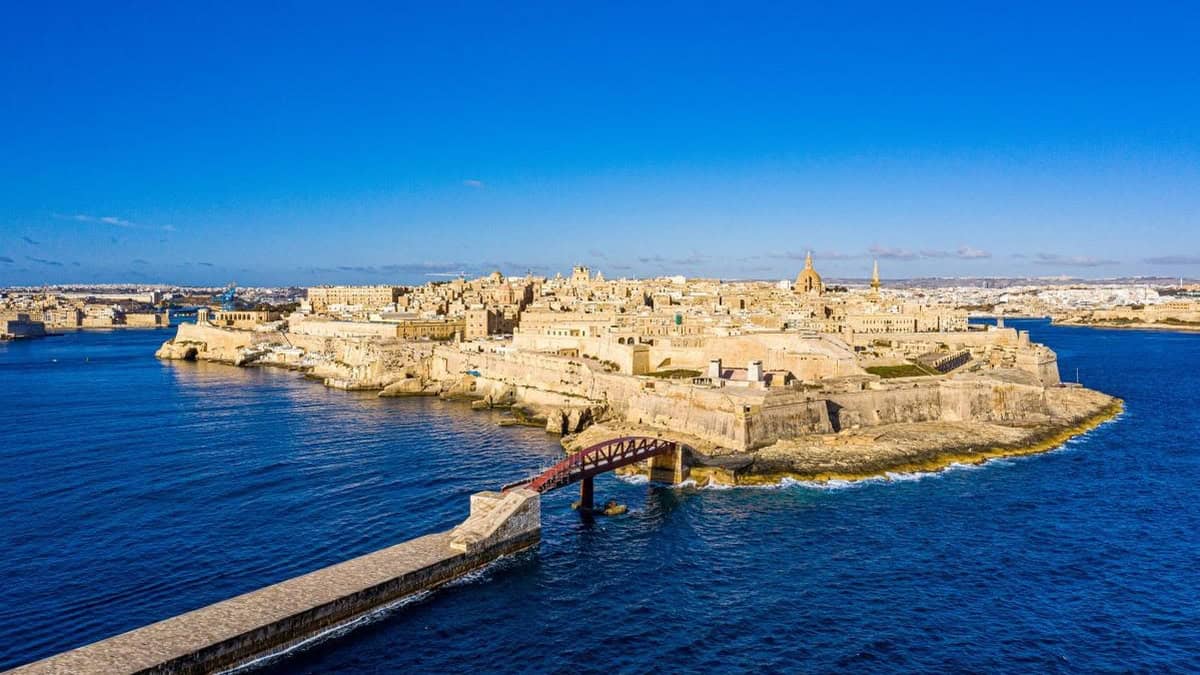
Malta’s capital, Valletta, is scheduled to receive Seven Seas Navigator on 3 November.
The city’s compact historic centre is an important advantage for short port visits.
The UNESCO World Heritage Centre recognises Valletta for its architectural and historical significance, including the extensive legacy of the Order of St John.
Advertisement
Advertisement
Malta’s official passenger statistics also provide useful market context.
The National Statistics Office of Malta recorded 256,369 cruise passenger movements during the second quarter of 2026 across 126 vessel calls.
Transit passengers accounted for 208,068 movements, or 81.2% of the total.
The average passenger count per cruise vessel call was 2,035.
Regent’s vessel is considerably smaller than that average. Its published maximum guest capacity is 496 passengers, although actual passenger numbers for this sailing have not been disclosed.
Malta’s first-half cruise traffic reached 321,616 passenger movements, a decrease of 5.7% compared with the equivalent period of 2025.
Advertisement
Advertisement
These figures show that cruise growth is not uniform across Mediterranean destinations.
For Malta, smaller luxury vessels can represent a different visitor segment from large cruise ships, particularly where historic attractions, personal service and guided experiences form the central tourism offering.
Tunisia Gains a North African Connection Through La Goulette
Tunisia will feature through the scheduled 4 November call at La Goulette, the cruise gateway serving Tunis and nearby cultural sites.
Its inclusion is particularly relevant to cruise operators seeking to combine European coastal destinations with North African heritage.
The Tunisian Office of the Merchant Marine and Ports recorded approximately 272,000 cruise tourist arrivals across Tunisia’s commercial port system in 2025.
That represented growth of approximately 22% compared with around 223,000 in 2024.
Advertisement
Advertisement
The authority also identified continued recovery in cruise activity following the resumption of services in 2022.
For La Goulette, the institution projected approximately 160,000 additional cruise tourists through 34 calls by the end of 2026.
That figure is an official forecast rather than a confirmed final-year result.
The Regent itinerary offers access to Tunisian heritage attractions, including the UNESCO-listed Archaeological Site of Carthage.
However, individual excursions and their availability must be confirmed with the operator.
The Tunisian call also introduces a significant operational difference.
Advertisement
Advertisement
Unlike Italy, Malta, France and Spain, Tunisia is outside the Schengen Area. This creates nationality-dependent travel-document and border-processing considerations for passengers continuing back to European ports.
France Builds on Cruise Growth at Toulon
France enters the itinerary through Toulon, where the vessel is expected on 9 November.
The destination provides access to the French Mediterranean coast, regional heritage and locally operated excursions.
Recent official port results indicate increasing cruise activity.
The Ports Rade de Toulon–La Seyne reported growth of 85.8% in its cruise segment during 2025.
The port complex handled 2,014,567 combined ferry and cruise passenger movements during that year.
Advertisement
Advertisement
These figures should not be interpreted as cruise-only passenger totals because the wider passenger count includes ferry traffic.
The destination’s infrastructure includes cruise facilities at Toulon Côte d’Azur and La Seyne-sur-Mer.
The Var Chamber of Commerce and Industry identifies the two facilities as part of the regional port network.
The precise berth assigned to Seven Seas Navigator should be confirmed before arranging passenger collection or independent shore transport.
Toulon’s port authority has also documented the introduction of shore-side electrical infrastructure designed to support cleaner passenger-vessel operations.
The existence of this infrastructure does not establish that Regent’s vessel will connect to it during the November call.
Advertisement
Advertisement
Spain Combines Costa Brava Off-Season Tourism with Barcelona Homeport Infrastructure
Spain will receive the ship at Palamós on 10 November before the voyage concludes in Barcelona the following morning.
The Palamós call is particularly relevant to the strategy of distributing cruise activity beyond the summer season.
According to the Municipality of Palamós, the port entered its 2026 cruise season forecasting 65 vessel calls and approximately 67,000 cruise passengers.
The municipality expected 74% of calls to take place during the low season.
Regent Seven Seas Cruises was among the 13 operators identified in its seasonal programme.
Palamós provides access to the Costa Brava, including regional historic towns, Girona and other cultural attractions.
Advertisement
Advertisement
This offers an example of how cruise itineraries can connect luxury passengers with destinations outside major Mediterranean metropolitan centres.
Barcelona plays a different role.
The Port of Barcelona’s 2025 performance report identified approximately 2.3 million cruise passengers visiting the city, an increase of 7.6% over the previous year.
Its homeport share reached 58%, reflecting the importance of embarkation and disembarkation activity.
Barcelona is also undergoing a significant cruise-terminal reorganisation.
Under its 2025 agreement with the city council, the port is working towards a maximum of five cruise terminals by 2030, with cruise activities concentrated at the Adossat wharf.
Advertisement
Advertisement
The programme includes terminal closures, redevelopment and changes to passenger mobility.
For agents arranging post-cruise transport on 11 November, the critical consideration is the vessel’s confirmed terminal assignment rather than assumptions based on previous Barcelona arrivals.
Official Mediterranean Cruise Statistics Reveal Different Market Conditions Across the Route
The following figures provide a comparative overview of the itinerary’s operating environment.
They come from port authorities, national statistical institutions and local government bodies.
Different reporting periods and statistical definitions mean they should not be treated as directly comparable measures of passenger demand.
| Country and destination | Latest relevant official indicator | Reporting period | Implication for cruise tourism |
|---|---|---|---|
| Italy — Civitavecchia | 3,556,559 cruise passenger movements | Full year 2025 | Established large-scale homeport and transit infrastructure |
| Malta — Valletta and national cruise traffic | 256,369 cruise passenger movements in Q2; first-half traffic down 5.7% | Q2 and H1 2026 | Substantial cruise activity alongside uneven annual growth |
| Tunisia — national cruise ports | Approximately 272,000 cruise tourist arrivals, up 22% | Full year 2025 | Evidence of recovering cruise market participation |
| France — Toulon–La Seyne | Cruise segment growth of 85.8% | Full year 2025 | Expanding port activity and opportunities for local services |
| Spain — Palamós | 65 calls and 67,000 passengers forecast; 74% of calls expected in low season | 2026 forecast | Strong emphasis on reducing tourism seasonality |
| Spain — Barcelona | Approximately 2.3 million cruise passengers visiting the city; homeport share 58% | Full year 2025 | Major turnaround infrastructure and high-value passenger logistics |
These statistics establish the different market conditions faced by the operator along its route.
Advertisement
Advertisement
They do not measure the economic impact of the specific November sailing.
Any assessment of incremental spending would require actual passenger volumes, disembarkation rates, excursion participation and destination-level expenditure data.
Seven Seas Navigator Brings an All-Inclusive Luxury Model to the Five-Country Voyage
The itinerary will operate aboard Seven Seas Navigator, an all-suite vessel with accommodation for up to 496 guests across 244 suites.
Regent’s official fleet and deployment announcement also identifies a crew complement of 365.
The relatively small guest capacity differentiates the vessel from large-volume Mediterranean cruise ships.
For the November sailing, Regent advertises up to 69 included shore excursions.
Advertisement
Advertisement
The programme also includes dining across its restaurants, selected beverages, Wi-Fi, gratuities and valet laundry under the operator’s published inclusions.
Passengers booking Concierge Suites and higher categories receive an eligible pre-cruise hotel package, subject to the applicable fare conditions.
These elements create a commercially different product from cruises where destination activities are predominantly sold separately.
Travel advisers must nevertheless distinguish advertised inclusions from guaranteed excursion places.
Availability, reservation deadlines, accessibility requirements and possible itinerary revisions remain important booking considerations.
Independent Industry Analysis: Why This Departure Matters Beyond the Traditional Cruise Season
The most significant strategic feature of the November itinerary is its combination of established cruise infrastructure with destinations that have different seasonal and commercial characteristics.
Advertisement
Advertisement
Civitavecchia and Barcelona can support major passenger turnaround operations. Valletta offers concentrated historic attractions. La Goulette reconnects the itinerary with North Africa. Toulon contributes an expanding French cruise market, while Palamós demonstrates an explicit local policy emphasis on low-season arrivals.
This combination allows the operator to construct a cultural product without relying entirely on the Mediterranean’s traditional summer appeal.
However, extending a cruise programme beyond peak season creates a different operating challenge from filling a ship during summer.
Cultural attractions, specialist guides and transport services must remain available. Weather disruption can reduce time ashore, while shorter daylight hours may limit the practical length of excursions.
The economics also differ by port.
Turnaround ports may benefit from accommodation, air transfers and provisioning, whereas transit destinations depend more heavily on passenger disembarkation and shore spending.
Advertisement
Advertisement
The voyage’s waitlisted status is therefore noteworthy but insufficient to demonstrate broader winter-market success.
Long-term performance will depend on repeatable demand, reliable port operations, commercially sustainable shore programmes and evidence that additional seasonal calls generate benefits beyond merely shifting passengers between departure dates.
Schengen Border Rules and Tunisia Entry Requirements Add a Critical Cruise Planning Dimension
The five-country itinerary also requires closer attention to international entry procedures.
Italy, Malta, France and Spain are Schengen countries. Tunisia is not.
This distinction matters because passengers travelling from Italy and Malta to Tunisia will subsequently return to the Schengen Area when the vessel reaches Palermo.
Entry permissions depend on nationality, residence status, travel documents, visa conditions and applicable cruise procedures.
Advertisement
Advertisement
The European Commission confirmed that the Entry/Exit System became fully operational across the Schengen Area on 10 April 2026.
The system digitally records relevant entry and exit information for eligible non-EU short-stay travellers and uses biometric identification.
The European Union Agency eu-LISA also established additional carrier-verification obligations for certain third-country nationals holding single- or double-entry visas.
The European Travel Information and Authorisation System, known as ETIAS, is separate from the Entry/Exit System.
As of 11 October 2026, the official EU ETIAS information service identifies ETIAS as not yet operational, with no applications being accepted. Its intended launch period is the final quarter of 2026, but travellers should not assume an obligation until an official implementation date is established.
Essential Border and Travel-Document Considerations
| Travel segment | Jurisdiction | Principal operational consideration |
|---|---|---|
| Italy to Malta | Schengen to Schengen | Confirm general entry eligibility and applicable cruise documentation |
| Malta to Tunisia | Schengen to non-Schengen | Check Tunisia-specific admission rules and any relevant Schengen exit procedures |
| Tunisia to Palermo | Non-Schengen to Schengen | Verify eligibility for Schengen re-entry and applicable border checks |
| Italy to France | Schengen to Schengen | Confirm identification requirements and any applicable controls |
| France to Spain | Schengen to Schengen | Maintain valid travel documents and complete passenger records |
| Barcelona disembarkation | Spain | Confirm terminal, onward transport and relevant departure arrangements |
A visa suitable for entering Italy is not automatically sufficient for every nationality and every possible re-entry situation.
Advertisement
Advertisement
Travel agents should therefore obtain written confirmation of requirements from the relevant official consular authorities and cruise operator before departure.
Operational Priorities and Risk Management for Cruise Travel Agents
For travel advisers, destination management companies and tour operators, the approaching departure creates several practical responsibilities.
- Reconfirm booking availability: Regent currently lists the voyage as waitlisted. Obtain current suite availability and fare conditions directly from the operator rather than assuming cabins remain open for immediate confirmation.
- Audit passenger documentation: Check nationality-specific Tunisian entry requirements, Schengen re-entry permissions, passport validity and any applicable EES procedures.
- Verify embarkation logistics: Confirm Civitavecchia’s assigned terminal, boarding instructions and transport arrangements from Rome before issuing final travel documents.
- Protect shore-excursion delivery: Review booking deadlines, physical accessibility, guide availability and realistic attraction visiting times at all seven intermediate ports.
- Build weather contingencies: Allow flexibility for possible November sea conditions, itinerary adjustments and changes to arrival or departure times.
- Confirm final-port arrangements: Recheck Barcelona’s disembarkation terminal and airport-transfer logistics because the port is undergoing a multi-year terminal reorganisation.
- Separate confirmed facts from forecasts: Do not use national port statistics, published spending estimates or the ship’s waitlisted status as proof of actual revenue from this individual sailing.
- Monitor supplier commitments: Ensure independent ground services can accommodate changes to berth location, local transport access or the sequence of excursions.
Mediterranean Winter Cruising Could Reshape Luxury Itinerary Planning Beyond 2026
Regent’s approaching November departure illustrates a wider commercial opportunity for cruise operators seeking to use Mediterranean infrastructure beyond its busiest months.
The region already possesses extensive ports, historic attractions, established destination management networks and international transport connections.
The central question is whether those assets can sustain profitable and reliable cruise activity across a longer operating season.
Italy’s large homeport market provides an established departure base. Malta contributes concentrated cultural attractions. Tunisia offers opportunities connected to recovering cruise traffic. France adds an expanding regional port network, while Spain combines low-season coastal tourism with significant turnaround infrastructure.
Advertisement
Advertisement
Together, these destinations demonstrate how a single cruise itinerary can connect different tourism markets without requiring a formal multinational partnership.
For luxury cruise operators, the potential benefit is greater seasonal flexibility and a differentiated cultural proposition.
For destinations, the opportunity is to spread tourism activity across more months while managing local infrastructure, visitor flows and environmental requirements.
Yet the outcome remains uncertain until the programme produces measurable operating results.
The 1 November 2026 sailing will be an important initial step in Regent’s first full winter Mediterranean season, but one departure cannot establish lasting changes in regional demand.
Its longer-term significance will depend on the performance of subsequent voyages, passenger satisfaction, port reliability and the ability of travel businesses to deliver high-quality experiences outside the conventional summer season.
Advertisement
Advertisement
FAQs
1. When does Regent Seven Seas Navigator begin its winter Mediterranean programme?
The first scheduled departure is 1 November 2026 from Civitavecchia, the cruise port serving Rome. The ten-night voyage is scheduled to reach Barcelona on 11 November 2026. It opens Regent Seven Seas Cruises’ first full winter Mediterranean programme, originally announced in December 2025.
2. Which countries are included in the November luxury cruise itinerary?
The voyage visits Italy, Malta, Tunisia, France and Spain. Its seven intermediate port calls are Valletta, La Goulette, Palermo, Naples, Livorno, Toulon and Palamós. Italy is the departure country, while Spain is the final destination.
3. Why is the November sailing important for Mediterranean cruise tourism?
The departure extends Regent’s Mediterranean offering into the quieter travel period. It combines established cruise homeports with cultural destinations and smaller regional ports, creating opportunities for shore excursions and tourism services outside peak summer months. Its actual economic impact remains to be measured.
4. Is the Regent November 2026 Mediterranean cruise available to book?
At the time of review on 11 October 2026, Regent’s official itinerary page displayed the sailing as waitlisted. Availability can change, so travel agents should contact Regent directly for current suite inventory, booking conditions and any potential waitlist options.
5. Will cruise passengers need additional visas to visit Tunisia and return to Europe?
Requirements depend on the traveller’s nationality, passport, residence status and existing permissions. Tunisia is outside the Schengen Area, while Italy, Malta, France and Spain are Schengen destinations. Passengers should verify Tunisian admission rules and eligibility to re-enter Schengen before sailing. The EU Entry/Exit System is operational, while ETIAS was not operational as of 11 October 2026.
Advertisement
