
Thailand Moves Alongside Singapore and Others as New Checked-Baggage Security Rules Take Effect for Travellers

Updated
Published
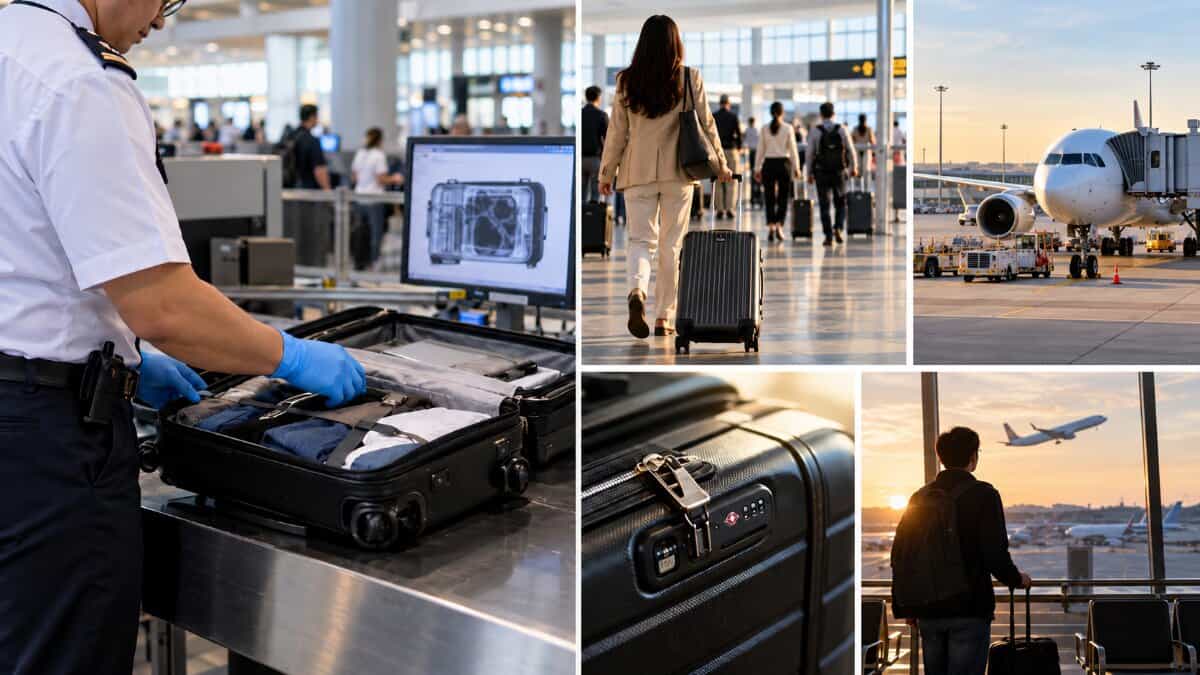
Thailand will introduce revised checked-baggage inspection procedures on 16 October 2026. Authorised personnel may open a bag without its owner present when screening identifies a reasonable security concern. Inspections must be recorded, and the traveller notified afterwards. Singapore, Japan, South Korea and the United States share the objective of screening hold baggage, but passenger procedures differ. The change does not introduce new visas, passport rules, airport routes or universal bag searches. For travel businesses, accurate packing advice and disruption support matter most.
Thailand’s Airport Security Change Begins on 16 October
Thailand’s Civil Aviation Authority published its revised framework in February 2026 and clarified the effective date in August. The Tourism Authority of Thailand circulated passenger guidance on 11 August. This is implementation, not a new announcement.
Advertisement
Advertisement
The rules apply to baggage accepted for carriage in an aircraft hold at airports in Thailand. They replace a source of operational friction when security personnel need access to a checked suitcase but cannot readily locate its owner. The regulator expects more efficient screening, but has published no measured reduction in delays.
What Airport Officers Can Inspect and How Travellers Are Notified
According to the Civil Aviation Authority of Thailand and Airports of Thailand, a reasonable suspicion of prohibited or dangerous contents is necessary before a checked bag is opened. An X-ray concern can lead to inspection in a designated, controlled area without the owner being present. This is not permission for routine searches of every suitcase.
Advertisement
Advertisement
The process must be video-recorded for accountability. A written inspection notice is placed inside the opened bag, and prohibited material may be removed under applicable rules. Suvarnabhumi Airport specifically identifies explosives, firearms and ammunition among examples of security-sensitive items. Travellers discovering an inspection issue or suspected damage can approach their airline or use the CAAT complaints channel.
Five Countries, One Aviation-Security Purpose, Different Passenger Procedures
Thailand’s tourism authority identifies Singapore, Japan, South Korea and the United States as international examples of comparable approaches. The common purpose is to keep dangerous items off aircraft while resolving screening alerts. Their passenger instructions are not identical.
Advertisement
Advertisement
| Country | What original institutional guidance establishes | Practical difference for the traveller | Official source |
|---|---|---|---|
| Thailand | Targeted opening without the owner, recorded inspection and notice inside the bag from 16 October | Prepare for an authorised post-check-in search | Airports of Thailand |
| Singapore | Aviation-security framework covers hold-baggage screening; CAAS issues detailed dangerous-goods advice | Do not assume Thailand’s notice and recording requirements apply identically | CAAS |
| Japan | Narita describes both passenger-present follow-up checks and unattended opening by some airlines | The chosen airline’s approach matters | Narita Airport |
| South Korea | Incheon publishes terminal-specific instructions for confirming X-ray clearance | Passengers may need to remain available immediately after check-in | Incheon Airport |
| United States | TSA can physically inspect a checked bag, open a lock if necessary and leave a notice | A recognised lock can simplify authorised access | TSA |
Singapore Shows Why Common Screening Standards Are Not Identical Rules
Singapore’s aviation-security framework provides for the screening and protection of hold baggage. The Civil Aviation Authority of Singapore also gives passengers a detailed packing guide, including which dangerous goods must stay out of the aircraft hold. These are established requirements, not a new Singaporean rule commencing on 16 October.
Publicly available Singapore guidance does not by itself verify that every inspection is video-recorded or followed by the same notification procedure as Thailand’s. Operators should therefore avoid promising identical treatment simply because Thailand has named Singapore as a comparable security market. Check the airline and airport guidance for the actual journey.
Advertisement
Advertisement
Japan’s Narita Airport Highlights the Airline-Level Difference
Narita International Airport uses an inline system to screen checked luggage after check-in. Its official passenger guide explains that a suspicious item may lead to a further check in the passenger’s presence near the boarding gate. Some airlines instead permit authorised personnel to open luggage without the owner, remove prohibited goods and load the remaining bag.
This distinction matters on multi-airline itineraries. Narita also warns that spare mobile batteries and lighters must comply with specific hold-baggage restrictions.
South Korea’s Incheon Airport Keeps Passengers Close to Screening
Incheon International Airport provides a particularly useful counterpoint. Its check-in guidance advises Terminal 1 passengers to wait nearby for approximately five minutes until their checked bag clears X-ray screening. At Terminal 2, passengers are directed to a designated area in the departure hall to confirm screening has been completed.
These instructions do not mean every bag needs manual inspection. Passengers should stay available when required. Tour escorts handling groups should brief customers on the correct terminal process rather than assuming a single national procedure.
Advertisement
Advertisement
United States TSA Procedures Explain the Value of Accessible Locks
The Transportation Security Administration screens checked baggage and can conduct a physical inspection when an electronic check raises a concern. TSA guidance explains that officers may open a suitcase, cut a lock they cannot otherwise release and place an inspection notice inside.
Locks that TSA officers can open with recognised tools may reduce damage during a necessary search, although no lock prevents inspection. Thailand’s new advice on TSA-compatible locks follows a similar practical principle. Compatible locks do not guarantee damage-free inspection or identical compensation rights.
Global Aviation Standards Set the Baseline, Not a Single Script
The International Civil Aviation Organization’s Annex 17 is the international framework for protecting civil aviation against unlawful interference. National authorities implement screening obligations through their own regulations, approved security programmes and airport systems. The key similarity across the five markets is the duty to identify threats before baggage is carried, rather than an identical protocol for opening every bag.
Multi-country itineraries may involve checks at origin or during transfers. Compliance in Bangkok cannot automatically be treated as proof that a separate inspection will be waived in Singapore, Tokyo, Seoul or the United States.
Connecting Flights and One-Stop Security Remain Separate Issues
ICAO describes one-stop security as a formal recognition that specified security measures carried out elsewhere achieve an equivalent outcome. Such arrangements can reduce duplicate transfer screening, shorten connections and limit mishandled baggage. However, their scope can vary by state, airport, terminal or type of screening.
Thailand’s 16 October revision is not an announcement of a new one-stop-security agreement with the other four countries. It does not guarantee through-checking of baggage or the removal of transfer checks. Travel firms should confirm airline baggage arrangements and transfer screening before selling tight connections.
Advertisement
Advertisement
Power Banks, Travel Documents and Fragile Items Need Clear Advice
Airports of Thailand instructs passengers not to put power banks or spare lithium batteries in checked bags. The devices belong in cabin baggage, subject to applicable capacity restrictions. Singapore likewise requires spare lithium batteries to be hand-carried and, under CAAS guidance effective 15 April 2026, limits passengers to two power banks on departing flights, with further conditions for larger capacities.
Thailand’s tourism authority also advises keeping passports, essential documents, valuables, fragile belongings and important personal items out of checked luggage. Passengers must also check airline restrictions.
Official Airport Traffic Data Shows the Scale of the Challenge
Screening is a substantial operational responsibility at busy airports. The figures below establish exposure to large passenger flows, not the number of bags opened or delays avoided. The periods and airport coverage differ, so they should not be ranked against each other.
| Airport system | Official traffic figure | Period and scope | Original source |
|---|---|---|---|
| Airports of Thailand | 99.03 million passenger movements, including 60.24 million international | Six AOT airports; October 2025–June 2026 | AOT results |
| Singapore Changi | 69.98 million passenger movements | Calendar year 2025 | Changi statistics |
| South Korea Incheon | 74,071,475 passenger movements | Calendar year 2025 | Incheon Airport Corporation |
Original Industry Analysis: The Unseen Risk Is the Handover
The most consequential change for travel sellers may not be the act of opening luggage. It is the point at which responsibility passes between the screening team, ground handler, airline and customer. Thailand’s recorded inspection and notice create an audit trail, but the existence of a record does not tell an arriving traveller who can retrieve it or how quickly a complaint will be resolved.
An operator supporting a family or corporate group should therefore distinguish three situations: a security inspection, a missing or delayed bag and suspected property damage. Each calls for different evidence and a potentially different contact. Recording the bag-tag number, flight details, discovery time and condition of the suitcase can support an accurate claim without prejudging its cause.
A second risk is expectation mismatch. Incheon asks passengers to confirm screening soon after check-in; Narita allows different airline practices; the US and Thailand explain inspection notices. One generic pre-departure message across all markets is insufficient. Short, destination-specific instructions are a low-cost way for travel firms to protect customer confidence while avoiding unsupported promises about waiting times, compensation or automatic baggage transfers.
Advertisement
Advertisement
Meetings, Incentives and Group Tours Face Practical Implications
Thailand’s rule has no announced effect on conference capacity, event permits, hotel openings or air-route availability. Its relevance to meetings, incentives, conferences and exhibitions is operational. Delegates carrying equipment, time-sensitive materials or essential work documents need packing advice that separates prohibited hold items from valuables that should remain accessible.
Group leaders can brief passengers on batteries, check baggage contents and identify a single complaint contact. These steps manage risk, not on-time performance.
Essential Actions for Travel Agents and Tour Operators
- Update pre-departure documents for travellers checking bags at Thai airports from 16 October 2026.
- Explain that only bags raising a security concern may be opened without the owner present.
- Recommend compatible locks without promising they eliminate inspection or damage.
- Check power banks, spare batteries, restricted items and airline-specific allowances before travel.
- Explain Narita’s airline-dependent procedure and Incheon’s terminal-specific screening confirmation.
- Retain bag tags and flight records; direct Thai inspection complaints first to the airline or CAAT.
- Confirm transfer screening and through-checking separately, especially on multi-ticket itineraries.
Outlook: Better Security Alignment Must Still Earn Passenger Trust
Thailand’s revision brings a clearer mechanism for resolving checked-baggage concerns without routinely tracing passengers through terminals. Measured impacts on delays and complaints remain unknown. International comparisons show why alignment around security outcomes does not remove local differences. For the wider tourism market, transparent procedures, credible passenger advice and effective complaint handling will matter more than claims of a universal new standard.
FAQs
1. When do Thailand’s revised checked-baggage rules start?
They take effect on 16 October 2026 and cover hold-baggage security, not visas or passports.
2. Will Thai airport officers open every checked bag?
No. Opening without the owner requires reasonable suspicion and controlled, recorded inspection.
3. Can travellers use ordinary padlocks?
Yes, but a non-compatible lock may be cut. TSA-compatible locks are recommended, not mandatory.
Advertisement
Advertisement
4. Do Singapore, Japan, South Korea and the US have the same rules?
No. All have aviation-security screening systems, but published procedures differ. Narita recognises airline variations, Incheon has terminal-specific passenger instructions, and TSA uses baggage-inspection notices. Singapore’s public requirements do not establish identical Thai safeguards.
5. Does the change speed up international connections?
Reduced delays are possible but unmeasured. No new one-stop-security agreement or through-check guarantee follows.
Advertisement
