
Albania Surges in WEF 2026 Tourism Index as Riviera and Mountain Travel Expand

Published
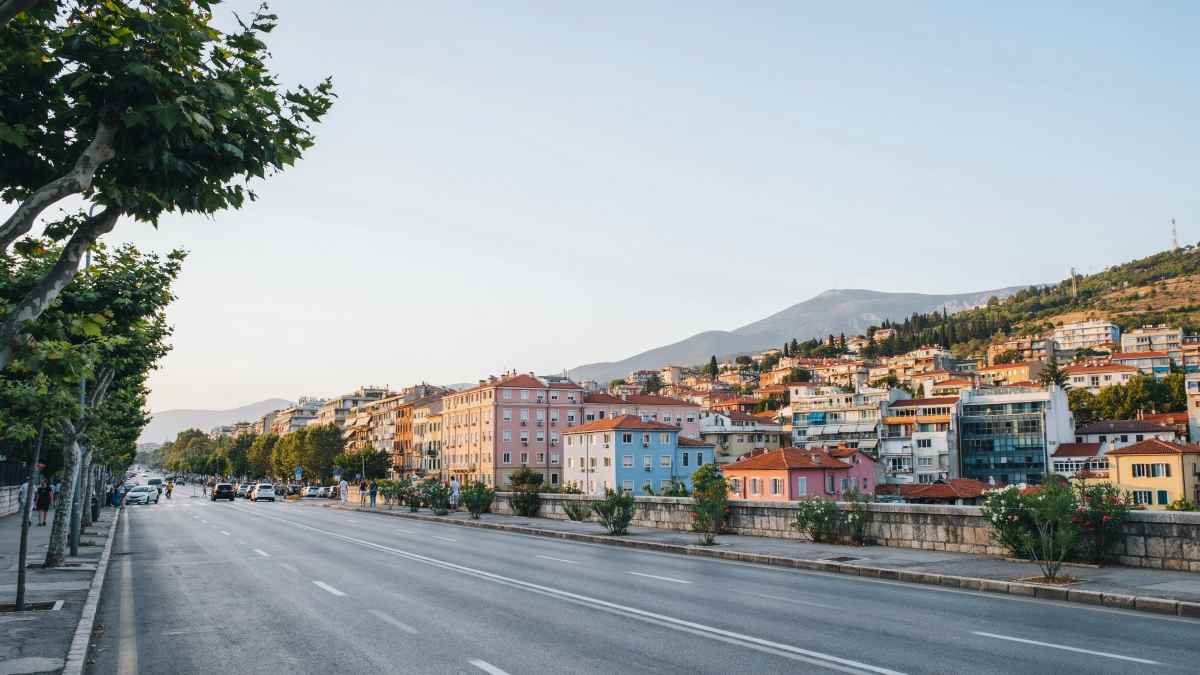
Image generated with Ai
Albania ranks first in terms of the greatest improvements in the Travel & Tourism Development Index 2026 of the World Economic Forum, where the country has made a 7% improvement in its index value between 2024 and 2026. Albania has advanced 10 ranks to be ranked 53rd out of 110 economies, which is one of the most considerable changes that have occurred in this year’s global tourism assessment. This change is attributed to progress in tourism services and infrastructure, air transport, and ground and port infrastructure. These improvements are assisting the country in converting the increased demand for tourists into better development of the tourism industry. The 2026 index was published on 25 September 2026.
Tourism Infrastructure Drives Albania’s Rise
Advertisement
Advertisement
Albania’s improvement comes as the country continues to strengthen the infrastructure supporting international visitors.
The WEF specifically identifies tourist services and infrastructure, air transport, and ground and port infrastructure as the main areas behind Albania’s progress. These are critical components for a country whose tourism geography stretches from the Adriatic and Ionian coasts to the mountains of the north.
Advertisement
Advertisement
The country’s rapid aviation growth provides a particularly clear example.
In August 2026, Albania’s Ministry of Infrastructure and Energy reported that around 242,000 flights had been processed through Albanian airspace between January and July, an 11% increase compared with the same period of 2025.
Advertisement
Advertisement
The ministry also reported that Tirana International Airport handled almost six million passengers during the first six months of 2026, around 17% more than in the corresponding period of 2025.
Tirana Becomes a Larger Gateway
Tirana is increasingly functioning as the main international gateway for Albania’s expanding tourism network.
Greater air connectivity allows visitors to reach the capital before continuing towards the coast, historic cities or mountain regions. The official tourism platform already promotes multi-region itineraries that combine Tirana with the Albanian Riviera, Gjirokastër, Butrint and other destinations.
This creates an important advantage for travellers who want to combine different landscapes in one trip.
Instead of treating Albania purely as a beach destination, tourism planners can connect the capital with coastal villages, archaeological sites, protected landscapes and northern mountain communities.
Advertisement
Advertisement
The Albanian Riviera Continues to Expand
The Albanian Riviera remains one of the country’s most visible tourism assets.
The official tourism authority describes the coastal route as stretching from Vlora towards Saranda and Ksamil, with destinations including Palasa, Dhërmi, Vuno, Himarë, Qeparo, Borsh and Lukovë.
The coastline combines beaches and secluded bays with mountain scenery and traditional settlements. Llogara Pass provides one of the most striking transitions, where the road descends from the mountains towards the Ionian coast.
The challenge now is managing this growth carefully.
The WEF’s wider 2026 findings show that tourism investment is struggling to keep pace with demand globally. Rising visitor numbers can place pressure on infrastructure, accommodation, natural resources and local communities.
Advertisement
Advertisement
For Albania, continued development therefore needs to extend beyond adding rooms and attracting more flights.
Mountain Tourism Opens Another Season
Albania’s northern mountains offer an important counterbalance to the heavily promoted summer coastline.
The Accursed Mountains, including the areas around Theth and Valbona, provide opportunities for hiking, trekking, nature travel and rural tourism. The official Albanian tourism platform highlights Vermosh, Lepush, Tropojë, Theth and Valbona among the country’s northern destinations.
These landscapes also help Albania develop tourism beyond the peak beach season.
Mountain travel can create a different visitor calendar, particularly during spring, early summer and autumn, while encouraging longer itineraries that combine the coast with inland regions.
Advertisement
Advertisement
This matters because reducing seasonal concentration is becoming increasingly important for destinations experiencing rapid tourism growth.
Albania’s Competitive Price Advantage
Price competitiveness is another factor supporting Albania’s position within the wider European tourism market.
The WEF notes that major emerging tourism economies can benefit from competitive prices, natural resources and more sustainable demand patterns. Albania is particularly relevant to this trend because it offers Mediterranean coastline, mountain landscapes and cultural attractions while remaining comparatively accessible to travellers seeking alternatives to established European destinations.
But affordability alone cannot sustain growth.
As accommodation, labour, transport and operating costs increase, destinations must maintain service quality and invest in infrastructure. The long-term challenge is creating value rather than relying entirely on lower prices.
Advertisement
Advertisement
Beyond the Beach Tourism Model
Albania’s latest WEF result reflects a tourism sector becoming broader in both geography and infrastructure.
The Riviera remains central, but the country is increasingly presenting itself through mountain landscapes, heritage towns, national parks, food, culture and outdoor experiences.
This wider product mix could help distribute visitors across more regions and seasons.
The official tourism platform already promotes routes connecting Tirana with the Riviera, Butrint and Gjirokastër, while northern Albania is increasingly visible through nature-based itineraries.
For international travellers, this creates the possibility of combining several distinct experiences within one relatively compact country.
Advertisement
Advertisement
The Next Challenge Is Managing Growth
While the 7% increase in TTDI for Albania indicates improvements in the conditions for development of tourism in the country, it does not necessarily mean that all areas of the tourism industry have been equally developed. The WEF predicts that further development of the tourism industry will move into a new era where investment, workforce, affordability and sustainability will matter more than ever before. This prediction is especially true for Albania. While fast growth in aviation and coastal developments offer new opportunities for the country, at the same time, they put more pressure on roads, water supply, waste management, lodging options, and local communities. Future tourism development in Albania will be defined not just by the number of tourists coming to the country, but by the way in which the country will connect its coastline, capital, history and mountainous regions without damaging those landscapes that attracted visitors to the country. With its 53rd place in the 2026 WEF index, Albania finds itself as an important player among other countries with rapidly developing tourism markets in Europe.
Advertisement
