
Air India Cuts Delhi–Birmingham and Vienna Flights for Winter 2026–27, Reshaping Travel Between India and Europe

Published
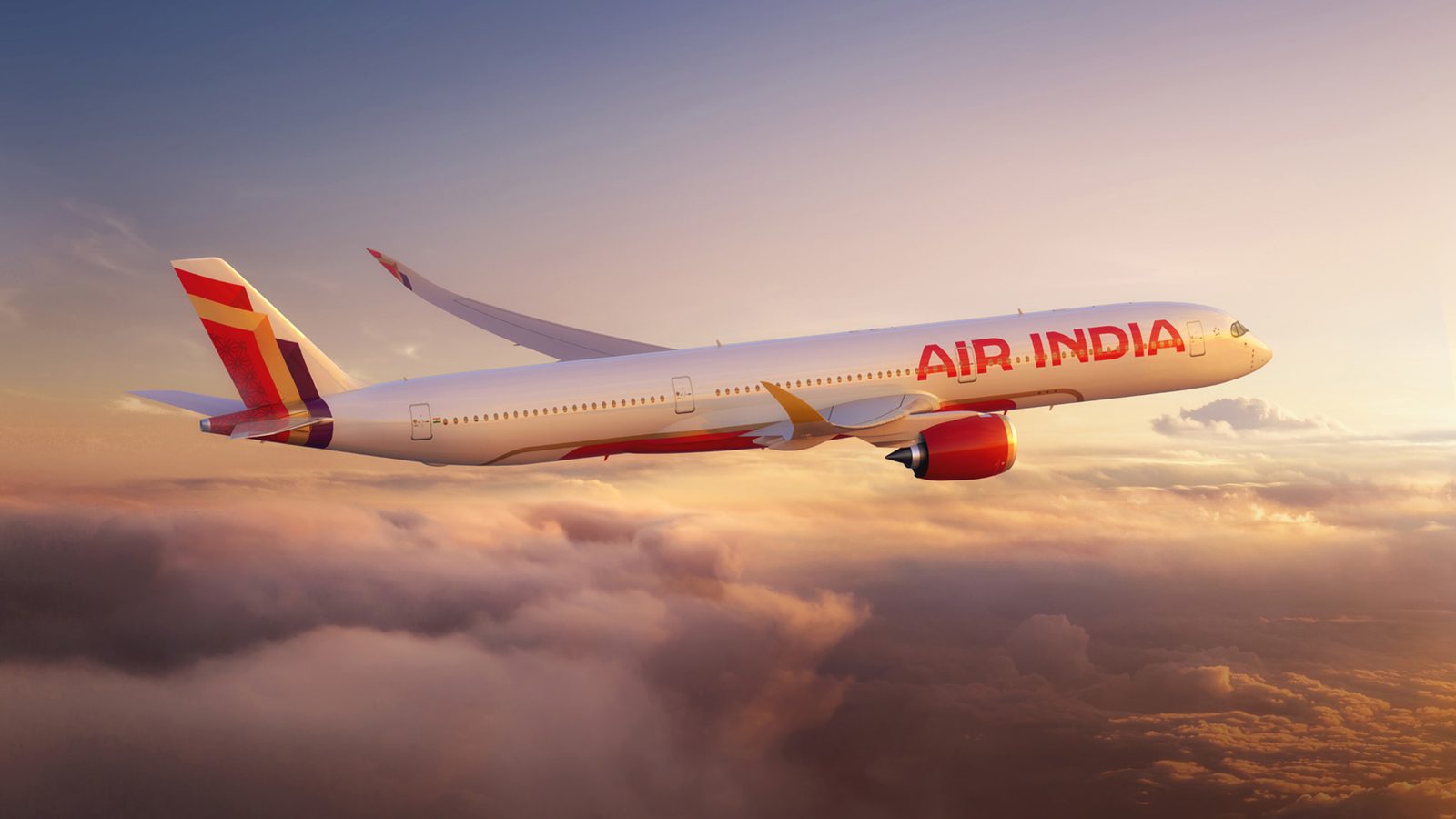
Air India is preparing to suspend nonstop flights from New Delhi to Birmingham in the United Kingdom and Vienna in Austria as part of its winter 2026–27 European network adjustments. Schedule filings reported on 13–14 October 2026 indicate that the Delhi–Vienna service will end around the beginning of November, followed by the withdrawal of Delhi–Birmingham flights. The changes could affect passengers travelling for tourism, business, education and family visits, particularly those relying on direct links between India and two important European destinations. The reported Air India Europe flight suspensions come amid higher aviation fuel costs, restricted airspace and wider reductions in India–Europe airline capacity.
Which Air India Routes Are Being Suspended During Winter 2026–27?
Air India’s forthcoming European adjustments centre on the withdrawal of nonstop passenger services connecting New Delhi with Birmingham and Vienna.
The routes currently provide direct access between India’s capital and two European cities with established international travel markets.
According to Aviation Week, citing global distribution system (GDS) inventory and CAPA – Centre for Aviation schedule information, the airline is withdrawing its four-times-weekly Delhi–Vienna service from 31 October 2026.
Advertisement
Advertisement
Its three-times-weekly Delhi–Birmingham service is also being removed from the beginning of November.
Separate schedule analysis published by AeroRoutes identifies 1 November as the first cancelled Delhi–Vienna departure and 4 November as the first cancelled Delhi–Birmingham departure. These dates may reflect differences between the start of a suspension period and the first affected scheduled flight.
Advertisement
Advertisement
A further question concerns Air India’s three-times-weekly Amritsar–Birmingham route.
CAPA has reported that this service is also expected to pause during winter 2026–27. However, reservations were still appearing on Air India’s booking platform when the initial reports emerged.
Advertisement
Advertisement
Consequently, the Amritsar service should be treated as uncertain until the airline’s latest bookable inventory or an official notice resolves the discrepancy.
Reported Air India Route Changes
| Route | Frequency before proposed suspension | Reported winter 2026–27 position | Important clarification |
|---|---|---|---|
| New Delhi–Vienna | 4 weekly | Service being withdrawn from late October or early November | AeroRoutes identifies 1 November as the first cancelled flight |
| New Delhi–Birmingham | 3 weekly | Nonstop service being suspended in early November | AeroRoutes identifies 4 November as the first cancelled flight |
| Amritsar–Birmingham | 3 weekly | Winter suspension reported by CAPA | Booking availability remained visible when initially reported |
| New Delhi–Copenhagen | 4 weekly | Cancellation from 25 October reported in schedule filings | Separate previously filed network adjustment |
| Amritsar–London Gatwick | 3 weekly | Cancellation from 25 October reported in schedule filings | Separate previously filed network adjustment |
The distinction between a scheduled withdrawal and an official airline announcement is important.
Air India had been approached for comment when Aviation Week published its report. A dedicated official statement confirming every October–November route adjustment was not located during this review.
Passengers should therefore use their individual flight status and reservation details as the final operational reference.
Advertisement
Advertisement
Why Is Air India Reducing Flights Between India and Europe?
The wider operating environment has become considerably more difficult for airlines connecting South Asia with Europe.
Fuel costs, airspace restrictions and longer flight routings have placed additional pressure on international operations.
For airlines operating long-haul aircraft, even relatively modest increases in flight duration can affect fuel consumption, crew scheduling, aircraft availability and operating costs.
Air India had already acknowledged these pressures earlier in 2026.
In an official announcement dated 13 May 2026, the airline explained that airspace restrictions and record-high international aviation fuel prices were affecting the commercial viability of some services.
That announcement concerned temporary changes between June and August 2026, rather than the newly reported winter withdrawals.
Advertisement
Advertisement
It nevertheless provides official evidence of the operating pressures the airline had been managing throughout the year.
Air India stated at the time that its objective was to improve network stability and reduce last-minute disruption.
The carrier also reduced frequencies on several international routes, including Delhi–Vienna, Delhi–Zurich and Delhi–Rome, during the earlier adjustment period.
The October route changes therefore follow an existing pattern of network rationalisation.
However, the precise commercial reasons for suspending each individual winter service have not been publicly established in a dedicated airline statement.
It would be inaccurate to conclude that weak passenger demand alone caused the withdrawals.
Advertisement
Advertisement
Indeed, the market data for Vienna indicate that India–Austria passenger demand increased during 2025.
The broader problem is that a route can attract passengers while becoming commercially challenging because of higher operating expenses.
How Are Airspace Restrictions Increasing Costs for Indian Airlines?
Airspace access is a major factor affecting international flight planning.
Indian carriers have faced restrictions involving Pakistani airspace alongside disruption across parts of the Middle East.
These conditions can force aircraft to follow longer routes than originally intended.
Additional flying time increases fuel consumption and can complicate the use of aircraft across multiple daily services.
Advertisement
Advertisement
A longer journey may also require different crew arrangements or operational adjustments.
Reuters reported in March 2026 that restrictions affecting Pakistani and Middle Eastern airspace were creating significant difficulties for Indian airlines, including Air India and IndiGo.
The combined effect was particularly important for flights between India, Europe and North America.
For passengers, the consequences may extend beyond the cancellation of individual routes.
Longer journeys can affect arrival times, connecting schedules and the ability of airlines to offer competitive nonstop fares.
The financial pressure also becomes more serious when fuel prices remain elevated.
Advertisement
Advertisement
In October 2026, European airlines continued warning about the impact of high aviation fuel costs.
Reuters reported on 8 October that Ryanair’s leadership expected elevated fuel expenses to remain a significant concern for the industry.
Although that assessment concerned the wider European aviation sector, it provides relevant context for the commercial pressures affecting international airline networks.
There is no confirmed evidence that every Air India route suspension was caused by exactly the same combination of factors.
Nevertheless, the documented operating environment helps explain why carriers are reviewing routes that previously formed part of their long-haul expansion strategies.
How Will Birmingham’s Loss of Air India Flights Affect UK–India Tourism?
Birmingham is among the most important regional gateways for travel between the United Kingdom and India, particularly for passengers travelling to and from Punjab.
Advertisement
Advertisement
The city serves a large catchment area across England’s West Midlands and surrounding regions.
Its links with India are important not only for leisure tourism but also for family visits, education, religious travel and commercial exchanges.
The latest proposed suspensions could reduce the availability of convenient nonstop journeys from Birmingham to Indian destinations.
According to Sabre Market Intelligence figures cited by Aviation Week, Birmingham recorded approximately 207,300 two-way origin-and-destination passengers travelling between the city and India during 2025.
That represented an 8.3% decline from the previous year.
Amritsar was the largest individual city market, generating about 81,200 passengers.
Advertisement
Advertisement
Delhi followed with approximately 53,600 passengers.
Birmingham–India Passenger Demand in 2025
| Market | Two-way passengers | Share of Birmingham–India traffic |
|---|---|---|
| Birmingham–Amritsar | 81,200 | 39.2% |
| Birmingham–Delhi | 53,600 | 25.9% |
| Birmingham–Other Indian cities | 72,500 | 35.0% |
| Total Birmingham–India market | 207,300 | 100% |
The data reveal that Amritsar accounted for a larger share of Birmingham’s India passenger market than Delhi.
That distinction helps explain why uncertainty over the Amritsar–Birmingham route is particularly important.
For many passengers visiting family or travelling for religious purposes, a direct Amritsar service provides access to Punjab without requiring a connection through another major airport.
If both Birmingham routes were suspended simultaneously, passengers would need to examine other travel arrangements.
Potential alternatives could include connecting services or departures from other UK airports, depending on individual schedules and availability.
Advertisement
Advertisement
However, passengers should not assume that every alternative offers comparable journey times, prices or baggage conditions.
Why Is the Amritsar–Birmingham Route Particularly Important for Punjabi Travellers?
Amritsar is a major destination for cultural, religious and family-related travel.
The city is home to the Golden Temple, one of the most important religious sites associated with Sikhism.
Its international airport also provides access to communities across Punjab.
Birmingham and the wider West Midlands have longstanding social, cultural and economic connections with the region.
These relationships support travel throughout the year, including visits to relatives, religious journeys and extended holidays.
Advertisement
Advertisement
The reported possibility of suspending Amritsar–Birmingham services therefore carries implications that extend beyond conventional holiday tourism.
Travellers who previously depended on nonstop services may need to connect through Delhi or another aviation hub.
Such journeys can introduce additional travel time and increase the importance of connection arrangements.
Passengers travelling with elderly relatives, children or substantial baggage may find direct services particularly convenient.
Air India had also been developing arrangements intended to improve connections between Amritsar and international destinations.
On 28 July 2026, the airline announced its Easy Connect programme from Amritsar, linking Punjab to 27 international destinations through Delhi.
Advertisement
Advertisement
The programme was designed to facilitate international transfers through the capital, including through-check-in and baggage handling arrangements for eligible itineraries.
At launch, Air India specifically identified Birmingham and Vienna among the international destinations included in its European connectivity plans.
The subsequent reported winter withdrawals illustrate how quickly long-haul schedules can change.
The Easy Connect programme remains relevant as an example of the airline’s wider connecting strategy, but its original destination list should not be treated as a guarantee of nonstop services during winter 2026–27.
What Does the Delhi–Vienna Suspension Mean for Austria–India Connectivity?
The reported withdrawal of Air India’s Delhi–Vienna route is significant because it would remove the only scheduled nonstop passenger service between India and Austria.
Vienna serves as Austria’s principal international aviation gateway and an important entry point for tourism, business and cultural travel.
Advertisement
Advertisement
Indian travellers use the Austrian capital for city breaks, cultural visits and onward journeys within the country.
The city also provides access to destinations associated with Austria’s wider tourism economy, including Salzburg and the Alpine regions.
For Austrian travellers, direct flights to Delhi provide access to India’s capital and opportunities for onward domestic connections.
Removing the nonstop service would therefore affect passengers travelling in both directions.
According to Sabre Market Intelligence figures reported by Aviation Week, approximately 173,500 passengers travelled between Vienna and Indian cities during 2025.
That was an 11% increase compared with 2024.
Advertisement
Advertisement
Delhi represented the largest city pair, accounting for approximately 68,400 passengers.
Mumbai generated about 29,600 passengers, followed by Bengaluru with 21,100.
Vienna–India Passenger Traffic in 2025
| Market | Two-way passengers | Share of Vienna–India traffic |
|---|---|---|
| Vienna–Delhi | 68,400 | 39.4% |
| Vienna–Mumbai | 29,600 | 17.1% |
| Vienna–Bengaluru | 21,100 | 12.2% |
| Vienna–Other Indian cities | 54,400 | 31.4% |
| Total Vienna–India market | 173,500 | 100% |
The difference between Birmingham and Vienna is particularly revealing.
Birmingham’s India passenger market declined during 2025, while Vienna’s grew.
Nevertheless, both destinations are facing reported nonstop service withdrawals.
This demonstrates why passenger growth alone cannot establish whether a long-haul route is commercially sustainable.
Advertisement
Advertisement
Fuel costs, aircraft utilisation, operational restrictions and revenue characteristics can also influence airline scheduling decisions.
Will Vienna Airport Still Receive Air India Aircraft After the Route Suspension?
Vienna is expected to continue appearing in some Air India flight operations despite the withdrawal of its scheduled nonstop India–Austria passenger link.
AeroRoutes reports that the airport will remain a technical stop for selected North American services involving Toronto, San Francisco and Vancouver.
This distinction is particularly important for travellers interpreting airline timetables.
A technical stop is not necessarily equivalent to a commercially available passenger service between the stopover airport and the flight’s ultimate destination.
An aircraft may land for operational reasons, including refuelling, without offering passengers the ability to begin or end their journey at that location.
Advertisement
Advertisement
Therefore, Air India’s continued physical presence at Vienna would not automatically preserve nonstop commercial connectivity between India and Austria.
Passengers should verify that their itinerary includes a bookable passenger sector, rather than assuming that a technical stop creates a usable connection.
The reported arrangement also demonstrates how airspace restrictions can influence long-haul operations beyond direct point-to-point services.
Technical stops may support aircraft operations when longer routings or other constraints affect flight planning.
How Much India–Europe Airline Capacity Is Being Removed for Winter 2026–27?
The Air India changes form part of a broader reduction in planned seat capacity between India and Europe.
OAG Schedules Analyser data cited by Aviation Week showed that airlines had scheduled approximately 5.63 million two-way seats between the two regions for winter 2026–27 before the latest Air India adjustments.
Advertisement
Advertisement
That compared with approximately 6.02 million seats during winter 2025–26.
The reported difference represents a reduction of about 390,000 seats, or 6.5%.
India–Europe Winter Seat Capacity
| Winter season | Two-way scheduled seats | Comparison |
|---|---|---|
| 2025–26 | 6.02 million | Historical schedule baseline |
| 2026–27 | 5.63 million | Planned capacity before latest Air India cuts |
| Difference | Approximately −390,000 | Planned reduction |
| Percentage change | −6.5% | Year-on-year scheduled capacity decline |
The reduction signals a more constrained travel market for passengers planning winter journeys.
However, scheduled seat capacity should not be confused with actual passenger numbers.
Airlines may revise timetables before departure, and the number of seats offered does not indicate how many will ultimately be sold.
The figures also do not establish that all India–Europe airfares will rise.
Advertisement
Advertisement
Ticket prices depend on demand, competition, seasonal travel patterns, booking dates and seat availability on individual routes.
Nevertheless, fewer direct services can narrow passenger choice.
Travellers may have to compare a wider selection of connecting itineraries or consider travelling through alternative gateways.
For tourism businesses, connectivity matters because direct flights can make destinations more convenient for short holidays, packaged tours and organised travel.
The wider capacity reduction therefore deserves attention even where an individual destination retains alternative connections.
How Significant Were Air India’s Planned Birmingham Seat Increases?
Before the latest proposed withdrawals, OAG scheduling data indicated that Air India planned to offer approximately 91,100 two-way seats across its Delhi–Birmingham and Amritsar–Birmingham routes during winter 2026–27.
Advertisement
Advertisement
That represented a planned increase of 33.6% over winter 2025–26.
Using those rounded figures, the previous winter’s comparable planned capacity was approximately 68,200 seats.
The increase would have added roughly 22,900 seats across the two routes.
These numbers describe scheduled capacity, not actual passengers carried.
They also represent an earlier timetable plan, before the reported winter suspensions.
The contrast is substantial.
Advertisement
Advertisement
A programme that had been scheduled to grow by more than one-third is now facing uncertainty over both of its Birmingham connections.
This illustrates the difference between advance airline capacity planning and the final flights available for booking.
Long-haul schedules are often prepared months before departure, but aircraft availability and operating conditions can change significantly.
For passengers, the practical lesson is that a route appearing in an earlier seasonal timetable does not guarantee that the same service will operate throughout the season.
For travel agents and tour organisers, the adjustments strengthen the case for checking flight inventory before confirming complex itineraries.
How Is IndiGo’s European Retrenchment Adding to India’s Aviation Challenges?
Air India is not the only Indian carrier reducing its European operations.
Advertisement
Advertisement
IndiGo has also announced significant changes to its long-haul network following a decision to discontinue operations using six Boeing 787-9 aircraft leased from Norse Atlantic Airways.
In an official statement on 2 June 2026, IndiGo confirmed that it would temporarily discontinue flights to and from Manchester from 31 August.
The airline attributed its decision to extended flying times, airspace restrictions and higher operating costs.
On 31 July, IndiGo announced that it would conclude its widebody damp-lease programme, with the arrangement ending by 31 October.
The airline also confirmed that London Heathrow services would be temporarily discontinued pending the arrival of its Airbus A350-900 aircraft.
Mumbai–Amsterdam services would continue using the Airbus A321XLR from 25 October.
Advertisement
Advertisement
Aviation Week reported that this route would operate three times weekly with a 195-seat aircraft.
IndiGo’s European Network Changes
| Route or operation | Reported change | Relevant date |
|---|---|---|
| Delhi–Manchester | Temporarily discontinued | 31 August 2026 |
| Mumbai–Manchester | Temporarily discontinued | 31 August 2026 |
| London Heathrow services | Temporary withdrawal pending A350 deliveries | After widebody lease wind-down |
| Mumbai–Amsterdam | Transition to Airbus A321XLR, three weekly flights reported | 25 October 2026 |
| Norse Atlantic Boeing 787-9 lease | Six-aircraft programme ending | October 2026 |
The difference between Air India and IndiGo is notable.
Air India is adjusting an established international network, while IndiGo is restructuring a long-haul expansion programme built partly around leased widebody aircraft.
Yet both carriers are responding to difficult operating conditions.
Their decisions suggest that the challenges extend beyond individual destinations or airlines.
Why This Matters
The reported suspension of Air India’s Delhi–Birmingham and Delhi–Vienna flights could reshape travel choices between India, the United Kingdom and Austria during winter 2026–27.
Advertisement
Advertisement
For passengers, the immediate consequence is potentially fewer nonstop options.
For Birmingham, the uncertainty is particularly important because of the city’s substantial India passenger market and its strong connections with Punjab.
For Vienna, the withdrawal would eliminate the only scheduled nonstop passenger route linking Austria and India.
The reductions could also affect tourism planning, connecting journeys and the convenience of international family visits.
For the aviation industry, the changes highlight the pressure created by high fuel costs and constrained airspace access.
The figures do not establish that either market lacks demand. Instead, they show how operating economics can influence international connectivity even where substantial passenger traffic exists.
Advertisement
Advertisement
What Travellers Should Know
Passengers holding reservations on affected Air India routes should check their booking status rather than assuming that a previously confirmed service will operate unchanged.
Before Booking or Travelling
- Check departure dates: Pay particular attention to Delhi–Vienna journeys from late October and Delhi–Birmingham journeys from early November.
- Verify Amritsar services: The Birmingham route has been reported as a possible winter suspension, but initial booking availability created uncertainty.
- Review connecting itineraries: Check transit requirements, baggage arrangements and connection times before accepting alternatives.
- Contact Air India: Passengers affected by airline-initiated cancellations can use the carrier’s booking management and disruption-support services.
- Check refund eligibility: Air India states that customers affected by cancellations can request refunds or use available re-accommodation options.
According to Air India’s official refund and cancellation guidance, passengers whose flights are cancelled by the airline may request a refund or select eligible alternative arrangements.
The airline also provides a Manage Booking service for reviewing reservations and available changes.
Frequently Asked Questions
1. Is Air India cancelling its Delhi–Birmingham flights?
Schedule filings indicate that the three-times-weekly nonstop service will be suspended in early November 2026. AeroRoutes identifies 4 November as the first cancelled scheduled departure.
2. When will Air India stop flying nonstop between Delhi and Vienna?
Industry timetable reports indicate a suspension beginning around 31 October–1 November 2026. The first cancelled flight is listed as 1 November in AeroRoutes’ schedule analysis.
3. Will Amritsar–Birmingham flights also be cancelled?
CAPA has reported a possible winter suspension, but reservations remained available on Air India’s platform when the initial report appeared. Passengers should check the status of their specific flights.
Advertisement
Advertisement
4. Will Austria retain nonstop flights to India?
The reported Delhi–Vienna withdrawal would remove the only scheduled nonstop passenger connection between the two countries. Vienna may still be used as a technical stop for selected Air India services.
5. Can passengers receive refunds if Air India cancels their flights?
Yes. Air India’s official guidance provides refund and re-accommodation options for passengers affected by airline-initiated cancellations. The applicable arrangements depend on the booking and disruption circumstances.
Conclusion: India’s European Winter Flight Network Faces a Significant Adjustment
Air India’s reported winter 2026–27 suspensions mark another important adjustment to international connectivity between India and Europe.
The proposed withdrawal of Delhi–Birmingham and Delhi–Vienna services, alongside uncertainty over Amritsar–Birmingham flights, could reduce direct travel options for passengers visiting the UK, Austria and India.
The changes arrive during a difficult period for aviation, with higher fuel expenses, airspace restrictions and wider capacity reductions influencing airline schedules.
For passengers, the priority is to verify reservations, understand available alternatives and monitor official airline communications.
Advertisement
Advertisement
For the wider tourism and aviation sectors, the situation underlines the importance of reliable international connectivity and the vulnerability of long-haul routes to changes in operating conditions.
The suspension dates remain based on reported schedule filings, and any future resumption should be treated as unconfirmed until Air India publishes or makes available an updated operating timetable.
Advertisement
