
Taiwan’s Mega Airport Shock as Taoyuan Terminal 3 Set to Redefine Global Air Travel with Massive 2027 Expansion

Published
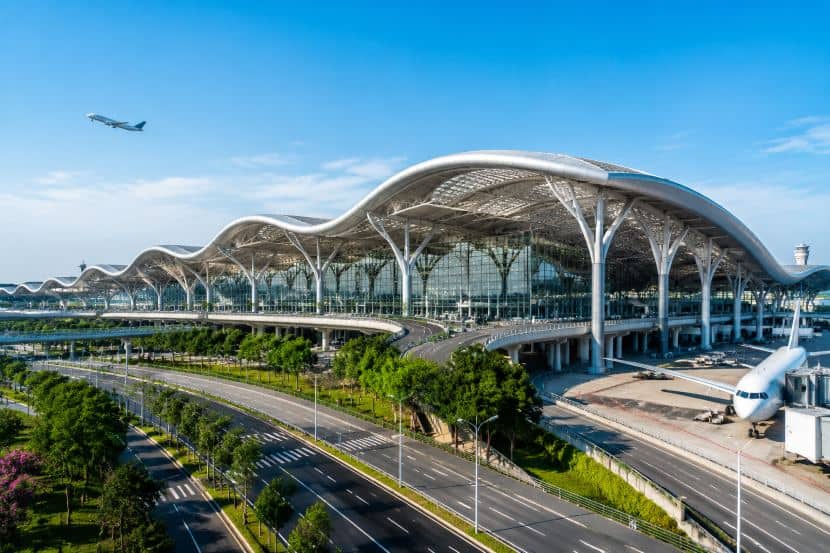
Image generated with Ai
Taiwan is moving forward with one of the most ambitious aviation infrastructure projects in its history as Taoyuan Airport Terminal 3 takes shape at Taoyuan International Airport in Taipei. Scheduled for completion in late 2027, the new terminal is designed to dramatically expand passenger capacity while transforming how travelers move through Taiwan’s main international gateway.
The development comes as Taiwan’s air traffic continues to rise, pushing existing airport infrastructure toward its limits. Once completed, Terminal 3 is expected to significantly enhance operational capacity, streamline passenger processing, and support the country’s long-term role as a key aviation hub in East Asia.
Advertisement
Advertisement
Massive expansion designed to handle surging passenger demand
Taoyuan Airport Terminal 3 has been planned with a handling capacity of approximately 45 million passengers per year. This expansion is strategically aligned with forecasts indicating that total passenger numbers at Taoyuan International Airport may exceed 50 million annually in the near future.
The project is not a minor upgrade but a large-scale transformation of the airport’s core infrastructure. It includes a main terminal building, north and south concourses, office facilities, and 21 aircraft stands. Together, these components are intended to distribute passenger flow more efficiently and reduce congestion across the airport system.
Advertisement
Advertisement
The scale of the project positions it among the most significant aviation infrastructure developments in Taiwan in decades, reflecting a long-term strategy to accommodate sustained growth in both tourism and business travel.
Advertisement
Advertisement
Self-service revolution reshaping the airport experience
One of the most significant operational changes introduced in Terminal 3 is the widespread adoption of self-service check-in systems. Nearly half of all check-in procedures are planned to be handled through automated kiosks and digital processing systems.
This shift marks a clear move toward a faster, more technology-driven airport experience. By reducing reliance on traditional staffed counters, the airport aims to shorten queues, improve efficiency, and handle higher passenger volumes during peak travel periods.
At the same time, staffed check-in counters are being redesigned with extended service areas. These upgraded counters will allow earlier baggage drop-off and smoother processing, ensuring that passengers who require assistance still experience improved service flow without delays.
Advertisement
Advertisement
Engineering on a mega scale: a terminal built like a landmark
The architectural design of Terminal 3 reflects large-scale engineering ambitions rarely seen in airport construction. The terminal features a wave-shaped roof supported by 16 massive steel columns, creating an expansive and open interior environment designed to accommodate heavy passenger traffic.
The ceiling structure spans an area equivalent to 16 soccer fields and is composed of a highly complex modular system made up of thousands of individual components. This design is intended to balance structural strength with visual openness, allowing natural light to flow through the interior space.
Advertisement
Advertisement
Beyond its aesthetic impact, the structure also serves a functional purpose by supporting efficient passenger movement and reducing visual congestion in a high-density travel environment.
Designed for high-speed passenger movement and global connectivity
Terminal 3 is being developed with a strong focus on passenger flow optimization. The layout includes multiple interconnected zones, including a central terminal building and two concourses located to the north and south. This design helps distribute passenger traffic evenly across boarding gates and reduces bottlenecks during peak operations.
The terminal will also include 18 large elevators to support vertical movement across multiple levels. This is a critical feature in a facility expected to handle tens of millions of passengers annually.
In addition, the terminal will provide 21 aircraft stands, enabling simultaneous handling of multiple international and regional flights. Five gates will be dedicated to smaller aircraft, increasing flexibility for short-haul and regional connectivity across Asia.
Smart airport design with dynamic visual environment
Beyond functionality, Terminal 3 incorporates advanced design elements aimed at enhancing the passenger environment. A programmable lighting system integrated into the ceiling allows for dynamic color changes across the terminal interior.
Advertisement
Advertisement
This system is designed to improve spatial orientation while also creating a modern and visually distinctive airport atmosphere. The lighting concept reflects a broader global trend where airports are increasingly designed as experiential spaces rather than purely functional transit zones.
The combination of large-scale architecture and adaptive lighting contributes to a more navigable and visually engaging environment for travelers moving through the terminal.
Phased construction moving toward 2027 completion
Construction of Terminal 3 is progressing in carefully planned phases to ensure that Taoyuan International Airport remains fully operational during development. The north concourse has already been completed and opened for use, marking an important milestone in the project timeline.
The main terminal structure has reached full structural completion, with interior systems and operational installations now moving into advanced stages. Final completion is expected in late 2027, after which the terminal will be gradually integrated into the airport’s full operational network.
This phased approach allows continuous airport operations while gradually expanding capacity and upgrading infrastructure in parallel.
Advertisement
Advertisement
Taiwan’s strategic push to become a leading aviation hub
Once completed, Taoyuan Airport Terminal 3 is expected to significantly strengthen Taiwan’s position in regional and global aviation networks. By increasing capacity and introducing advanced automation systems, the airport is preparing for sustained growth in international travel demand.
The project also reflects Taiwan’s broader infrastructure strategy focused on modernization and scalability. As air travel continues to expand across Asia, the development positions Taipei’s primary international gateway as a more competitive and efficient hub for global connectivity.
With its combination of large-scale engineering, automation, and capacity expansion, Terminal 3 represents a major step in reshaping Taiwan’s aviation landscape ahead of 2027.
Advertisement
